
 Oil On Canvas
- WallArt
- Cubism
 1934
1934 52.0 x 65.0 cm
 Walker Art Gallery

The picture follows your choices: , .
Opis obiektu
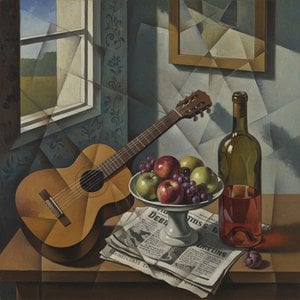
Discover Paul Nash’s "Telecommunications" (1934), a striking Cubist still life in grey & red. Explore this dynamic, geometric artwork – a unique piece of British Modernism.
 Rozwiń treść
Biografia artysty
Odkryj mistyczną krainę Paula Nasha (1889-1946), brytyjskiego artysty modernizmu i surrealizmu! Jego krajobrazy i wojenne obrazy pełne są symboliki i piękna. Zobacz więcej!
Ręcznie malowana reprodukcja olejowa
Ręcznie malowany obraz olejny na płótnie, wykonany na zamówienie przez naszych artystów w wybranym przez Ciebie wymiarze i oprawie. ( Przełącz na wydania drukowane Przejdź do wersji cyfrowej)
More about this painting
 Podgląd w skali 1:1
 Wyślij jako kartkę
 Udostępnij
 Szczegóły dzieła
 Przewodnik

 Pobierz obraz
 Podobne obiekty
 RTG
RTG Pokaz slajdów
 Q&A
Q&A Statystyki
Order your painting in four simple steps
Take your time. You can change any answer; the price in your order card follows each choice.
1 Step one of four
Which size would you like?
These sizes keep the proportions of the original painting. The drawing shows your choice on a wall, above a two-metre sofa.
Or give your own measurements
Wybierz spośród naszych standardowych rozmiarów, które zachowują oryginalne proporcje dzieła sztuki.

Wpisz wymaganą szerokość i wysokość, aby obraz pasował do Twojej ramy lub ściany. Ponieważ jest to dzieło malowane ręcznie, w przypadku rozmiaru o innych proporcjach artysta może domalować nieco więcej wokół obrazu lub przyciąć jego fragmenty — wybór należy do Ciebie. Przed rozpoczęciem pracy prześlemy Ci cyfrową wizualizację do zatwierdzenia. Obraz widoczny na tej stronie nie przedstawia rzeczywistego efektu — jedynie wizualizacja oddaje realny rezultat.
2 Step two of four
How should it be prepared: rolled, stretched or framed?
The prices below are for the size you chose in step one.
Choose the edges of the stretched canvas
Choose your frame

White zł1

Blurside zł1

Extended zł1

P118B zł10

P118H zł10

P118W zł10

P438Z zł10

P508JH zł12

P508YH zł12

P805H zł10

P805Z zł10

P919BZ zł10

P919G zł10

P919XJ zł10

P959ZH zł10

P968JZ zł12

W106C zł8

W218G zł10

W218JH zł8

W218Y zł10

W307PJ zł10

W316G zł10

W316PJ zł8

W316Y zł10

W398PJ zł8

W4111J zł10

W500HY zł15

W500JH zł15

W692G zł12

W849H zł8

W940BG zł15

W953PJ zł8

H24-GOLD zł30

H24-SILVER zł30

H36-GOLD zł45

H36-SILVER zł45
W oprawie
Moulding: . Overall size with the frame: .
3 Step three of four
Would you like anything changed in the painting?
Most people answer no. Because each painting is made by hand, our artist can also adapt it for you.
After order, ArtsDot.com team will email client for instructions and provide a mockup preview
4 Step four of four
A few finishing options
All of them are optional. The answers already selected cost nothing extra.
Who paints it?
Dostawa na całym świecie () w ciągu 3–4 tygodni zamiast standardowych 5 tygodni. (29 Październik). Bez kompromisów w kwestii jakości.
A nameplate, as in a museum?
Szczegóły grawerowanej brązowej tabliczki
This elegant plaque features the artist's name and the title of the artwork, finely engraved for a timeless presentation.
It is made from bronze with a refined, elegant finish. The text is precisely laser-engraved for a sharp and permanent result. Measuring 9x2 cm, the plaque is compact yet easy to read. It's built to be durable and scratch-resistant, offering a professional, museum-quality look. Mounting is simple thanks to the included adhesive backing.
Szczegóły przezroczystej tabliczki akrylowej
The plaque includes essential engraved details such as the artist's name, the title of the artwork, the date it was created, the type of media used-like oil on canvas or watercolor-a brief description of the piece, and a QR code that links to the complete artwork information.
It is crafted from clear acrylic, offering a sleek, modern appearance. The text is UV-engraved in black to ensure strong visual contrast. With a size of 10x15 cm, it ensures optimal readability. It comes equipped with two metal hooks for secure wall mounting. The plaque is designed to be weather-resistant, making it suitable for various environments, and it includes interactive features that work seamlessly with smartphone scanning.
Szczegóły czarnej tabliczki akrylowej
This elegant plaque includes engraved information such as the artist's name, the title of the artwork, the date it was created, the type of media used (like oil on canvas or watercolor), a short description of the artwork, and a QR code for quick access to more information.
The plaque itself is made from refined black acrylic with a premium finish. The text is laser-engraved in white for high contrast and readability. Its size is 10x15 cm, designed to be easy to read. It comes with two metal hooks for professional mounting. The design is sleek and fits any interior style. It is also weather-resistant and durable, with built-in digital integration for mobile compatibility.
A protective varnish?
When do you need it?
✓ Check and order
Your painting, as you ordered it

Telecommunications
Technika reprodukcji
Wymiary reprodukcji
-

Wybitny mistrz artystyczny
Większa szczegółowość, finezja i dodatkowy czas na realizację
-

Opcje oprawy reprodukcji
-
-
W przypadku dzieł sztuki lub reprodukcji, których którykolwiek z boków przekracza 105 cm (około 41 cali), rama zostanie wysłana w formie zestawu do samodzielnego montażu. Metoda ta zapewnia bezpieczną dostawę i zapobiega uszkodzeniom podczas transportu.
Wymagany profesjonalny montaż – nie jest to produkt typu DIY.
Zestaw musi zostać złożony, a płótno naciągnięte przez doświadczonego profesjonalnego ramiarza, przy użyciu kleju do drewna (brak w zestawie), kleszczy do naciągania płótna oraz ścisków, które utrzymają krosna w równej pozycji podczas schnięcia kleju. Nieprawidłowy montaż lub nierównomierne napięcie płótna może trwale uszkodzić dzieło sztuki i nie podlega naszej gwarancji.
 W przypadku dzieł sztuki lub reprodukcji, których którykolwiek z boków przekracza 105 cm (około 41 cali), rama zostanie wysłana w formie zestawu do samodzielnego montażu. Metoda ta zapewnia bezpieczną dostawę i zapobiega uszkodzeniom podczas transportu.
W zestawie znajdują się wszystkie listwy z litego drewna, precyzyjnie docięte do wymiarów.
Montaż odbywa się przy użyciu dołączonych wkrętów oraz kleju do drewna do łączenia narożników, którego zestaw nie zawiera i który musi zostać dostarczony przez ramiarza.
Wymagane są profesjonalne narzędzia, których nie ma w zestawie: kleszcze do naciągania płótna (napinacz) oraz zaciski, które pozwolą utrzymać listwy w równej pozycji podczas schnięcia kleju.
Ważne:
Do połączenia narożników niezbędny jest klej do drewna, listwy należy unieruchomić za pomocą ścisków do momentu całkowitego wyschnięcia kleju, a naciągnięcie płótna na złożoną ramę wymaga użycia kleszczy do naciągania płótna. Żaden z tych elementów nie jest dołączony do zestawu. Przed zamówieniem tego rozmiaru zalecamy konsultację z doświadczonym ramiarzem.

Etykieta obiektu
-
-

Lakier ochronny
Lakier z połyskiem (pogłębia kolory, chroni przed światłem i wilgocią)
-

Personalizacja dzieła
Przykłady możliwości personalizacji: zastąp twarz zdjęciem klienta; dodaj zwierzę domowe (np. zamień kota na psa); umieść ukrytą wiadomość w tle; zmień krajobraz lub elementy tła.
-

Ekspresowa
Dostawa na cały świat () w ciągu 3–4 tygodni zamiast standardowych 5 tygodni. (29 Październik). Bez kompromisów w kwestii jakości.
-
Przesyłka ekspresowa
Dostawa na cały świat () w ciągu 5 tygodni. (5 Listopad).
W cenie
Cena całkowita
zł 1013
Opcja ze szkłem jest dostępna wyłącznie w rozmiarach poniżej 110 cm
Included with every order
- Bezpłatna ekspresowa wysyłka na cały świat
- Wysokiej jakości płótno lniane
- Pełne ubezpieczenie przesyłki
- Gwarancja zwrotu należności celnych i podatków importowych
- Gwarancja wiernego odwzorowania kolorów
- 100-dniowa polityka zwrotów (tylko w przypadku wad)
- Gwarancja 100% zwrotu pieniędzy
- Zniżka przy zakupie wielu sztuk


A Static Symphony: Unpacking Paul Nash's "Telecommunications"
Paul Nash’s 1934 painting, “Telecommunications,” isn’t merely a still life; it’s a carefully constructed visual argument about the burgeoning anxieties and promises of modernity. Rendered in a restrained palette of greys, blacks, whites, and muted reds – colors that evoke both industrial austerity and a subtle, melancholic beauty – the work immediately draws the viewer into a world where familiar objects are fractured, rearranged, and imbued with an unsettling sense of detachment. It’s a piece that speaks volumes about the era's fascination with technology while simultaneously hinting at its potential to alienate us from nature and ourselves.
The composition itself is deliberately asymmetrical, creating a dynamic tension that mirrors the rapid changes occurring in society during the 1930s. A table dominates the foreground, supporting a bowl, an apple (a potent symbol of temptation and knowledge), and a draped cloth – objects rendered with a Cubist sensibility; their forms are broken down into geometric shapes, overlapping and receding from view as if viewed through a distorted lens. The central element, a towering telecommunications tower, acts as both the focal point and the unsettling anchor of the piece. It’s not depicted realistically but rather as a rigid, almost menacing structure, its sharp angles cutting across the otherwise muted tones.
Cubism Meets Constructivism: A Hybrid Style
Nash's style is a fascinating blend of Cubist and Constructivist influences. The fragmentation of forms, reminiscent of Picasso and Braque, is combined with a deliberate emphasis on geometric shapes – rectangles, triangles, and lines – echoing the principles of Constructivism, which sought to reduce art to its essential elements. This fusion creates an image that feels both familiar and strangely alienating, reflecting the anxieties of a world grappling with rapid industrialization and technological advancement. The flattened perspective, characteristic of Cubism, further contributes to this sense of detachment, as if the objects are suspended in a timeless void.
The technique employed is remarkably controlled. Nash utilizes a brushstroke-based approach, creating a surface that appears smooth and almost graphic. However, closer inspection reveals subtle variations in texture and tone, suggesting a deliberate layering of paint – a testament to his skill as a painter. The limited color palette reinforces the painting’s overall mood, contributing to its sense of quiet intensity and underlying unease. The choice of materials—likely oil paints on canvas or board—adds to the work's durability and timeless quality.
Echoes of Blake and the British Landscape
To understand Nash’s artistic vision fully, it’s crucial to consider his early influences. Like William Blake before him, Nash was deeply fascinated by mythology and folklore, often incorporating symbolic elements into his work. His childhood spent in Buckinghamshire instilled a profound love for the English landscape, particularly ancient burial mounds and Iron Age hill forts – motifs that frequently appear in his paintings. “Telecommunications” can be interpreted as a meditation on this relationship between the natural world and the encroaching forces of modernity. The tower, a symbol of technological progress, stands in stark contrast to the implied tranquility of the surrounding landscape, suggesting a potential loss or disruption of connection.
A Timeless Reflection: Reproduction Possibilities
Reproductions of “Telecommunications” offer a remarkable opportunity to bring this evocative artwork into your home or office. ArtsDot’s high-quality reproductions capture the painting's nuanced details and atmospheric mood with exceptional fidelity. Whether you choose a canvas print, a framed giclée, or a metal print, you can experience the power of Nash’s vision firsthand. This piece is more than just decoration; it’s a conversation starter – a visual reminder of our complex relationship with technology and the enduring beauty of the natural world. Consider this artwork as an investment in both artistic appreciation and a thoughtful reflection on the modern condition.
Pytania i odpowiedzi
Z jakich materiałów wykonano "Telecommunications" i w jakim stylu?
W "Telecommunications" technika Oil On Canvas łączy się z nurtem Cubism.
Jaki jest zalecany rozmiar wydruku dla „Telecommunications” – Paul Nash?
Zalecany rozmiar wydruku dla „Telecommunications” – Paul Nash to Medium.
W jaki sposób tematyka dzieła "Telecommunications" odnosi się do typowych motywów twórczości Paul Nash?
Wśród motywów charakterystycznych dla twórczości Paul Nash – takich jak war propaganda imagery, symbolic british art, early modernist style, cubism & constructivism, geometric abstraction, early 20th century art, modernity & technology, industrial age concerns – dzieło „Telecommunications” wprowadza własne skupienie na geometric abstraction, modern composition, minimalist still life, cubist forms, abstract objects, graphic design art, 20th century art.
Podobne dzieła


Paul Nash
1889 - 1946, Wielka Brytania
Biografia artysty
Paul Nash: Wizjoner Krajobrazu i Kronikarz Wojny
Paul Nash, urodzony w 1889 roku w Londynie jako John Northcote Nash, był postacią kluczową w brytyjskim modernizmie, artystą, który z niezwykłą wrażliwością łączył tradycję krajobrazu z nowatorskimi tendencjami modernistycznymi i surrealistycznymi. Jego życie, naznaczone zarówno osobistymi tragediami – chorobami psychicznymi matki, jak i doświadczeniami wojennymi, głęboko wpłynęło na jego twórczość, nadając jej wyjątkowy charakter i głębię symboliczną. Wychowany w rodzinie, gdzie ojciec był prawnikiem, a matka wykazywała oznaki choroby psychicznej, Nash przeniósł się z rodziną do Iver Heath, co miało poprawić stan zdrowia jego matki. To właśnie tam, otoczony bujną przyrodą i starożytnymi zabytkami – grobami kurhanowymi i pozostałościami kultury epoki kamienia – kształtowały się jego wczesne inspiracje. Edukację artystyczną podjął w Parsons School of Art oraz Slade School of Fine Art, gdzie choć wykazywał talent do malarstwa krajobrazowego, z trudem radził sobie z rysunkiem figuralnym. Wczesne prace Nasha noszą ślady wpływu Williama Blake’a i J.M.W. Turnera, mistrzów romantyzmu, a także fascynacji historycznymi pejzażami, nasyconymi atmosferą minionych epok.Od Modernizmu do Surrealistycznych Inspiracji
Styl Paula Nasha stanowił unikalne połączenie modernistycznej awangardy z tradycyjną techniką malarską. Wykorzystywał odważne kolory, geometryczne kształty i elementy abstrakcji, co wyróżniało go na tle ówczesnych artystów. W 1928 roku, po obejrzeniu wystawy Giorgio de Chirico, Nash uległ wpływowi surrealizmu, choć nigdy nie uznawał się za pełnoprawnego przedstawiciela tego nurtu. Surrealistyczne inspiracje przełożyły się na jego krajobrazy, w których codzienne obiekty nabierały symbolicznego znaczenia, tworząc atmosferę tajemniczości i oniryczności. Jego prace z tego okresu charakteryzują się niezwykłą kompozycją i precyzją detalu, a jednocześnie emanują subtelną melancholią i poczuciem niepokoju. Nash był pionierem brytyjskiego modernizmu, artystą, który potrafił łączyć tradycję z nowoczesnością, tworząc dzieła o ponadczasowej wartości.Wojenne Widzienia: "The Menin Road" i "Aerial Creatures"
Doświadczenia wojenne miały fundamentalny wpływ na twórczość Paula Nasha. Służąc jako oficjalny artysta wojenny podczas I i II wojny światowej, dokumentował okrucieństwa i zniszczenia spowodowane konfliktem. Jego obrazy z pola bitwy, takie jak słynne "The Menin Road" (Droga do Menina), to nie gloryfikujące sceny walki, lecz przejmujące wizje zranionej ziemi, symbolizujące bezsens wojny i jej tragiczny wpływ na krajobraz. W czasie II wojny światowej Nash stworzył cykl "Aerial Creatures" ("Lotne Stworzenia"), przedstawiający wraki samolotów w krajobrazach – antropomorficzne obrazy maszyn śmierci, które stały się wyrazem jego rozczarowania technologią i jej destrukcyjnym potencjałem. Te prace, łączące elementy surrealizmu z realizmem, świadczą o ewolucji stylu Nasha i pogłębianiu jego symboliki.Dziedzictwo i Trwałe Znaczenie
Paul Nash zmarł w 1946 roku, pozostawiając po sobie bogate dziedzictwo artystyczne. Jego prace do dziś zachwycają widzów swoją niezwykłą siłą wyrazu, głębią symboliczną i pięknem krajobrazów. Był współzałożycielem grupy Unit One w 1933 roku, obok takich artystów jak Ben Nicholson i Barbara Hepworth, co umocniło jego pozycję w brytyjskiej awangardzie. Jego twórczość wywarła wpływ na kolejne pokolenia artystów, a jego obrazy znajdują się w prestiżowych kolekcjach muzealnych, takich jak Tate Britain, Imperial War Museum i York Art Gallery. Nash pozostaje jednym z najważniejszych przedstawicieli brytyjskiego modernizmu, artystą, który potrafił uchwycić ducha swojej epoki i przekazać go przyszłym pokoleniom w sposób niezapomniany. Jego krajobrazy, nasycone symboliką i emocjami, stanowią świadectwo głębokiej wrażliwości i niezwykłego talentu artysty.
Powiązane artykuły
Dekonstrukcja Rzeczywistości: Kompleksowa Eksploracja Martwej Natury w Kubizmie
Odkryj fascynujący świat kubizmu! Kompleksowa analiza martwej natury w twórczości Picassa i Braque’a. Historia, techniki, wpływ na sztukę współczesną – wszystko, co musisz wiedzieć.

Geometria Sztuki: 10 Arcydzieł Abstrakcji Geometrycznej | ArtsDot.com
Odkryj 10 arcydzieł abstrakcji geometrycznej! Poznaj historię Mondriana, Kandinskiego i Maleвича. Inspiracje wnętrzarskie z malarstwem abstrakcyjnym – reprodukcje najwyższej jakości na ArtsDot.com. Eksploruj kolekcję online!

Paul Cézanne: 25 Arcydzieł, które Zrewolucjonizowały Świat Sztuki | ArtsDot
Odkryj 25 arcydzieł Paula Cézanne'a – od impresjonizmu po postimpresjonizm. Poznaj historie, techniki i inspiracje malarza, który zrewolucjonizował sztukę. Reprodukcje obrazów najwyższej jakości na ArtsDot.com!