


Obraz dostosowuje się do Twoich wyborów: , .
Opis obiektu
Pollock's Gothic features a vibrant, rhythmic dance of figures in an abstract expressionist style. Discover this masterpiece today.
 Rozwiń treść
Biografia artysty
Pionier ekspresjonizmu abstrakcyjnego znany z techniki drip. Odkryj surową energię jego kultowych płócien już dziś.
Ręcznie malowana reprodukcja olejowa
Ręcznie malowany obraz olejny na płótnie, wykonany na zamówienie przez naszych artystów w wybranym przez Ciebie wymiarze i oprawie. ( Przełącz na wydania drukowane Przejdź do wersji cyfrowej)
Więcej o tym obrazie
 Podgląd w skali 1:1
 Wyślij jako kartkę
 Udostępnij
 Szczegóły dzieła
 Przewodnik

 Pobierz obraz
 Podobne obiekty
 RTG
RTG Pokaz slajdów
 Pytania i odpowiedzi
 Statystyki
Zamów swój obraz w czterech prostych krokach
Nie spiesz się. Możesz zmienić każdą odpowiedź; cena w Twoim koszyku będzie aktualizowana po każdym wyborze.
1 Pierwszy z czterech kroków
Który rozmiar wybierasz?
Te rozmiary zachowują proporcje oryginalnego obrazu. Rysunek przedstawia wybrany przez Ciebie format na ścianie, nad dwumetrową sofą.
lub podaj własne wymiary
Wybierz spośród naszych standardowych rozmiarów, które zachowują oryginalne proporcje dzieła sztuki.

Wpisz wymaganą szerokość i wysokość, aby obraz pasował do Twojej ramy lub ściany. Ponieważ jest to dzieło malowane ręcznie, w przypadku rozmiaru o innych proporcjach artysta może domalować nieco więcej wokół obrazu lub przyciąć jego fragmenty — wybór należy do Ciebie. Przed rozpoczęciem pracy prześlemy Ci cyfrową wizualizację do zatwierdzenia. Obraz widoczny na tej stronie nie przedstawia rzeczywistego efektu — jedynie wizualizacja oddaje realny rezultat.
2 Drugi z czterech kroków
W jaki sposób przygotować dzieło: w formie tuby, na krosnach czy w ramie?
Poniższe ceny dotyczą rozmiaru wybranego w pierwszym kroku.
Wybierz krawędzie płótna naciągniętego na ramę
Wybierz ramę

Białe krawędzie zł1

rozmyte krawędzie zł1

Przedłużony zł1

P118B zł10

P118H zł10

P118W zł10

P438Z zł10

P508JH zł12

P508YH zł12

P805H zł10

P805Z zł10

P919BZ zł10

P919G zł10

P919XJ zł10

P959ZH zł10

P968JZ zł12

W106C zł8

W218G zł10

W218JH zł8

W218Y zł10

W307PJ zł10

W316G zł10

W316PJ zł8

W316Y zł10

W398PJ zł8

W4111J zł10

W500HY zł15

W500JH zł15

W692G zł12

W849H zł8

W940BG zł15

W953PJ zł8

H24-GOLD zł30

H24-SILVER zł30

H36-GOLD zł45

H36-SILVER zł45
W oprawie
Profil: . Wymiar całkowity w ramie: .
3 Trzeci z czterech kroków
Czy chcieliby Państwo wprowadzić jakieś zmiany w obrazie?
Większość osób odpowiada przecząco. Ponieważ każdy obraz jest tworzony ręcznie, nasz artysta może również dostosować go do Twoich potrzeb.
Po złożeniu zamówienia zespół ArtsDot.com skontaktuje się z klientem drogą mailową w celu uzyskania instrukcji i prześle podgląd projektu
4 Krok czwarty z czterech
Kilka opcji wykończenia
Wszystkie są opcjonalne. Wybrane już odpowiedzi nie wiążą się z żadnymi dodatkowymi kosztami.
Kto jest autorem?
Dostawa na całym świecie () w ciągu 3–4 tygodni zamiast standardowych 5 tygodni. (12 Listopad). Bez kompromisów w kwestii jakości.
Tabliczka informacyjna, jak w muzeum?
Szczegóły grawerowanej brązowej tabliczki
This elegant plaque features the artist's name and the title of the artwork, finely engraved for a timeless presentation.
It is made from bronze with a refined, elegant finish. The text is precisely laser-engraved for a sharp and permanent result. Measuring 9x2 cm, the plaque is compact yet easy to read. It's built to be durable and scratch-resistant, offering a professional, museum-quality look. Mounting is simple thanks to the included adhesive backing.
Szczegóły przezroczystej tabliczki akrylowej
The plaque includes essential engraved details such as the artist's name, the title of the artwork, the date it was created, the type of media used-like oil on canvas or watercolor-a brief description of the piece, and a QR code that links to the complete artwork information.
It is crafted from clear acrylic, offering a sleek, modern appearance. The text is UV-engraved in black to ensure strong visual contrast. With a size of 10x15 cm, it ensures optimal readability. It comes equipped with two metal hooks for secure wall mounting. The plaque is designed to be weather-resistant, making it suitable for various environments, and it includes interactive features that work seamlessly with smartphone scanning.
Szczegóły czarnej tabliczki akrylowej
This elegant plaque includes engraved information such as the artist's name, the title of the artwork, the date it was created, the type of media used (like oil on canvas or watercolor), a short description of the artwork, and a QR code for quick access to more information.
The plaque itself is made from refined black acrylic with a premium finish. The text is laser-engraved in white for high contrast and readability. Its size is 10x15 cm, designed to be easy to read. It comes with two metal hooks for professional mounting. The design is sleek and fits any interior style. It is also weather-resistant and durable, with built-in digital integration for mobile compatibility.
Werniks ochronny?
Kiedy potrzebujesz dostawy?
✓ Sprawdź i zamów
Twoje dzieło, dokładnie tak, jak zamówiłeś

Gothic
Technika reprodukcji
Wymiary reprodukcji
-

Wybitny mistrz artystyczny
Większa szczegółowość, finezja i dodatkowy czas na realizację
-

Opcje oprawy reprodukcji
-
-
W przypadku dzieł sztuki lub reprodukcji, których którykolwiek z boków przekracza 105 cm (około 41 cali), rama zostanie wysłana w formie zestawu do samodzielnego montażu. Metoda ta zapewnia bezpieczną dostawę i zapobiega uszkodzeniom podczas transportu.
Wymagany profesjonalny montaż – nie jest to produkt typu DIY.
Zestaw musi zostać złożony, a płótno naciągnięte przez doświadczonego profesjonalnego ramiarza, przy użyciu kleju do drewna (brak w zestawie), kleszczy do naciągania płótna oraz ścisków, które utrzymają krosna w równej pozycji podczas schnięcia kleju. Nieprawidłowy montaż lub nierównomierne napięcie płótna może trwale uszkodzić dzieło sztuki i nie podlega naszej gwarancji.
 W przypadku dzieł sztuki lub reprodukcji, których którykolwiek z boków przekracza 105 cm (około 41 cali), rama zostanie wysłana w formie zestawu do samodzielnego montażu. Metoda ta zapewnia bezpieczną dostawę i zapobiega uszkodzeniom podczas transportu.
W zestawie znajdują się wszystkie listwy z litego drewna, precyzyjnie docięte do wymiarów.
Montaż odbywa się przy użyciu dołączonych wkrętów oraz kleju do drewna do łączenia narożników, którego zestaw nie zawiera i który musi zostać dostarczony przez ramiarza.
Wymagane są profesjonalne narzędzia, których nie ma w zestawie: kleszcze do naciągania płótna (napinacz) oraz zaciski, które pozwolą utrzymać listwy w równej pozycji podczas schnięcia kleju.
Ważne:
Do połączenia narożników niezbędny jest klej do drewna, listwy należy unieruchomić za pomocą ścisków do momentu całkowitego wyschnięcia kleju, a naciągnięcie płótna na złożoną ramę wymaga użycia kleszczy do naciągania płótna. Żaden z tych elementów nie jest dołączony do zestawu. Przed zamówieniem tego rozmiaru zalecamy konsultację z doświadczonym ramiarzem.

Etykieta obiektu
-
-

Lakier ochronny
Lakier z połyskiem (pogłębia kolory, chroni przed światłem i wilgocią)
-

Personalizacja dzieła
Przykłady możliwości personalizacji: zastąp twarz zdjęciem klienta; dodaj zwierzę domowe (np. zamień kota na psa); umieść ukrytą wiadomość w tle; zmień krajobraz lub elementy tła.
-

Ekspresowa
Dostawa na cały świat () w ciągu 3–4 tygodni zamiast standardowych 5 tygodni. (12 Listopad). Bez kompromisów w kwestii jakości.
-
Przesyłka ekspresowa
Dostawa na cały świat () w ciągu 5 tygodni. (19 Listopad).
W cenie
Cena całkowita
zł 1028
Opcja ze szkłem jest dostępna wyłącznie w rozmiarach poniżej 110 cm
W każdym zamówieniu
- Bezpłatna ekspresowa wysyłka na cały świat
- Wysokiej jakości płótno lniane
- Pełne ubezpieczenie przesyłki
- Gwarancja zwrotu należności celnych i podatków importowych
- Gwarancja wiernego odwzorowania kolorów
- 100-dniowa polityka zwrotów (tylko w przypadku wad)
- Gwarancja 100% zwrotu pieniędzy
- Zniżka przy zakupie wielu sztuk


Identification of the Artwork Gothic
The canvas known as Gothic emerges from the creative mind of Paul Jackson Pollock. Created in 1944, this work exists within the permanent collection of The Museum of Modern Art in New York. It carries the specific archive designation IN1819.16, a mark of its place within the museum's vast holdings. The piece pulses with a presence that demands immediate attention, pulling the viewer into its immediate, swirling reality.
In this work, Paul Jackson Pollock captures a specific moment of intensity. The painting, Gothic, resides in the heart of New York's most significant art institution. It remains a vital part of the history of the Abstract Expressionist movement, holding its ground within the halls of The Museum of Modern Art. Every line and color choice feels active, as if the energy of 1944 is still vibrating through the pigment.
Visual Composition and Subject Matter
A group of people occupies the center of the frame, caught in a moment of social interaction. At least five individuals appear within the scene, their forms suggesting a dance or a shared activity. They move through a landscape of color, where deep reds, blues, yellows, and greens intertwine. These figures are not static; they seem to be in perpetual motion, mirroring the restless energy of human connection. The arrangement of these people draws the eye inward, pulling the viewer toward the heart of the gathering.
The composition relies on a tension between stability and movement. Horizontal bands of color stretch across the canvas, providing a sense of structure that is constantly interrupted by vertical drips of paint. This interplay creates a visual dialogue, where the steady flow of color meets the sudden, gravity-fed descent of pigment. The result is a scene that feels both organized and chaotic, as if the social interaction of the figures is being mirrored by the very medium itself.
Technique and Artistic Method
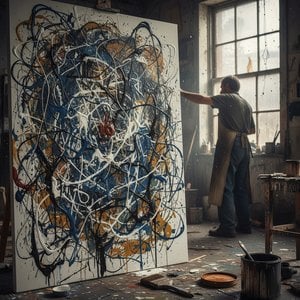
The canvas lies flat upon the floor, stripped of the traditional easel. Here, the artist moves around the perimeter, standing over the work to engage with the medium from all sides. This physical performance turns the act of creation into a rhythmic release of energy. Gravity becomes a primary collaborator, guiding the liquid paint as it falls in unpredictable patterns. The signature drip technique transforms the surface into a record of movement, where splatters and pools of color settle where they land.
Unconventional tools dictate the texture of the work. Sticks, knives, and even syringes are used to manipulate the fluid medium, pushing and pulling the pigment across the surface. These gestures create a dense, layered effect. The resulting surface feels almost sculptural, a thick crust of paint that captures a dynamic, restless energy. Every drip and splash contributes to a complex network of lines that seem to possess a life of their own.
Related Works by the Artist
The evolution of this creative energy continues through other canvases that capture the artist's restless spirit. Around 1945, the work There Were Seven in Eight emerges, reflecting a period of intense development. Shortly after, the composition of Number 3 takes shape about 1948, continuing the exploration of rhythm and movement across the surface. These pieces exist as markers of a shifting approach to the canvas, where the physical act of creation becomes a central part of the visual language.
As the years progress, the intensity of the paint application reaches new heights. In 1950, Lavender Mist, Number 1 appears, presenting a complex network of lines and colors that seem to dance in a state of perpetual motion. This momentum carries forward into 1952 with Blue Poles, Number 11, where the interplay of verticality and chaotic splatters creates a sense of boundless space. Each work acts as a record of a specific moment in time, capturing the pulse of an artist constantly redefining the boundaries of abstraction.
Pytania i odpowiedzi
W jaki sposób "Gothic" wpisuje się w tematykę i styl twórczości Jackson Pollock?
"Gothic" wpisuje się w nurt Abstract Expressionism w twórczości Jackson Pollock, której charakterystyczne motywy obejmują regionalist style, social commentary, american landscape, dynamic rhythm, pollock legacy.
Ile światła zdają się odbijać kolory dzieła "Gothic"?
„Gothic” – Jackson Pollock ma luminancję na poziomie Soft Shadow. Luminancja określa, jak dużą ilość światła zdają się odbijać kolory.
Do którego pomieszczenia w domu najlepiej pasuje reprodukcja "Gothic"?
Dzieło „Gothic” – Jackson Pollock jest rekomendowane do Living Room. Sugestia ta opiera się na tematyce, kolorystyce oraz nastroju pracy.
Podobne dzieła


Jackson Pollock
1912 - 1956, Stany Zjednoczone
Biografia artysty
Wczesne lata, rodzina i kształcenie
Historia, którą napisał Jackson Pollock, bierze swój początek w surowym krajobrazie Cody w stanie Wyoming, gdzie 28 stycznia 1912 roku przyszedł na świat młody chłopiec. Był najmłodszym z pięciu braci, owocem związku Stelli May McClure i LeRoya Pollocka. Jego ojciec pracował jako geodeta, a ten zawód wymuszał nieustanne przemieszczanie się przez bezkresne obszary amerykańskiego Zachodu. To nomadyczne życie sprawiło, że wczesne lata artysty upłynęły pod znakiem częstych przeprowadzek – niepokój ten zdawał się odzwierciedlać zmieniające się horyzonty pracy jego ojca. Te wczesne wędrówki przez Zachód zapewniły mu bezpośrednie, niepośredniczone spotkanie z naturą oraz duchowym rezonansem sztuki rdzennych Amerykanów; wrażenia te cicho osadzały się w jego podświadomości na długo przed tym, zanim po raz pierwszy chwycił za pędzel.
W miarę dorastania, poszukiwanie własnego miejsca na ziemi skierowało go ku miejskiej energii wybrzeża. Zapisał się do Manual Arts High School w Los Angeles, szukając formalnej struktury dla swoich rodzących się impulsów. Jednak prawdziwe ukształtowanie jego warsztatu nastąpiło znacznie później, gdy przeprowadził się do Nowego Jorku. To właśnie tam, w Art Students League, rozpoczął długi i przełomowy okres studiów. Od 1929 do 1942 roku kształcił się pod okiem Thomasa Harta Bentona. Podczas gdy Benton kładł nacisk na rytmiczną kompozycję i narracyjny ciężar amerykańskiego życia, młody student zaczął już wówczas dryfować w stronę własnych, bardziej abstrakcyjnych, wewnętrznych prawd.
Rozwój unikalnej techniki
Do 1947 roku w jego podejściu do płótna zaszła głęboka przemiana. Odsunął od siebie tradycyjną sztalugę, wybierając zamiast tego kładzenie płócien bezpośrednio na podłodze. Ta zmiana pozwoliła mu stanąć nad swoim dziełem, stając się integralną częścią samego aktu twórczego. Nie ograniczał się jedynie do nakładania farby; on ją lał, chlapał i rozrzucał z góry, pozwalając płynnej materii opadać w nieprzewidywalnych wzorach. Metoda ta przekształciła proces malowania w fizyczny performans, w którym to grawitacja i gest dyktowały ostateczny kształt kompozycji.
Jego narzędzia były równie niekonwencjonalne, co same metody. Sięgał po patyki, noże, a nawet strzykawki, aby manipulować płynnym medium. Czasami używał kielni lub rzadkiej, ściekającej farby, by uzyskać specyficzne tekstury. Często drapał powierzchnię lub wykorzystywał dziwne przedmioty, by budować grubą, niemal rzeźbiarską skorupę farby, nadając pracy namacalną, trójwymiarową jakość. Proces ten nie polegał na kontrolowanym prowadzeniu pędzla, lecz na rytmicznym, niemal pierwotnym uwalnianiu energii bezpośrednio na powierzchnię płótna.
Kluczowe dzieła i ekspresja artystyczna
W miarę jak Pollock odchodził od ograniczeń sztalugi, jego płótna zaczęły odzwierciedlać coraz bardziej instynktowne, wręcz wizceralne zaangażowanie w materię malarską. W 1943 roku stworzył Mural, monumentalne dzieło o wymiarach 2,4 na 6,1 m, które udowodniło jego niezwykłą zdolność do panowania nad ogromną powierzchnią. W tym okresie jego poszukiwania w głąb podświadomości oraz sam akt malowania doprowadziły do powstania takich prac jak Eyes in the Heat, powstałych około 1946 roku. Dzieła te nie były jedynie obrazami, lecz zapisem fizycznej obecności, w której ruch całego ciała artysty dyktował rozmieszczenie każdej plamy i kałuży koloru.
Lata, które nadeszły później, przyniosły dopracowanie rytmicznych, kompozycji typu „all-over”, które miały zdefiniować jego sławę. Dążył on do stworzenia poczucia nieskończonej przestrzeni, w której żaden pojedynczy punkt nie dominował nad resztą płótna. Podejście to jest wyraźnie widoczne w Number 1, 1949 – pracy oddającej surowy wybuch energii – oraz w Lavender Mist, Number 1, 1950, która pozostaje jednym z najważniejszych osiągnięć w jego dorobku. W tych kompozycjach gra między kontrolą a przypadkiem tworzy subtelną równowagę, jak gdyby farba została uwolniona, a nie nałożona na podłoże.
Jego późniejsze eksperymenty nieustannie przesuwały granice tego, jak można manipulować farbą na płaskiej, poziomej powierzchni. Często używał patyczków, noży, a nawet samych puszek, by rozbryzgiwać pigment, co skutkowało powstaniem złożonych sieci linii. Metoda ta jest wyraźnie dostrzegalna w Blue Poles, Number 11, 1952 oraz w pełnej energii Convergence. Dzięki tym pracom Jackson Pollock osiągnął stan, w którym obraz zdawał się posiadać własne życie, wyłaniając się z głębokiego zanurzenia w jego własnej wyobraźni.
Mecenasi, pracownia i zlecenia
Droga jego kariery była kształtowana zarówno przez potrzeby publiczne, jak i przez hojność nielicznych, lecz kluczowych protektorów. Między 1938 a 1942 rokiem znajdował stałe zatrudnienie jako malarz w ramach WPA Federal Art Project, co zapewniło niezbędny rytm jego rozwijającej się praktyce twórczej. Ta stabilizacja ustąpiła miejsca bardziej osobistemu i przełomowemu przymierzu, gdy w lipcu 1943 roku Peggy Guggenheim zaoferowała mu kontrakt galeryjny. Jej wsparcie okazało się czymś więcej niż tylko profesjonalnym układem; w 1945 roku przekazała mu 2000 dolarów zaliczki na zakup domu, co było gestem głęboko splatającym jego życie prywatne z artystycznym przetrwaniem.
Jego życie twórcze znalazło w końcu swoje centrum w East Hampton w Nowym Jorku. Tam, w przestrzeni Pollock-Krasner House and Studio, żył i tworzył u boku swojej żony, Lee Krasner. Pracownia ta była miejscem intensywnego ruchu fizycznego, w którym granice między artystą a płótnem ulegały całkowitemu rozmyciu. Często rezygnował z tradycyjnej sztalugi, woląc kłaść płótna bezpośrednio na podłodze, aby móc obcować z farbą z każdej strony. To miejsce pracy nie było jedynie pomieszczeniem do produkcji dzieł, lecz przestrzenią głębokiej, niespokojnej energii, w której rodziły się jego najbardziej radykalne eksperymenty.
Późne lata i śmierć
Prywatne życie artysty było nierozerwalnie splecione z jego twórczymi zmaganiami. W 1945 roku poślubił artystkę Lee Krasner, związek, który stał się kluczowym elementem jego egzystencji w najbardziej przełomowych latach twórczości. Jednak pod powierzchnią profesjonalnych sukcesów i nieustannego wzrostu znaczenia, w cieniu jego życia pozostawał nieustępliwy mrok. Przez całe życie zmagał się z uzależnieniem od alkoholu – walką, która wielokrotnie komplikowała jego codzienność oraz zdolność do radzenia sobie z ogromną presją, jaką niosła ze sobą rosnąca sława.
To wewnętrzne i zewnętrzne rozchwianie doprowadziło do tragicznego finału w East Hampton w stanie Nowy Jork. 11 sierpnia 1956 roku, w wieku zaledwie 44 lat, jego życie zostało brutalnie przerwane w wyniku nagłego, tragicznego wypadku. Podczas jazdy doszło do wypadku samochodowego spowodowanego spożyciem alkoholu. Zderzenie okazało się śmiertelne, pozostawiając po sobie dziedzictwo równie burzliwe i nieprzewidywalne, jak farba, którą Pollock rozlewał na swoich płótnach.
Dziedzictwo i wpływ na sztukę nowoczesną
Echa jego radykalnych metod rozeszły się daleko poza ściany pracowni w East Hampton. Poprzez zerwanie tradycyjnej więzi między pędzlem a sztalugą, Jackson Pollock stał się centralną postacią ruchu ekspresjonizmu abstrakcyjnego – przesunięcia, które fundamentalnie zmieniło trajektorię amerykańskiej kreatywności. Jego obecność pomogła ugruntować pozycję Nowego Jorku jako światowego centrum sztuki nowoczesnej, przenosząc serce awangardy zdominowanej dotychczas przez Europę. Był jednym z pierwszych amerykańskich malarzy uznanych za równorzędnego partnera dla wielkich mistrzów europejskich XX wieku, udowadniając, że nowy, pierwotny język może wyrosnąć bezpośrednio z amerykańskiej ziemi.
Jego wpływ zadziałał jako katalizator dla wielu późniejszych nurtów artystycznych, które podążyły jego śladem. Sposób, w jaki wchodził w relację z płótnem – traktując je jako arenę dla fizycznego działania, a nie jedynie powierzchnię do reprezentacji – otworzył drzwi dla wielu twórców pragnących wyrazić podświadomość poprzez gest. To skupienie na samym procesie tworzenia pozostawiło trwały ślad w historii sztuki nowoczesnej, zapewniając, że spontaniczność i nieplanowane działanie na zawsze zajmą specjalne miejsce w warsztacie artysty.
- Number 1, 1949
- Blue Poles: Number 11, 1952
- Convergence
- Autumn Rhythm. Number 30, 1950
Gdzie dziś można podziwiać jego dzieła
Aby stać twarzą w twarz z fizycznymi śladami jego ruchu, należy udać się do wielkich instytucji, które ocaliły tę radykalną energię od zapomnienia. W Nowym Jorku Museum of Modern Art przechowuje kilka jego płócien, pozwalając widzom stanąć przed rozległymi, pozbawionymi centralnego punktu kompozycjami, które zdefiniowały jego epokę. National Gallery of Art w Waszyngtonie również posiada jego prace, oferując przestrzeń do kontemplacji tych skomplikowanych sieci barw, które artysta osiągnął dzięki swoim unikalnym metodom. Po drugiej stronie Atlantyku, londyńska Tate Gallery podtrzymuje jego obecność w swoich kolekcjach, dbając o to, by jego wpływ sięgał daleko poza brzegi Ameryki.
Dla tych, którzy pragną bardziej intymnego kontaktu z procesem twórczym, Pollock-Krasner House and Studio w East Hampton oferuje głębokie poczucie obcowania z historią. To miejsce, uznane za narodowy zabytek historyczny, było przestrzenią, w której on i jego żona, Lee Krasner, żyli i tworzyli. Rezydencja pozostaje żywym ogniwem łączącym nas z jego życiem, zachowując środowisko, które pielęgnowało jego przejście od tradycyjnych form ku spontanicznym, wykonywanym na podłodze metodom, które zmieniły bieg nowoczesnego malarstwa. Spacerowanie po tych przestrzeniach pozwala poczuć skalę i fizyczną rzeczywistość jego artystycznej walki.
- Number 1, 1949
- Blue Poles: Number 11, 1952
- Mural (1943)
- Convergence


Powiązane artykuły

Paul Jenkins: Abstraction, Color Field Painting & the Pursuit of Lyrical Expression
Explore the captivating world of Paul Jenkins, a pioneer of abstract expressionism & color field painting. Discover his unique ‘Phenomena’ series and investment potential for art collectors. Expert insights at ArtsDot.
Paul Jackson Pollock: A Radical Departure – Exploring Abstract Expressionism's Pioneering Figure and His Enduring Legacy
Explore the revolutionary art of Jackson Pollock & Abstract Expressionism. Discover his iconic drip paintings, lasting impact, and considerations for collecting this pivotal American artist. Expert insights at ArtsDot.

Ekspresjonizm Abstrakcyjny: Emocjonalny Krajobraz Nowojorskiej Awangardy
Poznaj fascynujący świat ekspresjonizmu abstrakcyjnego! Analiza kluczowych artystów, nurtów i wpływu na współczesną sztukę. Ekskluzywne informacje dla kolekcjonerów i miłośników.