


 Zobacz w skali 1:1
 Wyślij
 Udostępnij
 Szczegóły
 Przewodnik

 Pobierz plik obrazu
 Podobne obiekty
 RTG
RTG Pokaz slajdów
 Statystyki
ariosto

 Czytaj więcej
Ręcznie malowana reprodukcja olejowa
Ręcznie malowany obraz olejny na płótnie, wykonany na zamówienie przez naszych artystów w wybranym przez Ciebie wymiarze i oprawie. ( Przełącz na wersję drukowaną Przełącz na wersję cyfrową)




P118B zł10

P118H zł10

P118W zł10

P438Z zł10

P508JH zł12

P508YH zł12

P805H zł10

P805Z zł10

P919BZ zł10

P919G zł10

P919XJ zł10

P959ZH zł10

P968JZ zł12

W106C zł8

W218G zł10

W218JH zł8

W218Y zł10

W307PJ zł10

W316G zł10

W316PJ zł8

W316Y zł10

W398PJ zł8

W4111J zł10

W500HY zł15

W500JH zł15

W692G zł12

W849H zł8

W940BG zł15

W953PJ zł8




Wybierz spośród naszych standardowych rozmiarów, które zachowują oryginalne proporcje dzieła sztuki.

Wpisz wymaganą szerokość i wysokość, aby obraz pasował do Twojej ramy lub ściany. Ponieważ jest to dzieło malowane ręcznie, w przypadku rozmiaru o innym proporcji artysta może domalować nieco więcej wokół obrazu lub przyciąć fragmenty — wybór należy do Ciebie. Przed rozpoczęciem pracy prześlemy Ci cyfrową wizualizację do zatwierdzenia. Obraz widoczny na tej stronie nie przedstawia rzeczywistego efektu — jedynie wizualizacja oddaje realny rezultat.
Po złożeniu zamówienia zespół ArtsDot.com skontaktuje się z klientem drogą mailową w celu uzyskania instrukcji i prześle wizualizację projektu
Dostawa na całym świecie () w ciągu 3–4 tygodni zamiast standardowych 5 tygodni. (24 Październik). Bez kompromisów w kwestii jakości.

Bezpłatna ekspresowa wysyłka na cały świat

Wysokiej jakości płótno lniane

Pełne ubezpieczenie transportowe

Gwarancja zwrotu należności celnych i podatków importowych

Gwarancja idealnego odwzorowania barw

100-dniowy okres na zwrot dzieła w przypadku wykrycia wad produkcyjnych

Gwarancja 100% zwrotu pieniędzy

Oferta przy zakupie wielu sztuk
 Opcja ze szkłem jest dostępna wyłącznie w rozmiarach poniżej 110 cm

ariosto
Technika wykonania
Rozmiar reprodukcji
-


Suma do zapłaty
zł 1009
A Portrait of Fear: Gustave Doré’s “Ariosto”
Gustave Doré's “Ariosto,” a monochromatic pen and ink drawing depicting a grotesque ape-like figure, stands as an arresting testament to Romantic horror illustration. Executed with obsessive detail—a hallmark of Doré’s oeuvre—the artwork plunges viewers into a realm of unsettling psychological depth, prioritizing texture and shading to generate palpable unease. More than merely a depiction of monstrous anatomy, it's a carefully crafted visual meditation on primal terror and the chilling contemplation of human vulnerability.
Technical Mastery: The Language of Line
Doré’s technique is fundamentally rooted in meticulous line work—a process that elevates the drawing beyond mere representation. Dense hatching and crosshatching dominate the composition, forming an intricate network that defines form and volume with astonishing precision. Each stroke contributes to a palpable sense of surface texture, simulating fur, skin wrinkles, and clothing fabric with remarkable accuracy. The artist’s masterful control over line weight—ranging from delicate linework for facial features to bolder strokes delineating musculature—creates dramatic chiaroscuro effects, emphasizing contours and casting shadows that heighten the artwork's emotional impact.
Historical Context: Romantic Horror and Literary Inspiration
Created in 1869, “Ariosto” emerged during a pivotal moment in artistic history – the waning years of Romanticism. Doré’s inspiration stemmed directly from Ludovico Ariosto's epic poem “Orlando Furioso,” a sprawling narrative steeped in medieval legends and infused with themes of chivalry, magic, and moral ambiguity. Ariosto’s tale explores the conflict between Christian morality and Moorish barbarity, providing a rich tapestry for Doré to weave his unsettling vision.
Symbolic Resonance: Beyond Monstrosity
While undeniably grotesque in appearance—characterized by exaggerated features like enormous teeth and prominent brow ridges—the ape-like figure transcends mere visual horror. Symbolically, it speaks to repressed instincts, the darker recesses of human psyche, and perhaps a broader commentary on societal anxieties surrounding the ‘other.’ Doré’s deliberate distortion serves not only to frighten but also to provoke contemplation about fundamental questions concerning humanity's relationship with its own primal impulses.
A Legacy of Unease: Doré’s Enduring Influence
"Ariosto" exemplifies Doré’s signature style—a blend of realism and nightmare aesthetics—that continues to captivate audiences today. Its meticulous execution, coupled with its profound psychological exploration, solidified Doré's position as a pioneer of horror illustration and cemented his enduring legacy as one of the most influential artists of the Victorian era. The artwork remains a powerful reminder that art can transcend mere visual pleasure, delving into the darkest corners of human experience.
Pytania i odpowiedzi
Jaki format i orientacja druku są sugerowane dla „ariosto” autorstwa Gustaw Doro?
Rozmiar Duży format, orientacja Orientacja pionowa: to sugerowane ustawienia druku dla „ariosto” autorstwa Gustaw Doro.
Z czego wykonano "ariosto"?
Gustaw Doro wykorzystał/a technikę Akryl na płótnie w pracy "ariosto". Technika ta definiuje materię oryginalnego dzieła.
Jaki nastrój i emocje łączą się w "ariosto"?
W "ariosto" nastrojowi Dramatyczny towarzyszy emocja Melancholijny.
Podobne dzieła


Biografia artysty
A Life Etched in Shadow and Light: The World of Gustave Doré
Paul Gustave Louis Christophe Doré, known to the world as Gustave Doré, was a figure who straddled the worlds of illustration, painting, and sculpture with an astonishing virtuosity. Born in Strasbourg, France, on January 6th, 1832, his life unfolded during a period of immense social and artistic change, a time when Romanticism still held sway but was giving way to new currents of realism and symbolism. Even as a child, Doré displayed a precocious talent, not merely in drawing—which he began at an incredibly young age—but also in a personality that hinted at the dramatic flair which would come to define his work. Stories abound of youthful pranks demonstrating a maturity beyond his years, foreshadowing the complex and often melancholic themes that would permeate his art. He embarked on his professional career remarkably early, at just fifteen years old, as a caricaturist for the French journal *Le Journal pour rire*, honing his skills in observation and composition within the bustling world of Parisian satire.From Caricature to Literary Giants: The Rise of an Illustrator
Doré’s early commissions laid the foundation for his future renown. Works like *Les Travaux d'Hercule* (1847), *Trois artistes incompris et mécontents* (1851), and *Les Dés-agréments d'un voyage d'agrément* (1851) showcased a burgeoning talent for dynamic composition and a masterful use of light and shadow, even in these relatively modest beginnings. He was deeply influenced by the illustrations of J.J. Grandville, whose fantastical imagery and satirical edge resonated with Doré’s own developing style. However, it was through his collaborations with literary giants that Doré truly ascended to prominence. In 1853, he received a commission to illustrate the works of Lord Byron, an undertaking which opened doors to further prestigious projects. The monumental task of illustrating the Bible followed, a project that would cement his reputation and bring his art before a vast international audience. His illustrations for Cervantes’ *Don Quixote* in the 1860s were particularly impactful, profoundly influencing subsequent interpretations of the characters and narrative. He wasn't merely illustrating these stories; he was reimagining them, imbuing them with a dramatic intensity that captured the imagination of readers worldwide. The oversized edition of Edgar Allan Poe’s “The Raven,” completed in 1883, earned him an impressive 30,000 francs from Harper & Brothers, demonstrating the commercial success alongside the artistic acclaim he had achieved. His collaboration with Blanchard Jerrold on *London: A Pilgrimage* (1872) was a particularly poignant and controversial work, depicting the stark realities of Victorian London’s poverty and sparking debate about social conditions.A Master of Technique: Wood Engraving and Romantic Vision
Doré's artistic prowess lay not only in his imaginative vision but also in his technical mastery, particularly in wood engraving. He possessed an extraordinary ability to create incredibly detailed and dramatic images through this medium, a skill that allowed for the mass production and widespread dissemination of his work. His compositions are characterized by their dynamism, strong contrasts between light and shadow—a technique known as chiaroscuro—and a sense of grandeur that often evokes a feeling of awe or even terror. He frequently employed a large team of block-cutters to translate his designs into wood engravings, enabling the efficient production needed to meet the demands of publishers and readers alike. His style is firmly rooted in the Romantic tradition, emphasizing emotion, imagination, and the sublime—a fascination with the overwhelming power of nature and the human condition. He wasn’t merely recording scenes; he was interpreting them through a lens of heightened emotionality and dramatic flair. This approach, while celebrated by many, also drew criticism from some contemporaries who found his work overly theatrical or sensationalized.Notable Works and Lasting Influence
Doré's artistic output spanned a remarkable range of subjects and styles. His illustrations for Dante’s *Inferno* remain perhaps his most enduring achievement, capturing the terrifying beauty and moral complexity of the poem with unparalleled intensity. Similarly, his interpretations of Milton’s *Paradise Lost* are renowned for their grandeur and dramatic flair, transporting viewers to realms of mythic proportions. Beyond these monumental projects, Doré produced countless illustrations for popular literature, including works by Cervantes, Hugo, and Dickens. His depictions of London—particularly *London: A Pilgrimage*—offered a stark and unflinching portrayal of the city’s social inequalities. His work also included series like “Flower Sellers of London,” which powerfully depicted the lives of ordinary people amidst poverty and hardship. Despite facing some criticism during his lifetime—some found his style overly dramatic or lacking in subtlety—Doré's work is now celebrated for its artistic merit and historical importance. His illustrations continue to shape our understanding of classic literature and Victorian society, offering a powerful visual interpretation of timeless stories and enduring themes. He died on January 23rd, 1883, leaving behind an immense body of work that continues to captivate and inspire. *His art remains a testament to the power of illustration to not only depict but also to interpret and transform the world around us.*Key Figures Influencing Doré
- J.J. Grandville: Doré admired Grandville's fantastical imagery and satirical edge, which influenced his own approach to illustration.
- Lord Byron: The commission to illustrate Byron’s works was a pivotal moment in Doré’s career, providing him with significant recognition and experience.
Major Achievements
- Illustrator of *Don Quixote* (1860-1862) – A monumental achievement that established his reputation as a master illustrator.
- Illustrator of the Bible (1857-1869) – A vast and ambitious project that showcased his technical skill and dramatic vision.
- Creator of *London: A Pilgrimage* (1872) – A powerful depiction of Victorian London’s social inequalities.

Gustaw Doro
1832 - 1883 , Francja
Najważniejsze informacje
- Artistic Movement Or Style: Romantyzm
- Artists Or Movements Influenced By This Artist: ['Vincent van Gogh']
- Artists Who Influenced This Artist: ['J.J. Grandville']
- Date Of Birth: 6 stycznia 1832
- Date Of Death: 23 stycznia 1883
- Full Name: Paul Gustave Doré
- Nationality: Francuz
- Notable Artworks:
- Don Kiszot
- Pająk
- Londyn: Pielgrzymka
- Dante Albigenski
- Place Of Birth: Strasburg, Francja
Zobacz także powiązane artykuły

Paul Gustave Doré: A Master of Romantic Realism & the Illustrated Imagination
Explore the captivating world of Gustave Doré, master of Romantic realism & iconic illustrator. Discover his dramatic wood engravings, paintings, and sculptures – a legacy shaping art history. Learn more at ArtsDot.

Kay Rasmus Nielsen: A Golden Age Illustrator's Enchanting Legacy of Symbolism & Narrative
Explore the captivating world of Kay Rasmus Nielsen, a celebrated Golden Age illustrator renowned for his Art Nouveau fairy tale art & Disney contributions. Discover his unique style, enduring legacy, and how to collect his enchanting works.

The Enduring Legacy of Fine Art Prints: Technique, History & Aesthetic Impact
Explore the rich history & techniques of fine art prints. Discover investment potential, assess authenticity, and learn how to preserve your collection with expert guidance. Trusted insights for discerning collectors.

Odbitki Giclée: Jakość Archiwalna i Estetyczne Niuanse dla Wymagającego Kolekcjonera
Poznaj sekrety druku giclée – technologii zapewniającej najwyższą jakość reprodukcji sztuki i trwałość archiwalaną. Poradnik dla wymagających kolekcjonerów o wyborze papieru, tuszy i profilach kolorystycznych.
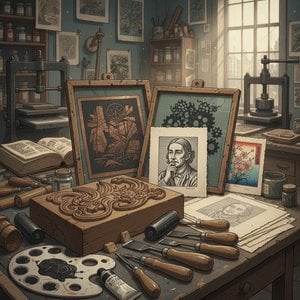
The Enduring Legacy of Printmaking: Techniques, Themes & Artistic Innovation Across Centuries
Explore the rich history of printmaking with ArtsDot. Discover techniques from intaglio to lithography, learn about collecting valuable prints & find museum-quality reproductions. Expert insights for art enthusiasts and collectors.


