- Strona główna

- Reprodukcja obrazu olejnego
- Paul Delvaux
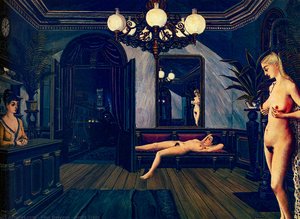
- Śpiąca Wenus

 Zamów wydruk Kup cyfrowy obraz
 Udostępnij
 Udostępnij
 Details
 Dodaj do ulubionych

 Pobierz
 Podobne obiekty
 X-Ray
X-Ray
 Pokaz slajdów
Śpiąca Wenus
 Olej na płótnie
- Sztuka ścienna
- Surrealism
 1943
1943- Nowoczesność
 74.0 x 158.0 cm
Ręcznie malowana reprodukcja olejowa
Ręcznie malowany olej na płótnie w Twoim wymiarze i ramie, tworzony na zamówienie przez naszych artystów.




P118B $10

P118H $10

P118W $10

P438Z $10

P508JH $12

P508YH $12

P805H $10

P805Z $10

P919BZ $10

P919G $10

P919XJ $10

P959ZH $10

P968JZ $12

W106C $8

W218G $10

W218JH $8

W218Y $10

W307PJ $10

W316G $10

W316PJ $8

W316Y $10

W398PJ $8

W4111J $10

W500HY $15

W500JH $15

W692G $12

W849H $8

W940BG $15

W953PJ $8




 Dowiedz się więcej
Wybierz spośród naszych predefiniowanych rozmiarów, które zachowują oryginalne proporcje dzieła sztuki.

Możesz wprowadzić własne wymiary, aby dopasować obraz do konkretnej ramy lub przestrzeni. Jeśli wybrany rozmiar nie będzie odpowiadał proporcjom oryginału, przytniecie dzieło sztuki lub rozszerzymy je o dodatkowe elementy, ręcznie domalowane przez artystę. Przed rozpoczęciem produkcji wyślemy projekt cyfrowy do Twojej akceptacji.
Należy pamiętać, że podgląd na ekranie nie odzwierciedla rzeczywistego przycinania ani rozszerzania obrazu. Tylko projekt dokładnie pokaże ostateczną kompozycję.
Choć oferujemy możliwość zamówienia niestandardowych rozmiarów, zalecamy wybór wymiaru z gotowej listy, aby zachować oryginalne proporcje dzieła.
Po złożeniu zamówienia zespół ArtsDot.com skontaktuje się z klientem drogą mailową w celu uzyskania instrukcji i prześle wizualizację projektu
Dostawa na całym świecie () w ciągu 3/4 tygodni zamiast standardowych 5 tygodni. (1 Lipiec). Bez kompromisów w kwestii jakości.

Bezpłatna ekspresowa wysyłka na cały świat

Wysokiej jakości płótno lniane

Pełne ubezpieczenie przesyłki

Gwarancja zwrotu należności celnych

Gwarancja pełnego zgodności kolorystycznej

Polityka 60-dniowego zwrotu (tylko w przypadku wad)

Gwarancja 100% zwrotu pieniędzy

Zniżka przy większych zamówieniach
 Opcja szkła jest dostępna wyłącznie w rozmiarach poniżej 110 cm

Śpiąca Wenus
Technika reprodukcji
Wymiary reprodukcji
-


Cena całkowita
-
Opis dzieła
The Sleeping Venus
Paul Delvaux's “The Sleeping Venus” (1943) is a captivating oil painting that invites viewers into a dreamlike world where classical beauty meets surrealist intrigue. This mesmerizing artwork blends the serene elegance of a reclining Venus with the dramatic tension of her surroundings, creating a timeless piece that resonates with art lovers and collectors alike.
A Surrealist Vision
Delvaux, a Belgian painter renowned for his surrealist style, masterfully combines classical mythology with unsettling imagery. His work is characterized by dreamlike landscapes, enigmatic figures, and a meticulous attention to detail that draws viewers into a world of fantasy and mystery. “The Sleeping Venus” exemplifies this unique fusion, where the calm repose of the central figure contrasts sharply with the anguished expressions of the surrounding figures.
Composition and Technique
The painting's composition is structured around a central reclining figure on a chaise longue, surrounded by three other figures engaged in various activities. The setting is an open-air pavilion or terrace adorned with classical columns and distant buildings, creating a sense of depth and perspective. Delvaux employs strong horizontal and vertical lines through the architectural elements, providing structure and balance to the scene.
The color palette is earthy and muted, dominated by warm tones of browns, ochres, and blues. The central figure's blue drapery contrasts with the lighter tones of the other figures' clothing and the neutral background. Delvaux’s use of soft, diffused lighting enhances the serene atmosphere, while his meticulous brushwork captures the textures and forms with remarkable realism.
Historical Context
"The Sleeping Venus" was painted in 1943 during World War II, a period marked by turmoil and uncertainty. Delvaux sought to contrast the psychological drama of the time with the calm and tranquility of Venus, creating a piece that transcends its historical context. The painting reflects Delvaux’s fascination with classical mythology and his exploration of themes such as desire, horror, eroticism, and death.
Symbolism and Emotional Impact
The central figure of the sleeping Venus symbolizes peace and contemplation, while the surrounding figures represent different aspects of human experience. The juxtaposition of calm and violence creates a sense of tension and intrigue, inviting viewers to interpret the narrative in their own way. The classical setting adds a layer of historical and cultural significance, making the artwork a rich tapestry of meaning.
The emotional impact of “The Sleeping Venus” is profound, evoking a sense of timelessness and serenity. The painting’s dreamlike quality transports viewers to a world where beauty and mystery coexist, offering a moment of escape and reflection in our fast-paced modern lives.
Why Choose This Reproduction?
For art lovers, collectors, and interior designers seeking to add a touch of elegance and intrigue to their spaces, “The Sleeping Venus” is an exquisite choice. Its timeless beauty and surrealist allure make it a stunning centerpiece for any room. Whether displayed in a private collection or a public space, this high-quality reproduction captures the essence of Delvaux’s masterpiece, bringing a sense of wonder and inspiration to your environment.
Podobne dzieła sztuki


Biografia artysty
A Dream Weaver: The Life and Art of Paul Delvaux
Paul Delvaux, a name synonymous with haunting beauty and unsettling mystery, was born in 1897 in the small Belgian village of Wanze – a place that would profoundly shape his artistic vision. His early life, steeped in both rigorous academic training and the fantastical worlds conjured by literature and myth, laid the foundation for his unique approach to Surrealism. Initially destined for a career in architecture by his parents, Delvaux’s passion for painting ultimately prevailed, leading him to enroll at the prestigious Académie Royale des Beaux-Arts in Brussels. While he struggled with the demanding structure of architectural design, the artistic training instilled within him a remarkable command of perspective and form – skills that would later be brilliantly employed in crafting his dreamlike landscapes. Early works, primarily landscapes painted in a post-impressionist style, hinted at the peculiar atmosphere that would become his signature, yet they also reflected a grounding in classical techniques.The Seeds of Surrealism: De Chirico and Early Influences
A pivotal moment arrived with Delvaux’s encounter with the paintings of Giorgio de Chirico. The Italian artist's metaphysical landscapes – stark, enigmatic scenes populated by shadows, classical architecture, and unsettling figures – resonated deeply within Delvaux’s soul, unlocking a new realm of possibilities. De Chirico’s ability to evoke a sense of unease and psychological depth profoundly influenced Delvaux’s artistic direction. He wasn't merely copying de Chirico; he was absorbing the *spirit* of his work, adapting it to his own unique sensibility. Alongside de Chirico, Delvaux also found inspiration in the works of Flemish Expressionists like Constant Permeke and Gustave De Smet, whose somber palettes and emotionally charged brushwork added another layer of complexity to his artistic vocabulary. The influence of Homer’s *Odyssey* and Jules Verne's adventurous tales further fueled his imagination, imbuing his paintings with a sense of timelessness and the allure of the unknown. This confluence of influences – classical precision, psychological depth, and fantastical imagery – began to coalesce into Delvaux’s distinctive style.The Language of Dreams: Recurring Motifs and Symbolism
Delvaux's artistic language is characterized by a rich tapestry of symbolism, though he consistently resisted attempts at reductive psychoanalytic interpretations. The female nude, a recurring motif in his work, rarely embodies simple sensuality; instead, she often appears passive, melancholic, or even haunted – embodying both desire and vulnerability. Trains and railway stations frequently serve as potent symbols of transition, displacement, and the anxieties inherent in modern life. Skeletons, far from being morbid reminders of death, are presented as spectral presences, subtly reminding us of our mortality while existing within idyllic scenes. Classical architecture provides a backdrop of order and permanence, yet it is often rendered strangely distorted or incomplete, suggesting a fragility beneath its imposing facade. These elements aren’t merely decorative; they are integral to the emotional and psychological impact of his paintings. Consider *Night Train*, for example – the anonymous figures, the looming architecture, and the palpable sense of impending doom create an unforgettable image that speaks to our deepest anxieties. The artist himself emphasized that his imagery stemmed from deeply personal memories and impressions, rather than deliberate attempts at decoding the subconscious.From Neo-Impressionism to Surrealist Recognition
Delvaux’s artistic journey wasn't a straightforward progression; he navigated various stylistic influences before fully embracing Surrealism. Initially working in a neo-impressionist style, characterized by meticulous detail and vibrant colors, his early landscapes reflected this academic grounding. However, after encountering the works of de Chirico and Magritte, Delvaux began to experiment with more irrational and dreamlike imagery. He traveled through Italy during World War II, immersing himself in the classical architecture and artistic traditions of that country, which further informed his style. He officially joined the Surrealist movement in 1934, participating in an exhibition organized by André Breton, though he maintained a degree of independence from the group’s rigid ideological framework. His paintings – such as *Sleeping Venus*, *The Summer*, and *Grise City* – became instantly recognizable for their haunting beauty and unsettling atmosphere. Major works like *Sleeping Venus* are now held in prestigious museums worldwide, cementing his place as one of the most important artists of the 20th century.Legacy and Enduring Influence
Paul Delvaux’s legacy extends far beyond his own lifetime. His paintings continue to captivate audiences with their haunting beauty and enigmatic atmosphere, prompting viewers to confront unsettling questions about reality, desire, and mortality. He demonstrated that Surrealism could exist beyond the confines of automatic writing and dream analysis, embracing instead a meticulous technique and a deeply personal vision. The Paul Delvaux Museum in Saint-Idesbald, Belgium, stands as a testament to his lasting impact, housing the world’s largest collection of his work and offering visitors an intimate glimpse into the captivating realm of his imagination. His influence can be seen in the works of countless contemporary artists who continue to explore themes of memory, desire, and the subconscious – ensuring that Delvaux's dreamlike visions will endure for generations to come.
Paul Delvaux
1897 - 1994 , Belgia
Kluczowe informacje
- Artistic Movement Or Style: Surrealizm
- Artists Or Movements Influenced By This Artist:
- Neoimpresjonizm
- Ekspresjonizm
- Artists Who Influenced This Artist:
- De Chirico
- Magritte
- Date Of Birth: 23 września 1897
- Date Of Death: 20 lipca 1994
- Full Name: Paul Delvaux
- Nationality: Belgijski
- Notable Artworks:
- Śpiąca Wenus
- Nocny pociąg
- Miasto szarości
- Place Of Birth: Wanze, Belgia
Powiązane artykuły

Połączenie Technologii i Tradycji: Współczesny Proces Tworzenia Indywidualnych Obrazów
Odkryj sztukę malarstwa olejnego na zamówienie! Ręcznie malowane reprodukcje i portrety z dbałością o każdy detal. Flamandzka technika, najwyższa jakość materiałów i indywidualne podejście do klienta. Stwórz arcydzieło dla swojego wnętrza!


The Enigmatic Realm of Paul Delvaux: Surrealism, Memory & the Poetics of Disquiet
Explore the haunting dreamscapes of Paul Delvaux, a master of Surrealism. Discover his iconic motifs, classical influences & enduring legacy with ArtsDot.com.
10 Arcydzieł Malarstwa Olejnego, Które Zmieniły Historię Sztuki | ArtsDot.com
Poznaj 10 legendarnych arcydzieł malarstwa olejnego, które na zawsze zmieniły historię sztuki! Odkryj historie van Gogha, Moneta i Rembrandta. Reprodukcje obrazów najwyższej jakości – ArtsDot.com. Eksploruj kolekcję online!

Surrealizm: Ewolucja Sztuki i Wpływ na Kulturę XX Wieku – Od Manifestu do Współczesności
Poznaj historię surrealizmu – od narodzin w 1920 roku po wpływ na współczesną sztukę i kulturę. Analiza technik, kluczowych artystów (Dalí, Magritte) i związku z psychoanalizą Freuda. Ekspercka wiedza o nadrealizmie!

10 Legendarnych Obrazów Olejnych na Desce, Które Zmieniły Sztukę | ArtsDot
Odkryj 10 legendarnych obrazów olejnych na desce, które zrewolucjonizowały świat sztuki! Van Gogh, Munch i Klimt – poznaj historie arcydzieł impresjonizmu, ekspresjonizmu i realizmu. Znajdź inspiracje do wnętrz i reprodukcje najwyższej jakości na ArtsDot.com