

 Podgląd w skali 1:1
 Wyślij jako kartkę
 Udostępnij
 Szczegóły dzieła
 Przewodnik

 Pobierz obraz
 Podobne obiekty
 RTG
RTG Pokaz slajdów
 Q&A
Q&A Statystyki
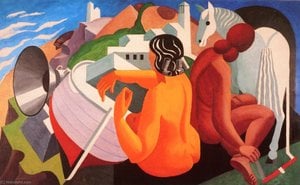
Orpheus and Eurydice
 Rozwiń treść
Dzieło sztuki prezentowane na tej stronie podlega ochronie prawem autorskim, co oznacza, że nie mamy prawa do tworzenia ani sprzedaży jego identycznej reprodukcji. Ochrona ta jest egzekwowana na mocy umów międzynarodowych, takich jak Konwencja berneńska oraz przez przepisy prawa krajowego, w tym te określone w Prawo autorskie USA – Tytuł 17.
Metoda ta jest w pełni zgodna z przepisami prawa autorskiego, ponieważ nie polega na kopiowaniu ani powielaniu chronionego dzieła. Stanowi ona kreatywną reinterpretację – nowy obraz, który czerpie inspirację z oryginału, ale nie jest z nim tożsamy.
Giclée / Wydruk artystyczny
Wydruki giclée lub płótna o jakości muzealnej, szybka realizacja i szeroki wybór opcji wykończenia. ( Zamów ręcznie malowaną reprodukcję Przejdź do wersji cyfrowej)




































Wybierz spośród naszych standardowych rozmiarów, które zachowują oryginalne proporcje dzieła sztuki.

Wpisz wymaganą szerokość i wysokość, aby dopasować grafikę do ramy lub ściany. Wydruk można jedynie przyciąć, nigdy nie powiększając go poza oryginalny obraz, dlatego format o innych proporcjach spowoduje utratę części kompozycji. Przed rozpoczęciem druku prześlemy Ci cyfrowy podgląd do zatwierdzenia. Obraz wyświetlany na tej stronie nie pokazuje rzeczywistego przycięcia — jedynie podgląd oddaje ten efekt.
Dostawa na cały świat () w ciągu 2 tygodni zamiast standardowych 4/5 tygodni. (2 Listopad)

Bezpłatna ekspresowa wysyłka na cały świat

Wysokiej jakości płótno lniane

Pełne ubezpieczenie przesyłki

Gwarancja zwrotu należności celnych i podatków importowych

Gwarancja wiernego odwzorowania kolorów

100-dniowa polityka zwrotów (tylko w przypadku wad)

Gwarancja 100% zwrotu pieniędzy

Zniżka przy zakupie wielu sztuk
 Opcja ze szkłem jest dostępna wyłącznie w rozmiarach poniżej 110 cm

Orpheus and Eurydice
Giclée / Wydruk artystyczny
Wymiary reprodukcji
-


Cena całkowita
zł 241
Podobne dzieła



Biografia artysty
The lines of a dual life
Nikos Engonopoulos lived through a period where the boundaries between words and images often blurred. Born in Athens in 1907, his early years were marked by a move to Constantinople during the first World War. This movement between places preceded a formative time in Paris, where he studied at a lycee from 1923 to 1927. Upon returning to Greece, he followed the path of many of his generation, completing military service and working in various roles, from a bank translator to a designer for the Urban Planning Department of the Greek Ministry of Public Works.
His training at the Athens School of Fine Arts between 1932 and 1938 brought him into contact with teachers like Konstantinos Parthenis and Yannis Kefallinos. He also spent time as an apprentice to Fotis Kontoglou, absorbing the spirit of Byzantine art. This education was not confined to a single classroom; he sought out independent studies in Munich and several Italian cities. These varied exposures allowed him to develop a way of seeing that pulled from many different eras at once.
A language of symbols
The work produced by Engonopoulos often relies on the unexpected placement of figures. He used techniques such as egg tempera on wood, engraving, and woodcutting to bring together elements that do not naturally belong in the same space. His paintings frequently feature mythological characters, military figures, and the female form, all set against a backdrop that feels both ancient and modern. There is a specific way he uses color and drawing to connect the traditions of Byzantine iconography with the more fragmented logic of surrealism.
His creative output was never limited to the canvas. He was equally active in writing, producing poetry that shared the same surrealist impulses as his visual art. His collections, such as Do Not Distract the Driver and The Clavicembalos of Silence, used language to create much like his paintings used pigment. He also worked in theatre, designing costumes and creating mock-ups for plays like Caesar and Cleopatra. The way he approached a stage set or a book illustration was tied to the same interest in historical and folk Greek imagery.
Recognition and presence
The reception of his work was not always quiet. His first solo exhibition in 1939 drew sharp reactions from critics, yet he continued to build a steady presence in the Greek art scene. He was a founding member of the Armos art group in 1964 and later served as a professor of painting at the National Technical University of Athens. His reach extended beyond Greece, notably representing the country at the Venice Biennale in 1954 and participating in the Sao Paulo Biennale the following year.
Throughout his life, he received several honors for his contributions to both literature and the visual arts, including the First Poetry Award from the Greek Ministry of Education in 1958 and the Gold Cross of George I in 1966. His paintings remain in significant collections, such as the National Gallery of Greece and the Benaki Museum. He passed away in Athens in 1985, leaving behind a body of work that remains tied to the specific historical and cultural textures of the 20th century.

Nikos Engonopoulos
1907 - 1985
Krótka nota
- Artistic Movement Or Style: Surrealism, Generation of the '30s
- Artists Who Influenced This Artist:
- Andreas Embirikos
- Yannis Tsarouchis
- Giorgio de Chirico
- Yannis Moralis
- Lautreamont
- Full Name: Nikos Engonopoulos
- Nationality: Greek
- Notable Artworks:
- Bolivar, a Greek Poem
- The Death of Archimedes
- Two Philosophers and a Soldier
- Orpheus
- Place Of Birth: Athens, Greece
- Date Of Birth: 1907
- Date Of Death: 1985