


 Wyślij
 Udostępnij
 Szczegóły
 Przewodnik

 Pobierz plik obrazu
 Podobne obiekty
 Pokaz slajdów
 Statystyki
Amphitrite
 Sculpture
- Sculpture
- Symbolism
 1898
1898- 19th Century
 47.0 x 178.0 cm
 Alte Nationalgalerie
 Czytaj więcej
Ręcznie malowana reprodukcja olejowa
Ręcznie malowany obraz olejny na płótnie, wykonany na zamówienie przez naszych artystów w wybranym przez Ciebie wymiarze i oprawie. ( Przełącz na wersję drukowaną Przełącz na wersję cyfrową)




































Wybierz spośród naszych standardowych rozmiarów, które zachowują oryginalne proporcje dzieła sztuki.

Wpisz wymaganą szerokość i wysokość, aby obraz pasował do Twojej ramy lub ściany. Ponieważ jest to dzieło malowane ręcznie, w przypadku rozmiaru o innym proporcji artysta może domalować nieco więcej wokół obrazu lub przyciąć fragmenty — wybór należy do Ciebie. Przed rozpoczęciem pracy prześlemy Ci cyfrową wizualizację do zatwierdzenia. Obraz widoczny na tej stronie nie przedstawia rzeczywistego efektu — jedynie wizualizacja oddaje realny rezultat.
Po złożeniu zamówienia zespół ArtsDot.com skontaktuje się z klientem drogą mailową w celu uzyskania instrukcji i prześle wizualizację projektu
Dostawa na całym świecie () w ciągu 3–4 tygodni zamiast standardowych 5 tygodni. (20 Październik). Bez kompromisów w kwestii jakości.

Bezpłatna ekspresowa wysyłka na cały świat

Wysokiej jakości płótno lniane

Pełne ubezpieczenie transportowe

Gwarancja zwrotu należności celnych i podatków importowych

Gwarancja idealnego odwzorowania barw

100-dniowy okres na zwrot dzieła w przypadku wykrycia wad produkcyjnych

Gwarancja 100% zwrotu pieniędzy

Oferta przy zakupie wielu sztuk
 Opcja ze szkłem jest dostępna wyłącznie w rozmiarach poniżej 110 cm

Amphitrite
Technika wykonania
Rozmiar reprodukcji
-


Suma do zapłaty
zł 997
The Genesis of a Sea Goddess
Max Klinger’s “Amphitrite,” completed in 1898, isn't merely a portrait; it’s an invocation. Born from a single, substantial marble step salvaged from the Greek island of Syros, the sculpture embodies a profound yearning for transcendence—a desire to bridge the gap between disparate artistic realms. Klinger, already a recognized figure within the burgeoning Symbolist movement, sought not simply to replicate reality but to distill its essence, its hidden currents and emotional weight. The provenance of the stone itself – bearing the inscription “Amphitrite,” referencing the Greek sea goddess surrounded by the ocean—suggests an immediate resonance with the work’s core themes: fluidity, mystery, and a connection to primordial forces.

Max Klinger, Amphitrite, 1898
A Fragmented Ideal – Form and Flesh
The sculpture’s power lies in its deliberate ambiguity. The figure of Amphitrite is presented with a striking lack of completion; her arms are conspicuously absent, a consequence of the stone's original dimensions. This fragmentation isn’t a flaw but rather an integral element of Klinger’s artistic strategy. He deliberately resists the idealized forms prevalent in classical sculpture, opting instead for a subtly naturalistic treatment of the flesh and draperies. The musculature is hinted at, not overtly defined, and the folds of the fabric possess a remarkable sense of movement—a suggestion of constant flow and transformation, mirroring the ceaseless motion of the sea itself. This deliberate departure from rigid classical ideals reflects Klinger’s engagement with modernism, prioritizing psychological depth and emotional resonance over strict adherence to established aesthetic conventions.
Symbolic Depths – The Sea as Metaphor
Beyond its purely visual qualities, “Amphitrite” is saturated with symbolism. As the goddess of the sea, she represents not just water but also intuition, emotion, and the subconscious—elements often associated with the feminine principle in mythology. The missing arms can be interpreted as a symbolic shedding of earthly constraints, an embrace of the boundless potential of the unseen realms. The choice of marble, a material historically linked to divinity and permanence, further elevates the sculpture’s spiritual significance. Klinger's exploration of the human torso, a recurring motif in his work, reveals a fascination with the complexities of the body—its vulnerability, its strength, and its capacity for both beauty and torment.
A Legacy of Shadowed Beauty
Max Klinger’s “Amphitrite” stands as a testament to the Symbolist movement's ability to imbue everyday materials with profound meaning. It is a work that invites contemplation, prompting viewers to consider not only the beauty of its form but also the hidden depths of human experience. Klinger’s masterful manipulation of light and shadow, combined with his deliberate use of fragmentation and ambiguity, creates an image that is both hauntingly beautiful and deeply unsettling—a reflection of the complexities inherent in our relationship with the natural world and the mysteries of the human psyche. Reproductions capture a fraction of this power, offering a glimpse into the artist’s visionary spirit.
Pytania i odpowiedzi
Jakie emocje budzą kolory w „Amphitrite” autorstwa Max Klinger?
W "Amphitrite" kolory Neutrals towarzyszą Melancholic nastrojowi.
Gdzie mogę kupić ręcznie malowaną reprodukcję dzieła „Amphitrite” autorstwa Max Klinger?
"Amphitrite" jest dostępny jako ręcznie malowana reprodukcja olejowa na płótnie lnianym. Zamówienie można złożyć na stronie Ręcznie malowana reprodukcja, wybierając preferowany rozmiar.
Jak mogę odkryć dzieła zbliżone do „Amphitrite” autorstwa Max Klinger?
Dzieła podobne do „Amphitrite” znajdują się na stronie Podobne dzieła danego dzieła.
Podobne dzieła


Biografia artysty
The Shadowed World of Max Klinger: A Pioneer of Symbolism
Max Klinger, born in Leipzig in 1857, emerged as a pivotal figure bridging the gap between Realism and the burgeoning world of Symbolism. His artistic journey wasn’t one of immediate recognition but rather a gradual unfolding of a unique vision—a descent into the psychological depths that would profoundly influence modern art. Klinger's early training at the Academy of Fine Arts in Karlsruhe, under Karl Gussow, provided him with a solid foundation in traditional techniques, yet it was his fascination with the etchings of artists like Menzel and Goya that truly ignited his imagination. These masters demonstrated the power of printmaking to convey not merely visual representation but also narrative complexity and emotional intensity—qualities Klinger would masterfully employ throughout his career. He wasn’t content simply to depict the world as it appeared; he sought to unveil its hidden currents, its anxieties, and its dreams.From Realism's Embrace to Symbolic Depths
Klinger’s artistic evolution was marked by a deliberate shift away from straightforward realism towards a more subjective and symbolic language. Initially, his work reflected the prevailing aesthetic of the time—detailed depictions of everyday life. However, this phase proved merely a stepping stone. The turning point came with his series of etchings, Paraphrase on the Finding of a Glove (1881). This ambitious project, comprising ten plates, wasn’t a literal illustration of an event but rather a fragmented, dreamlike exploration of desire, loss, and the complexities of human relationships. The glove itself became a potent symbol—a relic imbued with memory and longing. This series established Klinger as a leading voice in the Symbolist movement, demonstrating his ability to transform ordinary objects into vehicles for profound psychological insight. He wasn’t interested in simply showing what things looked like; he wanted to convey what they *felt* like, what they represented on a deeper, more subconscious level. The images are filled with an unsettling beauty and a sense of melancholy that continues to captivate viewers today.Sculpture, Printmaking and the Exploration of Myth
Klinger's artistic output was remarkably diverse, encompassing painting, sculpture, and printmaking—though it’s arguably in the realm of graphic arts that he achieved his most enduring legacy. His prints are characterized by their meticulous technique, dramatic use of light and shadow, and haunting imagery. He wasn’t afraid to tackle challenging themes—mortality, sexuality, and the darker aspects of the human psyche. Beyond Paraphrase on the Finding of a Glove, works like his depictions of Faustian bargains and mythological scenes reveal a fascination with archetypal narratives and universal human struggles. His sculptural work, though less prolific than his prints, was equally ambitious. A prime example is his monumental installation in homage to Beethoven at the Vienna Secession in 1902—a powerful testament to the composer’s genius and a bold statement of artistic innovation. Klinger's sculptures were often deliberately unsettling, challenging conventional notions of beauty and form. They are not meant to be comforting or reassuring; rather, they invite contemplation and provoke emotional responses.Influences and Artistic Development
Klinger’s artistic development was shaped by a complex interplay of influences. His early training under Karl Gussow instilled in him a respect for traditional techniques and a grounding in academic principles. However, it was his exposure to the works of Menzel, Goya, and other masters that broadened his horizons and encouraged him to experiment with new forms of expression. He deeply admired the work of Francisco Goya, particularly his ability to capture human suffering and social injustice through powerful imagery. The influence of Japanese woodblock prints—which he encountered during his time in Berlin—also played a significant role in shaping his aesthetic sensibilities. Klinger was drawn to the Japanese emphasis on simplicity, understatement, and the use of negative space. He also found inspiration in the writings of philosophers such as Arthur Schopenhauer and Friedrich Nietzsche, whose ideas about pessimism, irrationality, and the subconscious profoundly influenced his artistic vision.Legacy and Influence: A Bridge to Modernity
Max Klinger’s influence extended far beyond his own lifetime. He paved the way for Expressionism, Surrealism, and other avant-garde movements that sought to explore the inner world of human experience. His emphasis on symbolism, psychological depth, and subjective interpretation resonated with artists grappling with the anxieties and uncertainties of the modern age. The artist’s exploration of dreamlike states and subconscious desires anticipated the work of later Surrealists like Salvador Dalí and René Magritte. Even in more recent times, Klinger's ideas continue to resonate with contemporary artists. In 1991, the Moscow art collective Inspection Medical Hermeneutics created “Klinger’s Boxes,” an installation directly inspired by his work—a testament to the enduring power of his vision. Klinger remains a crucial figure in understanding the transition from 19th-century academic traditions to the radical experimentation of the 20th century. His art invites us to confront our own shadows, to delve into the mysteries of the human psyche, and to recognize the profound beauty that can be found even in the darkest corners of existence.Notable Works & Continued Relevance
Beyond the celebrated Paraphrase on the Finding of a Glove, Klinger’s oeuvre boasts numerous significant pieces. Paintings like “Karl Haberstock,” showcasing his influence on fellow artists, and works reflected in collections at Kunstsammlungen und Museen Augsburg demonstrate his broad impact. His monochrome photographs, such as "Days Of March III," with their intriguing UFO sightings, reveal a willingness to embrace the unconventional and explore the boundaries of perception. Klinger’s art isn't merely historical; it remains strikingly relevant today. In an era defined by uncertainty and rapid change, his exploration of psychological themes—anxiety, alienation, and the search for meaning—continues to resonate with audiences worldwide. His legacy is a reminder that true artistic innovation lies not in simply replicating reality but in revealing its hidden depths and challenging our preconceived notions about the world around us.
Max Klinger
1857 - 1920 , Niemcy
Najważniejsze informacje
- Artistic Movement Or Style: Symbolizm
- Artists Or Movements Influenced By This Artist: ['Expressionizm']
- Artists Who Influenced This Artist:
- Menzel
- Goya
- Date Of Birth: 1857
- Date Of Death: 1920
- Full Name: Max Klinger
- Nationality: Niemiec
- Notable Artworks:
- Rękawiczka
- Beethoven
- Paraphrasa
- Place Of Birth: Lipsk, Niemcy
Zobacz także powiązane artykuły

10 Legendarnych Brązów, Które Zrewolucjonizowały Sztukę | ArtsDot
Odkryj 10 legendarnych rzeźb brązowych, które zrewolucjonizowały sztukę! Poznaj historie Rodina, Donatello i innych mistrzów. Inspiracje wnętrzarskie & reprodukcje najwyższej jakości na ArtsDot.com.

10 Legendarnych Brązów Rzeźbiarskich, Które Zmieniły Sztukę | ArtsDot
Odkryj 10 legendarnych rzeźb brązowych od Rodina, Degasa i innych mistrzów! Poznaj historię powstania arcydzieł sztuki i inspiruj się do dekoracji wnętrz. Reprodukcje najwyższej jakości na ArtsDot.com – zobacz kolekcję!
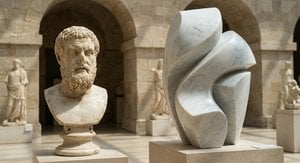
Urok marmuru w historii sztuki: od klasycznej rzeźby do nowoczesnej abstrakcji
Odkryj fascynującą historię rzeźby marmurowej – od klasycznych arcydzieł po nowoczesną abstrakcję. Poznaj techniki, artystów i wartość kolekcjonerską tego wyjątkowego medium. Ekspercka analiza dla miłośników sztuki.

Trwałe Formy: Ewolucja Technik i Tematów w Rzeźbie Przez Wieki – Od Antyku do Renesansu
Poznaj fascynującą historię rzeźby od antyku do renesansu! Odkryj techniki, wybitnych artystów i wpływ na współczesną sztukę. Ekspercka analiza dla kolekcjonerów i miłośników.

Trwała Forma: Rzeźba w Historii – Technika i Rezonans Emocjonalny
Poznaj historię rzeźby od antyku do współczesności! Ekspercka analiza technik, stylów i emocjonalnego wpływu arcydzieł. Inspiracje dla kolekcjonerów i miłośników sztuki.