
 Podgląd w skali 1:1
 Wyślij jako kartkę
 Udostępnij
 Szczegóły dzieła
 Przewodnik

 Pobierz obraz
 Podobne obiekty
 RTG
RTG Pokaz slajdów
 Pytania i odpowiedzi
 Statystyki
Still Life with Three Skulls


 Rozwiń treść
Giclée / Wydruk artystyczny
Wydruki giclée lub płótna o jakości muzealnej, szybka realizacja i szeroki wybór opcji wykończenia. ( Zamów ręcznie malowaną reprodukcję Przejdź do wersji cyfrowej)




P118B zł10

P118H zł10

P118W zł10

P438Z zł10

P508JH zł12

P508YH zł12

P805H zł10

P805Z zł10

P919BZ zł10

P919G zł10

P919XJ zł10

P959ZH zł10

P968JZ zł12

W106C zł8

W218G zł10

W218JH zł8

W218Y zł10

W307PJ zł10

W316G zł10

W316PJ zł8

W316Y zł10

W398PJ zł8

W4111J zł10

W500HY zł15

W500JH zł15

W692G zł12

W849H zł8

W940BG zł15

W953PJ zł8




Wybierz spośród naszych standardowych rozmiarów, które zachowują oryginalne proporcje dzieła sztuki.

Wpisz wymaganą szerokość i wysokość, aby dopasować grafikę do ramy lub ściany. Wydruk można jedynie przyciąć, nigdy nie powiększając go poza oryginalny obraz, dlatego format o innych proporcjach spowoduje utratę części kompozycji. Przed rozpoczęciem druku prześlemy Ci cyfrowy podgląd do zatwierdzenia. Obraz wyświetlany na tej stronie nie pokazuje rzeczywistego przycięcia — jedynie podgląd oddaje ten efekt.
Dostawa na cały świat () w ciągu 2 tygodni zamiast standardowych 4/5 tygodni. (5 Listopad)

Bezpłatna ekspresowa wysyłka na cały świat

Wysokiej jakości płótno lniane

Pełne ubezpieczenie przesyłki

Gwarancja zwrotu należności celnych i podatków importowych

Gwarancja wiernego odwzorowania kolorów

100-dniowa polityka zwrotów (tylko w przypadku wad)

Gwarancja 100% zwrotu pieniędzy

Zniżka przy zakupie wielu sztuk
 Opcja ze szkłem jest dostępna wyłącznie w rozmiarach poniżej 110 cm

Still Life with Three Skulls
Giclée / Wydruk artystyczny
Wymiary reprodukcji
-


Cena całkowita
zł 246
A Memento Mori in Modernity
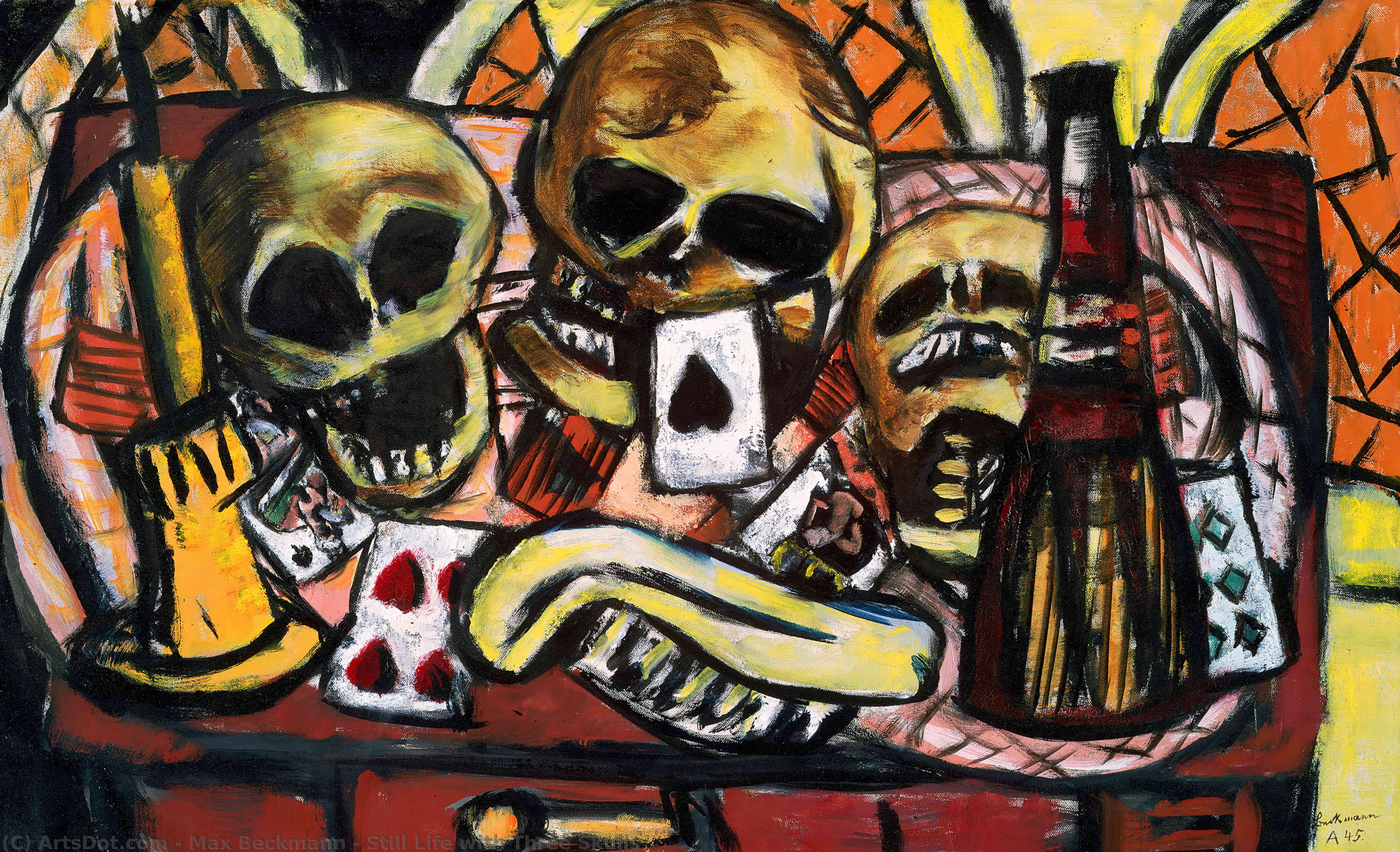
In the hauntingly evocative Still Life with Three Skulls, the viewer is invited into a somber, introspective space where the boundaries between life and death blur through the lens of German Expressionism. Max Beckmann, a master of capturing the psychological weight of the human condition, presents a composition that transcends mere tabletop arrangement. The painting features three skulls arranged across a dark, textured surface, their hollow sockets staring back with an unsettling permanence. Interspersed among these skeletal remains are various bottles and a solitary knife, objects that ground the macabre subject matter in a domestic, almost mundane reality. This juxtaposition creates a profound tension, as the everyday items of life sit alongside the undeniable symbols of mortality.
The technique employed by Beckmann is nothing short of visceral. Eschewing the delicate smoothness of classical still lifes, he utilizes a bold, distorted approach to space and form that reflects his experience as a medical orderly during World War I. The brushwork feels heavy and deliberate, imbuing each object with a sense of sculptural weight. There is a rhythmic quality to the placement of the bottles—one perched in the upper right, another near the center, and a third anchoring the lower left—which guides the eye through a labyrinth of light and shadow. This use of chiaroscuro, reminiscent of the Old Masters like Rembrandt, serves to heighten the drama, pulling the skulls out of the darkness and forcing a confrontation with their stark, bony architecture.
Symbolism and the Weight of Existence
To gaze upon this work is to engage with the ancient tradition of memento mori—the reminder that death is an ever-present companion. However, Beckmann breathes a modern, existential dread into this classical theme. The skulls are not merely decorative symbols; they represent the fragility of the human ego and the inevitable decay of all material things. The presence of the knife adds a layer of latent violence or perhaps the surgical precision of fate, while the bottles suggest the fleeting pleasures of the senses that cannot stave off the end. For the collector or interior designer, this piece offers more than just visual interest; it provides a profound intellectual anchor for a room, sparking conversation about the cyclical nature of life and the enduring legacy of human struggle.
For those seeking to integrate such a powerful work into a curated space, a high-quality reproduction of Still Life with Three Skulls serves as a centerpiece of immense character. It is an ideal selection for a study, a library, or a sophisticated gallery wall where art is intended to provoke thought and evoke emotion. The painting’s dark palette and commanding presence allow it to harmonize with rich textures like leather, dark wood, and velvet, creating an atmosphere of timelessness and intellectual depth. Owning this piece is an invitation to contemplate the beauty found within the shadows and to appreciate the raw, unfiltered truth of the human experience as captured by one of the twentieth century's most significant artistic voices.
Pytania i odpowiedzi
Co przedstawia "Still Life with Three Skulls"?
Tematyka obecna w „Still Life with Three Skulls” – Max Beckmann obejmuje still life, skulls, memento mori, bottles, symbolism, german expressionism. Razem stanowią one podsumowanie tematyki dzieła.
Jaki jest ogólny nastrój dzieła „Still Life with Three Skulls” – Max Beckmann?
"Still Life with Three Skulls" ma Dramatic atmosferę.
Jakie kolory dominują w „Still Life with Three Skulls” – Max Beckmann?
„Still Life with Three Skulls” – Max Beckmann wykorzystuje paletę w odcieniach Earthy, w której dominuje kolor Putty (#d3c39f).
Podobne dzieła




Biografia artysty
Early Life and Artistic Development
Max Carl Friedrich Beckmann (ur. 12 lutego 1884 w Lipsku, zm. 27 grudnia 1950 w Nowym Jorku) – niemiecki malarz, rysownik, rzeźbiarz, grafik i pisarz. Członek Berlińskiej Secesji. Jego twórczość rozpoczęła się od obrazów wiernych akademickim zasadom, które później przekształciły się w deformacje postaci i przestrzeni, odzwierciedlając jego zmieniony obraz ludzkości po służbie jako lekarz podczas I wojny światowej. Jego edukacja odbyła się w Lipsku, gdzie ojciec był młynarzem. Po wybuchu konfliktu międzynarodowego Beckmann został jego gorącym przeciwnikiem, gdyż uważał ją za narodowe nieszczęście. W 1915 przeżył poważną kryzys psychiczną. Te wydarzenia znacząco wpłynęły na jego twórczość i zainspirowały go do eksperymentów z różnymi technikami artystycznymi oraz tematami filozoficznymi. Jego pierwszym obrazem był dzieło inspirowane sztuką Cézanne’a i Van Gogha, które odzwierciedlało wpływ impresjonizmu na jego młodych twórczych lat.Artistic Style and Influences
Beckmann's style, rooted in the imagery of medieval stained glass, was profoundly influenced by numerous artists. Among them were Cézanne, Van Gogh, Blake, Rembrandt, and Rubens – figures who championed expressive brushwork and bold color palettes. He drew inspiration from Northern European artists of the late Middle Ages and early Renaissance, such as Bosch, Grünewald, and Matthias Grünewald, whose works explored themes of morality and symbolism with unsettling detail. Beckmann’s artistic vision was shaped by a fascination for psychological depth and an uncompromising commitment to portraying human experience in its rawest form. Jego twórczość odzwierciedlała zainteresowanie filozofią oraz refleksję nad kondycją człowieka w obliczu tragedii i przemiany świata.Notable Works and Exhibitions
Beckmann’s oeuvre encompasses a remarkable range of styles and mediums, reflecting his evolving artistic sensibilities throughout his life. He gained recognition for monumental triptychs that tackled complex theological and philosophical questions, demonstrating his mastery of visual storytelling and symbolic representation. His most celebrated paintings include *The Bark*, acquired by the National Gallery in Berlin – a haunting depiction of human suffering and resilience – and *Self-Portrait in Tuxedo*, which captures a moment of introspective contemplation. Beckmann’s works were showcased in prestigious exhibitions across Europe, cementing his place as one of the foremost artists of his era. Jego twórczość była prezentowana na międzynarodowych wystawach sztuki i osiągnęła ogromną popularność wśród krytyków oraz kolekcjonerów.Later Life and Exile
Beckmann’s life took a dramatic turn with the rise of Adolf Hitler, leading to his dismissal from the Frankfurt Art School and the confiscation of over 500 of his paintings – a devastating blow to his artistic career. Forced into exile, he resided in Amsterdam for ten years, facing insurmountable obstacles in securing permission to immigrate to the United States. Despite these hardships, Beckmann continued to produce art during his self-imposed seclusion, demonstrating unwavering dedication to his craft and intellectual pursuits. Jego twórczość powstała podczas okresu emigracji i była świadectwem jego odporności ducha oraz umiejętności przekształcania trudnych doświadczeń w inspirację dla sztuki. Podczas II wojny światowej Beckmann pozostał wiernym swoim przekonaniom politycznym i wyrażał swoje sprzeciw wobec nazistowskiego reżimu poprzez twórczość artystyczną. Jego ostatnie lata spędził w Nowym Jorku, gdzie kontynuował pracę nad obrazami oraz prowadził działalność pedagogiczną. Max Beckmann zmarł na atak serca w 1950 roku, pozostawiając po sobie bogate dziedzictwo kulturalne i wpływowe dzieła sztuki. Jego twórczość jest analizowana przez krytyków i historyków sztuki jako jedno z najważniejszych osiągnięć ekspresjonizmu niemieckiego oraz refleksję nad kondycją człowieka w XX wieku.Legacy
Beckmann’s legacy extends beyond his artistic output, encompassing his role as a teacher and mentor who nurtured the talents of aspiring artists. His retrospective exhibitions in Saint Louis and Basel captivated audiences worldwide, reaffirming his enduring relevance to contemporary art discourse. Max Beckmann Gallery, Germany – houses a comprehensive collection of his paintings and prints, offering visitors an unparalleled opportunity to immerse themselves in the artist’s visionary aesthetic. Jego twórczość jest analizowana przez krytyków i historyków sztuki jako jedno z najważniejszych osiągnięć ekspresjonizmu niemieckiego oraz refleksję nad kondycją człowieka w XX wieku.
Max Beckmann
1884 - 1950 , Niemcy
Krótka nota
- Artistic Movement Or Style: Ekspresjonizm
- Artists Or Movements Influenced By This Artist:
- Rembrandt
- Bosch
- Artists Who Influenced This Artist:
- Georges Seurat
- Vincent van Gogh
- Date Of Birth: 2 lutego 1884
- Date Of Death: 27 grudnia 1950
- Full Name: Max Carl Friedrich Beckmann
- Nationality: Niemiec
- Notable Artworks:
- The Bark
- Portret w smokingu
- Place Of Birth: Lipsk, Niemcy
Powiązane artykuły

10 Arcydzieł Ekspresjonizmu Niemieckiego, Które Zdefiniowały Epokę | ArtsDot
Poznaj 10 arcydzieł ekspresjonizmu niemieckiego – od Kirchnera po Muncha. Odkryj historię, emocje i techniki tych ikonicznych dzieł sztuki. Reprodukcje najwyższej jakości na ArtsDot.com. Eksploruj kolekcję online!

Silent Narratives: Exploring the Enduring Appeal of Still Life Painting Across Centuries
Explore the rich history of still life painting with ArtsDot. Discover Dutch Masters, decode vanitas symbolism & learn about collecting timeless art. Expert insights and museum-quality reproductions.

Wizceralny krzyk narodu: Ekspresjonizm niemiecki i emocjonalna deformacja w sztuce
Odkryj głębię ekspresjonizmu niemieckiego! Analiza Die Brücke, Kirchnera, Heckela i Nolde. Poznaj emocjonalną siłę deformacji w sztuce i jej wpływ na współczesny świat. Ekspercka analiza dla miłośników historii sztuki.

Clyfford Still's Abstract Expressionism: A Study of Color, Form & the Existential Landscape
Explore the profound world of Clyfford Still's Abstract Expressionism with ArtsDot. Discover his unique style, existential themes & investment potential. Expert analysis for discerning collectors.
Martwa natura w sztuce: od starożytności do współczesności – historia, symbolika i trwały urok
Odkryj fascynującą historię martwej natury w sztuce – od antycznych początków po współczesne reinterpretacje. Poznaj mistrzów, symbolikę i techniki malarskie. Ekskluzywne artykuły na ArtsDot.com!


