


 Podgląd w skali
 Wyślij jako kartkę
 Udostępnij
 Szczegóły dzieła

 Pobierz
 Podobne obiekty
 RTG
RTG Pokaz slajdów
 Statystyki
Self-Portrait with Trumpet
 Oil On Canvas
- WallArt
- Expressionist Portraiture
 1938
1938- Modern
 101.0 x 110.0 cm
 Rozwiń treść
Giclée / Wydruk artystyczny
Druk giclée lub płótno o jakości muzealnej, szybka realizacja i szeroki wybór opcji wykończenia. ( Zamów ręcznie malowaną reprodukcję Przełącz na obraz cyfrowy)




P118B $10

P118H $10

P118W $10

P438Z $10

P508JH $12

P508YH $12

P805H $10

P805Z $10

P919BZ $10

P919G $10

P919XJ $10

P959ZH $10

P968JZ $12

W106C $8

W218G $10

W218JH $8

W218Y $10

W307PJ $10

W316G $10

W316PJ $8

W316Y $10

W398PJ $8

W4111J $10

W500HY $15

W500JH $15

W692G $12

W849H $8

W940BG $15

W953PJ $8




Wybierz spośród naszych standardowych rozmiarów, które zachowują oryginalne proporcje dzieła sztuki.

Możesz wprowadzić własne wymiary, aby dopasować dzieło do konkretnej ramy lub przestrzeni. Jeśli wybrany rozmiar nie będzie odpowiadał proporcjom oryginalnego obrazu, przytniecie dzieło lub rozszerzymy obraz za pomocą odbicia lustrzanego lub jednolitego wypełnienia krawędzi. Przed rozpoczęciem produkcji prześlemy cyfrową wizualizację do Twojej akceptacji.
Prosimy pamiętać, że podgląd na ekranie nie odzwierciedla faktycznego przycinania ani rozszerzania. Tylko wizualizacja dokładnie pokaże końcową kompozycję.
Mimo dostępności niestandardowych rozmiarów, zalecamy wybór wymiaru z listy zdefiniowanej, aby zachować oryginalne proporcje.
Dostawa na cały świat () w ciągu 2 tygodni zamiast standardowych 4/5 tygodni. (10 Wrzesień)

Bezpłatna ekspresowa wysyłka na cały świat

Wysokiej jakości płótno lniane

Pełne ubezpieczenie przesyłki

Gwarancja zwrotu należności celnych i podatków importowych

Gwarancja wiernego odwzorowania kolorów

100-dniowa polityka zwrotów (tylko w przypadku wad)

Gwarancja 100% zwrotu kosztów

Zniżka przy zamówieniu wielu produktów
 Opcja ze szkłem jest dostępna wyłącznie w rozmiarach poniżej 110 cm

Self-Portrait with Trumpet
Giclée / Wydruk artystyczny
Wymiary reprodukcji
-


Cena całkowita
$ 62
Max Beckmann's 'Self-Portrait with Trumpet': A Study in Disquiet
Max Beckmann’s 1938 ‘Self-Portrait with Trumpet’ is not merely a representation of the artist; it’s a raw, unsettling exploration of identity and disillusionment rendered with the characteristic intensity of his expressionist style. Completed during a period of profound personal and artistic transformation, this oil on canvas offers a glimpse into Beckmann's evolving worldview – one shaped by the trauma of World War I and a growing sense of alienation from the societal norms of his time. The painting’s immediate impact lies in its unsettling composition: a man, clad in a striking red garment, stares directly at the viewer with an almost accusatory gaze. His posture is rigid, conveying a palpable tension, while the trumpet he holds to his lips suggests both aspiration and perhaps a desperate attempt to find solace or expression within a world seemingly devoid of meaning.
- Subject & Composition: The central figure dominates the canvas, immediately drawing the viewer into a confrontation. The inclusion of the bottle and cup adds layers of complexity, hinting at themes of indulgence, contemplation, and perhaps even self-medication – common anxieties reflected in Beckmann’s oeuvre.
- Technique & Materials: Executed in oil on canvas, the painting showcases Beckmann's masterful control over texture and color. Thick impasto strokes build a sense of physicality, while his use of muted reds, browns, and blues creates an atmosphere of brooding melancholy. The deliberate distortion of perspective further amplifies the emotional impact.
Echoes of Medieval Iconography & Artistic Influences
Beckmann’s artistic development was profoundly influenced by a deep engagement with medieval art, particularly stained glass and late Gothic painting. This fascination is evident in the flattened perspectives, symbolic imagery, and almost ritualistic quality of ‘Self-Portrait with Trumpet.’ He drew heavily from artists like Rembrandt, whose use of chiaroscuro – the dramatic interplay of light and shadow – resonates powerfully within this work, as well as the Northern European masters Bosch and Grünewald, known for their unsettling depictions of human folly and spiritual struggle. Cézanne’s influence is also discernible in Beckmann's exploration of form and space, while Van Gogh’s emotional intensity undoubtedly contributed to his own expressive approach.
Historical Context & The Artist's Psyche
Painted in 1938, a year marked by rising political tensions in Germany, the painting reflects the anxieties of the era. Beckmann’s experiences as a medical orderly during World War I left an indelible mark on his psyche, contributing to his later artistic preoccupation with themes of suffering, loss, and the dehumanizing effects of conflict. The self-portrait can be interpreted as a deeply personal statement – a struggle to reconcile his own identity with the fractured realities of the modern world. It’s a testament to Beckmann's courage in confronting difficult truths about himself and humanity.
A Timeless Expression of Human Condition
'Self-Portrait with Trumpet' transcends its historical context, offering a timeless meditation on the human condition. Its raw emotional power and unsettling imagery continue to resonate with viewers today, solidifying Beckmann’s place as one of the most significant artists of the 20th century. This meticulously crafted reproduction captures not just an image but the very essence of Beckmann's artistic vision – a poignant reminder of our shared vulnerability and the enduring search for meaning in a chaotic world.
Podobne dzieła


O artyście
Early Life and Artistic Development
Max Carl Friedrich Beckmann (ur. 12 lutego 1884 w Lipsku, zm. 27 grudnia 1950 w Nowym Jorku) – niemiecki malarz, rysownik, rzeźbiarz, grafik i pisarz. Członek Berlińskiej Secesji. Jego twórczość rozpoczęła się od obrazów wiernych akademickim zasadom, które później przekształciły się w deformacje postaci i przestrzeni, odzwierciedlając jego zmieniony obraz ludzkości po służbie jako lekarz podczas I wojny światowej. Jego edukacja odbyła się w Lipsku, gdzie ojciec był młynarzem. Po wybuchu konfliktu międzynarodowego Beckmann został jego gorącym przeciwnikiem, gdyż uważał ją za narodowe nieszczęście. W 1915 przeżył poważną kryzys psychiczną. Te wydarzenia znacząco wpłynęły na jego twórczość i zainspirowały go do eksperymentów z różnymi technikami artystycznymi oraz tematami filozoficznymi. Jego pierwszym obrazem był dzieło inspirowane sztuką Cézanne’a i Van Gogha, które odzwierciedlało wpływ impresjonizmu na jego młodych twórczych lat.Artistic Style and Influences
Beckmann's style, rooted in the imagery of medieval stained glass, was profoundly influenced by numerous artists. Among them were Cézanne, Van Gogh, Blake, Rembrandt, and Rubens – figures who championed expressive brushwork and bold color palettes. He drew inspiration from Northern European artists of the late Middle Ages and early Renaissance, such as Bosch, Grünewald, and Matthias Grünewald, whose works explored themes of morality and symbolism with unsettling detail. Beckmann’s artistic vision was shaped by a fascination for psychological depth and an uncompromising commitment to portraying human experience in its rawest form. Jego twórczość odzwierciedlała zainteresowanie filozofią oraz refleksję nad kondycją człowieka w obliczu tragedii i przemiany świata.Notable Works and Exhibitions
Beckmann’s oeuvre encompasses a remarkable range of styles and mediums, reflecting his evolving artistic sensibilities throughout his life. He gained recognition for monumental triptychs that tackled complex theological and philosophical questions, demonstrating his mastery of visual storytelling and symbolic representation. His most celebrated paintings include *The Bark*, acquired by the National Gallery in Berlin – a haunting depiction of human suffering and resilience – and *Self-Portrait in Tuxedo*, which captures a moment of introspective contemplation. Beckmann’s works were showcased in prestigious exhibitions across Europe, cementing his place as one of the foremost artists of his era. Jego twórczość była prezentowana na międzynarodowych wystawach sztuki i osiągnęła ogromną popularność wśród krytyków oraz kolekcjonerów.Later Life and Exile
Beckmann’s life took a dramatic turn with the rise of Adolf Hitler, leading to his dismissal from the Frankfurt Art School and the confiscation of over 500 of his paintings – a devastating blow to his artistic career. Forced into exile, he resided in Amsterdam for ten years, facing insurmountable obstacles in securing permission to immigrate to the United States. Despite these hardships, Beckmann continued to produce art during his self-imposed seclusion, demonstrating unwavering dedication to his craft and intellectual pursuits. Jego twórczość powstała podczas okresu emigracji i była świadectwem jego odporności ducha oraz umiejętności przekształcania trudnych doświadczeń w inspirację dla sztuki. Podczas II wojny światowej Beckmann pozostał wiernym swoim przekonaniom politycznym i wyrażał swoje sprzeciw wobec nazistowskiego reżimu poprzez twórczość artystyczną. Jego ostatnie lata spędził w Nowym Jorku, gdzie kontynuował pracę nad obrazami oraz prowadził działalność pedagogiczną. Max Beckmann zmarł na atak serca w 1950 roku, pozostawiając po sobie bogate dziedzictwo kulturalne i wpływowe dzieła sztuki. Jego twórczość jest analizowana przez krytyków i historyków sztuki jako jedno z najważniejszych osiągnięć ekspresjonizmu niemieckiego oraz refleksję nad kondycją człowieka w XX wieku.Legacy
Beckmann’s legacy extends beyond his artistic output, encompassing his role as a teacher and mentor who nurtured the talents of aspiring artists. His retrospective exhibitions in Saint Louis and Basel captivated audiences worldwide, reaffirming his enduring relevance to contemporary art discourse. Max Beckmann Gallery, Germany – houses a comprehensive collection of his paintings and prints, offering visitors an unparalleled opportunity to immerse themselves in the artist’s visionary aesthetic. Jego twórczość jest analizowana przez krytyków i historyków sztuki jako jedno z najważniejszych osiągnięć ekspresjonizmu niemieckiego oraz refleksję nad kondycją człowieka w XX wieku.
Max Beckmann
1884 - 1950 , Niemcy
Krótka nota
- Artistic Movement Or Style: Ekspresjonizm
- Artists Or Movements Influenced By This Artist:
- Rembrandt
- Bosch
- Artists Who Influenced This Artist:
- Georges Seurat
- Vincent van Gogh
- Date Of Birth: 2 lutego 1884
- Date Of Death: 27 grudnia 1950
- Full Name: Max Carl Friedrich Beckmann
- Nationality: Niemiec
- Notable Artworks:
- The Bark
- Portret w smokingu
- Place Of Birth: Lipsk, Niemcy
Powiązane artykuły
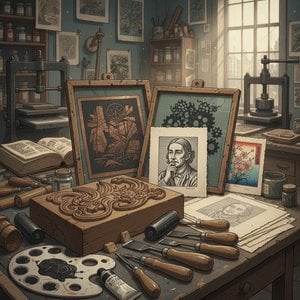
The Enduring Legacy of Printmaking: Techniques, Themes & Artistic Innovation Across Centuries
Explore the rich history of printmaking with ArtsDot. Discover techniques from intaglio to lithography, learn about collecting valuable prints & find museum-quality reproductions. Expert insights for art enthusiasts and collectors.

Odbitki Giclée: Jakość Archiwalna i Estetyczne Niuanse dla Wymagającego Kolekcjonera
Poznaj sekrety druku giclée – technologii zapewniającej najwyższą jakość reprodukcji sztuki i trwałość archiwalaną. Poradnik dla wymagających kolekcjonerów o wyborze papieru, tuszy i profilach kolorystycznych.

The Enduring Legacy of Fine Art Prints: Technique, History & Aesthetic Impact
Explore the rich history & techniques of fine art prints. Discover investment potential, assess authenticity, and learn how to preserve your collection with expert guidance. Trusted insights for discerning collectors.

Crimson Threads of Narrative: Exploring Symbolism & Representation in Artworks Featuring the Red Dress
Explore the rich symbolism of the red dress in art history! From ancient power displays to iconic portraits like Cézanne’s 'Madame Cezanne', discover the cultural and artistic significance behind this captivating color. Expert analysis & insights.

Echoes of Time: Exploring the Enduring Appeal & Historical Context of Vintage Art Prints
Explore the captivating world of vintage art prints! Discover their history, collecting tips & enduring appeal. Expert insights on chromolithography and building a legacy collection with ArtsDot.


