

 Podgląd w skali 1:1
 Wyślij jako kartkę
 Udostępnij
 Szczegóły dzieła
 Przewodnik

 Pobierz obraz
 Podobne obiekty
 RTG
RTG Pokaz slajdów
 Pytania i odpowiedzi
 Statystyki
Trinity (detail)


 Rozwiń treść
Giclée / Wydruk artystyczny
Wydruki giclée lub płótna o jakości muzealnej, szybka realizacja i szeroki wybór opcji wykończenia. ( Zamów ręcznie malowaną reprodukcję Przejdź do wersji cyfrowej)




P118B zł10

P118H zł10

P118W zł10

P438Z zł10

P508JH zł12

P508YH zł12

P805H zł10

P805Z zł10

P919BZ zł10

P919G zł10

P919XJ zł10

P959ZH zł10

P968JZ zł12

W106C zł8

W218G zł10

W218JH zł8

W218Y zł10

W307PJ zł10

W316G zł10

W316PJ zł8

W316Y zł10

W398PJ zł8

W4111J zł10

W500HY zł15

W500JH zł15

W692G zł12

W849H zł8

W940BG zł15

W953PJ zł8




Wybierz spośród naszych standardowych rozmiarów, które zachowują oryginalne proporcje dzieła sztuki.

Wpisz wymaganą szerokość i wysokość, aby dopasować grafikę do ramy lub ściany. Wydruk można jedynie przyciąć, nigdy nie powiększając go poza oryginalny obraz, dlatego format o innych proporcjach spowoduje utratę części kompozycji. Przed rozpoczęciem druku prześlemy Ci cyfrowy podgląd do zatwierdzenia. Obraz wyświetlany na tej stronie nie pokazuje rzeczywistego przycięcia — jedynie podgląd oddaje ten efekt.
Dostawa na cały świat () w ciągu 2 tygodni zamiast standardowych 4/5 tygodni. (8 Listopad)

Bezpłatna ekspresowa wysyłka na cały świat

Wysokiej jakości płótno lniane

Pełne ubezpieczenie przesyłki

Gwarancja zwrotu należności celnych i podatków importowych

Gwarancja wiernego odwzorowania kolorów

100-dniowa polityka zwrotów (tylko w przypadku wad)

Gwarancja 100% zwrotu pieniędzy

Zniżka przy zakupie wielu sztuk
 Opcja ze szkłem jest dostępna wyłącznie w rozmiarach poniżej 110 cm

Trinity (detail)
Giclée / Wydruk artystyczny
Wymiary reprodukcji
-


Cena całkowita
zł 246
The Trinity (Detail): A Dawn of Renaissance Realism
Masaccio’s “Trinity (detail),” housed within the magnificent Santa Maria Novella in Florence, isn't merely a fresco; it’s a pivotal moment in art history – a visual manifesto declaring the arrival of the High Renaissance. Painted between 1425 and 1427, this intimate section captures the essence of Masaccio’s revolutionary approach to depicting reality, a departure from the stylized elegance of the preceding Gothic era and a profound influence on generations of artists to come. The scene, centered around an elder figure representing God the Father, is imbued with a startling sense of depth, volume, and emotional resonance that was unprecedented for its time.
The fresco’s immediate impact lies in its masterful use of linear perspective. Masaccio didn't simply depict space; he created it – a meticulously constructed illusion of three-dimensionality that draws the viewer directly into the scene. The architecture, modeled after Roman precedents and likely informed by Filippo Brunelleschi’s groundbreaking experiments with perspective, recedes realistically towards a vanishing point, anchoring the figures within a believable environment. This isn't a flat surface; it’s a stage where forms exist in relation to each other, creating an astonishingly convincing sense of space.
A Symphony of Color and Light
Masaccio’s palette is restrained yet remarkably effective. Earth tones – ochres, siennas, and umbers – dominate the composition, lending it a dignified solemnity. However, within this muted range, he skillfully employs chiaroscuro—the dramatic interplay of light and shadow—to sculpt the figures and define their forms. The light source, emanating from an unseen point above and to the right, casts deep shadows that accentuate the musculature of the Father’s body, imbuing him with a palpable sense of weight and presence. This subtle manipulation of light isn't merely decorative; it’s integral to Masaccio’s goal of creating realistic figures that appear to exist within a tangible world.
The figure of the Father is particularly striking. His face, rendered with astonishing detail – the furrowed brow, the thoughtful gaze—conveys an intense contemplation. He isn't depicted as a distant deity but as a human being grappling with profound questions. The folds of his garment are meticulously modeled, demonstrating Masaccio’s mastery of drapery and his commitment to accurately representing the texture and weight of fabric.
Symbolism and Spiritual Depth
Beyond its technical brilliance, “Trinity (detail)” is rich in symbolic meaning. The central figure represents God the Father, while the dove hovering above symbolizes the Holy Spirit. The presence of Mary and Saint John—both deeply revered figures within Christian iconography—adds layers of spiritual significance to the scene. The inclusion of a *memento mori* – a reminder of death – beneath the depiction of the Trinity serves as a poignant counterpoint, reminding viewers of the ephemeral nature of earthly existence and the importance of seeking salvation.
The donor figures flanking the central archway are particularly intriguing. Their placement within the architectural framework suggests that they represent patrons who commissioned the fresco—likely members of the Florentine elite. The gesture of prayer, with their hands raised in supplication, underscores the devotional purpose of the artwork and its intended audience.
A Legacy of Innovation
Masaccio’s “Trinity (detail)” represents a watershed moment in art history. It marked a decisive shift away from the stylized conventions of the Gothic era and toward a more naturalistic and intellectually rigorous approach to painting. His innovations in perspective, his mastery of chiaroscuro, and his profound understanding of human anatomy profoundly influenced artists like Leonardo da Vinci and Michelangelo, shaping the course of Western art for centuries to come. Reproductions of this masterpiece offer a unique opportunity to experience firsthand the genius of one of the Renaissance’s most visionary painters.
Additional Research:
Pytania i odpowiedzi
Czy "Trinity (detail)" charakteryzuje się silnym kontrastem światłocienia?
Poziom kontrastu dzieła „Trinity (detail)” – Masaccio wynosi Gentle.
W jaki sposób styl dzieła "Trinity (detail)" odnosi się do epoki jego twórcy?
W „Trinity (detail)” – Masaccio nurt Early Renaissance łączy się z epoką Renesans.
W którym roku i w ramach jakiego nurtu powstało dzieło "Trinity (detail)"?
„Trinity (detail)” – Masaccio datowane jest na 1425 rok i reprezentuje nurt Early Renaissance.
Podobne dzieła


![Stanze Vaticane - The Parnassus (detail) [07] — Rafael, High Renaissance](/media/artworks/images-thumb/3c/a1/3ca1620e84d3f2fe4e94d9bb954e0eca.jpg)


Biografia artysty
Masaccio (1401-1428): The Dawn of Renaissance Realism
Tommaso di Ser Giovanni di Simone Guidi, better known as Masaccio (meaning "clumsy Tom"), was a pivotal figure in the Early Italian Renaissance. Born on December 21, 1401, in San Giovanni Valdarno, Italy, and dying tragically young in 1428, his brief career revolutionized painting with groundbreaking realism, perspective, and chiaroscuro (the use of strong contrasts between light and dark). Despite his short life, Masaccio’s impact on subsequent generations of artists was profound, establishing a new standard for naturalism and influencing the course of Western art.Early Life and Training
Masaccio's origins were humble; he descended from a family involved in cabinet making – Ser Giovanni Cassai, his father, practiced this craft. Orphaned at age five due to his father’s untimely death, Masaccio was cared for by his brother, Giovanni (Lo Scheggia), who also pursued artistic endeavors. The details surrounding Masaccio's formative years remain shrouded in obscurity—a rarity amongst Renaissance artists—underscoring the mystery surrounding his rapid ascent and innovative techniques. It is believed he began his apprenticeship around 12 years old, though definitive documentation of his master remains elusive. This lack of verifiable training contributes to speculation about how he achieved such remarkable artistic prowess. He joined the painters’ guild in Florence on January 7, 1422, marking his emergence as an independent artist and signaling a decisive step toward establishing himself within the burgeoning Florentine art scene.Artistic Development and Major Works
Masaccio's artistic journey commenced with an initial fascination for Giotto di Bondone—a predecessor who championed naturalism—but he swiftly surpassed Giotto’s achievements in mastering perspective and anatomical accuracy. He drew inspiration from Filippo Brunelleschi’s groundbreaking rediscovery of linear perspective, particularly Brunelleschi’s architectural innovations at the Duomo in Florence. Masaccio pioneered several transformative techniques that fundamentally reshaped painting:- Linear Perspective: Employing vanishing points and mathematical precision, he created a convincing illusion of depth on canvas—a technique previously unheard of in art—effectively capturing spatial realism.
- Chiaroscuro: He skillfully manipulated light and shadow to sculpt forms with astonishing detail, generating volume and conveying emotion with unparalleled effectiveness.
- Naturalism: Masaccio depicted human figures with meticulous anatomical precision and expressive gestures, departing from stylized representations prevalent in earlier artistic traditions.
Historical Significance and Legacy
Masaccio's influence extended far beyond his lifetime, profoundly impacting subsequent generations of artists—Leonardo da Vinci, Michelangelo, Raphael—who sought to emulate his unparalleled skill in portraying the human form and conveying emotion. Vasari famously lauded Masaccio as “the best painter of his generation,” recognizing him as a catalyst for artistic innovation and establishing a new standard for naturalism that would dominate Western art for decades to come. Despite his tragically curtailed life, Masaccio’s legacy persists as one of the most significant figures in Renaissance history—a testament to the transformative power of artistic genius and an enduring inspiration for artists across centuries.
Masaccio
1401 - 1429 , Włochy
Krótka nota
- Artistic Movement Or Style: Renesans
- Artists Or Movements Influenced By This Artist:
- Leonardo da Vinci
- Michelangelo
- Artists Who Influenced This Artist:
- Giotto di Bondone
- Filippo Brunelleschi
- Date Of Birth: 21 grudnia 1401
- Full Name: Tommaso di Ser Giovanni di Simone Cassai
- Nationality: Włoski
- Notable Artworks:
- Święta Trójca
- Freski Kaplicy Brancacci
- Place Of Birth: San Giovanni Valdarno, Italia
Powiązane artykuły

Trwała Spuścizna Fresku: Technika, Historia i Wyraz Artystyczny w Różnych Kulturach
Odkryj fascynujący świat fresków! Poznaj historię, technikę tworzenia i wybitnych artystów. Ekspercka analiza konserwacji i współczesne zastosowania malowideł ściennych. Inspiracje dla wnętrz i pasjonatów sztuki.

Masaccio: Revolutionizing Renaissance Painting Through Innovation & Emotional Realism
Explore the revolutionary art of Masaccio, the first great Italian Renaissance painter. Discover his groundbreaking techniques in perspective, realism & emotional depth – a pivotal figure shaping Western art history.

Sztuka, która ożywia przestrzeń: Emocjonalna siła fresku we wnętrzu
Poznaj fascynujący świat fresków! Ekspercka wiedza o technice, historii i konserwacji malowideł ściennych. Inspiracje dla wnętrz i możliwość zamówienia unikalnego dzieła sztuki.

The Enduring Legacy of Fresco Painting: Techniques, History & Contemporary Relevance
Explore the rich history & enduring artistry of fresco painting – from Giotto to Michelangelo! Discover techniques, conservation efforts, & modern applications. Learn how ArtsDot brings this timeless art form to your home.
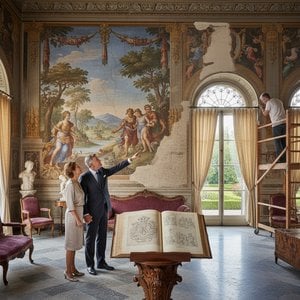
Fresk jako Rodzinna Spuścizna: Utrwalenie Dziedzictwa na Ścianach
Odkryj sztukę fresku! Poznaj historię, technikę i inspiracje. Zamów spersonalizowany fresk rodzinny – trwałe dzieło sztuki dla przyszłych pokoleń. Profesjonalna konserwacja i ochrona.


