

 Podgląd w skali 1:1
 Wyślij jako kartkę
 Udostępnij
 Szczegóły dzieła
 Przewodnik

 Pobierz obraz
 Podobne obiekty
 RTG
RTG Pokaz slajdów
 Pytania i odpowiedzi
 Statystyki
(Untitled--Flower Study)

- 25.0 x 17.0 cm


 Rozwiń treść
Giclée / Wydruk artystyczny
Wydruki giclée lub płótna o jakości muzealnej, szybka realizacja i szeroki wybór opcji wykończenia. ( Zamów ręcznie malowaną reprodukcję Przejdź do wersji cyfrowej)




P118B zł10

P118H zł10

P118W zł10

P438Z zł10

P508JH zł12

P508YH zł12

P805H zł10

P805Z zł10

P919BZ zł10

P919G zł10

P919XJ zł10

P959ZH zł10

P968JZ zł12

W106C zł8

W218G zł10

W218JH zł8

W218Y zł10

W307PJ zł10

W316G zł10

W316PJ zł8

W316Y zł10

W398PJ zł8

W4111J zł10

W500HY zł15

W500JH zł15

W692G zł12

W849H zł8

W940BG zł15

W953PJ zł8




Wybierz spośród naszych standardowych rozmiarów, które zachowują oryginalne proporcje dzieła sztuki.

Wpisz wymaganą szerokość i wysokość, aby dopasować grafikę do ramy lub ściany. Wydruk można jedynie przyciąć, nigdy nie powiększając go poza oryginalny obraz, dlatego format o innych proporcjach spowoduje utratę części kompozycji. Przed rozpoczęciem druku prześlemy Ci cyfrowy podgląd do zatwierdzenia. Obraz wyświetlany na tej stronie nie pokazuje rzeczywistego przycięcia — jedynie podgląd oddaje ten efekt.
Dostawa na cały świat () w ciągu 2 tygodni zamiast standardowych 4/5 tygodni. (12 Listopad)

Bezpłatna ekspresowa wysyłka na cały świat

Wysokiej jakości płótno lniane

Pełne ubezpieczenie przesyłki

Gwarancja zwrotu należności celnych i podatków importowych

Gwarancja wiernego odwzorowania kolorów

100-dniowa polityka zwrotów (tylko w przypadku wad)

Gwarancja 100% zwrotu pieniędzy

Zniżka przy zakupie wielu sztuk
 Opcja ze szkłem jest dostępna wyłącznie w rozmiarach poniżej 110 cm

(Untitled--Flower Study)
Giclée / Wydruk artystyczny
Wymiary reprodukcji
-


Cena całkowita
zł 246
A Delicate Dance of Observation: Mary Vaux Walcott’s “Untitled--Flower Study”
Mary Vaux Walcott, a name synonymous with meticulous botanical illustration and unwavering dedication to American conservation, achieved the moniker "the Audubon of Botany" – a testament to her unparalleled ability to capture the exquisite beauty of wildflowers with breathtaking precision. Born in Philadelphia in 1860 into a Quaker family deeply rooted in intellectual pursuits, Walcott’s artistic journey began unexpectedly at age eight when she received a set of watercolor paints as a gift. This simple act ignited a lifelong passion for translating the natural world onto paper, shaping her career and cementing her legacy as one of America's foremost botanical artists.- Subject Matter: The artwork presents a captivating study of three clover plants—a humble yet remarkably complex specimen—each rendered in varying stages of bloom. Walcott’s focus isn’t on grand landscapes or dramatic narratives; rather, she delves into the minute details of floral anatomy and foliage texture, revealing an astonishing level of observation.
- Style & Technique: Embracing realism alongside a distinctly botanical aesthetic, Walcott employed watercolor paint on paper—a medium perfectly suited to conveying subtle tonal variations and capturing the ethereal quality of light filtering through petals. Her technique is characterized by layering washes of color, creating soft gradients that imbue the image with an atmosphere of tranquility and understated elegance.
- Composition & Perspective: The vertical orientation emphasizes the plants as central subjects against a softly textured off-white background—a deliberate choice designed to heighten visual impact without distracting from the botanical subject matter. Lines delineate stems, leaves, and flower petals, establishing structural integrity while maintaining a naturalistic feel. Depth is achieved through overlapping elements and careful consideration of shading, fostering a sense of spatial realism.
- Material: Watercolor paint on paper
Pytania i odpowiedzi
Czy kolory w „(Untitled--Flower Study)” – Mary Vaux Walcott są nasycone czy stonowane?
Kolory dzieła „(Untitled--Flower Study)” – Mary Vaux Walcott charakteryzują się Muted nasyceniem. Nasycenie określa, jak żywe lub stonowane są barwy.
Jaki klimat wnosi „(Untitled--Flower Study)” – Mary Vaux Walcott do wnętrza?
Dzięki swojemu Serene nastrojowi, "(Untitled--Flower Study)" idealnie sprawdzi się w Living Room.
Co przedstawia „(Untitled--Flower Study)” – Mary Vaux Walcott i jaki ma nastrój?
„(Untitled--Flower Study)” – Mary Vaux Walcott przedstawia wildflowers, botanical art, floral study, clover blooms, watercolor detail, nature observation, plant life, delicate beauty, wprowadzając Serene nastrój. Tematyka i atmosfera wspólnie definiują to dzieło.
Podobne dzieła


Biografia artysty
A Life Blossoming in Watercolor: The World of Mary Vaux Walcott
Mary Vaux Walcott, a name synonymous with the delicate beauty and scientific precision of North American wildflowers, was born into a world of quiet refinement in Philadelphia in 1860. Yet, from her earliest years, a vibrant artistic spirit pulsed within her—a gift nurtured by a simple set of watercolor paints at the tender age of eight. This wasn’t merely a childhood pastime; it was the genesis of a lifelong passion, a deep connection with the natural world that would ultimately define her extraordinary career and earn her the affectionate title “the Audubon of Botany.” Her story is not simply one of artistic talent, but also of remarkable resilience, unwavering curiosity, and a pioneering spirit that defied the societal expectations placed upon women in the late 19th century. The responsibility for caring for her father and two younger brothers fell heavily upon young Mary after the untimely death of her mother in 1880—a burden she carried with grace and determination, never allowing it to extinguish the flame of her creative spirit.The Allure of the Rockies: Nature as Muse and Subject
The landscapes of the Canadian Rockies became the very heart and soul of Mary’s artistic journey. These vast, rugged mountains weren't merely a backdrop for her paintings; they were an active laboratory, a place where she meticulously documented the intricate details of alpine flora alongside her brothers. They didn’t simply observe the landscape; they engaged with it deeply—studying mineralogy, charting glacial movements through detailed drawings and photographs, and immersing themselves in the subtle nuances of each wildflower species. This wasn't passive observation; it was a profound engagement with the scientific underpinnings of nature, driven by an insatiable curiosity and a desire to capture its essence with unparalleled accuracy. During these annual summer expeditions, Mary honed her skills as a botanical illustrator, initially at the request of botanists eager for precise depictions of rare and elusive species. Her approach was revolutionary for its time—she rendered plants to scale, showcasing their delicate structures, vibrant colors, and intricate details with an almost obsessive attention to detail. Unlike many floral paintings of the era, which often romanticized or stylized their subjects, Walcott’s work prioritized scientific accuracy alongside artistic expression, creating images that were both beautiful and profoundly informative. Her dedication extended beyond mere representation; she sought to capture not just the outward appearance of a flower but also its unique characteristics and ecological role.A Partnership Forged in Science and Art
In 1914, Mary’s life took an unexpected turn with her marriage to Charles Doolittle Walcott, then Secretary of the Smithsonian Institution—a man deeply committed to scientific exploration and a renowned paleontologist. This union wasn't simply a personal connection; it was a meeting of minds—two individuals united by a shared passion for understanding the natural world. Their marriage fostered a unique partnership where art and science intertwined seamlessly. They continued their annual expeditions to the Canadian Rockies, with Charles pursuing his geological research while Mary dedicated herself to her botanical paintings. These weren’t separate endeavors but complementary pursuits, each enriching the other—Charles's scientific observations providing context for Mary’s artistic interpretations, and Mary’s detailed illustrations offering a visual record of Charles’s discoveries. The Smithsonian Institution became a crucial platform for showcasing Mary’s work, culminating in the publication of *North American Wild Flowers* in 1925—a monumental five-volume collection featuring over 400 of her meticulously crafted illustrations, accompanied by insightful descriptions and scientific observations. This publication cemented her reputation as a leading botanical artist and earned her the enduring moniker “the Audubon of Botany,” acknowledging the parallel between her detailed floral studies and John James Audubon’s iconic depictions of birds.Key Achievements & Recognition
- Pioneering Botanical Illustration: Renowned for her scientifically accurate and artistically exquisite watercolor paintings of wildflowers, setting a new standard for botanical illustration.
- “The Audubon of Botany”: Affectionately known by this title, recognizing the significance of her work in botanical art and its parallels with Audubon’s legacy.
- *North American Wild Flowers* (1925): Publication of a five-volume collection showcasing over 400 of her illustrations, solidifying her reputation as a leading botanical artist.
- First Woman to Summit Mount Stephen: A testament to her adventurous spirit, physical endurance, and pioneering spirit in the field of mountaineering.
- Contributions to Glacial Geology: Documented glacial recession in the Canadian Rockies alongside her brothers, providing valuable data for climate change studies and contributing significantly to scientific understanding.
- Philanthropic Legacy: Bequeathed a substantial sum to the Smithsonian Institution to support scientific research and conservation efforts.
A Lasting Legacy
Mary Vaux Walcott’s influence extends far beyond the beauty of her paintings—she represents a unique synthesis of artistic skill, scientific observation, and adventurous spirit. Her work isn't simply a collection of pretty flowers; it’s a profound celebration of the natural world, revealing its intricate structures, capturing its delicate beauty, and highlighting its vital role in the ecosystem. Her illustrations continue to be valued by both art enthusiasts and botanists alike, serving as invaluable resources for identifying and studying North American flora. Beyond her artistic achievements, Walcott demonstrated a commitment to public service, advocating for improved conditions on Native American reservations and contributing to scientific understanding through her meticulous documentation of the Canadian Rockies. Her story serves as an inspiration—a reminder that passion, dedication, and a deep connection with nature can blossom into a life of remarkable achievement and leave a lasting legacy for generations to come.
Mary Vaux Walcott
1860 - 1940 , Stany Zjednoczone
Krótka nota
- Artistic Movement Or Style: Botaniczna ilustracja
- Artists Or Movements Influenced By This Artist: ['Maria Sibylla Merian']
- Artists Who Influenced This Artist: ['John James Audubon']
- Date Of Birth: 31 lip 1860
- Date Of Death: 22 aug 1940
- Full Name: Mary Vaux Walcott
- Nationality: Amerykańska
- Notable Artworks:
- Kwiaty jesienne
- Gaillardia aristata
- Rosa bourgeauiana
- Fremontodendron
- Place Of Birth: Filadelfia, USA
Powiązane artykuły
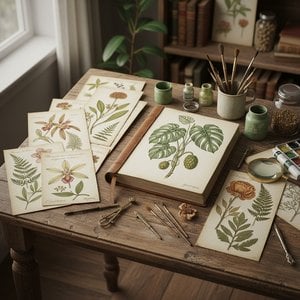
The Flourishing Canvas: A Historical & Artistic Exploration of Botanical Illustration
Explore the rich history of botanical illustration! Discover key artists like Havell & Barraband, learn about scientific accuracy & aesthetic beauty. Shop museum-quality reproductions at ArtsDot.
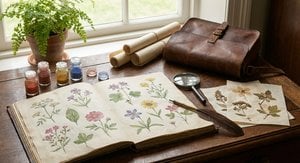
The Flourishing Canvas: A Historical Journey Through Botanical Illustration
Explore the captivating history of botanical illustration! Discover renowned artists like Robert Havell & Mary Walcott, learn about techniques, and find museum-quality art at ArtsDot.com.

Mary Vaux Walcott: Botanical Precision & Artistic Vision in American Conservation
Discover the exquisite botanical watercolors of Mary Vaux Walcott, celebrated as the 'Audubon of Botany.' Explore her life, art, and lasting impact on American conservation through detailed illustrations & Smithsonian contributions.

10 Legendarnych Akwareli, Które Zmieniły Sztukę. Inspiracje do Dekoracji Domu.
Odkryj 10 legendarnych akwareli Turner'a, Monet'a i innych mistrzów! Poznaj historie, techniki i inspiracje tych ponadczasowych dzieł. Reprodukcje obrazów najwyższej jakości na ArtsDot.com – idealne do dekoracji wnętrz.

Kwiatowy Rozkwit Nauki i Sztuki: Historyczna Podróż przez Botaniczne Ilustracje
Odkryj fascynującą historię botanicznej ilustracji – od starożytnych zielników po współczesne arcydzieła. Poznaj wybitnych artystów, techniki i wpływ tej dziedziny na naukę i kulturę. Ekskluzywne artykuły dla pasjonatów sztuki i botaniki.


