


 Zobacz w skali 1:1
 Wyślij
 Udostępnij
 Szczegóły
 Przewodnik

 Pobierz plik obrazu
 Podobne obiekty
 RTG
RTG Pokaz slajdów
 Statystyki
Skulls


 Czytaj więcej
Dzieło sztuki prezentowane na tej stronie podlega ochronie prawem autorskim, co oznacza, że nie mamy prawa do tworzenia ani sprzedaży jego identycznej reprodukcji. Ochrona ta jest egzekwowana na mocy umów międzynarodowych, takich jak Konwencja berneńska oraz przez przepisy prawa krajowego, w tym te określone w Prawo autorskie USA – Tytuł 17.
Metoda ta jest w pełni zgodna z przepisami prawa autorskiego, ponieważ nie polega na kopiowaniu ani powielaniu chronionego dzieła. Stanowi ona kreatywną reinterpretację – nowy obraz, który czerpie inspirację z oryginału, ale nie jest z nim tożsamy.
Giclée / Wydruk artystyczny
Wydruki giclée lub płótna o jakości muzealnej, szybka realizacja i szeroki wybór opcji wykończenia. ( Kup ręcznie malowany obraz Przełącz na wersję cyfrową)




P118B zł10

P118H zł10

P118W zł10

P438Z zł10

P508JH zł12

P508YH zł12

P805H zł10

P805Z zł10

P919BZ zł10

P919G zł10

P919XJ zł10

P959ZH zł10

P968JZ zł12

W106C zł8

W218G zł10

W218JH zł8

W218Y zł10

W307PJ zł10

W316G zł10

W316PJ zł8

W316Y zł10

W398PJ zł8

W4111J zł10

W500HY zł15

W500JH zł15

W692G zł12

W849H zł8

W940BG zł15

W953PJ zł8




Wybierz spośród naszych standardowych rozmiarów, które zachowują oryginalne proporcje dzieła sztuki.

Możesz wprowadzić własne wymiary, aby dopasować dzieło do konkretnej ramy lub przestrzeni. Jeśli wybrany rozmiar nie będzie odpowiadał proporcjom oryginalnego obrazu, przytniecie dzieło lub rozszerzymy obraz za pomocą odbicia lustrzanego lub jednolitego wypełnienia krawędzi. Przed rozpoczęciem produkcji prześlemy cyfrową wizualizację do Twojej akceptacji.
Prosimy pamiętać, że podgląd na ekranie nie odzwierciedla faktycznego przycinania ani rozszerzania. Tylko wizualizacja dokładnie pokaże końcową kompozycję.
Mimo dostępności niestandardowych rozmiarów, zalecamy wybór wymiaru z listy zdefiniowanej, aby zachować oryginalne proporcje.
Dostawa na cały świat () w ciągu 2 tygodni zamiast standardowych 4/5 tygodni. (13 Październik)

Bezpłatna ekspresowa wysyłka na cały świat

Wysokiej jakości płótno lniane

Pełne ubezpieczenie transportowe

Gwarancja zwrotu należności celnych i podatków importowych

Gwarancja idealnego odwzorowania barw

100-dniowy okres na zwrot dzieła w przypadku wykrycia wad produkcyjnych

Gwarancja 100% zwrotu pieniędzy

Oferta przy zakupie wielu sztuk
 Opcja ze szkłem jest dostępna wyłącznie w rozmiarach poniżej 110 cm

Skulls
Giclée / Wydruk artystyczny
Rozmiar reprodukcji
-


Suma do zapłaty
zł 231
Marlene Dumas’s “Skulls”: A Descent into Vulnerability and Remembrance
Marlene Dumas's "Skulls," painted in 2015, isn’t merely a depiction of mortality; it’s an intensely personal meditation on the fragility of existence, layered with echoes of South African history and the unsettling power of photographic memory. The painting immediately confronts the viewer with a stark arrangement: a row of skulls presented against a muted, almost bleached background—a deliberate choice that amplifies their presence and forces a direct engagement with death’s inevitability. Each skull possesses a subtly different expression, hinting at individual stories silenced by time, suggesting a collective mourning rather than a singular loss.
Dumas's technique is characterized by a raw, almost violent application of paint. She eschews meticulous detail, favoring instead broad strokes and gestural marks—drips, smears, and daubs that imbue the work with an immediate sense of urgency. The color palette is deliberately restrained – predominantly blacks, whites, and grays – mirroring the somber subject matter while simultaneously creating a hauntingly beautiful effect. This deliberate lack of polish contributes to the painting’s emotional impact; it feels less like a finished product and more like a fleeting capture of a profound feeling.
The Weight of Photographic Memory
Dumas's artistic practice is deeply rooted in photography, a connection that profoundly shapes her work. She meticulously curates a private archive of images—photographs of herself, children, victims of violence, and the marginalized – transforming these visual fragments into the foundation for her paintings. “Skulls” exemplifies this process; it’s not simply an interpretation of skulls but rather a distillation of countless photographic encounters with mortality. The arrangement itself feels like a carefully constructed memorial, reminiscent of rows of graves or the faces in a forgotten album. This reliance on photographs forces us to confront the mediated nature of reality and the way images can both preserve and distort memory.
Echoes of Apartheid and Universal Loss
Born in Cape Town during the height of apartheid, Dumas’s life has been inextricably linked to themes of social injustice and identity. While “Skulls” doesn't explicitly reference this historical context, it resonates with the broader anxieties surrounding loss and remembrance that permeated South African society. The skulls can be interpreted as a symbol of silenced voices—those who suffered under oppression or were simply forgotten by history. The painting subtly evokes the collective trauma experienced during apartheid, reminding us of the enduring consequences of inequality and violence. However, Dumas transcends specific historical narratives, elevating the image to a universal representation of mortality – a reminder that all lives are finite and ultimately return to dust.
A Study in Vulnerability and Emotional Resonance
Ultimately, “Skulls” is a profoundly moving work that invites introspection and contemplation. It’s not a comfortable painting; it confronts us with the uncomfortable truths of death and loss. Yet, within this darkness lies a strange beauty—a testament to the resilience of the human spirit and the enduring power of art to grapple with life's most difficult questions. Dumas doesn’t offer easy answers or comforting platitudes. Instead, she presents us with a raw, honest portrayal of vulnerability – a reminder that beneath our carefully constructed facades, we are all ultimately fragile and mortal. The painting’s impact is not one of shock but of quiet recognition—a shared acknowledgment of the inevitability of death and the importance of remembering those who have passed.
- Artist: Marlene Dumas
- Year: 2015
- Medium: Oil on Canvas
- Dimensions (Approx.): Unknown
Further Resources: Google Arts & Culture, ArtsDot
Pytania i odpowiedzi
Jak silny jest kontrast w „Skulls” autorstwa Marlene Dumas?
Poziom kontrastu dzieła „Skulls” autorstwa Marlene Dumas wynosi Serene.
Jaki jest dominujący odcień dzieła „Skulls” autorstwa Marlene Dumas?
„Skulls” skłania się ku Ochre to Sepia tonacji.
Do jakiego pomieszczenia polecane jest dzieło „Skulls” autorstwa Marlene Dumas?
Zalecaną przestrzenią dla „Skulls” autorstwa Marlene Dumas jest Living Room. Sugestia ta może zostać oczywiście dostosowana do Twojego wnętrza.
Kto stworzył "Skulls"?
Autorem dzieła „Skulls” jest Marlene Dumas. Praca ta figuruje w katalogu pod nazwiskiem Marlene Dumas.
Z jakiego kraju pochodzi dzieło Contemporary Realism pt. "Skulls"?
"Skulls" zostało stworzone przez Marlene Dumas, urodzonego w Południowa Afryka, w ramach nurtu Contemporary Realism. Pochodzenie artysty wiąże to dzieło z Contemporary Realism w wydaniu twórców z Południowa Afryka.
Jak bardzo znane jest dzieło "Skulls" autorstwa Marlene Dumas?
Poziom popularności odnotowany dla „Skulls” autorstwa Marlene Dumas wynosi Recognized.
W którym roku powstało dzieło "Skulls"?
Powstanie „Skulls” autorstwa Marlene Dumas datuje się na 2015.
Kto jest autorem i z jakiego roku pochodzi "Skulls"?
Dzieło "Skulls" zostało stworzone przez Marlene Dumas w 2015 roku.
Podobne dzieła


Biografia artysty
A Life Shaped by Landscape and Sociopolitical Currents
Marlene Dumas, born in 1953 in Cape Town, South Africa, is a painter whose work resonates with an emotional depth rarely encountered in contemporary art. Her upbringing amidst the stark realities of apartheid profoundly shaped her artistic vision, instilling within her a keen awareness of social injustice and the complexities of human identity. Growing up on her father’s vineyard in Kuils River, she witnessed firsthand the divisions and inequalities that defined South African society during those years—a landscape both beautiful and burdened by history. This early exposure to a fractured world would become a recurring theme throughout her career, informing her exploration of race, sexuality, and the psychological weight of existence. Dumas’s formal artistic journey began at the University of Cape Town in 1972, where she pursued a Bachelor of Fine Arts degree alongside studies in ethics. This combination proved crucial, laying the groundwork for an art practice deeply concerned with moral questions and the human condition. She later continued her education at Ateliers '63 in Haarlem, Netherlands, relocating to Amsterdam in 1976—a move that marked a significant shift in both her geographical location and artistic perspective. Further academic pursuits in psychology at the University of Amsterdam between 1979-1980 would further refine her ability to portray inner states with remarkable sensitivity.The Evolution of a Distinctive Style
Dumas’s artistic development has been characterized by a constant questioning of representation and a willingness to confront difficult subjects. Her early work directly addressed the political climate of apartheid, reflecting her identity as a white woman grappling with the moral implications of living within a system of racial segregation. However, she quickly moved beyond purely political statements, delving into more universal themes of human vulnerability, desire, and loss. Influenced by the emotional intensity of Romanticism—particularly artists like Egon Schiele and Francis Bacon—Dumas developed a distinctive style marked by loose brushstrokes, distorted figures, and an evocative use of color. She often begins her paintings with source material gathered from diverse origins: Polaroid photographs, magazine clippings, even pornographic imagery. These images are not simply copied but rather serve as starting points for explorations of feeling and memory. Her technique is notable for its layering—a wet-on-wet approach that builds depth and texture through the interplay of thin and thick paint. This creates a sense of fluidity and ambiguity, mirroring the complexities of the emotions she seeks to convey. The resulting images are often hauntingly beautiful, simultaneously alluring and unsettling.Themes of Identity, Sexuality, and the Human Condition
At the heart of Dumas’s work lies an unwavering commitment to exploring the intricacies of human experience. Her subjects range widely—from portraits of friends and lovers to depictions of children, strippers, and figures drawn from popular culture. However, these are never mere representations; they are vehicles for investigating deeper psychological states. Race, sexuality, identity, violence, guilt, innocence – these are all recurring themes in her oeuvre, approached with a rare degree of honesty and nuance. Dumas’s paintings often challenge conventional notions of beauty and desirability, exposing the vulnerabilities and contradictions inherent in human relationships. She is particularly interested in the ways in which bodies are constructed and perceived—how they become sites of both pleasure and pain, power and oppression. Her work frequently engages with issues of representation, questioning who has the right to look at whom and what implications arise from that gaze. This critical perspective extends to her own artistic practice, as she acknowledges the inherent limitations and ethical challenges of portraying others.Recognition and Lasting Impact
Marlene Dumas’s contributions to contemporary art have been widely recognized through numerous exhibitions and accolades. A significant milestone was her first major American museum exhibition, “Measuring Your Own Grave,” which opened at the Museum of Contemporary Art, Los Angeles in 2008 and subsequently traveled to the Museum of Modern Art, New York City. This retrospective solidified her position as a leading figure in contemporary painting. Her market success has also been remarkable; in 2004, *Jule-die Vrou* (1985) sold for over $1 million, establishing her as one of only three living female artists to achieve such a price point at the time. More recently, *The Schoolboys* (1986–87) reached an astounding $9 million at Art Basel Miami Beach in 2023, and *Miss January* (1997) shattered records in May 2025, selling for $13.6 million at Christie’s—a new high for a living female artist. Represented by the prestigious David Zwirner Gallery since 2008, Dumas continues to exhibit internationally and inspire a new generation of artists. Her influence extends beyond the realm of painting; she has challenged conventional notions of portraiture and encouraged a more critical engagement with social and political issues within art. Dumas’s legacy lies in her ability to create works that are both deeply personal and universally resonant—paintings that confront us with our own vulnerabilities, desires, and prejudices.- Born: Cape Town, South Africa (1953)
- Education: University of Cape Town (BFA), Ateliers ‘63 (Haarlem)
- Notable Exhibitions: Measuring Your Own Grave (LACMA), Tate Modern, Fondation Beyeler
- Awards: Düsseldorf Art Prize, Rolf Schock Prize in the Visual Arts

Marlene Dumas
1953 - , Południowa Afryka
Najważniejsze informacje
- Artistic Movement Or Style: Romanticizm, Malarstwo figuralne
- Artists Or Movements Influenced By This Artist: ['Contemporary painters']
- Artists Who Influenced This Artist:
- Egon Schiele
- Francis Bacon
- Date Of Birth: 1953
- Full Name: Marlene Dumas
- Nationality: Południowa Afryka
- Notable Artworks:
- Young Boys
- The Cover Up
- Snow Flake
- Suspect
- Feather Stola
- Place Of Birth: Cape Town, South Africa
Zobacz także powiązane artykuły

Monochromatyczne Wizje: Estetyka i Historyczne Znaczenie Fotografii Czarno-Białej
Odkryj fascynujący świat fotografii czarno-białej! Poznaj historię, techniki i arcydzieła monochromatycznej sztuki. Inspiracje, porady i analiza wpływu na współczesną estetykę. ArtsDot.com.
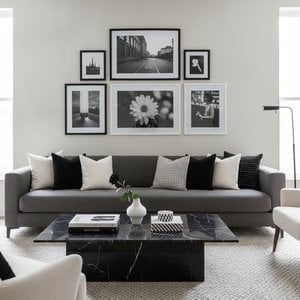
Timeless & Chic: Elevating Your New Home with the Sophistication of Black and White Photography
Transform your new home with the timeless allure of black and white photography. ArtsDot.com specializes in elegant monochrome decor and custom hand-painted wedding portraits that turn cherished milestones into lasting, soulful masterpieces. Elevate your space with ease.

Białe arcydzieła: Top 10 słynnych obrazów pełnych światła i emocji | ArtsDot.pl
Odkryj 10 najsłynniejszych obrazów, w których biel dominuje i tworzy wyjątkową atmosferę. Poznaj historie Moneta, Van Gogha i innych mistrzów! Reprodukcje najwyższej jakości na ArtsDot.com – inspiracje wnętrzarskie i kolekcjonerstwo sztuki online.

Beyond the Lens: Photography's Enduring Influence on Modern & Contemporary Art
Explore photography's pivotal role in shaping modern & contemporary art. Discover key movements, influential artists like Stieglitz, and expert collecting advice from ArtsDot.

Czarne arcydzieła: Top 10 słynnych obrazów pełnych mroku i ekspresji | ArtsDot.com
Odkryj 10 słynnych obrazów, w których czerń króluje! Poznaj historie artystów, ekspresjonizm i mroczną paletę barw. Reprodukcje dzieł sztuki najwyższej jakości na ArtsDot.com – inspiracje do wnętrz i kolekcjonerstwo.