


 Zobacz w skali 1:1
 Wyślij
 Udostępnij
 Szczegóły
 Przewodnik

 Pobierz plik obrazu
 Podobne obiekty
 RTG
RTG Pokaz slajdów
 Statystyki
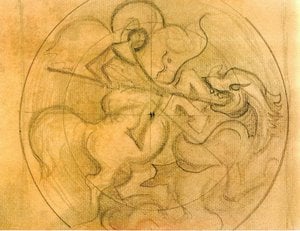
Floating Circle
 35.0 x 43.0 cm
 Royal West of England Academy
 Czytaj więcej
Dzieło sztuki prezentowane na tej stronie podlega ochronie prawem autorskim, co oznacza, że nie mamy prawa do tworzenia ani sprzedaży jego identycznej reprodukcji. Ochrona ta jest egzekwowana na mocy umów międzynarodowych, takich jak Konwencja berneńska oraz przez przepisy prawa krajowego, w tym te określone w Prawo autorskie USA – Tytuł 17.
Jako pełną szacunku i legalną alternatywę oferujemy personalizowane, malowane ręcznie dzieła sztuki inspirowane oryginałem. Nasi wykwalifikowani i profesjonalni artyści starannie analizują styl, nastrój oraz artystyczną esencję pierwowzoru, aby stworzyć nowe, unikalne dzieło, które przywołuje te same emocje – pozostając jednocześnie w pełni oryginalną kreacją.
Metoda ta jest w pełni zgodna z przepisami prawa autorskiego, ponieważ nie polega na kopiowaniu ani powielaniu chronionego dzieła. Stanowi ona kreatywną reinterpretację – nowy obraz, który czerpie inspirację z oryginału, ale nie jest z nim tożsamy.
Ręcznie malowana reprodukcja olejowa
Ręcznie malowany obraz olejny na płótnie, wykonany na zamówienie przez naszych artystów w wybranym przez Ciebie wymiarze i oprawie. ( Przełącz na wersję drukowaną Przełącz na wersję cyfrową)




































Wybierz spośród naszych standardowych rozmiarów, które zachowują oryginalne proporcje dzieła sztuki.

Wpisz wymaganą szerokość i wysokość, aby obraz pasował do Twojej ramy lub ściany. Ponieważ jest to dzieło malowane ręcznie, w przypadku rozmiaru o innym proporcji artysta może domalować nieco więcej wokół obrazu lub przyciąć fragmenty — wybór należy do Ciebie. Przed rozpoczęciem pracy prześlemy Ci cyfrową wizualizację do zatwierdzenia. Obraz widoczny na tej stronie nie przedstawia rzeczywistego efektu — jedynie wizualizacja oddaje realny rezultat.
Po złożeniu zamówienia zespół ArtsDot.com skontaktuje się z klientem drogą mailową w celu uzyskania instrukcji i prześle wizualizację projektu
Dostawa na całym świecie () w ciągu 3–4 tygodni zamiast standardowych 5 tygodni. (23 Październik). Bez kompromisów w kwestii jakości.

Bezpłatna ekspresowa wysyłka na cały świat

Wysokiej jakości płótno lniane

Pełne ubezpieczenie transportowe

Gwarancja zwrotu należności celnych i podatków importowych

Gwarancja idealnego odwzorowania barw

100-dniowy okres na zwrot dzieła w przypadku wykrycia wad produkcyjnych

Gwarancja 100% zwrotu pieniędzy

Oferta przy zakupie wielu sztuk
 Opcja ze szkłem jest dostępna wyłącznie w rozmiarach poniżej 110 cm

Floating Circle
Technika wykonania
Rozmiar reprodukcji
-


Suma do zapłaty
zł 1012
Podobne dzieła


Biografia artysty
Margaret Gregory: A Weaver of Myth and Memory
Margaret Gregory (1927-2011) wasn’t merely an artist; she was a chronicler, a storyteller deeply rooted in the folklore and landscape of County Galway. Her work, particularly her monumental “Homage to Joseph Beuys” series, transcends simple abstraction, becoming intricate tapestries woven with personal memory, Irish mythology, and a profound engagement with the social and political currents of her time. Born Margaret Parry in Cheltenham, England, she inherited a rich artistic lineage through her mother’s family, steeped in Victorian art patronage and a deep appreciation for the visual arts. This early exposure fostered a lifelong fascination with color, texture, and the evocative power of image – elements that would become central to her distinctive style.
Gregory's formative years were spent largely at Coole Park, the ancestral home of Lady Gregory, a pivotal figure in the Irish Literary Revival. Living within this vibrant intellectual community—a gathering place for Yeats, Joyce, Synge, and countless others—shaped her artistic sensibilities profoundly. She witnessed firsthand the struggles for cultural identity and independence that defined Ireland’s 20th-century experience. This engagement with national narratives, coupled with a deep connection to the rural landscape, fueled a desire to capture not just visual appearances but also the spirit of place – the whispers of history embedded within the stones and fields of Galway.
Her artistic journey began in earnest after marrying Robert Gregory, son of Lady Gregory, in 1907. This union brought her firmly into the heart of Irish cultural life, providing access to a wealth of knowledge and experience. She initially worked as an illustrator for her mother-in-law’s books, meticulously rendering scenes from Irish mythology – tales of fairies, giants, and ancient heroes—with a remarkable attention to detail and a subtle infusion of personal interpretation. These early illustrations reveal a nascent talent for layering symbolism and creating images that resonate with both the literal and the metaphorical.
The “Homage to Joseph Beuys” Series: A Dialogue Across Generations
Gregory’s most celebrated work, the “Homage to Joseph Beuys” series (1986-1993), represents a significant shift in her artistic practice. Inspired by the German artist's concept of ‘shamanic art,’ which sought to connect with ancestral spirits and revitalize communities through ritualistic creation, Gregory developed a complex visual language that blended abstract expressionism with elements of Irish folk art. The panels—each measuring approximately six feet tall—are not simply representations of Beuys’s work; they are layered meditations on his ideas, filtered through her own experiences and memories.
The series is characterized by a rich palette of earthy tones – ochres, siennas, and umbers – punctuated by bursts of vibrant color. Gregory employed a variety of techniques: layering acrylic paint, incorporating collage elements (including fragments of Irish newspapers and textiles), and applying textured surfaces to create a tactile and immersive experience for the viewer. Recurring motifs—circles, spirals, and animal figures—evoke ancient symbols and connect her work to the pre-Christian traditions of Ireland. The deliberate ambiguity of these images invites multiple interpretations, suggesting a dialogue between past and present, personal and collective memory.
Minimalist Compositions: “Floating Circle” and Beyond
Alongside the “Homage” series, Gregory produced a body of smaller, more restrained works—often referred to as her minimalist compositions. These pieces, exemplified by "Floating Circle" (1998), demonstrate a remarkable control over color and form. She pared down her palette to its essential elements – often just two or three colors – and employed simple geometric shapes to create visually arresting arrangements. The “Floating Circle,” for instance, is a deceptively complex work that suggests both stability and movement, inviting the viewer to contemplate the relationship between interiority and exteriority.
These minimalist works can be seen as a counterpoint to the more elaborate scale of her larger paintings. They represent a distillation of her artistic principles—a commitment to clarity, precision, and the power of suggestion. They also reflect a growing interest in exploring the fundamental elements of visual perception – color, line, and space – without relying on narrative or symbolic content.
Legacy and Historical Context
Margaret Gregory’s work occupies a unique position within the history of Irish art. She was part of a generation grappling with questions of national identity in the wake of independence, yet she resisted easy categorization. Her paintings are not simply portraits of Ireland; they are reflections on its past, present, and future—a complex tapestry woven from personal memory, folklore, and social commentary.
Her engagement with Joseph Beuys’s ideas is particularly significant. Beuys's emphasis on the transformative power of art resonated deeply with Gregory’s own belief in the potential of creativity to heal and revitalize communities. Her “Homage” series can be interpreted as a gesture of solidarity—a recognition of shared struggles and aspirations across generations and cultures. Margaret Gregory died in 2011, leaving behind a substantial body of work that continues to inspire and challenge viewers today. Her paintings serve as a powerful reminder of the enduring relevance of folklore, myth, and memory in shaping our understanding of the world.

Margaret Gregory
1927 - 2011
Najważniejsze informacje
- Artistic Movement Or Style: Abstract expressionism, Color field painting, Minimalist art
- Artists Or Movements Influenced By This Artist:
- Color field painting
- Minimalist art
- Artists Who Influenced This Artist: ['Joseph Beuys']
- Date Of Birth: 1927
- Date Of Death: 2011
- Full Name: Margaret Gregory
- Nationality: American
- Notable Artworks:
- Homage to Joseph Beuys
- Floating Circle
- Place Of Birth: WahooArt