


 Zobacz w skali 1:1
 Wyślij
 Udostępnij
 Szczegóły
 Przewodnik

 Pobierz plik obrazu
 Podobne obiekty
 RTG
RTG Pokaz slajdów
 Statystyki
The Three Candles
 Oil On Canvas
- WallArt
- Naive Art / Primitivism
 1940
1940 127.0 x 96.0 cm
 Czytaj więcej
Dzieło sztuki prezentowane na tej stronie podlega ochronie prawem autorskim, co oznacza, że nie mamy prawa do tworzenia ani sprzedaży jego identycznej reprodukcji. Ochrona ta jest egzekwowana na mocy umów międzynarodowych, takich jak Konwencja berneńska oraz przez przepisy prawa krajowego, w tym te określone w Prawo autorskie USA – Tytuł 17.
Metoda ta jest w pełni zgodna z przepisami prawa autorskiego, ponieważ nie polega na kopiowaniu ani powielaniu chronionego dzieła. Stanowi ona kreatywną reinterpretację – nowy obraz, który czerpie inspirację z oryginału, ale nie jest z nim tożsamy.
Giclée / Wydruk artystyczny
Wydruki giclée lub płótna o jakości muzealnej, szybka realizacja i szeroki wybór opcji wykończenia. ( Kup ręcznie malowany obraz Przełącz na wersję cyfrową)




P118B zł10

P118H zł10

P118W zł10

P438Z zł10

P508JH zł12

P508YH zł12

P805H zł10

P805Z zł10

P919BZ zł10

P919G zł10

P919XJ zł10

P959ZH zł10

P968JZ zł12

W106C zł8

W218G zł10

W218JH zł8

W218Y zł10

W307PJ zł10

W316G zł10

W316PJ zł8

W316Y zł10

W398PJ zł8

W4111J zł10

W500HY zł15

W500JH zł15

W692G zł12

W849H zł8

W940BG zł15

W953PJ zł8




Wybierz spośród naszych standardowych rozmiarów, które zachowują oryginalne proporcje dzieła sztuki.

Możesz wprowadzić własne wymiary, aby dopasować dzieło do konkretnej ramy lub przestrzeni. Jeśli wybrany rozmiar nie będzie odpowiadał proporcjom oryginalnego obrazu, przytniecie dzieło lub rozszerzymy obraz za pomocą odbicia lustrzanego lub jednolitego wypełnienia krawędzi. Przed rozpoczęciem produkcji prześlemy cyfrową wizualizację do Twojej akceptacji.
Prosimy pamiętać, że podgląd na ekranie nie odzwierciedla faktycznego przycinania ani rozszerzania. Tylko wizualizacja dokładnie pokaże końcową kompozycję.
Mimo dostępności niestandardowych rozmiarów, zalecamy wybór wymiaru z listy zdefiniowanej, aby zachować oryginalne proporcje.
Dostawa na cały świat () w ciągu 2 tygodni zamiast standardowych 4/5 tygodni. (13 Październik)

Bezpłatna ekspresowa wysyłka na cały świat

Wysokiej jakości płótno lniane

Pełne ubezpieczenie transportowe

Gwarancja zwrotu należności celnych i podatków importowych

Gwarancja idealnego odwzorowania barw

100-dniowy okres na zwrot dzieła w przypadku wykrycia wad produkcyjnych

Gwarancja 100% zwrotu pieniędzy

Oferta przy zakupie wielu sztuk
 Opcja ze szkłem jest dostępna wyłącznie w rozmiarach poniżej 110 cm

The Three Candles
Giclée / Wydruk artystyczny
Rozmiar reprodukcji
-


Suma do zapłaty
zł 233
The Three Candles: A Dreamscape of Hope Amidst Darkness
Marc Chagall’s *The Three Candles* stands as a poignant emblem of resilience and spiritual yearning—a testament to the artist's unwavering belief in beauty amidst the anxieties of wartime Europe. Painted in 1940, during Germany’s invasion of Poland and the commencement of World War II, this oil on canvas masterpiece embodies Chagall’s signature Naïve Art style, characterized by its fantastical imagery and emotionally charged brushstrokes. Measuring 127 x 96 cm, it resides within a private collection and exemplifies the artist's profound connection to his Jewish heritage and his ability to transmute personal experience into universal symbolism.A Vision of Surrealism Rooted in Memory
Chagall’s artistic approach defies conventional realism, opting instead for a dreamlike realm where figures float effortlessly against vibrant backgrounds—a technique directly influenced by the folklore traditions of Vitebsk, Belarus, his birthplace and lifelong muse. The painting's palette explodes with hues reminiscent of childhood recollections: luminous yellows, deep blues, and fiery reds dominate the composition, creating an atmosphere both serene and unsettling simultaneously. Bold brushstrokes convey movement and emotion, capturing not just what is seen but also what is felt—a palpable sense of longing for a lost homeland and a fervent aspiration for peace. This stylistic choice aligns perfectly with the broader Surrealist movement, albeit filtered through Chagall’s uniquely personal lens.Symbolism Illuminated: The Candles as Vessels of Faith
The title itself holds significant symbolic weight. While the three candles—a motif recurring throughout Chagall's oeuvre—are subtly integrated into the scene rather than prominently displayed, they represent far more than mere illumination. Interpreted as emblems of love, hope, and spirituality, they symbolize the enduring power of faith in times of adversity. The central figures—a man and woman—embraced beneath a sprawling tree laden with blossoms—represent unity and connection—a visual affirmation of the human spirit’s capacity for compassion and resilience. Surrounding them are additional figures, possibly symbolizing the broader community or perhaps representing humanity's collective yearning for transcendence.Historical Context: Chagall's Flight from Occupation
The creation of *The Three Candles* coincided with a period of immense upheaval in Europe. Facing imminent danger from Nazi Germany’s expansionist ambitions, Chagall and his family hastily evacuated Vitebsk, relocating to Gordes, Provence, where he continued to produce art despite the pervasive fear and uncertainty of the era. This experience profoundly impacted his artistic vision, fueling a preoccupation with themes of displacement and loss—themes that find expression in the painting’s melancholic beauty. The artist's decision to seek refuge in America further solidified his connection to the New World, where he would establish himself as a celebrated figure within the burgeoning modernist movement.Emotional Resonance: A Timeless Expression of Longing
Ultimately, *The Three Candles* transcends its historical context to communicate an enduring emotional truth—a profound desire for solace and beauty amidst darkness. Chagall’s masterful manipulation of color and form evokes a feeling of vulnerability yet simultaneously conveys unwavering optimism. It is a painting that invites contemplation, prompting viewers to consider the significance of faith, love, and remembrance in confronting life's challenges. Like Lauren Cawley’s immersive art style, Chagall’s work speaks directly to the soul—a timeless masterpiece destined to inspire generations to come.Pytania i odpowiedzi
Z czego wykonano "The Three Candles"?
Technika wykonania dzieła „The Three Candles” autorstwa Marc Chagall to Oil On Canvas. Reprodukcje mają na celu wierne oddanie wyglądu tej techniki.
W jaki sposób „The Three Candles” autorstwa Marc Chagall łączy Naive Art / Primitivism z krajem pochodzenia artysty?
"The Three Candles" zostało stworzone przez Marc Chagall, urodzonego w Білорусь, w ramach nurtu Naive Art / Primitivism. Pochodzenie artysty wiąże to dzieło z Naive Art / Primitivism w wydaniu twórców z Білорусь.
Jaki jest dominujący odcień dzieła „The Three Candles” autorstwa Marc Chagall?
Dominującym odcieniem dzieła „The Three Candles” autorstwa Marc Chagall jest Golden Yellow Range. Odcień ten stanowi bazową tonację palety barw.
Kiedy powstało dzieło "The Three Candles" i do jakiego nurtu należy?
Dzieło "The Three Candles" powstało w 1940 roku, w ramach nurtu Naive Art / Primitivism.
Skąd pochodzą odwiedzający „The Three Candles” autorstwa Marc Chagall?
Strona Statystyki dzieła „The Three Candles” autorstwa Marc Chagall przedstawia statystyki odwiedzin: miesięczną liczbę wyświetleń tego dzieła, porównanie z najczęściej oglądanymi pracami artysty oraz informacje o pochodzeniu odwiedzających.
Jakie miejsce zajmuje „The Three Candles” wśród powracających motywów w twórczości Marc Chagall?
„The Three Candles” przedstawia love, hope, spirituality, family, candles, trees, flowers, symbolism, podczas gdy utrwalone motywy Marc Chagall to dreamlike style, jewish folklore, symbolism, war angst, personal vision. Porównanie tych dwóch elementów ukazuje, jak dzieło odnosi się do typowej dla tego artysty tematyki.
Do którego pomieszczenia w domu najlepiej pasuje reprodukcja "The Three Candles"?
Dzieło „The Three Candles” autorstwa Marc Chagall jest rekomendowane do Living Room. Sugestia ta opiera się na tematyce, kolorystyce oraz nastroju pracy.
Ile światła zdają się odbijać kolory dzieła "The Three Candles"?
Jasność zarejestrowana dla „The Three Candles” autorstwa Marc Chagall wynosi Soft Shadow.
Podobne dzieła


Biografia artysty
A Life Painted in Dreams: The World of Marc Chagall
Marc Chagall, born Moishe Shagal in 1887 in the small Belarussian town of Liozna near Vitebsk, wasn’t merely a painter; he was a poet of color, a weaver of dreams, and a chronicler of memory. His life, spanning nearly a century, mirrored the tumultuous currents of the 20th century, yet his art remained steadfastly rooted in a deeply personal vision—one infused with the folklore of his Hasidic Jewish upbringing and an unwavering belief in the power of imagination. Vitebsk itself was more than just a birthplace; it became the emotional core of his artistic universe, a recurring motif populated by flying figures, whimsical animals, and the vibrant hues of remembered landscapes. The town’s unique blend of cultures—Russian Orthodox churches alongside bustling Jewish marketplaces—forged an aesthetic sensibility that would defy easy categorization throughout his long career. Though he sought formal training first with a local sign painter and later in St. Petersburg under Léon Bakst, and then in Paris at the Académie de la Grande Chaumière, Chagall never fully embraced any single artistic movement. He absorbed elements of Cubism, Symbolism, and Fauvism, but always filtered them through his own intensely personal lens, creating a style that was uniquely, unmistakably Chagall.Early Years and Artistic Beginnings
Chagall’s formative years were marked by hardship and displacement. Born into a family of impoverished Jewish artisans, he experienced the trauma of pogroms—violent attacks against Jews—which instilled in him a profound awareness of persecution and loss. Despite these challenges, he pursued his artistic ambitions with unwavering determination, initially studying sign painting before enrolling at St. Petersburg’s Imperial Art Academy under Léon Bakst, where he honed his skills in theatrical design. However, Bakst's insistence on adhering to academic conventions clashed with Chagall’s innate inclination toward expressive abstraction, prompting him to forge his own path—a path that would ultimately lead him away from formal training and towards a radically original artistic vision. His early paintings, such as I and the Village (1911), already demonstrated his distinctive approach: he eschewed realistic representation in favor of fragmented imagery imbued with symbolic meaning. The village wasn’t rendered realistically but as a collection of recollections, bathed in luminous colors—a technique that would become central to his oeuvre. This ability to transmute personal experience into universal themes became a hallmark of his art and foreshadowed the stylistic innovations that would characterize his subsequent work.The Symbolist Influence and Vitebsk’s Vision
Chagall's artistic development was profoundly shaped by Symbolism, particularly by artists like Gustave Moreau and Edvard Munch. He embraced the Symbolists’ preoccupation with emotion and psychological depth, rejecting the objective depiction of reality in favor of subjective expression. The influence of folklore—particularly Jewish folklore—was equally significant. Chagall drew inspiration from biblical stories, folktales, and Jewish traditions, incorporating fantastical elements into his paintings that evoked a sense of wonder and enchantment. Vitebsk remained an enduring presence in Chagall’s artistic imagination. He depicted the town repeatedly throughout his career, capturing its distinctive atmosphere—the juxtaposition of Orthodox churches and Jewish marketplaces—with vibrant colors and dreamlike distortions. These images weren't merely topographical representations; they were expressions of nostalgia for a lost homeland and reflections on themes of identity and belonging.Cubism and Beyond: Experimentation and Innovation
While Chagall absorbed elements of Cubism, pioneered by Pablo Picasso and Georges Braque, he never fully embraced its geometric rigor. Instead, he adapted Cubist principles—such as fragmentation and multiple perspectives—to his own expressive style, creating canvases that defied conventional spatial conventions. He experimented with collage techniques, incorporating newspaper clippings and other found objects into his paintings—a practice that reflected his engagement with the cultural landscape of his time. His palette became increasingly bold and chromatic, employing colors that seemed to defy natural laws—colors that pulsed with emotion and conveyed a sense of otherworldly beauty. This willingness to push boundaries—to challenge artistic conventions—was driven by an unwavering belief in the transformative power of art.Mature Works and Legacy
Chagall’s mature oeuvre encompasses a vast range of subjects—biblical narratives, portraits, landscapes, still lifes—each rendered with unparalleled sensitivity and imagination. Paintings like White Crucifixion (1937) are emotionally charged meditations on suffering and redemption, reflecting the anxieties of the era while simultaneously reaffirming Chagall’s humanist values. His stained glass windows for the Hadassah Hebrew University Medical Center synagogue in Jerusalem—a monumental undertaking that cemented his reputation as a visionary artist—represent a culmination of his artistic explorations. These works stand as testament to his enduring influence on subsequent generations of artists, who continue to draw inspiration from his lyrical style and his profound engagement with universal themes. Marc Chagall’s legacy extends beyond his paintings; it resides in the indelible mark he left on the history of art—a mark characterized by beauty, imagination, and an unwavering commitment to expressing the deepest recesses of human experience. He died March 28, 1985, leaving behind a body of work that continues to captivate audiences worldwide.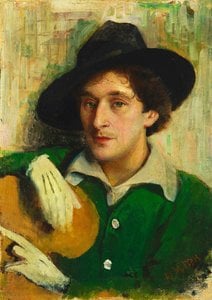
Marc Chagall
1887 - 1985 , Білорусь
Najważniejsze informacje
- Artistic Movement Or Style: Modernizm, Kubizm
- Artists Or Movements Influenced By This Artist:
- Surrealizm
- Artyści nowoczesni
- Artists Who Influenced This Artist:
- Bakst
- Delaunay
- Borowikowy
- Date Of Birth: 7 lipca 1887
- Date Of Death: 28 marca 1985
- Full Name: Marc Chagall
- Nationality: Rosjanin-Francuz
- Notable Artworks:
- I i Wieś
- Nad Vitebskiem
- Białe Ukrzyżowanie
- Place Of Birth: Liozna, Białoruś
Zobacz także powiązane artykuły

10 Arcydzieł Ekspresjonizmu Niemieckiego, Które Zdefiniowały Epokę | ArtsDot
Poznaj 10 arcydzieł ekspresjonizmu niemieckiego – od Kirchnera po Muncha. Odkryj historię, emocje i techniki tych ikonicznych dzieł sztuki. Reprodukcje najwyższej jakości na ArtsDot.com. Eksploruj kolekcję online!
Bunt Przeciw Konwencji: Odkrywanie Naiwnego Sztuki i Prymitywizmu jako Wyraz Odwrócenia Akademickich Tradycji
Odkryj fascynujący świat sztuki naiwnej i prymitywizmu! Analiza porównawcza, historia, wpływ na awangardę oraz współczesne interpretacje. Ekspercka wiedza dla kolekcjonerów i miłośników sztuki.
The Enduring Motif of Love in Art History: A Cross-Cultural Exploration of Representation and Emotion
Explore the rich history of love in art! Discover iconic masterpieces, artistic techniques & cultural symbolism from antiquity to modern times. Expert analysis for collectors.

10 Arcydzieł Sztuki, Które Rozpalają Romantyzm – Inspiracje do Wnętrz
Odkryj 10 arcydzieł romantyzmu! Poznaj historie miłości, pasji i emocji w malarstwie Delacroix, Friedricha i innych mistrzów. Inspiracje do wnętrz i reprodukcje obrazów najwyższej jakości na ArtsDot.com

10 Arcydzieł Sztuki na Wesele: Idealne Prezenty z Historią | ArtsDot.com
Znajdź idealny prezent na wesele! Odkryj 10 arcydzieł sztuki – od Van Gogha po Moneta – symbolizujących miłość i szczęście. Reprodukcje obrazów najwyższej jakości na ArtsDot.com. Inspiracje wnętrzarskie i luksusowe dekoracje ślubne czekają! Odkryj pełną kolekcję online.


