

- 32.0 x 24.0 cm


Obraz dostosowuje się do Twoich wyborów: , .
Opis obiektu
Explore Marc Chagall's iconic 'Adam and Eve Expelled from Paradise Land,' a surreal lithograph depicting biblical figures amidst dreamlike landscapes—a masterpiece of Jewish folklore and artistic vision.
 Rozwiń treść
Biografia artysty
Poznaj fascynujący świat Marc Chagalla (1887-1985), rosyjskiego i francuskiego mistrza sztuki, znanego z obrazów pełnych snu i folklorystycznych motywów oraz pięknych witraży. Odkryj jego dziedzictwo!
Ręcznie malowana reprodukcja olejowa
Ręcznie malowany obraz olejny na płótnie, wykonany na zamówienie przez naszych artystów w wybranym przez Ciebie wymiarze i oprawie. ( Przełącz na wydania drukowane Przejdź do wersji cyfrowej)
Ten utwór podlega ochronie prawem autorskim
Dzieło sztuki prezentowane na tej stronie podlega ochronie prawem autorskim, co oznacza, że nie mamy prawa do tworzenia ani sprzedaży jego identycznej reprodukcji. Ochrona ta jest egzekwowana na mocy umów międzynarodowych, takich jak Konwencja berneńska oraz przez przepisy prawa krajowego, w tym te określone w Prawo autorskie USA – Tytuł 17.
Jako pełną szacunku i legalną alternatywę oferujemy personalizowane, malowane ręcznie dzieła sztuki inspirowane oryginałem. Nasi wykwalifikowani i profesjonalni artyści starannie analizują styl, nastrój oraz artystyczną esencję pierwowzoru, aby stworzyć nowe, unikalne dzieło, które przywołuje te same emocje – pozostając jednocześnie w pełni oryginalną kreacją.
Metoda ta jest w pełni zgodna z przepisami prawa autorskiego, ponieważ nie polega na kopiowaniu ani powielaniu chronionego dzieła. Stanowi ona kreatywną reinterpretację – nowy obraz, który czerpie inspirację z oryginału, ale nie jest z nim tożsamy.
Więcej o tym obrazie
 Podgląd w skali 1:1
 Wyślij jako kartkę
 Udostępnij
 Szczegóły dzieła
 Przewodnik

 Pobierz obraz
 Podobne obiekty
 RTG
RTG Pokaz slajdów
 Pytania i odpowiedzi
 Statystyki
Zamów swój obraz w czterech prostych krokach
Nie spiesz się. Możesz zmienić każdą odpowiedź; cena w Twoim koszyku będzie aktualizowana po każdym wyborze.
1 Pierwszy z czterech kroków
Który rozmiar wybierasz?
Te rozmiary zachowują proporcje oryginalnego obrazu. Rysunek przedstawia wybrany przez Ciebie format na ścianie, nad dwumetrową sofą.
lub podaj własne wymiary
Wybierz spośród naszych standardowych rozmiarów, które zachowują oryginalne proporcje dzieła sztuki.

Wpisz wymaganą szerokość i wysokość, aby obraz pasował do Twojej ramy lub ściany. Ponieważ jest to dzieło malowane ręcznie, w przypadku rozmiaru o innych proporcjach artysta może domalować nieco więcej wokół obrazu lub przyciąć jego fragmenty — wybór należy do Ciebie. Przed rozpoczęciem pracy prześlemy Ci cyfrową wizualizację do zatwierdzenia. Obraz widoczny na tej stronie nie przedstawia rzeczywistego efektu — jedynie wizualizacja oddaje realny rezultat.
2 Drugi z czterech kroków
W jaki sposób przygotować dzieło: w formie tuby, na krosnach czy w ramie?
Poniższe ceny dotyczą rozmiaru wybranego w pierwszym kroku.
Wybierz krawędzie płótna naciągniętego na ramę
Wybierz ramę

Białe krawędzie zł1

rozmyte krawędzie zł1

Przedłużony zł1

P118B zł10

P118H zł10

P118W zł10

P438Z zł10

P508JH zł12

P508YH zł12

P805H zł10

P805Z zł10

P919BZ zł10

P919G zł10

P919XJ zł10

P959ZH zł10

P968JZ zł12

W106C zł8

W218G zł10

W218JH zł8

W218Y zł10

W307PJ zł10

W316G zł10

W316PJ zł8

W316Y zł10

W398PJ zł8

W4111J zł10

W500HY zł15

W500JH zł15

W692G zł12

W849H zł8

W940BG zł15

W953PJ zł8

H24-GOLD zł30

H24-SILVER zł30

H36-GOLD zł45

H36-SILVER zł45
W oprawie
Profil: . Wymiar całkowity w ramie: .
3 Trzeci z czterech kroków
Czy chcieliby Państwo wprowadzić jakieś zmiany w obrazie?
Większość osób odpowiada przecząco. Ponieważ każdy obraz jest tworzony ręcznie, nasz artysta może również dostosować go do Twoich potrzeb.
Po złożeniu zamówienia zespół ArtsDot.com skontaktuje się z klientem drogą mailową w celu uzyskania instrukcji i prześle podgląd projektu
4 Krok czwarty z czterech
Kilka opcji wykończenia
Wszystkie są opcjonalne. Wybrane już odpowiedzi nie wiążą się z żadnymi dodatkowymi kosztami.
Kto jest autorem?
Dostawa na całym świecie () w ciągu 3–4 tygodni zamiast standardowych 5 tygodni. (4 Listopad). Bez kompromisów w kwestii jakości.
Tabliczka informacyjna, jak w muzeum?
Szczegóły grawerowanej brązowej tabliczki
This elegant plaque features the artist's name and the title of the artwork, finely engraved for a timeless presentation.
It is made from bronze with a refined, elegant finish. The text is precisely laser-engraved for a sharp and permanent result. Measuring 9x2 cm, the plaque is compact yet easy to read. It's built to be durable and scratch-resistant, offering a professional, museum-quality look. Mounting is simple thanks to the included adhesive backing.
Szczegóły przezroczystej tabliczki akrylowej
The plaque includes essential engraved details such as the artist's name, the title of the artwork, the date it was created, the type of media used-like oil on canvas or watercolor-a brief description of the piece, and a QR code that links to the complete artwork information.
It is crafted from clear acrylic, offering a sleek, modern appearance. The text is UV-engraved in black to ensure strong visual contrast. With a size of 10x15 cm, it ensures optimal readability. It comes equipped with two metal hooks for secure wall mounting. The plaque is designed to be weather-resistant, making it suitable for various environments, and it includes interactive features that work seamlessly with smartphone scanning.
Szczegóły czarnej tabliczki akrylowej
This elegant plaque includes engraved information such as the artist's name, the title of the artwork, the date it was created, the type of media used (like oil on canvas or watercolor), a short description of the artwork, and a QR code for quick access to more information.
The plaque itself is made from refined black acrylic with a premium finish. The text is laser-engraved in white for high contrast and readability. Its size is 10x15 cm, designed to be easy to read. It comes with two metal hooks for professional mounting. The design is sleek and fits any interior style. It is also weather-resistant and durable, with built-in digital integration for mobile compatibility.
Werniks ochronny?
Kiedy potrzebujesz dostawy?
✓ Sprawdź i zamów
Twoje dzieło, dokładnie tak, jak zamówiłeś

Nocturne at Vence
Technika reprodukcji
Wymiary reprodukcji
-

Wybitny mistrz artystyczny
Większa szczegółowość, finezja i dodatkowy czas na realizację
-

Opcje oprawy reprodukcji
-
-
W przypadku dzieł sztuki lub reprodukcji, których którykolwiek z boków przekracza 105 cm (około 41 cali), rama zostanie wysłana w formie zestawu do samodzielnego montażu. Metoda ta zapewnia bezpieczną dostawę i zapobiega uszkodzeniom podczas transportu.
Wymagany profesjonalny montaż – nie jest to produkt typu DIY.
Zestaw musi zostać złożony, a płótno naciągnięte przez doświadczonego profesjonalnego ramiarza, przy użyciu kleju do drewna (brak w zestawie), kleszczy do naciągania płótna oraz ścisków, które utrzymają krosna w równej pozycji podczas schnięcia kleju. Nieprawidłowy montaż lub nierównomierne napięcie płótna może trwale uszkodzić dzieło sztuki i nie podlega naszej gwarancji.
 W przypadku dzieł sztuki lub reprodukcji, których którykolwiek z boków przekracza 105 cm (około 41 cali), rama zostanie wysłana w formie zestawu do samodzielnego montażu. Metoda ta zapewnia bezpieczną dostawę i zapobiega uszkodzeniom podczas transportu.
W zestawie znajdują się wszystkie listwy z litego drewna, precyzyjnie docięte do wymiarów.
Montaż odbywa się przy użyciu dołączonych wkrętów oraz kleju do drewna do łączenia narożników, którego zestaw nie zawiera i który musi zostać dostarczony przez ramiarza.
Wymagane są profesjonalne narzędzia, których nie ma w zestawie: kleszcze do naciągania płótna (napinacz) oraz zaciski, które pozwolą utrzymać listwy w równej pozycji podczas schnięcia kleju.
Ważne:
Do połączenia narożników niezbędny jest klej do drewna, listwy należy unieruchomić za pomocą ścisków do momentu całkowitego wyschnięcia kleju, a naciągnięcie płótna na złożoną ramę wymaga użycia kleszczy do naciągania płótna. Żaden z tych elementów nie jest dołączony do zestawu. Przed zamówieniem tego rozmiaru zalecamy konsultację z doświadczonym ramiarzem.

Etykieta obiektu
-
-

Lakier ochronny
Lakier z połyskiem (pogłębia kolory, chroni przed światłem i wilgocią)
-

Personalizacja dzieła
Przykłady możliwości personalizacji: zastąp twarz zdjęciem klienta; dodaj zwierzę domowe (np. zamień kota na psa); umieść ukrytą wiadomość w tle; zmień krajobraz lub elementy tła.
-

Ekspresowa
Dostawa na cały świat () w ciągu 3–4 tygodni zamiast standardowych 5 tygodni. (4 Listopad). Bez kompromisów w kwestii jakości.
-
Przesyłka ekspresowa
Dostawa na cały świat () w ciągu 5 tygodni. (11 Listopad).
W cenie
Cena całkowita
zł 1028
Opcja ze szkłem jest dostępna wyłącznie w rozmiarach poniżej 110 cm
W każdym zamówieniu
- Bezpłatna ekspresowa wysyłka na cały świat
- Wysokiej jakości płótno lniane
- Pełne ubezpieczenie przesyłki
- Gwarancja zwrotu należności celnych i podatków importowych
- Gwarancja wiernego odwzorowania kolorów
- 100-dniowa polityka zwrotów (tylko w przypadku wad)
- Gwarancja 100% zwrotu pieniędzy
- Zniżka przy zakupie wielu sztuk


A Surreal Symphony in Lithograph Ink
Marc Chagall’s “Nocturne at Vence,” created in 1963, transcends mere representation; it embodies the artist's profound engagement with folklore, mythology, and the subconscious. Printed as a lithograph by Mourlot, this artwork isn’t simply an image—it’s a portal into Chagall’s inner world, meticulously crafted to capture the essence of his distinctive vision. Measuring 32 x 24 cm, it commands attention not only for its size but also for the sheer audacity of its composition and color palette.- Subject Matter: The scene depicts a fantastical landscape bathed in moonlight, populated by animals—birds prominently positioned atop each other—a dog, and cats—creating an atmosphere of whimsical serenity.
- Style: Chagall’s signature style is instantly recognizable: Surrealism blended with elements of Jewish folklore and biblical imagery. Figures float effortlessly against a backdrop of stylized hills and skies, defying gravity and logic.
Technique and Material Considerations
The lithograph medium itself lends an ethereal quality to the artwork. Lithography relies on transferring ink onto stone through pressure, resulting in prints that possess remarkable tonal range and subtle textural nuances. Mourlot’s printing process ensured exceptional color fidelity, faithfully reproducing Chagall's vibrant hues—a testament to his mastery of pigment and printmaking techniques. The careful selection of paper stock further enhances the visual experience, providing a stable surface for the ink and contributing to the overall luminescence of the image.- Printing Process: Lithography utilizes oil-based inks pressed onto a treated limestone slab, transferring an image onto paper with precision.
- Paper Stock: The artwork is printed on archival quality paper designed to preserve color and prevent deterioration over time—a crucial factor for collectors seeking enduring beauty.
Historical Context and Chagall’s Artistic Journey
“Nocturne at Vence” emerged during a period of significant artistic experimentation, mirroring the broader trends of Surrealism and Expressionism that dominated European art in the mid-20th century. Chagall's lifelong fascination with Jewish tradition—particularly biblical narratives and Kabbalistic symbolism—is palpable throughout his oeuvre, including this lithograph. The painting reflects his formative years spent in Vitebsk, Belarus, where he absorbed influences from Orthodox Christianity and Jewish culture, shaping his artistic sensibility forever.- Surrealist Influence: Chagall’s work aligns with Surrealist principles of dreamlike imagery and irrational juxtapositions—a deliberate departure from realistic representation.
- Belarusian Roots: Vitebsk's cultural landscape profoundly impacted Chagall’s artistic vision, informing his use of color, symbolism, and narrative structure.
Symbolism and Emotional Resonance
Beyond its formal qualities, “Nocturne at Vence” communicates a powerful emotional resonance. The birds symbolize aspiration and transcendence, while the skulls serve as reminders of mortality—a duality that underscores Chagall’s contemplation on life's fragility and beauty. The overall composition evokes a sense of tranquility mingled with melancholy, inviting viewers to immerse themselves in a realm of imagination and memory. It is a piece that speaks directly to the soul, capturing the artist’s enduring belief in the transformative power of art—a legacy celebrated worldwide.- Symbolic Imagery: Birds represent hope and spiritual ascension; skulls symbolize mortality and contemplation on life's cycle.
- Emotional Impact: The artwork inspires reflection on themes of beauty, sorrow, and remembrance—reflecting Chagall’s profound engagement with human experience.
Pytania i odpowiedzi
Jaki kształt i wymiary ma „Nocturne at Vence” – Marc Chagall?
„Nocturne at Vence” – Marc Chagall ma proporcje pracy w formacie Portrait o wymiarach 32 x 24 cm.
Kto stworzył "Nocturne at Vence" i w jakim stylu jest to dzieło?
Za dziełem "Nocturne at Vence" stoi Marc Chagall oraz nurt Surrealist Expressionism.
Jakie emocje wywołują kolory w „Nocturne at Vence” – Marc Chagall?
Paleta Neutrals dzieła „Nocturne at Vence” – Marc Chagall współgra z jego Melancholic wydźwiękiem emocjonalnym. Kolor jest jednym ze sposobów, w jakie praca przekazuje emocje.
Podobne dzieła


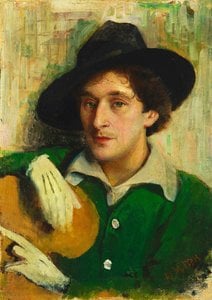
Marc Chagall
1887 - 1985, Білорусь
Biografia artysty
A Life Painted in Dreams: The World of Marc Chagall
Marc Chagall, born Moishe Shagal in 1887 in the small Belarussian town of Liozna near Vitebsk, wasn’t merely a painter; he was a poet of color, a weaver of dreams, and a chronicler of memory. His life, spanning nearly a century, mirrored the tumultuous currents of the 20th century, yet his art remained steadfastly rooted in a deeply personal vision—one infused with the folklore of his Hasidic Jewish upbringing and an unwavering belief in the power of imagination. Vitebsk itself was more than just a birthplace; it became the emotional core of his artistic universe, a recurring motif populated by flying figures, whimsical animals, and the vibrant hues of remembered landscapes. The town’s unique blend of cultures—Russian Orthodox churches alongside bustling Jewish marketplaces—forged an aesthetic sensibility that would defy easy categorization throughout his long career. Though he sought formal training first with a local sign painter and later in St. Petersburg under Léon Bakst, and then in Paris at the Académie de la Grande Chaumière, Chagall never fully embraced any single artistic movement. He absorbed elements of Cubism, Symbolism, and Fauvism, but always filtered them through his own intensely personal lens, creating a style that was uniquely, unmistakably Chagall.Early Years and Artistic Beginnings
Chagall’s formative years were marked by hardship and displacement. Born into a family of impoverished Jewish artisans, he experienced the trauma of pogroms—violent attacks against Jews—which instilled in him a profound awareness of persecution and loss. Despite these challenges, he pursued his artistic ambitions with unwavering determination, initially studying sign painting before enrolling at St. Petersburg’s Imperial Art Academy under Léon Bakst, where he honed his skills in theatrical design. However, Bakst's insistence on adhering to academic conventions clashed with Chagall’s innate inclination toward expressive abstraction, prompting him to forge his own path—a path that would ultimately lead him away from formal training and towards a radically original artistic vision. His early paintings, such as I and the Village (1911), already demonstrated his distinctive approach: he eschewed realistic representation in favor of fragmented imagery imbued with symbolic meaning. The village wasn’t rendered realistically but as a collection of recollections, bathed in luminous colors—a technique that would become central to his oeuvre. This ability to transmute personal experience into universal themes became a hallmark of his art and foreshadowed the stylistic innovations that would characterize his subsequent work.The Symbolist Influence and Vitebsk’s Vision
Chagall's artistic development was profoundly shaped by Symbolism, particularly by artists like Gustave Moreau and Edvard Munch. He embraced the Symbolists’ preoccupation with emotion and psychological depth, rejecting the objective depiction of reality in favor of subjective expression. The influence of folklore—particularly Jewish folklore—was equally significant. Chagall drew inspiration from biblical stories, folktales, and Jewish traditions, incorporating fantastical elements into his paintings that evoked a sense of wonder and enchantment. Vitebsk remained an enduring presence in Chagall’s artistic imagination. He depicted the town repeatedly throughout his career, capturing its distinctive atmosphere—the juxtaposition of Orthodox churches and Jewish marketplaces—with vibrant colors and dreamlike distortions. These images weren't merely topographical representations; they were expressions of nostalgia for a lost homeland and reflections on themes of identity and belonging.Cubism and Beyond: Experimentation and Innovation
While Chagall absorbed elements of Cubism, pioneered by Pablo Picasso and Georges Braque, he never fully embraced its geometric rigor. Instead, he adapted Cubist principles—such as fragmentation and multiple perspectives—to his own expressive style, creating canvases that defied conventional spatial conventions. He experimented with collage techniques, incorporating newspaper clippings and other found objects into his paintings—a practice that reflected his engagement with the cultural landscape of his time. His palette became increasingly bold and chromatic, employing colors that seemed to defy natural laws—colors that pulsed with emotion and conveyed a sense of otherworldly beauty. This willingness to push boundaries—to challenge artistic conventions—was driven by an unwavering belief in the transformative power of art.Mature Works and Legacy
Chagall’s mature oeuvre encompasses a vast range of subjects—biblical narratives, portraits, landscapes, still lifes—each rendered with unparalleled sensitivity and imagination. Paintings like White Crucifixion (1937) are emotionally charged meditations on suffering and redemption, reflecting the anxieties of the era while simultaneously reaffirming Chagall’s humanist values. His stained glass windows for the Hadassah Hebrew University Medical Center synagogue in Jerusalem—a monumental undertaking that cemented his reputation as a visionary artist—represent a culmination of his artistic explorations. These works stand as testament to his enduring influence on subsequent generations of artists, who continue to draw inspiration from his lyrical style and his profound engagement with universal themes. Marc Chagall’s legacy extends beyond his paintings; it resides in the indelible mark he left on the history of art—a mark characterized by beauty, imagination, and an unwavering commitment to expressing the deepest recesses of human experience. He died March 28, 1985, leaving behind a body of work that continues to captivate audiences worldwide.


Powiązane artykuły

10 Arcydzieł Surrealizmu, które Zdefiniowały Sztukę XX Wieku | ArtsDot
Odkryj 10 arcydzieł surrealizmu, które zrewolucjonizowały sztukę! Poznaj historie Dalíego, Magritte'a i innych mistrzów. Reprodukcje obrazów najwyższej jakości na ArtsDot.com – inspiracje dla Twojego wnętrza.

Surrealizm w Obrazach: 10 Arcydzieł, Które Zdefiniowały Ruch | ArtsDot.pl
Odkryj 10 arcydzieł surrealizmu! Poznaj historie Dalí, Magritte’a i Miró. Inspiracje, techniki i znaczenie onirycznych obrazów. Reprodukcje najwyższej jakości na ArtsDot.com – galeria sztuki online dla Twojego wnętrza. Eksploruj kolekcję!
The Enduring Legacy of Printmaking: Techniques, Themes & Artistic Innovation Across Centuries
Explore the rich history of printmaking with ArtsDot. Discover techniques from intaglio to lithography, learn about collecting valuable prints & find museum-quality reproductions. Expert insights for art enthusiasts and collectors.