


 Zobacz w skali 1:1
 Wyślij
 Udostępnij
 Szczegóły
 Przewodnik

 Pobierz plik obrazu
 Podobne obiekty
 RTG
RTG Pokaz slajdów
 Statystyki
Creation
 Lithography
- WallArt
- Surrealist Expression
 1960
1960- Modern
 52.0 x 38.0 cm
 Czytaj więcej
Dzieło sztuki prezentowane na tej stronie podlega ochronie prawem autorskim, co oznacza, że nie mamy prawa do tworzenia ani sprzedaży jego identycznej reprodukcji. Ochrona ta jest egzekwowana na mocy umów międzynarodowych, takich jak Konwencja berneńska oraz przez przepisy prawa krajowego, w tym te określone w Prawo autorskie USA – Tytuł 17.
Metoda ta jest w pełni zgodna z przepisami prawa autorskiego, ponieważ nie polega na kopiowaniu ani powielaniu chronionego dzieła. Stanowi ona kreatywną reinterpretację – nowy obraz, który czerpie inspirację z oryginału, ale nie jest z nim tożsamy.
Giclée / Wydruk artystyczny
Wydruki giclée lub płótna o jakości muzealnej, szybka realizacja i szeroki wybór opcji wykończenia. ( Kup ręcznie malowany obraz Przełącz na wersję cyfrową)




P118B zł10

P118H zł10

P118W zł10

P438Z zł10

P508JH zł12

P508YH zł12

P805H zł10

P805Z zł10

P919BZ zł10

P919G zł10

P919XJ zł10

P959ZH zł10

P968JZ zł12

W106C zł8

W218G zł10

W218JH zł8

W218Y zł10

W307PJ zł10

W316G zł10

W316PJ zł8

W316Y zł10

W398PJ zł8

W4111J zł10

W500HY zł15

W500JH zł15

W692G zł12

W849H zł8

W940BG zł15

W953PJ zł8




Wybierz spośród naszych standardowych rozmiarów, które zachowują oryginalne proporcje dzieła sztuki.

Wpisz wymaganą szerokość i wysokość, aby dopasować grafikę do ramy lub ściany. Wydruk można jedynie przyciąć, nigdy nie powiększając go poza oryginalny obraz, dlatego format o innym proporcji spowoduje utratę części kompozycji. Przed rozpoczęciem druku prześlemy Ci cyfrowy podgląd do zatwierdzenia. Obraz wyświetlany na tej stronie nie pokazuje rzeczywistego przycięcia — jedynie podgląd oddaje ten efekt.
Dostawa na cały świat () w ciągu 2 tygodni zamiast standardowych 4/5 tygodni. (21 Październik)

Bezpłatna ekspresowa wysyłka na cały świat

Wysokiej jakości płótno lniane

Pełne ubezpieczenie transportowe

Gwarancja zwrotu należności celnych i podatków importowych

Gwarancja idealnego odwzorowania barw

100-dniowy okres na zwrot dzieła w przypadku wykrycia wad produkcyjnych

Gwarancja 100% zwrotu pieniędzy

Oferta przy zakupie wielu sztuk
 Opcja ze szkłem jest dostępna wyłącznie w rozmiarach poniżej 110 cm

Creation
Giclée / Wydruk artystyczny
Rozmiar reprodukcji
-


Suma do zapłaty
zł 235
A Symphony of Animals and Myth
Completed in 1960, this lithograph presents a dense arrangement of fauna within a dreamlike landscape. Birds populate the upper reaches of the composition, some perched on branches while others take flight across the paper. Three fish navigate the space, positioned near the corners and center, while a cow rests at the top left. The scene functions as an assembly of primal forces, where the boundaries between the earthly and the spiritual appear blurred.
The artist utilizes the lithographic process to achieve a specific tonal range. By transferring ink from a stone matrix onto paper through pressure, the work captures fine details and a sense of luminosity. This technique allows for subtle variations in color and shading, contributing to an atmosphere that feels both weightless and deeply textured.
Symbolism and Heritage
The imagery draws heavily from the artist's formative years in Liozna, Belarus. The multitude of birds suggests themes of freedom and spiritual transcendence, while the presence of cows anchors the fantastical elements to notions of fertility and abundance. The fish evoke ideas of regeneration and divine providence, reflecting a connection to Jewish heritage and the concept of cyclical renewal.
The composition emerged from a period of significant intellectual change following World War II. Having experienced the displacement of conflict, the artist channeled anxieties into expressions of hope through these stylized figures. The work remains rooted in the cultural crossroads of Vitebsk, where Jewish tradition and Russian Orthodox influences shaped a unique visual language.
Pytania i odpowiedzi
Jakie zastosowanie i przestrzeń są zalecane dla „Creation” autorstwa Marc Chagall?
Dzieło „Creation” autorstwa Marc Chagall jest polecane do Conversation, najlepiej w Children's Room. Zastosowanie oraz przestrzeń pomagają zdecydować, gdzie najlepiej umieścić reprodukcję.
Jaki rozmiar i orientacja są zalecane dla wydruku dzieła „Creation” autorstwa Marc Chagall?
Rozmiar Small, orientacja Portrait: to sugerowane ustawienia druku dla „Creation” autorstwa Marc Chagall.
O czym jest "Creation" i jaką ma atmosferę?
„Creation” autorstwa Marc Chagall przedstawia animals, folklore, imagination, landscape, color palette, biblical symbolism, dreamscape, wprowadzając Mystical nastrój. Tematyka i atmosfera wspólnie definiują to dzieło.
Podobne dzieła


Biografia artysty
A Life Painted in Dreams: The World of Marc Chagall
Marc Chagall, born Moishe Shagal in 1887 in the small Belarussian town of Liozna near Vitebsk, wasn’t merely a painter; he was a poet of color, a weaver of dreams, and a chronicler of memory. His life, spanning nearly a century, mirrored the tumultuous currents of the 20th century, yet his art remained steadfastly rooted in a deeply personal vision—one infused with the folklore of his Hasidic Jewish upbringing and an unwavering belief in the power of imagination. Vitebsk itself was more than just a birthplace; it became the emotional core of his artistic universe, a recurring motif populated by flying figures, whimsical animals, and the vibrant hues of remembered landscapes. The town’s unique blend of cultures—Russian Orthodox churches alongside bustling Jewish marketplaces—forged an aesthetic sensibility that would defy easy categorization throughout his long career. Though he sought formal training first with a local sign painter and later in St. Petersburg under Léon Bakst, and then in Paris at the Académie de la Grande Chaumière, Chagall never fully embraced any single artistic movement. He absorbed elements of Cubism, Symbolism, and Fauvism, but always filtered them through his own intensely personal lens, creating a style that was uniquely, unmistakably Chagall.Early Years and Artistic Beginnings
Chagall’s formative years were marked by hardship and displacement. Born into a family of impoverished Jewish artisans, he experienced the trauma of pogroms—violent attacks against Jews—which instilled in him a profound awareness of persecution and loss. Despite these challenges, he pursued his artistic ambitions with unwavering determination, initially studying sign painting before enrolling at St. Petersburg’s Imperial Art Academy under Léon Bakst, where he honed his skills in theatrical design. However, Bakst's insistence on adhering to academic conventions clashed with Chagall’s innate inclination toward expressive abstraction, prompting him to forge his own path—a path that would ultimately lead him away from formal training and towards a radically original artistic vision. His early paintings, such as I and the Village (1911), already demonstrated his distinctive approach: he eschewed realistic representation in favor of fragmented imagery imbued with symbolic meaning. The village wasn’t rendered realistically but as a collection of recollections, bathed in luminous colors—a technique that would become central to his oeuvre. This ability to transmute personal experience into universal themes became a hallmark of his art and foreshadowed the stylistic innovations that would characterize his subsequent work.The Symbolist Influence and Vitebsk’s Vision
Chagall's artistic development was profoundly shaped by Symbolism, particularly by artists like Gustave Moreau and Edvard Munch. He embraced the Symbolists’ preoccupation with emotion and psychological depth, rejecting the objective depiction of reality in favor of subjective expression. The influence of folklore—particularly Jewish folklore—was equally significant. Chagall drew inspiration from biblical stories, folktales, and Jewish traditions, incorporating fantastical elements into his paintings that evoked a sense of wonder and enchantment. Vitebsk remained an enduring presence in Chagall’s artistic imagination. He depicted the town repeatedly throughout his career, capturing its distinctive atmosphere—the juxtaposition of Orthodox churches and Jewish marketplaces—with vibrant colors and dreamlike distortions. These images weren't merely topographical representations; they were expressions of nostalgia for a lost homeland and reflections on themes of identity and belonging.Cubism and Beyond: Experimentation and Innovation
While Chagall absorbed elements of Cubism, pioneered by Pablo Picasso and Georges Braque, he never fully embraced its geometric rigor. Instead, he adapted Cubist principles—such as fragmentation and multiple perspectives—to his own expressive style, creating canvases that defied conventional spatial conventions. He experimented with collage techniques, incorporating newspaper clippings and other found objects into his paintings—a practice that reflected his engagement with the cultural landscape of his time. His palette became increasingly bold and chromatic, employing colors that seemed to defy natural laws—colors that pulsed with emotion and conveyed a sense of otherworldly beauty. This willingness to push boundaries—to challenge artistic conventions—was driven by an unwavering belief in the transformative power of art.Mature Works and Legacy
Chagall’s mature oeuvre encompasses a vast range of subjects—biblical narratives, portraits, landscapes, still lifes—each rendered with unparalleled sensitivity and imagination. Paintings like White Crucifixion (1937) are emotionally charged meditations on suffering and redemption, reflecting the anxieties of the era while simultaneously reaffirming Chagall’s humanist values. His stained glass windows for the Hadassah Hebrew University Medical Center synagogue in Jerusalem—a monumental undertaking that cemented his reputation as a visionary artist—represent a culmination of his artistic explorations. These works stand as testament to his enduring influence on subsequent generations of artists, who continue to draw inspiration from his lyrical style and his profound engagement with universal themes. Marc Chagall’s legacy extends beyond his paintings; it resides in the indelible mark he left on the history of art—a mark characterized by beauty, imagination, and an unwavering commitment to expressing the deepest recesses of human experience. He died March 28, 1985, leaving behind a body of work that continues to captivate audiences worldwide.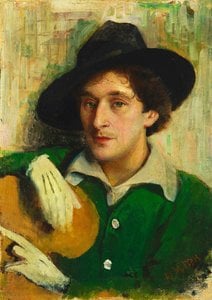
Marc Chagall
1887 - 1985 , Білорусь
Najważniejsze informacje
- Artistic Movement Or Style: Modernizm, Kubizm
- Artists Or Movements Influenced By This Artist:
- Surrealizm
- Artyści nowoczesni
- Artists Who Influenced This Artist:
- Bakst
- Delaunay
- Borowikowy
- Date Of Birth: 7 lipca 1887
- Date Of Death: 28 marca 1985
- Full Name: Marc Chagall
- Nationality: Rosjanin-Francuz
- Notable Artworks:
- I i Wieś
- Nad Vitebskiem
- Białe Ukrzyżowanie
- Place Of Birth: Liozna, Białoruś
Zobacz także powiązane artykuły

Timeless Companions: A Newlywed’s Guide to Decorating Your First Home with Beautiful Animal Portrait Art
Create a soulful first home with stunning animal portrait art. ArtsDot.com offers exquisite hand-painted oil reproductions and custom pet portraits tailored to your style. From digital mockups to free worldwide shipping, we help newlyweds turn cherished memories into timeless masterpieces.

Zwierzęta w Sztuce: Wprowadzanie Życia do Twojej Przestrzeni
Odkryj fascynujący świat zwierząt w sztuce! Poznaj symbolikę, historię i współczesne interpretacje. Znajdź idealny obraz ze zwierzęciem do swojego wnętrza z .

Beastly Brushstrokes: A Historical Journey Through Animal Painting & Aesthetic Movements
Explore the rich history of animal painting across cultures & movements. Discover iconic artists, symbolism, collecting trends & expert art consultation at ArtsDot.com.
Litografia: Historia Techniki, Wyraz Artystyczny i Trwałe Dziedzictwo
Poznaj historię litografii – od wynalazku Senefeldera po współczesne zastosowania. Szczegółowy przewodnik po technice, wybitnych artystach i konserwacji dzieł sztuki. Ekspercka wiedza dla kolekcjonerów i miłośników grafiki.

Feathered Visions: A Historical & Artistic Exploration of Birds in Painting
Explore the rich history of birds in painting! Discover symbolism, artistic movements & master artists like Audubon. High-quality reproductions available at ArtsDot.


