


Obraz dostosowuje się do Twoich wyborów: , .
Opis obiektu
A dramatic Northern Renaissance masterpiece by Maarten de Vos capturing the tension of The Last Supper through rich oil textures and golden light, inviting you to bring this profound biblical moment into your collection.
 Rozwiń treść
Biografia artysty
Discover Maarten de Vos: Flemish painter of history & portraits (1532-1603). Known for Venetian influence, Italian travels, & significant works in the Spanish Netherlands.
Ręcznie malowana reprodukcja olejowa
Ręcznie malowany obraz olejny na płótnie, wykonany na zamówienie przez naszych artystów w wybranym przez Ciebie wymiarze i oprawie. ( Przełącz na wydania drukowane Przejdź do wersji cyfrowej)
Więcej o tym obrazie
 Podgląd w skali 1:1
 Wyślij jako kartkę
 Udostępnij
 Szczegóły dzieła
 Przewodnik

 Pobierz obraz
 Podobne obiekty
 RTG
RTG Pokaz slajdów
 Pytania i odpowiedzi
 Statystyki
Zamów swój obraz w czterech prostych krokach
Nie spiesz się. Możesz zmienić każdą odpowiedź; cena w Twoim koszyku będzie aktualizowana po każdym wyborze.
1 Pierwszy z czterech kroków
Który rozmiar wybierasz?
Te rozmiary zachowują proporcje oryginalnego obrazu. Rysunek przedstawia wybrany przez Ciebie format na ścianie, nad dwumetrową sofą.
lub podaj własne wymiary
Wybierz spośród naszych standardowych rozmiarów, które zachowują oryginalne proporcje dzieła sztuki.

Wpisz wymaganą szerokość i wysokość, aby obraz pasował do Twojej ramy lub ściany. Ponieważ jest to dzieło malowane ręcznie, w przypadku rozmiaru o innych proporcjach artysta może domalować nieco więcej wokół obrazu lub przyciąć jego fragmenty — wybór należy do Ciebie. Przed rozpoczęciem pracy prześlemy Ci cyfrową wizualizację do zatwierdzenia. Obraz widoczny na tej stronie nie przedstawia rzeczywistego efektu — jedynie wizualizacja oddaje realny rezultat.
2 Drugi z czterech kroków
W jaki sposób przygotować dzieło: w formie tuby, na krosnach czy w ramie?
Poniższe ceny dotyczą rozmiaru wybranego w pierwszym kroku.
Wybierz krawędzie płótna naciągniętego na ramę
Wybierz ramę

Białe krawędzie zł1

rozmyte krawędzie zł1

Przedłużony zł1

P118B zł10

P118H zł10

P118W zł10

P438Z zł10

P508JH zł12

P508YH zł12

P805H zł10

P805Z zł10

P919BZ zł10

P919G zł10

P919XJ zł10

P959ZH zł10

P968JZ zł12

W106C zł8

W218G zł10

W218JH zł8

W218Y zł10

W307PJ zł10

W316G zł10

W316PJ zł8

W316Y zł10

W398PJ zł8

W4111J zł10

W500HY zł15

W500JH zł15

W692G zł12

W849H zł8

W940BG zł15

W953PJ zł8

H24-GOLD zł30

H24-SILVER zł30

H36-GOLD zł45

H36-SILVER zł45
W oprawie
Profil: . Wymiar całkowity w ramie: .
3 Trzeci z czterech kroków
Czy chcieliby Państwo wprowadzić jakieś zmiany w obrazie?
Większość osób odpowiada przecząco. Ponieważ każdy obraz jest tworzony ręcznie, nasz artysta może również dostosować go do Twoich potrzeb.
Po złożeniu zamówienia zespół ArtsDot.com skontaktuje się z klientem drogą mailową w celu uzyskania instrukcji i prześle podgląd projektu
4 Krok czwarty z czterech
Kilka opcji wykończenia
Wszystkie są opcjonalne. Wybrane już odpowiedzi nie wiążą się z żadnymi dodatkowymi kosztami.
Kto jest autorem?
Dostawa na całym świecie () w ciągu 3–4 tygodni zamiast standardowych 5 tygodni. (8 Listopad). Bez kompromisów w kwestii jakości.
Tabliczka informacyjna, jak w muzeum?
Szczegóły grawerowanej brązowej tabliczki
This elegant plaque features the artist's name and the title of the artwork, finely engraved for a timeless presentation.
It is made from bronze with a refined, elegant finish. The text is precisely laser-engraved for a sharp and permanent result. Measuring 9x2 cm, the plaque is compact yet easy to read. It's built to be durable and scratch-resistant, offering a professional, museum-quality look. Mounting is simple thanks to the included adhesive backing.
Szczegóły przezroczystej tabliczki akrylowej
The plaque includes essential engraved details such as the artist's name, the title of the artwork, the date it was created, the type of media used-like oil on canvas or watercolor-a brief description of the piece, and a QR code that links to the complete artwork information.
It is crafted from clear acrylic, offering a sleek, modern appearance. The text is UV-engraved in black to ensure strong visual contrast. With a size of 10x15 cm, it ensures optimal readability. It comes equipped with two metal hooks for secure wall mounting. The plaque is designed to be weather-resistant, making it suitable for various environments, and it includes interactive features that work seamlessly with smartphone scanning.
Szczegóły czarnej tabliczki akrylowej
This elegant plaque includes engraved information such as the artist's name, the title of the artwork, the date it was created, the type of media used (like oil on canvas or watercolor), a short description of the artwork, and a QR code for quick access to more information.
The plaque itself is made from refined black acrylic with a premium finish. The text is laser-engraved in white for high contrast and readability. Its size is 10x15 cm, designed to be easy to read. It comes with two metal hooks for professional mounting. The design is sleek and fits any interior style. It is also weather-resistant and durable, with built-in digital integration for mobile compatibility.
Werniks ochronny?
Kiedy potrzebujesz dostawy?
✓ Sprawdź i zamów
Twoje dzieło, dokładnie tak, jak zamówiłeś

The Last Supper
Technika reprodukcji
Wymiary reprodukcji
-

Wybitny mistrz artystyczny
Większa szczegółowość, finezja i dodatkowy czas na realizację
-

Opcje oprawy reprodukcji
-
-
W przypadku dzieł sztuki lub reprodukcji, których którykolwiek z boków przekracza 105 cm (około 41 cali), rama zostanie wysłana w formie zestawu do samodzielnego montażu. Metoda ta zapewnia bezpieczną dostawę i zapobiega uszkodzeniom podczas transportu.
Wymagany profesjonalny montaż – nie jest to produkt typu DIY.
Zestaw musi zostać złożony, a płótno naciągnięte przez doświadczonego profesjonalnego ramiarza, przy użyciu kleju do drewna (brak w zestawie), kleszczy do naciągania płótna oraz ścisków, które utrzymają krosna w równej pozycji podczas schnięcia kleju. Nieprawidłowy montaż lub nierównomierne napięcie płótna może trwale uszkodzić dzieło sztuki i nie podlega naszej gwarancji.
 W przypadku dzieł sztuki lub reprodukcji, których którykolwiek z boków przekracza 105 cm (około 41 cali), rama zostanie wysłana w formie zestawu do samodzielnego montażu. Metoda ta zapewnia bezpieczną dostawę i zapobiega uszkodzeniom podczas transportu.
W zestawie znajdują się wszystkie listwy z litego drewna, precyzyjnie docięte do wymiarów.
Montaż odbywa się przy użyciu dołączonych wkrętów oraz kleju do drewna do łączenia narożników, którego zestaw nie zawiera i który musi zostać dostarczony przez ramiarza.
Wymagane są profesjonalne narzędzia, których nie ma w zestawie: kleszcze do naciągania płótna (napinacz) oraz zaciski, które pozwolą utrzymać listwy w równej pozycji podczas schnięcia kleju.
Ważne:
Do połączenia narożników niezbędny jest klej do drewna, listwy należy unieruchomić za pomocą ścisków do momentu całkowitego wyschnięcia kleju, a naciągnięcie płótna na złożoną ramę wymaga użycia kleszczy do naciągania płótna. Żaden z tych elementów nie jest dołączony do zestawu. Przed zamówieniem tego rozmiaru zalecamy konsultację z doświadczonym ramiarzem.

Etykieta obiektu
-
-

Lakier ochronny
Lakier z połyskiem (pogłębia kolory, chroni przed światłem i wilgocią)
-

Personalizacja dzieła
Przykłady możliwości personalizacji: zastąp twarz zdjęciem klienta; dodaj zwierzę domowe (np. zamień kota na psa); umieść ukrytą wiadomość w tle; zmień krajobraz lub elementy tła.
-

Ekspresowa
Dostawa na cały świat () w ciągu 3–4 tygodni zamiast standardowych 5 tygodni. (8 Listopad). Bez kompromisów w kwestii jakości.
-
Przesyłka ekspresowa
Dostawa na cały świat () w ciągu 5 tygodni. (15 Listopad).
W cenie
Cena całkowita
zł 2202
Opcja ze szkłem jest dostępna wyłącznie w rozmiarach poniżej 110 cm
W każdym zamówieniu
- Bezpłatna ekspresowa wysyłka na cały świat
- Wysokiej jakości płótno lniane
- Pełne ubezpieczenie przesyłki
- Gwarancja zwrotu należności celnych i podatków importowych
- Gwarancja wiernego odwzorowania kolorów
- 100-dniowa polityka zwrotów (tylko w przypadku wad)
- Gwarancja 100% zwrotu pieniędzy
- Zniżka przy zakupie wielu sztuk


A Moment of Trembling Silence
Step closer to the table. There is a particular tension held within this room, a weight that seems to press against the very air between the figures. In this depiction of the biblical event, we find Christ at the center of a long, horizontal arrangement, his presence anchoring a scene of sudden, sharp movement. The light enters from a window on the right, casting deep shadows that pull the faces of the disciples into relief. It is a quiet sort of drama. You can almost hear the hushed whispers and the clatter of bread being moved as the news of betrayal ripples through the group. De Vos has captured that precise second where the announcement has been made, but the full weight of the consequence has not yet settled.
The composition relies on a careful arrangement of bodies to guide your eye. While many of the apostles are caught in mid-conversation or looking toward Christ with startled expressions, one figure is set apart. Judas sits directly in front of Jesus, turning his face away, physically attempting to evade the gaze of the man he intends to betray. This subtle movement creates a psychological pull that keeps you anchored to the center of the table.
The Language of Light and Oil
Observe the way the oil interacts with the wooden panel. There is a certain luster here, a pearl-like quality in the skin tones and the heavy folds of the drapery that speaks to the Northern Mannerist tradition. The palette is grounded in warm, earthy tones—ochres, deep reds, and browns—which lend the room an opulent, almost heavy atmosphere. This warmth is contrasted by the sharp, directional light that defines the architectural details of the setting, suggesting a space that is both Roman and Byzantine in its grandeur.
The technique allows for a meticulous attention to texture. You can see the weight of the fabrics and the rougher surfaces of the objects resting upon the table. These elements are not merely decorative; they ground the spiritual narrative in a tangible, physical reality. The bread and wine, central to the Eucharist, are rendered with a clarity that makes them feel present in the room with us. Through this careful layering of light and shadow, the artist achieves a sense of depth that brings the figures forward, making the betrayal feel less like a distant historical event and more like a lived, breathing moment.
Pytania i odpowiedzi
Kto stworzył "The Last Supper"?
Autorstwo dzieła "The Last Supper" przypisuje się Maarten De Vos.
Co to za dzieło: "The Last Supper"?
"The Last Supper" to WallArt.
Jakie są prawa do reprodukcji dzieła "The Last Supper" znajdującego się w The National Museum of Western Art?
Oryginał dzieła „The Last Supper” znajduje się w The National Museum of Western Art, a utwór jest należy do domeny publicznej – autorskie prawa majątkowe wygasły.
Podobne dzieła


Maarten De Vos
1532 - 1603
Biografia artysty
Early Life and Training in Antwerp
Maerten de Vos, born in the bustling artistic hub of Antwerp in 1532, emerged from a family deeply rooted in the city’s painting tradition. His father, Pieter de Vos, originally hailing from Leiden, had established himself as a respected painter after an apprenticeship with Jeroom Scuelens. Young Maerten, alongside his brother Pieter, initially received his foundational training within their father's workshop, absorbing the techniques and sensibilities of the mid-16th century Flemish school. While speculation suggests a possible tutelage under the prominent Frans Floris—the leading history painter of the time—documentary evidence remains elusive. This early period undoubtedly instilled in him a solid understanding of composition, draftsmanship, and the prevailing artistic currents of Antwerp.
The Italian Sojourn and Venetian Influences
As was common for ambitious Flemish artists seeking to broaden their horizons, Maerten de Vos embarked on an extended journey to Italy between 1550 and 1558. This transformative experience proved pivotal in shaping his artistic style. He likely sojourned in major centers like Rome, Florence, and Venice, immersing himself in the masterpieces of the Italian Renaissance and Mannerism. The vibrant colors and dynamic compositions of Venetian painters—particularly Paolo Veronese and Jacopo Tintoretto—left an indelible mark on his work. Carlo Ridolfi, a 17th-century art biographer, even claimed that de Vos studied directly under Tintoretto in Venice, though this assertion requires careful consideration. Regardless, the influence is palpable: a newfound richness of hue, a heightened sense of drama, and a more fluid approach to form characterize his paintings following his return to Antwerp.
A Prolific Draftsman and Rise to Prominence
Upon his return to Antwerp in 1558, de Vos quickly integrated into the city’s artistic community, joining the Guild of Saint Luke. He married Joanna le Boucq, a woman from Valenciennes, and together they raised a large family. The art world of Antwerp was competitive; Frans Floris dominated the scene with his expansive workshop. De Vos initially faced challenges securing commissions but proved fortunate in 1564 when he received patronage from Gillis Hooftman, a wealthy merchant who commissioned several significant works. However, it was the tumultuous period following the Beeldenstorm of the 1560s—the wave of iconoclasm that swept through the Netherlands—that truly propelled de Vos to prominence. Floris, deeply shaken by the destruction of his art, retreated from active painting, creating a void in the market for history paintings. De Vos skillfully stepped into this breach, becoming one of the leading figures in the Spanish Netherlands.
History Paintings and Religious Commissions
De Vos distinguished himself as a prolific painter of history and allegorical scenes, often imbued with moral or religious themes. His work reflects both his earlier Flemish training and the Italian influences he absorbed during his travels. He was particularly adept at depicting complex narratives filled with numerous figures, showcasing his mastery of composition and anatomical detail. In 1570, he received a prestigious commission to decorate the palatine chapel of William, Duke of Brunswick-Lüneburg in Celle, Germany—a project that involved creating a Lutheran scheme of decoration. This demonstrates his adaptability and willingness to cater to diverse religious patrons. Later in his career, as Antwerp experienced a resurgence of Catholic fervor, de Vos became a leading producer of altarpieces, effectively paving the way for the rise of Peter Paul Rubens.
Legacy and Historical Significance
Maerten de Vos’s impact extended beyond his own paintings. He was an exceptionally prolific draftsman, creating hundreds of designs that were widely circulated through Antwerp printing workshops. These prints served as models for tapestries, stained glass windows, and other decorative arts, disseminating his style throughout Europe and the Spanish colonies. His influence can be seen in the works of numerous artists who followed him. He left a lasting legacy not only as a skilled painter but also as an important innovator in printmaking and a key figure in the transition from Mannerism to Baroque art in the Netherlands. He died in Antwerp on December 4, 1603, leaving behind a rich artistic heritage that continues to captivate and inspire.
Powiązane artykuły

The Resonance of Earthly Tones: Exploring Nuance, History & Emotional Impact in Art
Explore the captivating world of earth tones in art! Discover historical context, emotional resonance & artistic techniques behind these timeless colors. Find inspiration for your home decor and museum-quality reproductions.

10 Arcydzieł w Odcieniach Gliny: Malarstwo Pełne Ziemi i Historii | ArtsDot.com
Odkryj 10 arcydzieł malarstwa w odcieniach gliny! Poznaj historie Picasso, Van Gogha i Rembrandta. Inspiracje wnętrzarskie & reprodukcje obrazów najwyższej jakości na ArtsDot.com. Eksploruj kolekcję online!
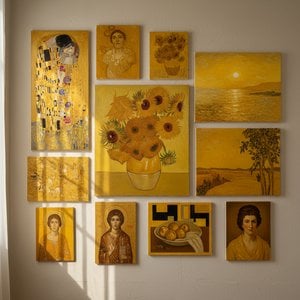
Top 10 Sławnych Obrazów w Odcieniach Ochry Żółtej – Sztuka i Dekoracja Domu
Odkryj 10 najsłynniejszych obrazów w odcieniach ochry żółtej! Van Gogh, Monet i inni mistrzowie. Poznaj historię sztuki, inspiracje kolorystyczne i techniki malarskie. Reprodukcje najwyższej jakości na ArtsDot.com – udekoruj swój dom arcydziełami!