


 Zobacz w skali 1:1
 Wyślij
 Udostępnij
 Szczegóły
 Przewodnik

 Pobierz plik obrazu
 Podobne obiekty
 RTG
RTG Pokaz slajdów
 Statystyki
Boats


 Czytaj więcej
Ręcznie malowana reprodukcja olejowa
Ręcznie malowany obraz olejny na płótnie, wykonany na zamówienie przez naszych artystów w wybranym przez Ciebie wymiarze i oprawie. ( Przełącz na wersję drukowaną Przełącz na wersję cyfrową)




P118B zł10

P118H zł10

P118W zł10

P438Z zł10

P508JH zł12

P508YH zł12

P805H zł10

P805Z zł10

P919BZ zł10

P919G zł10

P919XJ zł10

P959ZH zł10

P968JZ zł12

W106C zł8

W218G zł10

W218JH zł8

W218Y zł10

W307PJ zł10

W316G zł10

W316PJ zł8

W316Y zł10

W398PJ zł8

W4111J zł10

W500HY zł15

W500JH zł15

W692G zł12

W849H zł8

W940BG zł15

W953PJ zł8




Wybierz spośród naszych standardowych rozmiarów, które zachowują oryginalne proporcje dzieła sztuki.

Możesz wprowadzić własne wymiary, aby dopasować obraz do konkretnej ramy lub przestrzeni. Jeśli wybrany rozmiar nie będzie odpowiadał proporcjom oryginału, przytniecie dzieło sztuki lub rozszerzymy je o dodatkowe elementy, ręcznie domalowane przez artystę. Przed rozpoczęciem produkcji wyślemy projekt cyfrowy do Twojej akceptacji.
Należy pamiętać, że podgląd na ekranie nie odzwierciedla rzeczywistego przycinania ani rozszerzania obrazu. Tylko projekt dokładnie pokaże ostateczną kompozycję.
Choć oferujemy możliwość zamówienia niestandardowych rozmiarów, zalecamy wybór wymiaru z gotowej listy, aby zachować oryginalne proporcje dzieła.
Po złożeniu zamówienia zespół ArtsDot.com skontaktuje się z klientem drogą mailową w celu uzyskania instrukcji i prześle wizualizację projektu
Dostawa na całym świecie () w ciągu 3–4 tygodni zamiast standardowych 5 tygodni. (13 Październik). Bez kompromisów w kwestii jakości.

Bezpłatna ekspresowa wysyłka na cały świat

Wysokiej jakości płótno lniane

Pełne ubezpieczenie transportowe

Gwarancja zwrotu należności celnych i podatków importowych

Gwarancja idealnego odwzorowania barw

100-dniowy okres na zwrot dzieła w przypadku wykrycia wad produkcyjnych

Gwarancja 100% zwrotu pieniędzy

Oferta przy zakupie wielu sztuk
 Opcja ze szkłem jest dostępna wyłącznie w rozmiarach poniżej 110 cm

Boats
Technika wykonania
Rozmiar reprodukcji
-


Suma do zapłaty
zł 981
A Symphony of Geometry: Reimagining Feininger's Boats
In the vast landscape of early twentieth-century modernism, few works capture the rhythmic pulse of movement and light as elegantly as Lyonel Feininger’s Boats. Painted in 1917, this masterpiece serves as a breathtaking bridge between the whimsical precision of graphic illustration and the profound structural depth of Cubism. At first glance, the viewer is greeted by a serene maritime scene, yet upon closer inspection, the water and vessels dissolve into a mesmerizing dance of geometric planes. Feininger, a master who could just as easily navigate the sharp lines of a comic strip as the ethereal complexities of Expressionism, uses this piece to invite us into a world where reality is fragmented, yet harmoniously reconstructed through the lens of color and form.
The composition is a masterful study in perspective and spatial layering. Several sailboats, varying in scale, drift across a canvas dominated by deep, evocative blues. Some vessels appear anchored in the foreground, their sails catching the light with sharp, angular clarity, while others recede into a misty background, creating an illusion of infinite depth. This technique of multiple viewpoints—a hallmark of the Cubist movement—allows the eye to wander through the scene, experiencing the boats from several angles simultaneously. The presence of two subtle human figures, positioned near the edges of the frame, provides a sense of scale and a quiet, contemplative narrative, grounding the abstract geometry in a moment of lived experience.
The Intersection of Light and Structure
Technically, Boats is an extraordinary testament to Feininger’s ability to manipulate light as if it were a physical substance. The artist employs a palette that balances cool, aquatic tones with sudden, brilliant highlights that suggest the sun reflecting off a moving tide. His use of line is particularly noteworthy; there is a stained-glass quality to the way the shapes intersect, a precursor to his later, even more architectural works. Each stroke of oil on canvas contributes to a sense of dynamism, where the stillness of the water is constantly challenged by the sharp, energetic edges of the sails.
For the discerning collector or interior designer, this artwork offers much more than mere decoration. It provides a sophisticated focal point that embodies the intellectual rigor of the Cubist era while maintaining an emotional warmth. The painting’s ability to evoke both tranquility and motion makes it a versatile choice for modern spaces, particularly those seeking to introduce a sense of historical depth and avant-garde elegance. To possess a reproduction of Boats is to bring a piece of the Musée National d'Art Moderne into one's own sanctuary, offering a daily encounter with the transformative power of light, color, and geometric grace.
Pytania i odpowiedzi
Jak kolory w dziele "Boats" współgrają ze sobą?
Harmonia kolorystyczna dzieła "Boats" została określona jako Strong Color Unity.
Do jakiego nurtu artystycznego należy „Boats” autorstwa Lyonel Feininger?
Nurt związany z „Boats” autorstwa Lyonel Feininger to Cubism. Ta klasyfikacja sytuuje dzieło wśród pokrewnych artystów i dzieł sztuki.
W jaki sposób kontrast i harmonia łączą się w "Boats"?
W "Boats" Serene kontrast współgra z Strong Color Unity harmonią.
Do którego okresu twórczości Lyonel Feininger należy dzieło "Boats"?
„Boats” należy do Transition to Cubism w twórczości Lyonel Feininger. Klasyfikacja ta wiąże dzieło z rozwojem artysty.
Ilu użytkowników ogląda "Boats"?
Statystyki dotyczące „Boats” autorstwa Lyonel Feininger znajdują się na stronie Statystyki dzieła: obejmują one miesięczną liczbę odwiedzin danego dzieła, wizyty przy pracach artysty oraz podział ostatnich odwiedzających według krajów i języków.
Z której epoki pochodzi "Boats"?
Dzieło „Boats” autorstwa Lyonel Feininger pochodzi z okresu Modern. Epoka ta stanowi kontekst historyczny dla tego dzieła.
Kto stworzył "Boats" i w jakim roku?
Lyonel Feininger stworzył/a "Boats" w 1917 roku.
W jaki sposób mogę kupić wydruk „Boats” autorstwa Lyonel Feininger?
Aby zamówić wydruk dzieła „Boats” autorstwa Lyonel Feininger, wystarczy złożyć zamówienie na ta strona: szlachetna odbitka na płótnie bawełnianym lub archiwalnym papierze płótnopodobnym.
Podobne dzieła


Biografia artysty
Early Life and Artistic Roots
Lyonel Charles Adrian Feininger, a name synonymous with the vibrant intersection of Expressionism and modern art, was born in New York City on July 17, 1871. His lineage was deeply rooted in artistic heritage; his father, Karl Wilhelm Friedrich Feininger, was a celebrated German-American violinist and composer, while his mother, Elizabeth Feininger, possessed a remarkable voice as an American singer. This familial legacy of musical and artistic talent profoundly shaped Lyonel’s early development, instilling within him a deep appreciation for creative expression from a remarkably young age.
His childhood was marked by extensive travels throughout Europe, experiences that proved pivotal in shaping his artistic sensibilities. Beginning at the tender age of sixteen, he embarked on a journey to study music in Hamburg and Berlin, immersing himself in the rich cultural landscape of these European capitals. However, it wasn’t solely music that captivated him; a burgeoning interest in visual arts quickly took hold, leading him to pursue drawing studies in both cities. These formative years exposed him to diverse artistic styles and techniques, laying the groundwork for his distinctive approach to painting.
A Career Forged in Commercial Art
Following his European sojourn, Feininger established a successful career as a caricaturist, a profession that would occupy much of his time from 1894 until the mid-1930s. He quickly gained recognition for his witty and engaging comic strips, which appeared in numerous German, French, and American magazines. Titles like “The Kin-der-Kids” and “Wee Willie Winkie’s World” became immensely popular, showcasing his remarkable ability to capture character and humor with a unique graphic style. This period provided him with invaluable experience in visual communication and commercial art, honing his skills in composition, layout, and audience engagement – skills that would later prove essential to his development as a fine artist.
The Transformative Influence of Expressionism and the Bauhaus
A significant turning point in Feininger’s artistic trajectory occurred at the age of thirty-six when he decisively transitioned from commercial art to fine art. This decision coincided with the rise of Expressionism, a movement characterized by its emphasis on emotional expression and subjective experience. He eagerly embraced this burgeoning artistic philosophy, joining influential groups such as Die Brücke, Novembergruppe, and Gruppe 1919, immersing himself in the vibrant creative atmosphere of Berlin’s avant-garde scene.
In 1919, a truly momentous opportunity presented itself: he was appointed as the first faculty member at the Bauhaus, the revolutionary art school founded by Walter Gropius. This appointment marked a profound shift in his career and provided him with access to an unparalleled environment for artistic experimentation. As the master artist in charge of the printmaking workshop, Feininger exerted a considerable influence on numerous students, shaping their artistic perspectives and fostering a spirit of innovation.
A Unique Artistic Style: Cubism, Architecture, and the Sea
Feininger’s artistic style was instantly recognizable, characterized by a distinctive blend of influences. He skillfully incorporated elements of Cubism, utilizing fragmented forms and multiple viewpoints to create dynamic compositions. Simultaneously, he drew inspiration from stained glass aesthetics, employing translucent colors and intricate patterns to evoke a sense of ethereal beauty. Furthermore, his work frequently referenced architecture, particularly the imposing structures of German churches and buildings, reflecting a deep fascination with form and space.
The sea played an equally significant role in his artistic vision. He repeatedly depicted maritime scenes, capturing the power and majesty of the Baltic Sea with remarkable precision and emotional intensity. These recurring motifs—architecture, stained glass, and the sea—became hallmarks of his unique style, distinguishing his work from that of other Expressionist artists.
Major Works and a Lasting Legacy
Throughout his prolific career, Feininger produced a vast body of artwork encompassing watercolors, drawings, prints, and paintings. Notable works include “Werder I,” a captivating watercolor depicting the German landscape; “Gaberndorf II,” a poignant paper drawing capturing a moment of quiet contemplation; and “Boats,” a vibrant cubist painting that exemplifies his innovative approach to form and color. These pieces, along with countless others, demonstrate his remarkable versatility and artistic depth.
Following the rise of Nazism in 1933, Feininger emigrated to the United States, where he continued to paint and create art until his death on January 13, 1956. Despite facing significant challenges during this period, he remained a dedicated artist, producing works that reflected both his personal experiences and his enduring artistic vision. Lyonel Feininger’s legacy extends far beyond his individual creations; he is remembered as a pivotal figure in the development of Expressionism and a key contributor to the Bauhaus movement, whose innovative ideas continue to inspire artists today.

Lyonel Feininger
1871 - 1956 , Stany Zjednoczone Ameryki
Najważniejsze informacje
- Artistic Movement Or Style: Ekspresjonizm
- Artists Or Movements Influenced By This Artist: ['Bauhaus']
- Artists Who Influenced This Artist:
- Gustav Fürst
- Robert Delaunay
- Date Of Birth: 1871
- Date Of Death: 1956
- Full Name: Lyonel Charles Adrian Feininger
- Nationality: Amerykański
- Notable Artworks:
- Werder I
- Gaberndorf II
- Boats
- Place Of Birth: Nowy Jork, USA
Zobacz także powiązane artykuły

Fluid Reflections: Exploring Water's Symbolism in Art History – From Myth to Impressionism
Explore the rich symbolism of water in art history – from ancient myths to Impressionism's fleeting beauty. Discover masterpieces & find your perfect serene artwork with ArtsDot.com.

Claude Monet: 25 Najlepszych Arcydzieł Impresjonizmu | Reprodukcje Obrazów Online
Odkryj 25 najpiękniejszych arcydzieł Claude Moneta – impresjonistycznych pejzaży, nymfeii i słonecznych krajobrazów. Poznaj historię sztuki i zainspiruj się do dekoracji wnętrz z ArtsDot.com! Eksploruj pełną kolekcję online.

Top 10 Sławnych Obrazów w Odcieniach Szaroniebieskiego – Inspiracje dla Wnętrz | ArtsDot.com
Odkryj 10 najsłynniejszych obrazów w odcieniach szaroniebieskiego! Poznaj historie Claude Moneta, Degasa i Van Gogha. Inspiracje wnętrzarskie i reprodukcje najwyższej jakości na ArtsDot.com – sztuka dla Twojego domu.

Łodzie w sztuce: Top 10 arcydzieł i inspiracje do wnętrz
Odkryj 10 arcydzieł sztuki, które celebrują piękno łodzi! Od Monet po Van Gogha – poznaj historie artystów i inspiracje malarstwa morskiego. Reprodukcje obrazów najwyższej jakości na ArtsDot.com. Eksploruj kolekcję online!
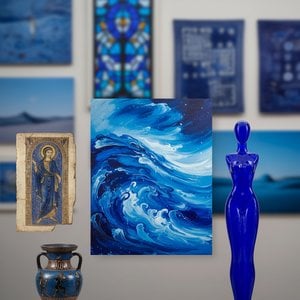
Błękit w Sztuce: Symbolika, Historia i Psychologiczne Oddziaływanie Koloru
Odkryj fascynującą historię błękitu w sztuce! Poznaj symbolikę, psychologię i wpływ tego koloru na arcydzieła renesansu i współczesne trendy. Ekspercka analiza dla miłośników sztuki.