

 Podgląd w skali 1:1
 Wyślij jako kartkę
 Udostępnij
 Szczegóły dzieła
 Przewodnik

 Pobierz obraz
 Podobne obiekty
 RTG
RTG Pokaz slajdów
 Pytania i odpowiedzi
 Statystyki
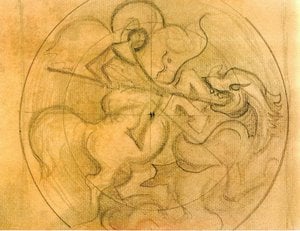
The suitor
 Rozwiń treść
Otrzymaj plik gotowy do druku, którego jakość znacznie przewyższa podgląd internetowy. Każdy sprzedawany przez nas obraz cyfrowy pochodzi z wysokorozdzielczego pliku wzorcowego w naszej bazie — zazwyczaj o szerokości od 5 000 do 15 000 pikseli — dzięki czemu możesz drukować w dużym formacie, mocno kadrować lub z pełnym przekonaniem odwzorowywać najdrobniejsze detale.
Żaden plik nie opuszcza naszego studia bez odpowiedniej obróbki. Ekspert ds. cyfrowej edycji sprawdza zgodność kolorów z oryginałem i w razie potrzeby je koryguje, a następnie za pomocą profesjonalnych narzędzi do retuszu poprawia ostrość oraz szczegółowość — zawsze zachowując wierność pociągnięciom pędzla i stylowi artysty. Rezultatem jest obraz, który wygląda jak prawdziwe dzieło, a nie jak przefiltrowany skan.
Zatwierdzasz przed finalizacją zamówienia: nasz ekspert prześle obraz drogą mailową w ciągu 72 godzin do Twojego wglądu. Nie jesteś zadowolony? Poproś o poprawki lub korektę, bądź o zwrot kosztów, jeśli jakość nie spełnia oczekiwań.
To jakość, na której polegają wydawcy, studia projektowe, galerie oraz drukarnie.
Obraz cyfrowy
Pobierz plik o wysokiej rozdzielczości do osobistego użytku, druku oraz projektów kreatywnych. ( Przełącz na wydania drukowane Zamów ręcznie malowaną reprodukcję)
W każdym zamówieniu na obraz cyfrowy znajduje się
Profesjonalna dostawa cyfrowa z gwarancją
Wybierając ArtsDot.com, nie otrzymujesz jedynie obrazu – otrzymujesz profesjonalnie udoskonalone cyfrowe dzieło sztuki, stworzone z najwyższą precyzją i objęte gwarancją satysfakcji. Oto wszystko, co automatycznie dołączane jest do Twojego zamówienia:

Błyskawiczna wysyłka e-mailowa
Plik z obrazem cyfrowym w wysokiej rozdzielczości zostanie przesłany na Twój adres e-mail w ciągu 72 godzin od złożenia zamówienia – gotowy do natychmiastowego użycia.

Plik cyfrowy wzbogacony przez AI
Twoja grafika została profesjonalnie zoptymalizowana przy użyciu zaawansowanych narzędzi AI oraz ręcznej edycji, co zapewnia maksymalną szczegółowość, klarowność i wierność kolorów.

Darmowe ponowne przesyłki dożywotnio
Przypadkowo usunąłeś lub zgubiłeś swój plik? Bez obaw – prześlemy go Tobie ponownie w dowolnym momencie, bez żadnych opłat.

Bez opłat importowych – zawsze
Ciesz się swoją sztuką natychmiast, bez żadnych opłat celnych, należności ani kosztów dostawy – pliki cyfrowe są zawsze wolne od podatku.

Gwarancja wierności kolorów
Dzięki zastosowaniu profesjonalnych narzędzi i procesów zarządzania barwą zapewniamy, że Twoje cyfrowe zdjęcie odzwierciedla oryginalne kolory tak wiernie, jak to tylko możliwe.

Gwarancja satysfakcji przez 100 dni
Jeśli nie będziesz zadowolony ze swojego cyfrowego obrazu, dokonamy jego poprawki lub zwrócimy 100% kosztów w ciągu 100 dni – bez zbędnych pytań.

100% Gwarancja zwrotu pieniędzy
Nie jesteś zadowolony? Otrzymaj pełny zwrot kosztów w ciągu 100 dni od otrzymania pliku cyfrowego – bez zbędnych pytań.

Rabaty przy zamówieniach hurtowych
Kup 3 obrazy, oszczędź 10% - Kup 5, oszczędź 15% - Kup 10+, oszczędź 20%. Idealne do projektów kreatywnych, galerii i agencji.
Podobne dzieła


Biografia artysty
A Painter of Northern Spain’s Soul
Luis Álvarez Catalá, a name etched into the golden era of nineteenth-century Spanish art, possessed a rare ability to capture the very essence of his heritage. Born on January 22, 1836, to an Asturian family, his early years were shaped by the rugged beauty and cultural richness of Northern Spain. Though he is believed to have been born in Madrid, the summers spent in Cangas de Narcea left an indelible mark on his artistic psyche. These formative landscapes, filled with the traditions of Asturias and León, would later serve as the emotional wellspring for much of his most poignant work. His journey from a student in Oviedo to a master of the academic tradition is a testament to a life dedicated to the pursuit of visual truth.
Catalá’s formal education was marked by rigorous discipline and the guidance of masters. After studying at the Escuela Especial de Pintura, Escultura y Grabado, he entered the prestigious Real Academia de Bellas Artes de San Fernando in Madrid. Under the influential tutelage of Federico de Madrazo, Catalá refined his technique, absorbing the elegance and precision of the academic style. However, it was his departure for Rome in 1857 that truly ignited his creative spirit. Supported by a generous scholarship alongside contemporaries like Eduardo Rosales, he immersed himself in the vibrant Roman artistic milieu. This period of international exposure allowed him to blend Spanish sentiment with European sophistication, leading to his first major triumph: winning a gold medal at the First National Exposition of Florence for Calpurnia’s Dream.
Mastery of Genre and Historical Grandeur
The evolution of Catalá’s oeuvre is a fascinating study in the balance between historical narrative and the intimate charm of costumbrismo. In his early career, he gained immense prestige through large-scale historical scenes that commanded attention in the great salons of Europe. The success of Calpurity's Dream was so profound that it caught the eye of Queen Isabel II, who purchased the work, further elevating his status within the Spanish court. His ability to breathe life into antiquity and legend demonstrated a technical mastery over light, shadow, and human emotion that resonated with the romantic sensibilities of his age.
As his career matured, Catalá turned his gaze toward the everyday—the quiet, unvarnished moments of Spanish life. This shift toward costumbrista painting allowed him to explore the textures of rural existence and the subtle nuances of social interaction. Works such as The Flirtation and The Suitor showcase a delicate touch, where the warmth of the palette and the meticulous detail of costume and setting invite the viewer into a private, domestic world. Whether depicting an opulent studio scene in Admiring the Picture or the rustic simplicity of his youth, Catalá maintained a profound respect for the dignity of his subjects, ensuring that even the most mundane moment felt monumental.
Legacy and the Stewardship of Art
Beyond the canvas, Luis Álvarez Catalá played a monumental role in the preservation of Spanish artistic heritage. His appointment as Director of the Museo del Prado from 1898 to 1901 was not merely a professional milestone but a period of significant cultural stewardship. During his tenure, he worked tirelessly to enhance the museum's collection, most notably through the acquisition of several works by Francisco de Goya. His scholarly dedication even led him to produce an illustrated catalog of the Velázquez collection, a contribution that remains vital to the study of Spanish masters. He was a man who understood that the greatness of the past must be carefully curated to inspire the future.
In his final years, Catalá returned to his roots, finding inspiration once more in the landscapes and people of Northern Spain. This nostalgic period produced works that are now cherished within the Museum of Fine Arts of Asturias, completing a beautiful artistic circle that began in those same verdant hills. When he passed away in Madrid on October 4, 1901, he left behind a legacy defined by both grandeur and intimacy. His life remains a bridge between the rigid traditions of the academy and the soulful, lived experience of the Spanish people, ensuring his place as a pivotal figure in the history of European painting.

Luis Alvarez Catala
1836 - 1901
Krótka nota
- Full Name: Luis Álvarez Catalá
- Nationality: Spanish
- Date Of Birth: 1836
- Date Of Death: 1901
- Place Of Birth: Madrid, Spain
- Notable Artworks:
- The Filandón
- The Suitor
- Calpurnia's Dream
- Artistic Movement Or Style: Costumbrista
- Artists Who Influenced This Artist: ['Federico de Madrazo']
- Artists Or Movements Influenced By This Artist: ['Diego Velázquez']