


 Zobacz w skali 1:1
 Wyślij
 Udostępnij
 Szczegóły
 Przewodnik

 Pobierz plik obrazu
 Podobne obiekty
 RTG
RTG Pokaz slajdów
 Statystyki
St Mark


 Czytaj więcej
Ręcznie malowana reprodukcja olejowa
Ręcznie malowany obraz olejny na płótnie, wykonany na zamówienie przez naszych artystów w wybranym przez Ciebie wymiarze i oprawie. ( Przełącz na wersję drukowaną Przełącz na wersję cyfrową)




P118B $10

P118H $10

P118W $10

P438Z $10

P508JH $12

P508YH $12

P805H $10

P805Z $10

P919BZ $10

P919G $10

P919XJ $10

P959ZH $10

P968JZ $12

W106C $8

W218G $10

W218JH $8

W218Y $10

W307PJ $10

W316G $10

W316PJ $8

W316Y $10

W398PJ $8

W4111J $10

W500HY $15

W500JH $15

W692G $12

W849H $8

W940BG $15

W953PJ $8




Wybierz spośród naszych standardowych rozmiarów, które zachowują oryginalne proporcje dzieła sztuki.

Możesz wprowadzić własne wymiary, aby dopasować obraz do konkretnej ramy lub przestrzeni. Jeśli wybrany rozmiar nie będzie odpowiadał proporcjom oryginału, przytniecie dzieło sztuki lub rozszerzymy je o dodatkowe elementy, ręcznie domalowane przez artystę. Przed rozpoczęciem produkcji wyślemy projekt cyfrowy do Twojej akceptacji.
Należy pamiętać, że podgląd na ekranie nie odzwierciedla rzeczywistego przycinania ani rozszerzania obrazu. Tylko projekt dokładnie pokaże ostateczną kompozycję.
Choć oferujemy możliwość zamówienia niestandardowych rozmiarów, zalecamy wybór wymiaru z gotowej listy, aby zachować oryginalne proporcje dzieła.
Po złożeniu zamówienia zespół ArtsDot.com skontaktuje się z klientem drogą mailową w celu uzyskania instrukcji i prześle wizualizację projektu
Dostawa na całym świecie () w ciągu 3–4 tygodni zamiast standardowych 5 tygodni. (25 Wrzesień). Bez kompromisów w kwestii jakości.

Bezpłatna ekspresowa wysyłka na cały świat

Wysokiej jakości płótno lniane

Pełne ubezpieczenie transportowe

Gwarancja zwrotu należności celnych i podatków importowych

Gwarancja idealnego odwzorowania barw

100-dniowy okres na zwrot dzieła w przypadku wykrycia wad produkcyjnych

Gwarancja 100% zwrotu pieniędzy

Oferta przy zakupie wielu sztuk
 Opcja ze szkłem jest dostępna wyłącznie w rozmiarach poniżej 110 cm

St Mark
Technika wykonania
Rozmiar reprodukcji
-


Suma do zapłaty
$ 263
Podobne dzieła


![Legend Of St Francis - [08] - Vision Of The Flaming Chariot — Giotto Di Bondone, Gothic And Proto-renaissance](/media/artworks/images-thumb/65/6e/656e345ff55e49ce2e4377a050b85aa1.jpg)


![Legend Of St Francis - [18] - Apparition At Arles — Giotto Di Bondone, Proto-renaissance](/media/artworks/images-thumb/79/1c/791c45725458c47701a241d551e6298f.jpg)
![Legend Of St Francis - [12] - Ecstasy Of St Francis — Giotto Di Bondone, Proto-renaissance](/media/artworks/images-thumb/04/ab/04abd6d876609c25d110143ce0fae9c5.jpg)

Biografia artysty
Lorenzo di Bicci: Bridging the Gothic and Renaissance in Florence
Lorenzo di Bicci, born around 1350 in the heart of Florence, stands as a pivotal figure bridging the late Gothic traditions of his predecessors with the burgeoning naturalism that would define the early Renaissance. While often overshadowed by the towering figures of Giotto and Masaccio, Lorenzo’s contribution to Florentine painting during the mid-14th century was remarkably significant, establishing a style characterized by refined elegance, luminous colors, and a subtle shift towards greater realism – a crucial stepping stone in the evolution of Italian art. His life unfolded within a vibrant artistic milieu, shaped by the legacy of masters like Andrea Pisano and Giotto di Bondone, yet he forged his own distinct path, primarily serving the needs of Florence’s wealthy clergy and merchant families. Lorenzo's early training remains somewhat shrouded in mystery; it is believed that he learned his craft largely from his father, Jacopo di Bicci, a skilled painter who likely worked as a workshop assistant for the renowned Giotto. This apprenticeship provided Lorenzo with an invaluable foundation in technique and artistic principles, but crucially, it also exposed him to Giotto’s revolutionary approach – one that prioritized human emotion and observation over rigid adherence to Byzantine conventions. Lorenzo's style, therefore, is not simply a copy of his father’s work; rather, it represents a deliberate adaptation and refinement of those lessons, imbued with a personal sensibility. He was known for exceptional talent in drawing, an ability he put to use at the initial stages of his painting. Unlike many celebrated Florentine artists of this period, Lorenzo mostly received commissions from the country clergy and from the lower-middle class Florentine guilds.A Style Defined by Refinement and Light
Lorenzo’s paintings are immediately recognizable for their harmonious color palettes and a remarkable sense of luminosity. He eschewed the heavy, dark backgrounds favored by many of his contemporaries, opting instead for lighter, more airy compositions that allowed figures to emerge with clarity and grace. This preference for light is not merely aesthetic; it reflects a deeper philosophical shift – a move towards celebrating the beauty and dignity of human life. His figures tend to have round faces and were often expressionless, conveying an air of serene composure. He was known for exceptional talent in drawing, an ability that he put to use at the initial stages of his painting. Lorenzo’s compositions avoided complexity, focusing on clear narratives and balanced arrangements. He skillfully employed perspective, though not with the mathematically precise rigor of later Renaissance artists, creating a sense of depth and spatial awareness through subtle variations in scale and detail.Collaborations and Key Works
Lorenzo's career was marked by numerous collaborations, often working alongside other prominent artists such as Agnolo Gaddi and Niccolò di Pietro Gerini. His early work, exemplified by the panel depicting *St. Martin Enthroned* (circa 1380), showcases his developing style – a blend of Gothic elegance and nascent Renaissance realism. This piece, now housed in the Depositi Galleria d'Arte Moderna in Florence, demonstrates his mastery of color and composition, as well as his ability to imbue religious subjects with a sense of quiet dignity. He also contributed significantly to the decoration of Orsanmichele, designing medallions for the Loggia dei Lanzi that celebrated Florentine virtues. Later commissions included altarpieces and frescoes, reflecting his versatility and adaptability.Influence and Legacy
Lorenzo di Bicci’s influence extended far beyond his own lifetime. He is considered a crucial link between the late Gothic style of his predecessors and the groundbreaking innovations of artists like Masaccio and Botticelli. His emphasis on naturalism, combined with his refined aesthetic sensibilities, paved the way for the High Renaissance. His successors, Bicci di Lorenzo and Neri di Bicci, continued to serve these groups, carrying forward his artistic legacy. While he may not be as widely celebrated as some of his contemporaries, Lorenzo di Bicci’s contribution to Florentine painting is undeniable – a testament to his skill, vision, and pivotal role in shaping the course of Italian art history. His work stands as a beautiful example of how tradition could be skillfully adapted and transformed, ultimately contributing to the remarkable flowering of artistic creativity that characterized Renaissance Florence.
Lorenzo di Bicci
1350 - 1427 , Italy
Najważniejsze informacje
- Artistic Movement Or Style: Florentine School
- Artists Or Movements Influenced By This Artist:
- Bicci di Lorenzo
- Neri di Bicci
- Artists Who Influenced This Artist:
- Andrea di Cione
- Giotto di Bondone
- Date Of Birth: c. 1350
- Date Of Death: 1427
- Full Name: Lorenzo di Bicci
- Nationality: Italian
- Notable Artworks:
- St. Martin Enthroned
- Dwelling in the Fuchun Mountains
- Place Of Birth: Florence, Italy
Zobacz także powiązane artykuły

Promienny Zmierzch Wizji Średniowiecza: Synteza Wiary, Formy i Emocjonalności w Późnym Gotyku (ok. 1300-1500)
Odkryj fascynujący świat późnego gotyku (ok. 1300-1500)! Analiza architektury, rzeźby i malarstwa, synteza wiary, formy i emocjonalności. Ekspercka wiedza o historii sztuki średniowiecza.
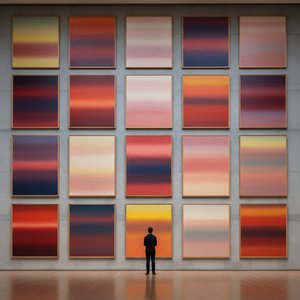
Mark Rothko: 25 Arcydzieł Koloru i Emocji | Reprodukcje Obrazów | ArtsDot.com
Odkryj 25 arcydzieł Marka Rothko – mistrza abstrakcji i koloru. Poznaj historie, techniki i emocje kryjące się za jego płótnami. Reprodukcje obrazów najwyższej jakości na ArtsDot.com. Eksploruj kolekcję online!

Late Medieval Masterpieces: 10 Artworks That Defined an Era | ArtsDot
Journey through 10 defining Late Medieval masterpieces – from Giotto's frescoes to Jan van Eyck’s realism. Explore the stories, techniques & vibrant colors of Gothic art. Find museum-quality reproductions and elevate your home decor with ArtsDot.com! Discover all masterpieces on ArtsDot.com

Giotto di Bondone: 25 Arcydzieł Sztuki Niezmieniających Historii | ArtsDot.com
Odkryj 25 arcydzieł Giotta di Bondone – renesansowego mistrza fresków. Poznaj historię, techniki i emocje w jego najsłynniejszych dziełach. Reprodukcje obrazów najwyższej jakości na ArtsDot.com. Eksploruj pełną kolekcję online!

Cień Wiary: Odkrywając Duchową Intensywność i Architektoniczną Innowację Sztuki Gotyckiej
Odkryj fascynujący świat architektury gotyckiej! Poznaj jej duchowe korzenie, innowacyjne rozwiązania i arcydzieła takie jak San Martino dei Servi. Ekspercka analiza dla miłośników historii sztuki.