


 Podgląd w skali
 Wyślij jako kartkę
 Udostępnij
 Szczegóły dzieła

 Pobierz
 Podobne obiekty
 RTG
RTG Pokaz slajdów
Vasya


 Rozwiń treść
Ręcznie malowana reprodukcja olejowa
Ręcznie malowany obraz olejny na płótnie, wykonany na zamówienie przez naszych artystów w wybranym przez Ciebie wymiarze i oprawie. ( Zamów wydruk Kup obraz wysokiej rozdzielczości)




P118B $10

P118H $10

P118W $10

P438Z $10

P508JH $12

P508YH $12

P805H $10

P805Z $10

P919BZ $10

P919G $10

P919XJ $10

P959ZH $10

P968JZ $12

W106C $8

W218G $10

W218JH $8

W218Y $10

W307PJ $10

W316G $10

W316PJ $8

W316Y $10

W398PJ $8

W4111J $10

W500HY $15

W500JH $15

W692G $12

W849H $8

W940BG $15

W953PJ $8




Wybierz spośród naszych standardowych rozmiarów, które zachowują oryginalne proporcje dzieła sztuki.

Możesz wprowadzić własne wymiary, aby dopasować obraz do konkretnej ramy lub przestrzeni. Jeśli wybrany rozmiar nie będzie odpowiadał proporcjom oryginału, przytniecie dzieło sztuki lub rozszerzymy je o dodatkowe elementy, ręcznie domalowane przez artystę. Przed rozpoczęciem produkcji wyślemy projekt cyfrowy do Twojej akceptacji.
Należy pamiętać, że podgląd na ekranie nie odzwierciedla rzeczywistego przycinania ani rozszerzania obrazu. Tylko projekt dokładnie pokaże ostateczną kompozycję.
Choć oferujemy możliwość zamówienia niestandardowych rozmiarów, zalecamy wybór wymiaru z gotowej listy, aby zachować oryginalne proporcje dzieła.
Po złożeniu zamówienia zespół ArtsDot.com skontaktuje się z klientem drogą mailową w celu uzyskania instrukcji i prześle wizualizację projektu
Dostawa na całym świecie () w ciągu 3–4 tygodni zamiast standardowych 5 tygodni. (7 Wrzesień). Bez kompromisów w kwestii jakości.

Bezpłatna ekspresowa wysyłka na cały świat

Wysokiej jakości płótno lniane

Pełne ubezpieczenie przesyłki

Gwarancja zwrotu należności celnych i podatków importowych

Gwarancja wiernego odwzorowania kolorów

100-dniowa polityka zwrotów (tylko w przypadku wad)

Gwarancja 100% zwrotu kosztów

Zniżka przy zamówieniu wielu produktów
 Opcja ze szkłem jest dostępna wyłącznie w rozmiarach poniżej 110 cm

Vasya
Technika reprodukcji
Wymiary reprodukcji
-


Cena całkowita
$ 263
A Visionary Encounter: The Soul of Vasya
In the quiet, profound stillness of Kuzma Petrov-Vodkin’s 1922 masterpiece, 'Vasya', we are invited into a moment that transcends mere portraiture. This painting is not simply a depiction of a young man; it is a window into the spiritual and psychological landscape of the early 20th century. The subject, a blonde-haired youth clad in a striking red shirt, sits with an arresting presence, his gaze meeting the viewer with an intensity that feels both intimate and eternal. Beside him, the delicate presence of a baby introduces a poignant layer of narrative, suggesting a profound connection between the innocence of new life and the burgeoning maturity of the young man. Through this composition, Petrov-Vodkin weaves a tapestry of human connection that resonates deeply with anyone who appreciates the quiet power of a shared glance or a silent bond.
The technique employed in 'Vasya' is a masterful synthesis of tradition and modernism. As an artist deeply rooted in the spiritual heritage of Russian icon painting, Petrov-Vodkin brings a unique sense of spherical perspective and monumental form to the canvas. The use of bold, saturated colors—most notably the vibrant crimson of the shirt—serves to anchor the subject within the frame, while the geometric arrangement of shapes creates a sense of structural harmony. This approach allows the painting to function as more than just a likeness; it becomes a symbolic architecture. For collectors and interior designers, this piece offers a sophisticated balance of color and form, making it an ideal centerpiece for spaces that demand both intellectual depth and visual impact.
Symbolism and the Weight of History
To gaze upon 'Vasya' is to engage with the profound language of Symbolism. During this era, artists sought to move beyond the surface of reality to capture the unseen truths of the human condition. In this work, the transition from adolescence to adulthood is palpably felt through the juxtaposition of the young man and the infant. The background figures, partially veiled and shrouded in mystery, add an atmospheric tension, suggesting a world that is much larger and more complex than the immediate subjects. This layering of meaning invites endless interpretation, making the painting a thought-provoking addition to any curated collection.
The historical context of 1922 Russia—a period of immense social and political transformation—infuses the work with an underlying sense of gravity. While the painting focuses on a personal, almost domestic scene, there is an unmistakable air of the monumental, as if these individuals are archetypes representing the resilience of life amidst change. For those seeking to adorn their homes with art that tells a story, a high-quality oil reproduction of 'Vasya' provides more than just decoration; it offers a piece of history, a conversation starter, and an enduring symbol of the beauty found in the quietest moments of existence.
Podobne dzieła


O artyście
A Visionary of Spherical Space: The Life and Art of Kuzma Petrov-Vodkin
Kuzma Sergeevich Petrov-Vodkin, a name that resonates deeply within the annals of Russian art – more than just a painter, he was a philosopher of form, a weaver of potent symbolism, and a chronicler of his nation’s complex soul. Born in 1878 in Khvalynsk, a small, unassuming town nestled along the banks of the Volga River, Petrov-Vodkin's artistic journey began not within the imposing walls of established academies, but rather amidst the vibrant, profoundly spiritual world inherited from Russian icon painting traditions and the skilled hands of local signmakers. These early formative influences instilled in him an unwavering reverence for line, color, and narrative – qualities that would ultimately define his uniquely distinctive aesthetic throughout his prolific career. His formal artistic training commenced at the Baron Stieglitz School in Saint Petersburg between 1895 and 1897, providing a crucial foundation upon which he would subsequently build a style markedly divergent from prevailing artistic currents of the time. It wasn’t merely an absorption of techniques; it was a deliberate synthesis – a careful blending of established tradition with the burgeoning spirit of modernism, forging a path that set him apart and distinguished his work.The Genesis of a Singular Style: Spherical Perspective and Symbolic Resonance
Petrov-Vodkin's most enduring and instantly recognizable contribution to art history lies undoubtedly in his groundbreaking development of “spherical perspective.” Rejecting the conventional, linear perspective – so firmly established by Renaissance masters – he embraced a far more expansive, almost cosmic approach. This wasn’t simply an aesthetic choice; it was deeply rooted in his philosophical convictions and spiritual inclinations. He sought to represent not just what the eye perceived, but how space *felt*, creating compositions that drew the viewer into a swirling vortex of emotion and meaning—a deliberate attempt to capture the subjective experience of reality. The painting The Dream (1910) became an immediate focal point for intense debate within Russian artistic circles. Alexandre Benois, a prominent figure in the Society for Protestant Art, championed its innovative approach, while Ilya Repin, a renowned realist painter, voiced critical reservations. Despite this initial discord, the work undeniably sparked a vital conversation about the possibilities inherent in modern painting—a testament to Petrov-Vodkin’s ability to challenge established norms and provoke thought. The dreamlike quality of The Dream – achieved through flattened planes, ambiguous figures, and a carefully orchestrated interplay of color – powerfully conveys a sense of disorientation and psychological depth. His masterpiece, *Bathing of a Red Horse* (1912), cemented his reputation as a visionary artist. This iconic image—depicting a group of peasant youths bathing a crimson horse against the backdrop of rolling hills—is often interpreted as a potent premonition of the social upheaval that would soon engulf Russia. The vibrant color palette, combined with an unconventional composition, signals a decisive departure from traditional realism towards a more symbolic and emotionally charged form of artistic expression.Beyond the Canvas: Literary Pursuits and Reflections on Life
Petrov-Vodkin’s creative spirit extended far beyond the confines of painting. Following his arduous battle with pulmonary tuberculosis in 1927, he turned increasingly to literature – a pursuit that mirrored and amplified his artistic explorations. He produced three meticulously crafted semi-autobiographical volumes—Khvalynsk, *Euclid’s Space*, and *Samarkandia*—each offering intimate glimpses into his childhood memories, profound philosophical musings, and the very process of his artistic creation. These literary works weren't merely autobiographical accounts; they were deeply layered explorations of memory, perception, and the persistent human quest for meaning within a world undergoing constant transformation. They provide invaluable insight into the intellectual and spiritual foundations that underpinned his artistic vision—a testament to his multifaceted genius. His later paintings, such as *Death of a Commissar* and *In the Line of Fire*, reflect a shift towards darker tones and more detailed compositions – perhaps mirroring the intensifying political tensions of the era.Influences and Artistic Evolution
Petrov-Vodkin’s artistic development was shaped by a confluence of influences. Initially, he was drawn to the rich traditions of Russian icon painting, absorbing its emphasis on line, color, and symbolic representation. However, his exposure to European Symbolism during his travels in France, Italy, Greece, and North Africa profoundly impacted his style. He embraced the Symbolists’ interest in exploring psychological states, mythic themes, and the hidden depths of human experience. Simultaneously, he was influenced by the burgeoning avant-garde movements of the early 20th century, particularly Cubism and Futurism, though he ultimately developed a distinctly personal approach that transcended these influences. His work also demonstrates a deep connection to Russian folklore and peasant life, evident in his depictions of rural scenes and his use of traditional motifs.Legacy and Enduring Significance
Kuzma Petrov-Vodkin’s influence extends far beyond the immediate context of his own prolific output. He left an indelible mark on subsequent generations of Russian artists, inspiring them to explore new avenues of symbolism, perspective, and emotional expression. His unique approach to spherical space continues to fascinate art historians and practitioners alike. His work is now housed in prestigious museums across Russia, including the Kramskoy Museum of Fine Arts in Voronezh and the Krasnoyarsk Art Museum, ensuring that his artistic legacy remains accessible for generations to come. Petrov-Vodkin’s life and work serve as a poignant reminder of the enduring power of art to transcend boundaries, challenge conventions, and illuminate the complexities of the human condition. He died in Leningrad in 1939, but his spirit—his vision—continues to resonate powerfully within the world of art.Museums Featuring Petrov-Vodkin’s Work
- Kramskoy Museum of Fine Arts (Voronezh, Russia)
- Krasnoyarsk Art Museum (Krasnoyarsk, Russia)

Kuzma Petrov-Vodkin
1878 - 1939 , Rosja
Krótka nota
- Artistic Movement Or Style: Post-impresionista
- Artists Or Movements Influenced By This Artist: ['Ruskí maliari']
- Date Of Birth: 5 listopada 1878
- Date Of Death: 15 februára 1939
- Full Name: Kuzma Sergeevich Petrov-Vodkin
- Nationality: Rusín
- Notable Artworks:
- Sen
- Kúpanie Červenej Koňskej
- Place Of Birth: Chvalynsk, Ruskej ríše
Powiązane artykuły

Crimson Threads of Narrative: Exploring Symbolism & Representation in Artworks Featuring the Red Dress
Explore the rich symbolism of the red dress in art history! From ancient power displays to iconic portraits like Cézanne’s 'Madame Cezanne', discover the cultural and artistic significance behind this captivating color. Expert analysis & insights.
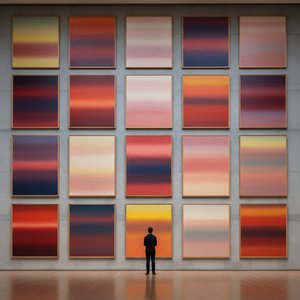
Mark Rothko: 25 Arcydzieł Koloru i Emocji | Reprodukcje Obrazów | ArtsDot.com
Odkryj 25 arcydzieł Marka Rothko – mistrza abstrakcji i koloru. Poznaj historie, techniki i emocje kryjące się za jego płótnami. Reprodukcje obrazów najwyższej jakości na ArtsDot.com. Eksploruj kolekcję online!

Henri Matisse: 25 Arcydzieł Koloru i Inspiracji | ArtsDot.com
Odkryj 25 arcydzieł Henri Matisse’a – od żywych kolorów fauwizmu po ikoniczne kompozycje. Poznaj historię, technikę i inspiracje malarstwa francuskiego. Reprodukcje obrazów najwyższej jakości na ArtsDot.com! Eksploruj kolekcję online.

Amedeo Modigliani: 25 Arcydzieł Pełnych Tęsknoty i Elegancji | ArtsDot
Odkryj 25 arcydzieł Amedeo Modiglianiego – portrety, rzeźby i nagości pełne melancholii i elegancji. Poznaj historię włoskiego modernizmu i zainspiruj się do dekoracji wnętrz z ArtsDot.com! Eksploruj kolekcję online.

Edvard Munch: 25 Arcydzieł Ekspresjonizmu dla Kolekcjonerów i Miłośników Sztuki
Poznaj 25 najbardziej znanych obrazów Edvarda Muncha – od kultowego "Krzyku" po poruszające portrety. Odkryj ekspresjonizm, symbolikę i emocje w sztuce norweskiej. Reprodukcje najwyższej jakości na ArtsDot.com! Eksploruj kolekcję online.