
 Oil On Canvas
- WallArt
- Vienna Secession
 1910
1910- Modern
 50.0 x 45.0 cm

The picture follows your choices: , .
Opis obiektu
Vibrant purple hyacinths bloom against a bright blue sky in this stunning 1910 oil painting by Koloman Moser, offering a colorful glimpse into the Vienna Secession era that you can bring to your home collection.
Biografia artysty
Koloman Moser (1868-1918) – austriacki grafik i architekt z epoki Secesji. Znany z geometrycznych wzorów, projektów dla Wiener Werkstätte oraz witraży kościoła am Steinhof.
 Rozwiń treść
Ręcznie malowana reprodukcja olejowa
Ręcznie malowany obraz olejny na płótnie, wykonany na zamówienie przez naszych artystów w wybranym przez Ciebie wymiarze i oprawie. ( Przełącz na wydania drukowane Przejdź do wersji cyfrowej)
More about this painting
 Podgląd w skali 1:1
 Wyślij jako kartkę
 Udostępnij
 Szczegóły dzieła
 Przewodnik

 Pobierz obraz
 Podobne obiekty
 RTG
RTG Pokaz slajdów
 Q&A
Q&A Statystyki
Order your painting in four simple steps
Take your time. You can change any answer; the price in your order card follows each choice.
1 Step one of four
Which size would you like?
These sizes keep the proportions of the original painting. The drawing shows your choice on a wall, above a two-metre sofa.
Or give your own measurements
Wybierz spośród naszych standardowych rozmiarów, które zachowują oryginalne proporcje dzieła sztuki.

Wpisz wymaganą szerokość i wysokość, aby obraz pasował do Twojej ramy lub ściany. Ponieważ jest to dzieło malowane ręcznie, w przypadku rozmiaru o innych proporcjach artysta może domalować nieco więcej wokół obrazu lub przyciąć jego fragmenty — wybór należy do Ciebie. Przed rozpoczęciem pracy prześlemy Ci cyfrową wizualizację do zatwierdzenia. Obraz widoczny na tej stronie nie przedstawia rzeczywistego efektu — jedynie wizualizacja oddaje realny rezultat.
2 Step two of four
How should it be prepared: rolled, stretched or framed?
The prices below are for the size you chose in step one.
Choose the edges of the stretched canvas
Choose your frame

White zł1

Blurside zł1

Extended zł1

P118B zł10

P118H zł10

P118W zł10

P438Z zł10

P508JH zł12

P508YH zł12

P805H zł10

P805Z zł10

P919BZ zł10

P919G zł10

P919XJ zł10

P959ZH zł10

P968JZ zł12

W106C zł8

W218G zł10

W218JH zł8

W218Y zł10

W307PJ zł10

W316G zł10

W316PJ zł8

W316Y zł10

W398PJ zł8

W4111J zł10

W500HY zł15

W500JH zł15

W692G zł12

W849H zł8

W940BG zł15

W953PJ zł8

H24-GOLD zł30

H24-SILVER zł30

H36-GOLD zł45

H36-SILVER zł45
W oprawie
Moulding: . Overall size with the frame: .
3 Step three of four
Would you like anything changed in the painting?
Most people answer no. Because each painting is made by hand, our artist can also adapt it for you.
After order, ArtsDot.com team will email client for instructions and provide a mockup preview
4 Step four of four
A few finishing options
All of them are optional. The answers already selected cost nothing extra.
Who paints it?
Dostawa na całym świecie () w ciągu 3–4 tygodni zamiast standardowych 5 tygodni. (29 Październik). Bez kompromisów w kwestii jakości.
A nameplate, as in a museum?
Szczegóły grawerowanej brązowej tabliczki
This elegant plaque features the artist's name and the title of the artwork, finely engraved for a timeless presentation.
It is made from bronze with a refined, elegant finish. The text is precisely laser-engraved for a sharp and permanent result. Measuring 9x2 cm, the plaque is compact yet easy to read. It's built to be durable and scratch-resistant, offering a professional, museum-quality look. Mounting is simple thanks to the included adhesive backing.
Szczegóły przezroczystej tabliczki akrylowej
The plaque includes essential engraved details such as the artist's name, the title of the artwork, the date it was created, the type of media used-like oil on canvas or watercolor-a brief description of the piece, and a QR code that links to the complete artwork information.
It is crafted from clear acrylic, offering a sleek, modern appearance. The text is UV-engraved in black to ensure strong visual contrast. With a size of 10x15 cm, it ensures optimal readability. It comes equipped with two metal hooks for secure wall mounting. The plaque is designed to be weather-resistant, making it suitable for various environments, and it includes interactive features that work seamlessly with smartphone scanning.
Szczegóły czarnej tabliczki akrylowej
This elegant plaque includes engraved information such as the artist's name, the title of the artwork, the date it was created, the type of media used (like oil on canvas or watercolor), a short description of the artwork, and a QR code for quick access to more information.
The plaque itself is made from refined black acrylic with a premium finish. The text is laser-engraved in white for high contrast and readability. Its size is 10x15 cm, designed to be easy to read. It comes with two metal hooks for professional mounting. The design is sleek and fits any interior style. It is also weather-resistant and durable, with built-in digital integration for mobile compatibility.
A protective varnish?
When do you need it?
✓ Check and order
Your painting, as you ordered it

Hyacinths
Technika reprodukcji
Wymiary reprodukcji
-

Wybitny mistrz artystyczny
Większa szczegółowość, finezja i dodatkowy czas na realizację
-

Opcje oprawy reprodukcji
-
-
W przypadku dzieł sztuki lub reprodukcji, których którykolwiek z boków przekracza 105 cm (około 41 cali), rama zostanie wysłana w formie zestawu do samodzielnego montażu. Metoda ta zapewnia bezpieczną dostawę i zapobiega uszkodzeniom podczas transportu.
Wymagany profesjonalny montaż – nie jest to produkt typu DIY.
Zestaw musi zostać złożony, a płótno naciągnięte przez doświadczonego profesjonalnego ramiarza, przy użyciu kleju do drewna (brak w zestawie), kleszczy do naciągania płótna oraz ścisków, które utrzymają krosna w równej pozycji podczas schnięcia kleju. Nieprawidłowy montaż lub nierównomierne napięcie płótna może trwale uszkodzić dzieło sztuki i nie podlega naszej gwarancji.
 W przypadku dzieł sztuki lub reprodukcji, których którykolwiek z boków przekracza 105 cm (około 41 cali), rama zostanie wysłana w formie zestawu do samodzielnego montażu. Metoda ta zapewnia bezpieczną dostawę i zapobiega uszkodzeniom podczas transportu.
W zestawie znajdują się wszystkie listwy z litego drewna, precyzyjnie docięte do wymiarów.
Montaż odbywa się przy użyciu dołączonych wkrętów oraz kleju do drewna do łączenia narożników, którego zestaw nie zawiera i który musi zostać dostarczony przez ramiarza.
Wymagane są profesjonalne narzędzia, których nie ma w zestawie: kleszcze do naciągania płótna (napinacz) oraz zaciski, które pozwolą utrzymać listwy w równej pozycji podczas schnięcia kleju.
Ważne:
Do połączenia narożników niezbędny jest klej do drewna, listwy należy unieruchomić za pomocą ścisków do momentu całkowitego wyschnięcia kleju, a naciągnięcie płótna na złożoną ramę wymaga użycia kleszczy do naciągania płótna. Żaden z tych elementów nie jest dołączony do zestawu. Przed zamówieniem tego rozmiaru zalecamy konsultację z doświadczonym ramiarzem.

Etykieta obiektu
-
-

Lakier ochronny
Lakier z połyskiem (pogłębia kolory, chroni przed światłem i wilgocią)
-

Personalizacja dzieła
Przykłady możliwości personalizacji: zastąp twarz zdjęciem klienta; dodaj zwierzę domowe (np. zamień kota na psa); umieść ukrytą wiadomość w tle; zmień krajobraz lub elementy tła.
-

Ekspresowa
Dostawa na cały świat () w ciągu 3–4 tygodni zamiast standardowych 5 tygodni. (29 Październik). Bez kompromisów w kwestii jakości.
-
Przesyłka ekspresowa
Dostawa na cały świat () w ciągu 5 tygodni. (5 Listopad).
W cenie
Cena całkowita
zł 1013
Opcja ze szkłem jest dostępna wyłącznie w rozmiarach poniżej 110 cm
Included with every order
- Bezpłatna ekspresowa wysyłka na cały świat
- Wysokiej jakości płótno lniane
- Pełne ubezpieczenie przesyłki
- Gwarancja zwrotu należności celnych i podatków importowych
- Gwarancja wiernego odwzorowania kolorów
- 100-dniowa polityka zwrotów (tylko w przypadku wad)
- Gwarancja 100% zwrotu pieniędzy
- Zniżka przy zakupie wielu sztuk


Podobne dzieła


Koloman Moser
1868 - 1918, Austria-Węgry
Biografia artysty
Early Life and Education
Koloman Moser, a name synonymous with the vibrant spirit of Vienna’s artistic landscape at the turn of the 20th century, was born on March 30, 1868, in the heart of Vienna, Austria-Hungary – a city already brimming with creative energy. His origins were deeply rooted in a family that valued art and design, an inheritance that would profoundly shape his artistic trajectory. While precise details of his early childhood remain somewhat elusive, it’s understood that he was exposed to a rich environment of aesthetic appreciation from a young age. This formative period laid the groundwork for his later explorations into diverse artistic mediums. Moser's formal education began at the Wiener Akademie and continued at the Kunstgewerbeschule, where he honed his skills in various crafts and design disciplines. Crucially, he later became an instructor at the Kunstgewerbeschule from 1899 onwards, a role that not only solidified his expertise but also provided him with opportunities to mentor and influence the next generation of artists and designers. This academic foundation, combined with his familial influences, equipped him with a robust understanding of artistic principles and techniques – a crucial springboard for his subsequent achievements.Artistic Contributions: A Multifaceted Career
Koloman Moser’s artistic legacy is remarkably diverse, extending far beyond the confines of any single discipline. He wasn't merely a graphic designer; he was a visionary who seamlessly integrated art into nearly every facet of daily life. His impact on graphic art is undeniable, characterized by bold geometric patterns and strikingly stylized imagery that graced postage stamps, magazine vignettes, and countless other printed materials. These designs were not simply decorative; they possessed an inherent clarity and elegance, showcasing his innovative use of typography and a masterful understanding of visual communication. However, Moser’s talent extended far beyond the realm of print. He demonstrated a remarkable versatility in fashion design, creating elegant garments that reflected the spirit of the era. Furthermore, he contributed significantly to the world of applied arts, designing exquisite stained glass windows for churches, intricate porcelains and ceramics, delicate blown glass objects, sophisticated tableware, luxurious silverware, and even bespoke jewelry – all embodying his commitment to “Gesamtkunstwerk,” or total work of art. This holistic approach ensured that every element of an object, from its initial concept to its final execution, was meticulously considered and harmoniously integrated. His architectural endeavors are equally noteworthy, most prominently exemplified by his work on the apse mosaic and glass windows for the Kirche am Steinhof in Vienna (1904). These structures stand as testaments to his ability to seamlessly blend artistic vision with functional design, showcasing a profound understanding of space, light, and material.The Wiener Werkstätte and Collaborative Spirit
In 1903, Koloman Moser joined forces with Josef Hoffmann and Fritz Wärndorfer to establish the Wiener Werkstätte – a workshop dedicated to producing aesthetically pleasing household goods. This collaborative venture represented a pivotal moment in Austrian design history, championing the philosophy of “Gesamtkunstwerk,” where every aspect of an object was conceived as part of a unified whole. The Wiener Werkstätte wasn’t simply a manufacturing facility; it was a crucible for artistic innovation, fostering a spirit of experimentation and collaboration among artists and craftsmen. Moser's involvement in the Wiener Werkstätte solidified his commitment to functional beauty and elevated the status of applied arts within Austrian society. He played a key role in shaping the workshop’s aesthetic direction, contributing significantly to its distinctive style characterized by geometric forms, vibrant colors, and meticulous craftsmanship. The workshops output became highly sought after, influencing design trends across Europe.Influences, Development, and Legacy
Moser's artistic development was profoundly shaped by a confluence of influences, including Art Nouveau, Symbolism, and the burgeoning Vienna Secession movement. He drew inspiration from Japanese woodblock prints, particularly their use of flat planes of color and simplified forms – techniques that he skillfully incorporated into his own designs. Over time, his style evolved, becoming increasingly abstract and geometric while retaining a core sense of elegance and refinement. His work during this period reflected a shift away from the more naturalistic tendencies of earlier Art Nouveau styles, embracing bolder geometries and a more stylized approach. This evolution culminated in a distinctive visual language that became instantly recognizable as a hallmark of Viennese design. Remarkably, Moser’s designs have endured, finding their way onto the Austrian 100 Euro Steinhof Church commemorative coin (2005), a testament to his enduring influence on art and design – a recognition of his lasting contribution to the cultural heritage of Austria. Koloman Moser died in Vienna in 1918, leaving behind a rich legacy that continues to inspire artists and designers today.
Powiązane artykuły

Claude Monet: 25 Najlepszych Arcydzieł Impresjonizmu | Reprodukcje Obrazów Online
Odkryj 25 najpiękniejszych arcydzieł Claude Moneta – impresjonistycznych pejzaży, nymfeii i słonecznych krajobrazów. Poznaj historię sztuki i zainspiruj się do dekoracji wnętrz z ArtsDot.com! Eksploruj pełną kolekcję online.

Top 10 Sławnych Obrazów w Odcieniach Szaroniebieskiego – Inspiracje dla Wnętrz | ArtsDot.com
Odkryj 10 najsłynniejszych obrazów w odcieniach szaroniebieskiego! Poznaj historie Claude Moneta, Degasa i Van Gogha. Inspiracje wnętrzarskie i reprodukcje najwyższej jakości na ArtsDot.com – sztuka dla Twojego domu.
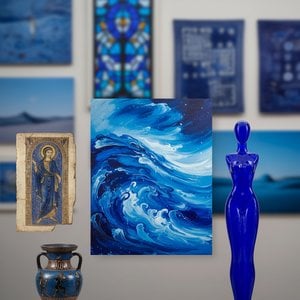
Błękit w Sztuce: Symbolika, Historia i Psychologiczne Oddziaływanie Koloru
Odkryj fascynującą historię błękitu w sztuce! Poznaj symbolikę, psychologię i wpływ tego koloru na arcydzieła renesansu i współczesne trendy. Ekspercka analiza dla miłośników sztuki.