


 Podgląd w skali
 Wyślij jako kartkę
 Udostępnij
 Szczegóły dzieła

 Pobierz
 Podobne obiekty
 RTG
RTG Pokaz slajdów
 Statystyki
Baghdad is an Occupied City
 Painting
- Contemporary Realism
 2003
2003- Contemporary
 100.0 x 200.0 cm
 Ibrahimi Collection
 Rozwiń treść
Giclée / Wydruk artystyczny
Druk giclée lub płótno o jakości muzealnej, szybka realizacja i szeroki wybór opcji wykończenia. ( Zamów ręcznie malowaną reprodukcję Przełącz na obraz cyfrowy)




P118B $10

P118H $10

P118W $10

P438Z $10

P508JH $12

P508YH $12

P805H $10

P805Z $10

P919BZ $10

P919G $10

P919XJ $10

P959ZH $10

P968JZ $12

W106C $8

W218G $10

W218JH $8

W218Y $10

W307PJ $10

W316G $10

W316PJ $8

W316Y $10

W398PJ $8

W4111J $10

W500HY $15

W500JH $15

W692G $12

W849H $8

W940BG $15

W953PJ $8




Wybierz spośród naszych standardowych rozmiarów, które zachowują oryginalne proporcje dzieła sztuki.

Możesz wprowadzić własne wymiary, aby dopasować dzieło do konkretnej ramy lub przestrzeni. Jeśli wybrany rozmiar nie będzie odpowiadał proporcjom oryginalnego obrazu, przytniecie dzieło lub rozszerzymy obraz za pomocą odbicia lustrzanego lub jednolitego wypełnienia krawędzi. Przed rozpoczęciem produkcji prześlemy cyfrową wizualizację do Twojej akceptacji.
Prosimy pamiętać, że podgląd na ekranie nie odzwierciedla faktycznego przycinania ani rozszerzania. Tylko wizualizacja dokładnie pokaże końcową kompozycję.
Mimo dostępności niestandardowych rozmiarów, zalecamy wybór wymiaru z listy zdefiniowanej, aby zachować oryginalne proporcje.
Dostawa na cały świat () w ciągu 2 tygodni zamiast standardowych 4/5 tygodni. (9 Wrzesień)

Bezpłatna ekspresowa wysyłka na cały świat

Wysokiej jakości płótno lniane

Pełne ubezpieczenie przesyłki

Gwarancja zwrotu należności celnych i podatków importowych

Gwarancja wiernego odwzorowania kolorów

100-dniowa polityka zwrotów (tylko w przypadku wad)

Gwarancja 100% zwrotu kosztów

Zniżka przy zamówieniu wielu produktów
 Opcja ze szkłem jest dostępna wyłącznie w rozmiarach poniżej 110 cm

Baghdad is an Occupied City
Giclée / Wydruk artystyczny
Wymiary reprodukcji
-


Cena całkowita
$ 62
A Window into a Fractured Era
In the evocative painting "Baghdad is an Occupied City," created in 2003 by the Iraqi artist Kareem Abdul Risan, we are invited to witness a moment of profound historical tension. The canvas serves as more than just a depiction of a landscape; it is a visceral record of a city caught in the crosshairs of conflict. Through a masterful blend of realism and atmospheric depth, Risan captures the heavy stillness that often precedes or follows moments of great upheaval. The scene unfolds with a large, imposing building that anchors the composition, surrounded by the mundane yet poignant details of daily life interrupted: parked cars, wandering horses, and figures moving through the streets. There is a haunting quality to the way these elements coexist, suggesting a world where the familiar rhythms of urban existence are shadowed by the presence of an occupying force.
The artist’s technique reflects his deep-rooted connection to the textures of his homeland. Having honed his skills in ceramics at Baghdad University, Risan brings a tactile sensibility to his paintings, treating the surface of the work with a weight that mirrors the gravity of his subject matter. The composition is layered with a sense of observation, as if the viewer is standing alongside the solitary figure on the left, peering into a city defined by its barricades and walls. The interplay between the organic movement of the horses and the rigid, metallic presence of the vehicles creates a symbolic friction—a clash between the ancient soul of Baghdad and the modern machinery of war.
Symbolism and the Weight of Memory
Beyond the literal depiction of an occupied cityscape, Risan’s work functions as a profound meditation on memory and resilience. The painting explores the concept of "traces"—the remnants of war that linger in the architecture and the very air of a city. Every element within the frame, from the way light hits the building to the placement of the figures, contributes to a narrative of survival. For collectors and enthusiasts of contemporary Middle Eastern art, this piece offers an unparalleled emotional depth, acting as a silent witness to the traces left by conflict on the human psyche. It is an exploration of how identity persists even when the physical environment is under siege.
For interior designers and curators, "Baghdad is an Occupied City" provides a powerful focal point for spaces that value storytelling and historical significance. The large-scale format of 100 x 200 cm allows the painting to command a room, offering a sophisticated yet emotionally charged atmosphere. Whether placed in a gallery setting or as a centerpiece in a curated collection, this reproduction serves as a conversation piece that bridges the gap between personal history and global events. It is an invitation to reflect on the enduring spirit of Baghdad—a city that, despite its many walls, continues to express its humanity through art.
Podobne dzieła


O artyście
A Voice From Iraq’s Turbulent Landscape
Born in Baghdad, Iraq, in 1983, Kareem Abdul Risan emerged from the shadows of a nation grappling with profound conflict and displacement—a formative experience that would irrevocably shape his artistic vision. While biographical details of his early years remain relatively sparse, Risan's oeuvre speaks volumes about his deep engagement with Iraqi history and culture, particularly its impact on the contemporary soul. His work is characterized by an uncompromising honesty and a willingness to confront difficult truths, mirroring the spirit of resilience found within the very fabric of Iraqi society.
Risan’s artistic journey began with a grounding in traditional craft at Baghdad University, where he focused primarily on ceramics. This early mastery of a tactile, earth-bound medium would become central to his distinctive style, providing him with a unique way to manipulate texture and form. This foundation in ceramic technique, combined with an intellectual curiosity for modern abstraction, allowed him to bridge the gap between ancient heritage and contemporary expression. His work often functions as a visceral record of a city caught in the crosshairs of conflict, using the weight of his materials to mirror the gravity of his subject matter.
The Language of Abstraction and Memory
Risan’s artistic approach defies easy categorization, operating within a realm where the boundaries of medium are constantly pushed. He deliberately rejects conventional aesthetics in favor of an experimental spirit that blends Islamic art motifs with the fluid grace of Arabic calligraphy. In pieces such as Improvisation, he embraces a fragmented visual language reminiscent of modern abstraction, creating a sense of movement and chaos that reflects the instability of his homeland. His work is deeply influenced by the broader context of Iraqi artistic history, drawing inspiration from the pointillism style of artists like Sayid Akert Sukri to capture the complexities of a landscape marked by both scars and renewal.
Beyond the formal elements of his technique, Risan’s paintings and ceramics serve as poignant meditations on memory and loss. His work often examines the chaos and violence in Iraq post-2003, acting as a reminder that the notion of a period "after the war" is rarely the reality experienced by those living through it. Through textured surfaces and muted tones, he creates scenes that feel both intimate and reflective, carrying both personal feeling and collective memory. Whether depicting the heavy atmosphere of an occupied cityscape or the quiet resilience of the human figure, his art captures the traces and remnants of a world in flux.
Legacy and International Recognition
The significance of Kareem Abdul Risan’s contribution to contemporary art lies in his ability to transform historical trauma into a universal language of endurance. His work has garnered recognition on international stages, notably featured in the Fuji Art Museum’s collection in Japan and showcased at the prestigious Katara Art Foundation. These exhibitions have allowed his narrative—one of struggle, identity, and the search for beauty amidst ruin—to resonate far beyond the borders of Iraq.
As his career continues to evolve, Risan remains a vital voice in the dialogue regarding Middle Eastern contemporary art. His ability to weave together the following elements ensures his place in the modern canon:
- The fusion of traditional Islamic motifs with modern abstract techniques.
- A profound connection to the socio-political history of Baghdad and Iraq.
- The use of tactile, ceramic-inspired textures to convey emotional depth.
- An exploration of the human condition through the lens of urban conflict and resilience.

kareem abdul risan
1983 - , Iraq
Krótka nota
- Artistic Movement Or Style: Contemporary Ceramics; Islamic Art Influences
- Artists Or Movements Influenced By This Artist: ['Modern Abstract Styles']
- Artists Who Influenced This Artist: ['Sayid Akram Sukri']
- Date Of Birth: 1983
- Full Name: Kareem Abdul Risan
- Nationality: Iraqi
- Notable Artworks:
- Improvisation
- Baghdad is an Occupied City
- Place Of Birth: Baghdad, Iraq
Powiązane artykuły

Betonowe Wizje: Studium Reprezentacji Życia Miejskiego w Sztuce Nowoczesnej i Współczesnej
Analiza reprezentacji życia miejskiego w sztuce nowoczesnej i współczesnej – od realizmu socjalistycznego po awangardę. Eksperckie spojrzenie na ideologię, urbanizm i krytykę społeczną w malarstwie i fotografii miejskiej.

C.R.W. Nevinson: A Vorticist Vision of War & Modernity
Explore the powerful art of C.R.W. Nevinson, a key British Vorticist painter. Discover his impactful depictions of WWI and evolution beyond Futurism. Expert analysis & high-quality reproductions at ArtsDot.
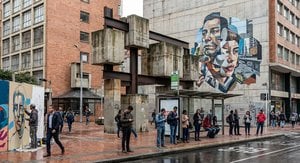
Betonowe Narracje: Miasto w Sztuce Nowoczesnej – Od Realizmu do Interpretacji Artystycznej
Odkryj ewolucję wizualnej reprezentacji miasta w sztuce nowoczesnej i współczesnej. Analiza kluczowych nurtów – od realizmu do surrealizmu – dla kolekcjonerów i pasjonatów.

William Owen: A Poetic Vision of War & Landscape in British Modernism
Explore the poignant war poetry of Wilfred Owen, a key figure in British Modernism. Discover his innovative style, themes of loss & camaraderie, and lasting impact on 20th-century literature. Analysis & historical context included.

Concrete Visions: Exploring the Urban Landscape in Painting – From Realism to Contemporary Art
Explore the evolution of cityscape painting from Realism to contemporary art with ArtsDot. Discover key artists & invest in timeless urban visions. Expert guidance, museum-quality reproductions.