


 Zobacz w skali 1:1
 Wyślij
 Udostępnij
 Szczegóły
 Przewodnik

 Pobierz plik obrazu
 Podobne obiekty
 RTG
RTG Pokaz slajdów
 Statystyki
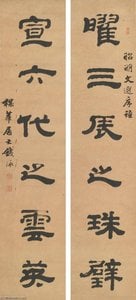
CALLIGRAPHY IN RUNNING SCRIPT
 Traditional Chinese Art
 173.0 x 41.0 cm
 Czytaj więcej
Ręcznie malowana reprodukcja olejowa
Ręcznie malowany obraz olejny na płótnie, wykonany na zamówienie przez naszych artystów w wybranym przez Ciebie wymiarze i oprawie. ( Przełącz na wersję drukowaną Przełącz na wersję cyfrową)




































Wybierz spośród naszych standardowych rozmiarów, które zachowują oryginalne proporcje dzieła sztuki.

Możesz wprowadzić własne wymiary, aby dopasować obraz do konkretnej ramy lub przestrzeni. Jeśli wybrany rozmiar nie będzie odpowiadał proporcjom oryginału, przytniecie dzieło sztuki lub rozszerzymy je o dodatkowe elementy, ręcznie domalowane przez artystę. Przed rozpoczęciem produkcji wyślemy projekt cyfrowy do Twojej akceptacji.
Należy pamiętać, że podgląd na ekranie nie odzwierciedla rzeczywistego przycinania ani rozszerzania obrazu. Tylko projekt dokładnie pokaże ostateczną kompozycję.
Choć oferujemy możliwość zamówienia niestandardowych rozmiarów, zalecamy wybór wymiaru z gotowej listy, aby zachować oryginalne proporcje dzieła.
Po złożeniu zamówienia zespół ArtsDot.com skontaktuje się z klientem drogą mailową w celu uzyskania instrukcji i prześle wizualizację projektu
Dostawa na całym świecie () w ciągu 3–4 tygodni zamiast standardowych 5 tygodni. (23 Wrzesień). Bez kompromisów w kwestii jakości.

Bezpłatna ekspresowa wysyłka na cały świat

Wysokiej jakości płótno lniane

Pełne ubezpieczenie transportowe

Gwarancja zwrotu należności celnych i podatków importowych

Gwarancja idealnego odwzorowania barw

100-dniowy okres na zwrot dzieła w przypadku wykrycia wad produkcyjnych

Gwarancja 100% zwrotu pieniędzy

Oferta przy zakupie wielu sztuk
 Opcja ze szkłem jest dostępna wyłącznie w rozmiarach poniżej 110 cm

CALLIGRAPHY IN RUNNING SCRIPT
Technika wykonania
Rozmiar reprodukcji
-


Suma do zapłaty
$ 263
Podobne dzieła




Biografia artysty
The Calligraphic Soul of a Reformer
In the turbulent twilight of the Qing Dynasty, few figures loomed as large or as complexly as Kang Youwei. To view his calligraphy is to witness more than mere ink on paper; it is to encounter the rhythmic pulse of a man caught between the ancient weight of Confucian tradition and the surging tides of Western modernity. Born in 1858 in the village of Su, within Guangdong province, Kang was a scholar whose intellect was forged in the rigorous fires of classical study but tempered by a visionary's desire to reshape a nation. His life was a profound struggle to reconcile the eternal ethics of the past with the urgent political necessities of a changing world, a tension that found its most graceful expression in the fluid, decisive strokes of his brushwork.
The intellectual foundation of Kang’s artistry was deeply rooted in the Confucian classics, yet he possessed an uncommon ability to reinterpret these ancient texts through a lens of progress. While many of his contemporaries clung to a reactionary preservation of tradition, Kang sought a way to revitalize the very essence of Chinese identity. This philosophical duality—the reverence for heritage and the hunger for reform—is palpable in his artistic output. His work often reflects a sense of intellectual rigor paired with an artistic sensitivity, where the structural discipline of formal scripts meets the spontaneous energy of more liberated styles. In his hands, calligraphy became a medium through which the stability of the old world and the dynamism of the new could coexist.
A Legacy Written in Ink and Action
The historical significance of Kang Youwei cannot be decoupled from his political audacity. As a primary architect of the Hundred Days’ Reform in 1898, he attempted to steer the Guangxu Emperor toward a constitutional monarchy, seeking to modernize education, strengthen the military, and overhaul the bureaucracy. This period of intense creativity and political maneuvering was marked by a high-stakes drama that eventually led to his exile following the coup by Empress Dowager Cixi. Yet, even in displacement, Kang’s influence remained undiminished. He continued to advocate for a reformed China, influencing generations of thinkers, including the prominent scholar Liang Qichao, who found inspiration in Kang's revolutionary reinterpretations of classical thought.
His artistic achievements serve as a serene counterpoint to his often violent political reality. The works that survive him, such as his Calligraphy in Running Script and various poetic scrolls, offer a window into a more meditative aspect of his character. In these pieces, one can observe:
- The Mastery of Line: A meticulous command of brushwork that balances formal structure with the organic flow of ink.
- Symbolic Resonance: The use of traditional characters to convey complex political and philosophical ideologies.
- Rhythmic Balance: A sense of movement within his scrolls that mirrors the ebb and flow of historical change.
Ultimately, Kang Youwei remains a monumental figure whose legacy is etched into both the political history of China and the aesthetic heritage of East Asian calligraphy. He was a man who lived through the collapse of an empire, yet through his art, he achieved a form of immortality, capturing the spirit of an era in every stroke of black ink upon white paper.

kang youwei
1858 - 1927
Najważniejsze informacje
- Artistic Movement Or Style: Calligraphy
- Date Of Birth: 1858
- Date Of Death: 1927
- Full Name: Kang Youwei
- Nationality: Chinese
- Notable Artworks:
- Poems on Swiss Excursions
- CALLIGRAPHY IN RUNNING SCRIPT
- A Thought on Wire Fences
- Place Of Birth: Guangdong Province, China
Zobacz także powiązane artykuły

Ephemeral Lines: Exploring Emotional Resonance in Ink Sketching Traditions
Explore the profound art of ink sketching! Discover techniques to express emotion, master line work, and cultivate artistic sensitivity. Learn from historical masters & unlock your creative potential.

Xie Zhiliu: A Legacy of Ink Wash Painting & Modern Chinese Literati Tradition
Explore the legacy of Xie Zhiliu, a master of Chinese ink wash painting & prominent figure in modern art. Discover his techniques, influences, and contributions to literati tradition. A guide for discerning collectors.

Timeless Elegance: Discovering the Soulful Beauty of Chinese Calligraphy for Sophisticated Home Interiors
Elevate your home with the serene beauty of Chinese calligraphy art. Explore our collection of hand-painted ink wash reproductions and bespoke commissions at ArtsDot.com. Discover museum-quality pieces designed to bring cultural elegance and tranquility to your modern interior.

Efemerowe Wyrażenia: Niuanse Malarstwa Tuszem w Historii i Sztuce Współczesnej
Poznaj fascynujący świat malarstwa tuszem! Odkryj historię, techniki i filozofię tej wyjątkowej sztuki azjatyckiej. Przewodnik po mistrzach pędzla i inspiracje dla współczesnych artystów.

Czarne arcydzieła: Top 10 słynnych obrazów pełnych mroku i ekspresji | ArtsDot.com
Odkryj 10 słynnych obrazów, w których czerń króluje! Poznaj historie artystów, ekspresjonizm i mroczną paletę barw. Reprodukcje dzieł sztuki najwyższej jakości na ArtsDot.com – inspiracje do wnętrz i kolekcjonerstwo.