
 Oil On Canvas
- WallArt
- Synthetic Cubism
 1916
1916 73.0 x 116.0 cm
 Króller-Müller Museum

The picture follows your choices: , .
Opis obiektu
Juan Gris's "Playing Cards and Siphon" (1916) is a vibrant Synthetic Cubist masterpiece, showcasing geometric forms & collage elements. Explore this iconic work’s rich colors & dynamic composition at the Kröller-Müller Museum.
 Rozwiń treść
Biografia artysty
Juan Gris (1887-1927) – hiszpański malarz kubista, znany z geometrycznych form i kolorytu. Jego dzieła rewolucjonizują percepcję i są inspiracją dla współczesnego sztuki.
Ręcznie malowana reprodukcja olejowa
Ręcznie malowany obraz olejny na płótnie, wykonany na zamówienie przez naszych artystów w wybranym przez Ciebie wymiarze i oprawie. ( Przełącz na wydania drukowane Przejdź do wersji cyfrowej)
More about this painting
 Podgląd w skali 1:1
 Wyślij jako kartkę
 Udostępnij
 Szczegóły dzieła
 Przewodnik

 Pobierz obraz
 Podobne obiekty
 RTG
RTG Pokaz slajdów
 Q&A
Q&A Statystyki
Order your painting in four simple steps
Take your time. You can change any answer; the price in your order card follows each choice.
1 Step one of four
Which size would you like?
These sizes keep the proportions of the original painting. The drawing shows your choice on a wall, above a two-metre sofa.
Or give your own measurements
Wybierz spośród naszych standardowych rozmiarów, które zachowują oryginalne proporcje dzieła sztuki.

Wpisz wymaganą szerokość i wysokość, aby obraz pasował do Twojej ramy lub ściany. Ponieważ jest to dzieło malowane ręcznie, w przypadku rozmiaru o innych proporcjach artysta może domalować nieco więcej wokół obrazu lub przyciąć jego fragmenty — wybór należy do Ciebie. Przed rozpoczęciem pracy prześlemy Ci cyfrową wizualizację do zatwierdzenia. Obraz widoczny na tej stronie nie przedstawia rzeczywistego efektu — jedynie wizualizacja oddaje realny rezultat.
2 Step two of four
How should it be prepared: rolled, stretched or framed?
The prices below are for the size you chose in step one.
Choose the edges of the stretched canvas
Choose your frame

White zł1

Blurside zł1

Extended zł1

P118B zł10

P118H zł10

P118W zł10

P438Z zł10

P508JH zł12

P508YH zł12

P805H zł10

P805Z zł10

P919BZ zł10

P919G zł10

P919XJ zł10

P959ZH zł10

P968JZ zł12

W106C zł8

W218G zł10

W218JH zł8

W218Y zł10

W307PJ zł10

W316G zł10

W316PJ zł8

W316Y zł10

W398PJ zł8

W4111J zł10

W500HY zł15

W500JH zł15

W692G zł12

W849H zł8

W940BG zł15

W953PJ zł8

H24-GOLD zł30

H24-SILVER zł30

H36-GOLD zł45

H36-SILVER zł45
W oprawie
Moulding: . Overall size with the frame: .
3 Step three of four
Would you like anything changed in the painting?
Most people answer no. Because each painting is made by hand, our artist can also adapt it for you.
After order, ArtsDot.com team will email client for instructions and provide a mockup preview
4 Step four of four
A few finishing options
All of them are optional. The answers already selected cost nothing extra.
Who paints it?
Dostawa na całym świecie () w ciągu 3–4 tygodni zamiast standardowych 5 tygodni. (30 Październik). Bez kompromisów w kwestii jakości.
A nameplate, as in a museum?
Szczegóły grawerowanej brązowej tabliczki
This elegant plaque features the artist's name and the title of the artwork, finely engraved for a timeless presentation.
It is made from bronze with a refined, elegant finish. The text is precisely laser-engraved for a sharp and permanent result. Measuring 9x2 cm, the plaque is compact yet easy to read. It's built to be durable and scratch-resistant, offering a professional, museum-quality look. Mounting is simple thanks to the included adhesive backing.
Szczegóły przezroczystej tabliczki akrylowej
The plaque includes essential engraved details such as the artist's name, the title of the artwork, the date it was created, the type of media used-like oil on canvas or watercolor-a brief description of the piece, and a QR code that links to the complete artwork information.
It is crafted from clear acrylic, offering a sleek, modern appearance. The text is UV-engraved in black to ensure strong visual contrast. With a size of 10x15 cm, it ensures optimal readability. It comes equipped with two metal hooks for secure wall mounting. The plaque is designed to be weather-resistant, making it suitable for various environments, and it includes interactive features that work seamlessly with smartphone scanning.
Szczegóły czarnej tabliczki akrylowej
This elegant plaque includes engraved information such as the artist's name, the title of the artwork, the date it was created, the type of media used (like oil on canvas or watercolor), a short description of the artwork, and a QR code for quick access to more information.
The plaque itself is made from refined black acrylic with a premium finish. The text is laser-engraved in white for high contrast and readability. Its size is 10x15 cm, designed to be easy to read. It comes with two metal hooks for professional mounting. The design is sleek and fits any interior style. It is also weather-resistant and durable, with built-in digital integration for mobile compatibility.
A protective varnish?
When do you need it?
✓ Check and order
Your painting, as you ordered it

Playing Cards and Siphon
Technika reprodukcji
Wymiary reprodukcji
-

Wybitny mistrz artystyczny
Większa szczegółowość, finezja i dodatkowy czas na realizację
-

Opcje oprawy reprodukcji
-
-
W przypadku dzieł sztuki lub reprodukcji, których którykolwiek z boków przekracza 105 cm (około 41 cali), rama zostanie wysłana w formie zestawu do samodzielnego montażu. Metoda ta zapewnia bezpieczną dostawę i zapobiega uszkodzeniom podczas transportu.
Wymagany profesjonalny montaż – nie jest to produkt typu DIY.
Zestaw musi zostać złożony, a płótno naciągnięte przez doświadczonego profesjonalnego ramiarza, przy użyciu kleju do drewna (brak w zestawie), kleszczy do naciągania płótna oraz ścisków, które utrzymają krosna w równej pozycji podczas schnięcia kleju. Nieprawidłowy montaż lub nierównomierne napięcie płótna może trwale uszkodzić dzieło sztuki i nie podlega naszej gwarancji.
 W przypadku dzieł sztuki lub reprodukcji, których którykolwiek z boków przekracza 105 cm (około 41 cali), rama zostanie wysłana w formie zestawu do samodzielnego montażu. Metoda ta zapewnia bezpieczną dostawę i zapobiega uszkodzeniom podczas transportu.
W zestawie znajdują się wszystkie listwy z litego drewna, precyzyjnie docięte do wymiarów.
Montaż odbywa się przy użyciu dołączonych wkrętów oraz kleju do drewna do łączenia narożników, którego zestaw nie zawiera i który musi zostać dostarczony przez ramiarza.
Wymagane są profesjonalne narzędzia, których nie ma w zestawie: kleszcze do naciągania płótna (napinacz) oraz zaciski, które pozwolą utrzymać listwy w równej pozycji podczas schnięcia kleju.
Ważne:
Do połączenia narożników niezbędny jest klej do drewna, listwy należy unieruchomić za pomocą ścisków do momentu całkowitego wyschnięcia kleju, a naciągnięcie płótna na złożoną ramę wymaga użycia kleszczy do naciągania płótna. Żaden z tych elementów nie jest dołączony do zestawu. Przed zamówieniem tego rozmiaru zalecamy konsultację z doświadczonym ramiarzem.

Etykieta obiektu
-
-

Lakier ochronny
Lakier z połyskiem (pogłębia kolory, chroni przed światłem i wilgocią)
-

Personalizacja dzieła
Przykłady możliwości personalizacji: zastąp twarz zdjęciem klienta; dodaj zwierzę domowe (np. zamień kota na psa); umieść ukrytą wiadomość w tle; zmień krajobraz lub elementy tła.
-

Ekspresowa
Dostawa na cały świat () w ciągu 3–4 tygodni zamiast standardowych 5 tygodni. (30 Październik). Bez kompromisów w kwestii jakości.
-
Przesyłka ekspresowa
Dostawa na cały świat () w ciągu 5 tygodni. (6 Listopad).
W cenie
Cena całkowita
zł 1013
Opcja ze szkłem jest dostępna wyłącznie w rozmiarach poniżej 110 cm
Included with every order
- Bezpłatna ekspresowa wysyłka na cały świat
- Wysokiej jakości płótno lniane
- Pełne ubezpieczenie przesyłki
- Gwarancja zwrotu należności celnych i podatków importowych
- Gwarancja wiernego odwzorowania kolorów
- 100-dniowa polityka zwrotów (tylko w przypadku wad)
- Gwarancja 100% zwrotu pieniędzy
- Zniżka przy zakupie wielu sztuk


The Enigmatic Still Life of Juan Gris
Juan Gris’s “Playing Cards and Siphon,” painted in 1916, isn't merely a depiction of objects; it’s an invitation into the fractured, vibrant world of Synthetic Cubism. This oil on panel, currently residing within the hallowed halls of the Kröller-Müller Museum in Otterlo, Netherlands, pulsates with a unique energy – a testament to Gris’s singular vision and his pivotal role in shaping this revolutionary artistic movement. More than just a visual puzzle, it's an exploration of perception, geometry, and the very nature of representation itself.
(Image: Playing Cards and Siphon by Juan Gris)
A Symphony of Geometric Forms
Gris masterfully dismantled the traditional approach to still life, employing a technique that’s both analytical and synthetic. The composition is dominated by a carefully arranged round table, acting as a stage for an intriguing cast of characters: playing cards scattered across its surface, a gleaming siphon bottle reflecting light, delicate cups, and various tools – each element rendered with a deliberate fragmentation. Unlike the earlier, more monochromatic Analytical Cubism favored by Picasso and Braque, “Playing Cards and Siphon” bursts forth in a carefully considered palette of blues, greens, ochres, and browns. These colors aren’t simply applied; they're strategically layered to create depth and suggest texture, adding a tactile quality to the otherwise abstract forms.
The key lies in Gris’s use of “papier collé,” or collage – incorporating newspaper clippings and other fragments into the painting. This technique, borrowed from the work of Maurice de Vlaminck, introduces an element of chance and spontaneity, disrupting the rigid geometry and adding a layer of visual complexity. The inclusion of the word "JOURNAL" on a fragment of paper subtly hints at themes of communication, documentation, and perhaps even the fleeting nature of time – concepts that resonate deeply within the artwork.
Historical Context: A World in Flux
Created during a period of immense social and political upheaval—the dawn of the 20th century—“Playing Cards and Siphon” reflects the anxieties and uncertainties of its time. The First World War was looming, and Europe was grappling with rapid technological advancements and shifting cultural values. Cubism, as an artistic movement, mirrored this sense of disruption, rejecting traditional notions of perspective and representation in favor of a more fragmented and subjective view of reality. Gris’s work stands as a bold assertion of individual expression within the context of a rapidly changing world.
Symbolic Layers and Emotional Resonance
Beyond its formal qualities, “Playing Cards and Siphon” is rich in symbolic meaning. The playing cards themselves can be interpreted as representations of chance, fate, or even the complexities of human relationships. The siphon, with its intricate mechanism and reflective surface, evokes notions of transformation, flow, and perhaps even the pursuit of knowledge. The overall effect is one of quiet contemplation – a suggestion that beauty and meaning can be found in the most unexpected places.
Gris’s ability to imbue an everyday still life with such profound depth and emotional resonance is what makes “Playing Cards and Siphon” a truly remarkable work of art. It's a painting that rewards repeated viewing, inviting us to lose ourselves in its intricate details and contemplate the mysteries of perception and representation.
Bringing Gris Home: High-Quality Reproductions
For those captivated by the allure of “Playing Cards and Siphon,” reproductions are available through ArtsDot.com, offering a beautiful way to bring this iconic artwork into your home or office. Each reproduction is meticulously crafted using archival-quality materials, ensuring that the colors and details of the original painting are faithfully reproduced for generations to come.
Pytania i odpowiedzi
Gdzie mogę znaleźć przewodnik do "Playing Cards and Siphon"?
Strona Karta informacyjna dla uczniów dzieła „Playing Cards and Siphon” – Juan Gris oferuje dwustronicową kartę informacyjną w formacie do druku: samo dzieło wraz z tabelą identyfikacyjną, oś czasu umieszczającą je w latach życia artysty, inne prace tego twórcy, zmierzoną paletę kolorystyczną oraz gotowe do skopiowania cytaty w czterech stylach.
Jakie inne pseudonimy lub nazwy stosuje Juan Gris?
Juan Gris jest znany/a również pod pseudonimami: José Victoriano González-Pérez.
Jaki nastrój budzi "Playing Cards and Siphon"?
Ogólny nastrój dzieła „Playing Cards and Siphon” – Juan Gris to Calm. Nastrój ten oddaje ogólną atmosferę pracy.
Podobne dzieła


Juan Gris
1887 - 1927, Hiszpania
Biografia artysty
A Spanish Visionary of Cubism: The Life and Art of Juan Gris
José Victoriano González-Pérez, born in Madrid in 1887, embarked on a remarkable artistic journey that would cement his place as one of the most significant figures of early 20th-century art. Initially pursuing an engineering degree at the School of Arts and Sciences, a keen analytical mind hinted at a future far removed from blueprints and calculations. Even during these formative years, a creative spark ignited – contributions to local periodicals showcased a burgeoning talent for visual observation. It was in 1905 that he adopted the evocative pseudonym Juan Gris, a name resonating with newfound identity and purpose as he began his formal studies in painting under José Moreno Carbonero. This pivotal shift marked the beginning of his artistic transformation, setting him on a course toward groundbreaking innovation.Parisian Awakening and the Embrace of Cubism
The year 1906 witnessed a transformative relocation to Paris, a city then brimming with unparalleled artistic energy. Gris immersed himself completely in this vibrant milieu, forging enduring friendships with luminaries such as Henri Matisse, Georges Braque, and Fernand Léger. Initially engaged in satirical illustration for publications like *L'Assiette au Beurre*, he honed his observational skills and developed a sharp wit – a foundation that would later inform his artistic approach. However, the profound influence of Pablo Picasso proved particularly compelling. Around 1910, Gris began to dedicate himself wholeheartedly to painting, deliberately distancing himself from caricature and embracing the burgeoning language of Cubism. This wasn’t mere imitation; it was a deliberate quest to distill the essence of form and space, seeking a new visual order – a radical departure from traditional representation. His early explorations were characterized by a conscious rejection of conventional perspective, embracing abstraction as a means of capturing reality's underlying structure.The Geometry of Perception: Style and Key Works
Juan Gris’s artistic output is distinguished by an exceptional clarity and intellectual rigor. He didn’t simply deconstruct objects; he meticulously reconstructed them, emphasizing geometric forms and a carefully considered palette. This approach led to what became known as his “crystal period,” exemplified in masterpieces such as *Still Life Before an Open Window* (1912) and *Place Ravignan* (1915). These works showcase a remarkable interplay of planes and angles, creating a sense of depth and solidity while simultaneously challenging conventional notions of perspective. The fragmented forms, rendered with precise lines and vibrant colors, invite the viewer to actively participate in reconstructing the image. Following this period, Gris moved towards Synthetic Cubism, pioneering the innovative use of *papier collé* – collage – incorporating real-world materials like newspaper clippings and textured papers into his compositions. This technique added a layer of complexity and tactile richness to his work, blurring the boundaries between painting and sculpture. Notable examples include *Guitar in front of the sea* (1925), a testament to his simplified forms and adherence to cubist principles, and *Homage à Pablo Picasso* (1912), which signaled his growing recognition within the avant-garde art world.Influences and Development
Gris’s artistic development was profoundly shaped by a confluence of influences. The early impact of Pablo Picasso, with his exploration of fractured forms and multiple perspectives, is undeniable. However, he also drew inspiration from Henri Matisse's use of color and Georges Braque's analytical approach to deconstructing objects. Crucially, Gris developed a unique style that transcended mere imitation, incorporating elements of Spanish tradition – particularly the vibrant colors and geometric patterns found in Moorish architecture – into his compositions. His move to Paris provided access to a diverse range of artistic ideas and movements, including Futurism and Constructivism, which further broadened his creative horizons. The intellectual rigor evident in his work reflects his engineering background, demonstrating a systematic approach to visual representation.Legacy and Lasting Influence
Juan Gris’s contribution to Cubism extends far beyond mere stylistic innovation; he brought a unique intellectual depth and structural clarity to the movement. He moved past the analytical phase, towards a more organized and synthetic approach, emphasizing order and precision. His work profoundly influenced the Purist style championed by Amédée Ozenfant and Charles Edouard Jeanneret (Le Corbusier), advocating for a return to classical principles of form and composition. Gris’s emphasis on geometric forms, harmonious color palettes, and the integration of everyday objects into his art established him as a pivotal figure in 20th-century art. His legacy continues to inspire artists today, demonstrating the enduring power of Cubism and the visionary genius of Juan Gris – a Spanish master who reshaped our understanding of perception and representation.


Powiązane artykuły
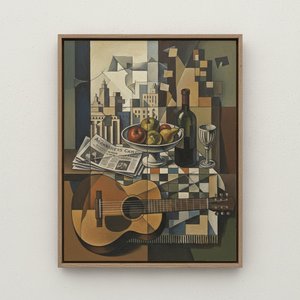
Juan Gris: Cubist Deconstruction & Synthesis – A Comprehensive Exploration
Explore the revolutionary art of Juan Gris – a master of Cubism. Discover his unique approach to deconstruction, vibrant Synthetic Cubist works, and lasting influence on modern art. Expert analysis for collectors.

Dekonstrukcja Rzeczywistości: Rewolucyjny Wpływ Kubizmu na Sztukę XX Wieku
Odkryj rewolucyjny wpływ kubizmu na sztukę XX wieku! Analiza dzieł Picassa i Braque’a, historia nurtu, techniki oraz dziedzictwo. Ekspercka wiedza dla kolekcjonerów i miłośników sztuki.
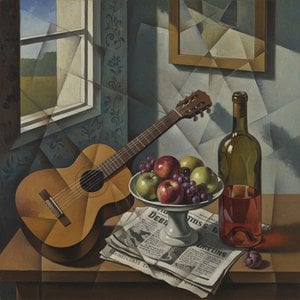
Dekonstrukcja Rzeczywistości: Kompleksowa Eksploracja Martwej Natury w Kubizmie
Odkryj fascynujący świat kubizmu! Kompleksowa analiza martwej natury w twórczości Picassa i Braque’a. Historia, techniki, wpływ na sztukę współczesną – wszystko, co musisz wiedzieć.