

 Podgląd w skali 1:1
 Wyślij jako kartkę
 Udostępnij
 Szczegóły dzieła
 Przewodnik

 Pobierz obraz
 Podobne obiekty
 RTG
RTG Pokaz slajdów
 Q&A
Q&A Statystyki
Envy


 Rozwiń treść
Giclée / Wydruk artystyczny
Wydruki giclée lub płótna o jakości muzealnej, szybka realizacja i szeroki wybór opcji wykończenia. ( Zamów ręcznie malowaną reprodukcję Przejdź do wersji cyfrowej)




































Wybierz spośród naszych standardowych rozmiarów, które zachowują oryginalne proporcje dzieła sztuki.

Wpisz wymaganą szerokość i wysokość, aby dopasować grafikę do ramy lub ściany. Wydruk można jedynie przyciąć, nigdy nie powiększając go poza oryginalny obraz, dlatego format o innych proporcjach spowoduje utratę części kompozycji. Przed rozpoczęciem druku prześlemy Ci cyfrowy podgląd do zatwierdzenia. Obraz wyświetlany na tej stronie nie pokazuje rzeczywistego przycięcia — jedynie podgląd oddaje ten efekt.
Dostawa na cały świat () w ciągu 2 tygodni zamiast standardowych 4/5 tygodni. (2 Listopad)

Bezpłatna ekspresowa wysyłka na cały świat

Wysokiej jakości płótno lniane

Pełne ubezpieczenie przesyłki

Gwarancja zwrotu należności celnych i podatków importowych

Gwarancja wiernego odwzorowania kolorów

100-dniowa polityka zwrotów (tylko w przypadku wad)

Gwarancja 100% zwrotu pieniędzy

Zniżka przy zakupie wielu sztuk
 Opcja ze szkłem jest dostępna wyłącznie w rozmiarach poniżej 110 cm

Envy
Giclée / Wydruk artystyczny
Wymiary reprodukcji
-


Cena całkowita
zł 241
Podobne dzieła


Biografia artysty
Josse de Corte: A Master of Baroque Drama
Josse de Corte (1627-1679) stands as a pivotal figure in the vibrant artistic landscape of 17th-century Flanders, a period defined by dramatic religious fervor and burgeoning classical influences. Born in Ypres, a strategically important city at the heart of the Spanish Netherlands, his early life remains somewhat shrouded in mystery, though it’s believed he received foundational training in Rome under the tutelage of François Duquesnoy, a renowned sculptor known for his elegant and refined style. This Roman education proved crucial, laying the groundwork for de Corte's own distinctive approach – one that skillfully blended the dynamism of Baroque aesthetics with a growing appreciation for classical forms.
De Corte’s career truly blossomed in Venice, a city then at the epicenter of European art and commerce. He arrived around 1657 and quickly established himself as a sought-after sculptor, commanding commissions from wealthy patrons and religious institutions throughout the Venetian Republic. This move marked a significant shift; Venice offered a radically different artistic environment than his native Flanders – one characterized by intense competition, a diverse range of influences (including Italian Mannerism and Caravaggismo), and a thriving market for sculpture intended to adorn lavish churches and palazzi.
The Sculptor’s Palette: Technique and Style
De Corte's sculptures are immediately recognizable for their dramatic intensity and meticulous detail. He possessed an extraordinary ability to convey emotion through gesture, expression, and the manipulation of light and shadow. Unlike some of his contemporaries who favored a more restrained approach, de Corte embraced theatricality, often depicting scenes of religious ecstasy or profound suffering with startling realism. His works are characterized by a powerful sense of movement – figures seem poised on the brink of action, caught in moments of intense spiritual experience.
His mastery of marble carving was particularly noteworthy. He worked primarily with white marble, skillfully exploiting its inherent luminosity and translucence to create surfaces that shimmered with an almost ethereal quality. He employed a technique known as *schiacciato*, or “flattening,” which involved subtly manipulating the surface of the stone to create the illusion of depth and volume. This technique, combined with his precise modeling skills, allowed him to achieve remarkable anatomical accuracy while maintaining a sense of dynamism and movement.
Key Works: A Testament to His Vision
Among de Corte’s most celebrated achievements is undoubtedly the ‘Altar of the Crucifixion’ (1672), currently housed in ArtsDot's collection. This monumental work exemplifies his signature style – a dramatic depiction of Christ’s sacrifice rendered with breathtaking realism and emotional intensity. The intricate marble carvings, showcasing the agony and compassion of the figures involved, are a testament to his technical skill and artistic vision.
Another significant piece is “Envy” (1660), a neoclassical marble bust of Medusa, demonstrating his growing interest in classical forms. The sculpture captures the terrifying beauty of the Gorgon’s visage with remarkable detail, reflecting a shift towards greater restraint and elegance in his style as he matured.
Furthermore, de Corte's contribution to the High Altar for Santa Maria della Salute in Venice remains a cornerstone of Baroque art. This colossal sculptural complex, depicting the Virgin Mary expelling the plague, is considered one of his masterpieces, showcasing his ability to create monumental works that powerfully conveyed religious themes and emotions.
Legacy and Influence
Josse de Corte’s impact on 17th-century sculpture extends beyond his individual creations. He played a crucial role in shaping the artistic landscape of Venice, fostering a vibrant community of sculptors and influencing the work of subsequent generations. His dynamic style, combined with his technical mastery, helped to establish Baroque sculpture as a dominant force in Europe.
His association with the Somascan Fathers at Santa Maria della Salute further cemented his legacy, contributing significantly to the elaborate sculptural decoration of one of Venice’s most iconic churches. De Corte's work continues to be studied and admired for its dramatic intensity, technical skill, and profound emotional resonance – a testament to the enduring power of his artistic vision.

Josse De Corte
1627 - 1679 , Belgium
Krótka nota
- Full Name: Josse de Corte
- Nationality: Flemish
- Date Of Birth: 1627
- Date Of Death: 1679
- Place Of Birth: Ypres, Belgium
- Notable Artworks:
- Altar of the Crucifixion
- Envoy
- High Altar
- Artistic Movement Or Style: Baroque
- Artists Who Influenced This Artist: ['François Duquesnoy']
- Artists Or Movements Influenced By This Artist: ['Baroque Flanders']
Powiązane artykuły
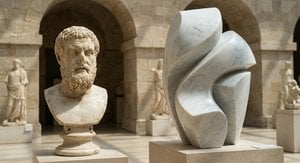
Urok marmuru w historii sztuki: od klasycznej rzeźby do nowoczesnej abstrakcji
Odkryj fascynującą historię rzeźby marmurowej – od klasycznych arcydzieł po nowoczesną abstrakcję. Poznaj techniki, artystów i wartość kolekcjonerską tego wyjątkowego medium. Ekspercka analiza dla miłośników sztuki.

10 Legendarnych Brązów Rzeźbiarskich, Które Zmieniły Sztukę | ArtsDot
Odkryj 10 legendarnych rzeźb brązowych od Rodina, Degasa i innych mistrzów! Poznaj historię powstania arcydzieł sztuki i inspiruj się do dekoracji wnętrz. Reprodukcje najwyższej jakości na ArtsDot.com – zobacz kolekcję!

Francisco Goya: 25 Arcydzieł Genialnego Malarza Hiszpańskiego | ArtsDot.pl
Odkryj 25 arcydzieł Francisco Goyi – od portretów królewskich po dramatyczne 'Czarne Malowidła'. Poznaj historię, technikę i emocje hiszpańskiego mistrza. Reprodukcje obrazów najwyższej jakości na ArtsDot.com! Eksploruj kolekcję online.

Trwała Forma: Rzeźba w Historii – Technika i Rezonans Emocjonalny
Poznaj historię rzeźby od antyku do współczesności! Ekspercka analiza technik, stylów i emocjonalnego wpływu arcydzieł. Inspiracje dla kolekcjonerów i miłośników sztuki.

Trwałe Formy: Ewolucja Technik i Tematów w Rzeźbie Przez Wieki – Od Antyku do Renesansu
Poznaj fascynującą historię rzeźby od antyku do renesansu! Odkryj techniki, wybitnych artystów i wpływ na współczesną sztukę. Ekspercka analiza dla kolekcjonerów i miłośników.