
The picture follows your choices: , .
Biografia artysty
"PolishMetaDescription": "Joseph DeCamp – amerykański malarz impresjonistyczny z Bostonu. Znany z eleganckich portretów i obrazów wnętrz, łączących realizm z delikatnym światłem i wpływami japońskimi. Jego dzieła uchwycą spokojne życie i wewnętrzne emocje."
 Rozwiń treść
Ręcznie malowana reprodukcja olejowa
Ręcznie malowany obraz olejny na płótnie, wykonany na zamówienie przez naszych artystów w wybranym przez Ciebie wymiarze i oprawie. ( Przełącz na wydania drukowane Przejdź do wersji cyfrowej)
More about this painting
 Podgląd w skali 1:1
 Wyślij jako kartkę
 Udostępnij
 Szczegóły dzieła
 Przewodnik

 Pobierz obraz
 Podobne obiekty
 RTG
RTG Pokaz slajdów
 Q&A
Q&A Statystyki
Order your painting in four simple steps
Take your time. You can change any answer; the price in your order card follows each choice.
1 Step one of four
Which size would you like?
These sizes keep the proportions of the original painting. The drawing shows your choice on a wall, above a two-metre sofa.
Or give your own measurements
Wybierz spośród naszych standardowych rozmiarów, które zachowują oryginalne proporcje dzieła sztuki.

Wpisz wymaganą szerokość i wysokość, aby obraz pasował do Twojej ramy lub ściany. Ponieważ jest to dzieło malowane ręcznie, w przypadku rozmiaru o innych proporcjach artysta może domalować nieco więcej wokół obrazu lub przyciąć jego fragmenty — wybór należy do Ciebie. Przed rozpoczęciem pracy prześlemy Ci cyfrową wizualizację do zatwierdzenia. Obraz widoczny na tej stronie nie przedstawia rzeczywistego efektu — jedynie wizualizacja oddaje realny rezultat.
2 Step two of four
How should it be prepared: rolled, stretched or framed?
The prices below are for the size you chose in step one.
Choose the edges of the stretched canvas
Choose your frame

White zł1

Blurside zł1

Extended zł1

P118B zł10

P118H zł10

P118W zł10

P438Z zł10

P508JH zł12

P508YH zł12

P805H zł10

P805Z zł10

P919BZ zł10

P919G zł10

P919XJ zł10

P959ZH zł10

P968JZ zł12

W106C zł8

W218G zł10

W218JH zł8

W218Y zł10

W307PJ zł10

W316G zł10

W316PJ zł8

W316Y zł10

W398PJ zł8

W4111J zł10

W500HY zł15

W500JH zł15

W692G zł12

W849H zł8

W940BG zł15

W953PJ zł8

H24-GOLD zł30

H24-SILVER zł30

H36-GOLD zł45

H36-SILVER zł45
W oprawie
Moulding: . Overall size with the frame: .
3 Step three of four
Would you like anything changed in the painting?
Most people answer no. Because each painting is made by hand, our artist can also adapt it for you.
After order, ArtsDot.com team will email client for instructions and provide a mockup preview
4 Step four of four
A few finishing options
All of them are optional. The answers already selected cost nothing extra.
Who paints it?
Dostawa na całym świecie () w ciągu 3–4 tygodni zamiast standardowych 5 tygodni. (2 Listopad). Bez kompromisów w kwestii jakości.
A nameplate, as in a museum?
Szczegóły grawerowanej brązowej tabliczki
This elegant plaque features the artist's name and the title of the artwork, finely engraved for a timeless presentation.
It is made from bronze with a refined, elegant finish. The text is precisely laser-engraved for a sharp and permanent result. Measuring 9x2 cm, the plaque is compact yet easy to read. It's built to be durable and scratch-resistant, offering a professional, museum-quality look. Mounting is simple thanks to the included adhesive backing.
Szczegóły przezroczystej tabliczki akrylowej
The plaque includes essential engraved details such as the artist's name, the title of the artwork, the date it was created, the type of media used-like oil on canvas or watercolor-a brief description of the piece, and a QR code that links to the complete artwork information.
It is crafted from clear acrylic, offering a sleek, modern appearance. The text is UV-engraved in black to ensure strong visual contrast. With a size of 10x15 cm, it ensures optimal readability. It comes equipped with two metal hooks for secure wall mounting. The plaque is designed to be weather-resistant, making it suitable for various environments, and it includes interactive features that work seamlessly with smartphone scanning.
Szczegóły czarnej tabliczki akrylowej
This elegant plaque includes engraved information such as the artist's name, the title of the artwork, the date it was created, the type of media used (like oil on canvas or watercolor), a short description of the artwork, and a QR code for quick access to more information.
The plaque itself is made from refined black acrylic with a premium finish. The text is laser-engraved in white for high contrast and readability. Its size is 10x15 cm, designed to be easy to read. It comes with two metal hooks for professional mounting. The design is sleek and fits any interior style. It is also weather-resistant and durable, with built-in digital integration for mobile compatibility.
A protective varnish?
When do you need it?
✓ Check and order
Your painting, as you ordered it

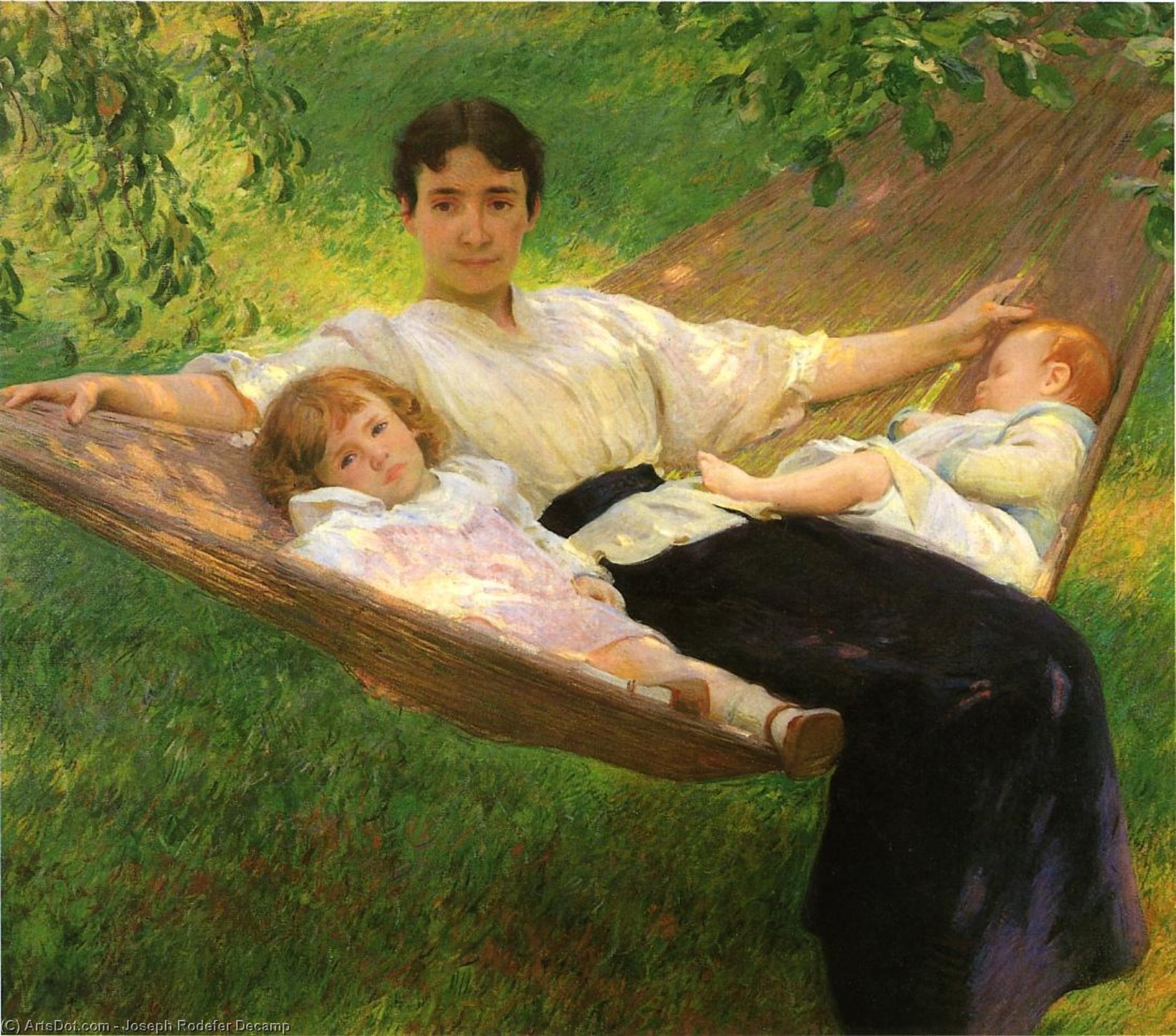
The Hammock
Technika reprodukcji
Wymiary reprodukcji
-

Wybitny mistrz artystyczny
Większa szczegółowość, finezja i dodatkowy czas na realizację
-

Opcje oprawy reprodukcji
-
-
W przypadku dzieł sztuki lub reprodukcji, których którykolwiek z boków przekracza 105 cm (około 41 cali), rama zostanie wysłana w formie zestawu do samodzielnego montażu. Metoda ta zapewnia bezpieczną dostawę i zapobiega uszkodzeniom podczas transportu.
Wymagany profesjonalny montaż – nie jest to produkt typu DIY.
Zestaw musi zostać złożony, a płótno naciągnięte przez doświadczonego profesjonalnego ramiarza, przy użyciu kleju do drewna (brak w zestawie), kleszczy do naciągania płótna oraz ścisków, które utrzymają krosna w równej pozycji podczas schnięcia kleju. Nieprawidłowy montaż lub nierównomierne napięcie płótna może trwale uszkodzić dzieło sztuki i nie podlega naszej gwarancji.
 W przypadku dzieł sztuki lub reprodukcji, których którykolwiek z boków przekracza 105 cm (około 41 cali), rama zostanie wysłana w formie zestawu do samodzielnego montażu. Metoda ta zapewnia bezpieczną dostawę i zapobiega uszkodzeniom podczas transportu.
W zestawie znajdują się wszystkie listwy z litego drewna, precyzyjnie docięte do wymiarów.
Montaż odbywa się przy użyciu dołączonych wkrętów oraz kleju do drewna do łączenia narożników, którego zestaw nie zawiera i który musi zostać dostarczony przez ramiarza.
Wymagane są profesjonalne narzędzia, których nie ma w zestawie: kleszcze do naciągania płótna (napinacz) oraz zaciski, które pozwolą utrzymać listwy w równej pozycji podczas schnięcia kleju.
Ważne:
Do połączenia narożników niezbędny jest klej do drewna, listwy należy unieruchomić za pomocą ścisków do momentu całkowitego wyschnięcia kleju, a naciągnięcie płótna na złożoną ramę wymaga użycia kleszczy do naciągania płótna. Żaden z tych elementów nie jest dołączony do zestawu. Przed zamówieniem tego rozmiaru zalecamy konsultację z doświadczonym ramiarzem.

Etykieta obiektu
-
-

Lakier ochronny
Lakier z połyskiem (pogłębia kolory, chroni przed światłem i wilgocią)
-

Personalizacja dzieła
Przykłady możliwości personalizacji: zastąp twarz zdjęciem klienta; dodaj zwierzę domowe (np. zamień kota na psa); umieść ukrytą wiadomość w tle; zmień krajobraz lub elementy tła.
-

Ekspresowa
Dostawa na cały świat () w ciągu 3–4 tygodni zamiast standardowych 5 tygodni. (2 Listopad). Bez kompromisów w kwestii jakości.
-
Przesyłka ekspresowa
Dostawa na cały świat () w ciągu 5 tygodni. (9 Listopad).
W cenie
Cena całkowita
zł 1024
Opcja ze szkłem jest dostępna wyłącznie w rozmiarach poniżej 110 cm
Included with every order
- Bezpłatna ekspresowa wysyłka na cały świat
- Wysokiej jakości płótno lniane
- Pełne ubezpieczenie przesyłki
- Gwarancja zwrotu należności celnych i podatków importowych
- Gwarancja wiernego odwzorowania kolorów
- 100-dniowa polityka zwrotów (tylko w przypadku wad)
- Gwarancja 100% zwrotu pieniędzy
- Zniżka przy zakupie wielu sztuk


Podobne dzieła


Joseph Rodefer DeCamp
1858 - 1923, Stany Zjednoczone
Biografia artysty
Joseph Rodefer DeCamp (1858-1923): A Luminist of American Life – The World of Joseph Rodefer DeCamp
Joseph Rodefer DeCamp, a name synonymous with the refined elegance of American Impressionism and the distinctive style of the Boston School, occupies a pivotal position in the narrative of late 19th and early 20th-century American art. Born in Cincinnati, Ohio, in 1858, DeCamp’s artistic journey was one of dedicated study, evolving influences, and ultimately, a masterful synthesis of realism, impressionistic light, and an enduring fascination with the subtleties of human experience. His canvases offer glimpses into a world of quiet domesticity, luminous interiors, and portraits that capture not merely likeness but also the inner lives of his subjects. From early training under Thomas S. Noble and Frank Duveneck in Cincinnati to formative years spent absorbing artistic traditions in Munich and Florence, DeCamp’s foundation was built upon rigorous academic principles before blossoming into a uniquely American vision.Formative Years and European Influences
DeCamp's initial exposure to art came at the McMicken School of Design in Cincinnati, where he honed his foundational skills under Noble, whose emphasis on draftsmanship would remain a cornerstone of DeCamp’s technique. However, it was his association with Frank Duveneck that proved particularly impactful, steering him towards a bolder, more direct approach to painting. This influence propelled DeCamp across the Atlantic in the 1870s, joining Duveneck and a cohort of American students at the Royal Academy of Munich. While initially embracing the academic rigor of the academy, DeCamp soon gravitated toward Duveneck’s independent spirit and followed him to Florence, immersing himself in the rich artistic heritage of Italy. These European experiences were crucial, providing not only technical training but also exposure to the Old Masters – particularly the Dutch painters like Jan Vermeer – whose influence would become increasingly apparent in his later work. The meticulous detail, subtle lighting, and quiet intimacy found in Vermeer’s interiors resonated deeply with DeCamp, shaping his aesthetic sensibilities and informing his approach to composition and atmosphere. He meticulously studied the techniques of Rembrandt and Velázquez, absorbing their mastery of chiaroscuro—the dramatic interplay of light and shadow—which would become a hallmark of his own artistic style.The Boston School and a Distinctive Style
Upon returning to the United States in 1883, DeCamp settled in Boston, becoming an integral part of what would soon emerge as the Boston School. Alongside artists like Edmund C. Tarbell and Emil Otto Grundmann, he championed a style that blended Impressionist techniques with traditional academic training. This wasn’t a wholesale adoption of French Impressionism; rather, it was a uniquely American adaptation, prioritizing solid draftsmanship, carefully considered compositions, and a luminous quality of light achieved through subtle color harmonies. DeCamp's work during this period often depicted women engaged in everyday activities – sewing, reading, or simply lost in thought – bathed in the soft glow of interior light. He also embraced Tonalism in the 1890s, furthering refining his palette and emphasizing atmospheric effects. His incorporation of Japonisme—the influence of Japanese art and design—added another layer to his artistic vocabulary, introducing delicate patterns and a sense of refined elegance into his compositions. The meticulous observation of natural light and color, combined with a restrained emotional expression, distinguished DeCamp’s Boston School paintings from their Parisian counterparts.Notable Works
- The Hammock – Portrait of the Artist's Wife and Children: A tender depiction of domestic life, showcasing DeCamp’s skill in capturing familial intimacy.
- The Guitar Player (1908): Demonstrates his ability to blend figure painting with atmospheric effects, creating a captivating scene of musical contemplation.
- Portrait of Francis I. Amory (1912): A masterful portrait that reveals not only the subject’s physical likeness but also his intellectual depth and character—a testament to DeCamp's understanding of psychological nuance.
- The Cellist (1908): Exemplifies DeCamp's skill in portraying figures within subtly lit interiors, evoking a sense of quiet concentration and artistic passion.
- Jetty at Low Tide: Captures serene coastal beauty with texture and light—a masterful rendering of the American landscape infused with Impressionistic sensibilities.