


 Zobacz w skali 1:1
 Wyślij
 Udostępnij
 Szczegóły
 Przewodnik

 Pobierz plik obrazu
 Podobne obiekty
 RTG
RTG Pokaz slajdów
 Statystyki
The Old Violin


 Czytaj więcej
Giclée / Wydruk artystyczny
Wydruki giclée lub płótna o jakości muzealnej, szybka realizacja i szeroki wybór opcji wykończenia. ( Kup ręcznie malowany obraz Przełącz na wersję cyfrową)




P118B zł10

P118H zł10

P118W zł10

P438Z zł10

P508JH zł12

P508YH zł12

P805H zł10

P805Z zł10

P919BZ zł10

P919G zł10

P919XJ zł10

P959ZH zł10

P968JZ zł12

W106C zł8

W218G zł10

W218JH zł8

W218Y zł10

W307PJ zł10

W316G zł10

W316PJ zł8

W316Y zł10

W398PJ zł8

W4111J zł10

W500HY zł15

W500JH zł15

W692G zł12

W849H zł8

W940BG zł15

W953PJ zł8




Wybierz spośród naszych standardowych rozmiarów, które zachowują oryginalne proporcje dzieła sztuki.

Wpisz wymaganą szerokość i wysokość, aby dopasować grafikę do ramy lub ściany. Wydruk można jedynie przyciąć, nigdy nie powiększając go poza oryginalny obraz, dlatego format o innym proporcji spowoduje utratę części kompozycji. Przed rozpoczęciem druku prześlemy Ci cyfrowy podgląd do zatwierdzenia. Obraz wyświetlany na tej stronie nie pokazuje rzeczywistego przycięcia — jedynie podgląd oddaje ten efekt.
Dostawa na cały świat () w ciągu 2 tygodni zamiast standardowych 4/5 tygodni. (24 Październik)

Bezpłatna ekspresowa wysyłka na cały świat

Wysokiej jakości płótno lniane

Pełne ubezpieczenie transportowe

Gwarancja zwrotu należności celnych i podatków importowych

Gwarancja idealnego odwzorowania barw

100-dniowy okres na zwrot dzieła w przypadku wykrycia wad produkcyjnych

Gwarancja 100% zwrotu pieniędzy

Oferta przy zakupie wielu sztuk
 Opcja ze szkłem jest dostępna wyłącznie w rozmiarach poniżej 110 cm

The Old Violin
Giclée / Wydruk artystyczny
Rozmiar reprodukcji
-


Suma do zapłaty
zł 238
The Allure of Decay: John Frederick Peto’s “The Old Violin”
John Frederick Peto's "The Old Violin," painted in 1890, isn’t merely a depiction of an instrument; it’s a carefully constructed illusion—a masterful exercise in *trompe-l’oeil* that invites the viewer into a world of faded grandeur and poignant nostalgia. Peto, a largely forgotten artist until his work was rediscovered in the late 20th century alongside William Harnett, possessed a singular ability to render commonplace objects with breathtaking realism, creating scenes that seem to breathe with life and age. “The Old Violin” exemplifies this talent, transporting us to a dimly lit room filled with the ghosts of musical memories.
At first glance, the painting presents as a still life—a violin resting on a table alongside scattered sheet music, a pair of antique keys, and an open book. However, closer inspection reveals the astonishing depth of Peto’s technique. He meticulously recreated every surface – the worn wood grain of the violin, the aged paper of the music sheets, the tarnished metal of the keys—with such precision that they appear utterly tangible. The light, subtly diffused and casting long shadows, further enhances this illusionistic effect, mimicking the play of natural light in a real room. Peto’s skill lies not just in his technical proficiency but also in his ability to evoke atmosphere through careful observation and rendering of texture.
A Window into Victorian Material Culture
“The Old Violin” offers a fascinating glimpse into the material culture of late 19th-century America. The violin itself, likely an antique Cremona instrument (hence the title), represents both musical artistry and social status—a symbol of refinement and cultural appreciation. The scattered sheet music hints at a life devoted to music, suggesting a connection to education, leisure, or perhaps even professional performance. The keys, with their intricate detail, speak to a time when craftsmanship was highly valued, and objects were made to last. Even the open book, its pages yellowed with age, contributes to the overall sense of history and accumulated experience.
Peto’s work is deeply rooted in the *trompe-l'oeil* tradition, which sought to create the illusion of three-dimensional space on a two-dimensional surface. This technique was particularly popular during the Victorian era, reflecting a fascination with realism and an interest in capturing everyday life. The influence of William Harnett, another prominent practitioner of *trompe-l’oeil*, is evident in Peto's meticulous attention to detail and his ability to convincingly mimic the appearance of real objects. However, Peto’s work possesses a unique melancholic quality, a subtle sense of loss and remembrance that distinguishes it from Harnett’s more straightforward depictions.
Symbolism and Emotional Resonance
Beyond its technical brilliance, “The Old Violin” is rich in symbolism. The aged instrument represents the passage of time, the fading beauty of youth, and the enduring power of art. The scattered music suggests a life filled with melodies—perhaps joyful celebrations or moments of quiet contemplation. The keys, often associated with unlocking secrets and opening doors, could symbolize access to knowledge, creativity, or perhaps even lost memories.
Peto’s paintings are not simply representations of objects; they evoke emotions. “The Old Violin” is imbued with a sense of nostalgia—a longing for the past and a recognition of the ephemeral nature of beauty. The muted colors, the soft lighting, and the carefully rendered details all contribute to this emotional resonance, inviting the viewer to pause and reflect on the themes of time, memory, and artistic legacy. It’s a piece that whispers stories of forgotten melodies and lives lived within its meticulously crafted illusion.
Discovering the Master
John Frederick Peto's work offers a rare opportunity to connect with a significant yet often overlooked artist of the late 19th century. His paintings, like “The Old Violin,” are testaments to his extraordinary skill and his ability to capture the essence of everyday life. Explore more of Peto’s captivating creations at “The Old Cremona”, a similar masterpiece showcasing his mastery of *trompe-l'oeil*. For collectors and interior designers seeking unique pieces that combine artistic skill with historical significance, Peto’s work represents an exceptional investment. Further insights can be found in articles detailing the life and works of John Frederick Herring Senior here, or William Michael Harnett here.
Pytania i odpowiedzi
Gdzie mogę kupić ręcznie malowaną reprodukcję dzieła „The Old Violin” autorstwa John Frederick Peto?
Ręcznie malowaną reprodukcję dzieła „The Old Violin” autorstwa John Frederick Peto można zamówić bezpośrednio na stronie Ręcznie malowana reprodukcja: ręcznie malowana reprodukcja olejowa na płótnie lnianym, tworzoną na specjalne zamówienie.
W którym roku powstało „The Old Violin” autorstwa John Frederick Peto?
Dzieło "The Old Violin" pochodzi z 1890 roku. Data ta pozwala umiejscowić pracę w kontekście twórczości John Frederick Peto oraz epoki, w której powstała.
Do czego zaleca się wykorzystanie reprodukcji „The Old Violin” autorstwa John Frederick Peto?
Zalecanym zastosowaniem wydruku "The Old Violin" jest Statement.
Podobne dzieła


Biografia artysty
John Frederick Peto: Na nowo odkryty mistrz amerykańskiego trompe l'oeil
- Miejsce urodzenia: Filadelfia, Stany Zjednoczone Ameryki (1854)
- Data śmierci: 1907
John Frederick Peto był amerykańskim artystą, którego sława opierała się na niezwykłym mistrzostwie techniki trompe l'oeil – malarstwa mającego na celu zwiedzenie wzroku widza i przekonanie go, że namalowane obiekty są rzeczywiste. Przez wiele długich lat twórczość Peto pozostawał w zapomnieniu, aż do momentu jej ponownego odkrycia pod koniec XX wieku, równolegle z dziełami innego mistrza tej techniki, Williama Harnetta. Jego płótna stanowią unikalne okno na codzienność oraz kulturę materialną schyłku XIX wieku.
Wczesne lata i edukacja artystyczna
- Peto odebrał swoje pierwsze szlify artystyczne w Pennsylvania Academy of the Fine Arts, gdzie kształcił się u boku Williama Harnetta.
- W początkach swojej kariery regularnie prezentował swoje prace na corocznych wystawach w Filadelfijskiej Akademii.
- W 1889 roku Peto przeniósł się do Island Heights w New Jersey, co stało się momentem przełomowym, znacząco kształtującym jego styl oraz tematykę dzieł.
Styl artystyczny i charakterystyka twórczości
- Technika trompe l'oeil: Najbardziej rozpoznawalną cechą Peto była jego wybitna biegłość w oszukiwaniu oka. Z niezwykłą precyzją oddawał zwyczajne przedmioty – pistolety, podkowy, skrawki papieru, klucze czy książki – tworząc iluzję trójwymystości na płaskiej powierzchni.
- Płytka przestrzeń i kompozycja: Jego obrazy zazwyczaj przedstawiają aranżacje tych przedmiotów w ograniczonej, płytkiej przestrzeni, co potęguje wrażenie głębi oraz realizmu.
- Gra światłocienia i tekstura: Peto poświęcał ogromną uwagę grze cieni oraz fakturze, co jeszcze bardziej wzmacniało zwodniczy charakter jego prac. Stosował subtelne przejścia tonalne, by stworzyć iluzję namacalnych powierzchni.
- Paleta barw i warsztat: Dojrzałe dzieła Peto charakteryzują się nieprzezroczystą, niemal pudrową teksturą, którą często porównuje się do stylu Jean-Baptiste-Siméona Chardina, słynnego francuskiego malarza z XVIII wieku. Jego paleta barw była zazwyczaj stonowana i ziemista, odzwierciedlając tony wiekowych przedmiotów i zużytych powierzchni.
Ponowne odkrycie i dziedzictwo
- Lata zapomnienia: Po przeprowadzce do Island Heights, Peto w dużej mierze wycofał się z głównego nurtu świata sztuki. Prowadził ciche życie, dorabiając malowaniem dla turystów oraz grając muzykę podczas lokalnych wydarzeń. Jego twórczość pozostawała niemal całkowicie zapomniana przez dziesięciolecia.
- Późniejsza sława: Ponowne odkrycie obrazów Peto pod koniec XX wieku przywróciło światu uwagę nad jego talentem. Badacze zaczęli dostrzegać jego unikalny wkład w historię sztuki amerykańskiej.
- Porównania z Harnettem: Choć często zestawiany z Williamem Harnettem, styl Peto jest zazwyczaj uważany za bardziej abstrakcyjny i nasycony emocjami niż technicznie doskonałe, lecz czasem sztywne podejście Harnetta. Kompozycje Peto są mniej formalne, a przedstawiane przez niego przedmioty wydają się starsze i bardziej zużyte.
- Muzea i kolekcje: Dziś obrazy Peto można odnaleźć w prestiżowych muzeach na terenie całych Stanów Zjednoczonych, w tym w John F. Peto Studio Museum, które jest poświęcone pielęgnowaniu jego dziedzictwa.
Najważniejsze dzieła
- Take Your Choice (1885)
- Reminiscences of 1865 (1901)
- Job Lot Cheap (1901)
- Still Life with Mug, Pipe and Book (1870)
- Still Life with Oranges and Banana (ok. 1880)
Aby uzyskać więcej informacji na temat życia i twórczości Johna Fredericka Peto, odwiedź ArtsDot.com.

John Frederick Peto
1854 - 1907 , Stany Zjednoczone Ameryki
Najważniejsze informacje
- Artistic Movement Or Style: Trompe-l'oeil, Realizm
- Artists Who Influenced This Artist: ['Jean-Baptiste-Siméon Chardin']
- Date Of Birth: 21 maja 1854
- Date Of Death: 23 listopada 1907
- Full Name: John Frederick Peto
- Nationality: Amerykańska
- Notable Artworks:
- Take Your Choice
- Reminiscences of 1865
- Job Lot Cheap
- Martwa natura z kubkiem, fajką i książką
- Martwa natura z pomarańczami i bananem
- Place Of Birth: Filadelfia, Stany Zjednoczone
Zobacz także powiązane artykuły
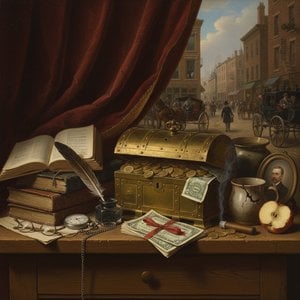
William Michael Harnett: Still Life, Realism & the American Pursuit of Materiality
Explore the captivating still lifes of William Michael Harnett, a master of American realism and trompe l'oeil painting. Discover his technique, legacy & the cultural context behind his iconic works.
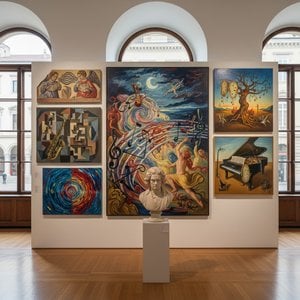
Harmonies on Canvas: Exploring the Visual Representation of Music in Art History
Explore the fascinating history of music's visual representation in art! From ancient symbolism to modern abstraction, discover how artists have captured sound and emotion on canvas. Expert insights & stunning examples.

Rodzinny Portret w Duchu Mistrzów: Przemiana Współczesnego Zdjęcia w Majestatyczny Obraz Olejny
Przemień swoje zdjęcie w majestatyczny portret olejny! Ręcznie malowane obrazy na zamówienie, inspirowane mistrzami renesansu. Eksperci, najwyższa jakość i trwałość. Idealny prezent dla rodziny!

Sergey Solomko: Rediscovering the Poetic Landscape of Old Russia
Explore the captivating world of Sergey Solomko (1867-1928), a master of Russian Art Nouveau. Discover his stunning paintings, illustrations & designs capturing Old Russia's beauty. Hand-painted reproductions available at ArtsDot.

Remixing Renaissance: Contemporary Appropriations and Digital Reimaginations of Old Master Paintings
Explore the fascinating world of Renaissance art reimagined! Discover how contemporary artists are transforming Old Master paintings with digital tools & insightful critique. Expert analysis and a deep dive into art history.