


 Podgląd w skali 1:1
 Wyślij jako kartkę
 Udostępnij
 Szczegóły dzieła
 Przewodnik

 Pobierz obraz
 Podobne obiekty
 RTG
RTG Pokaz slajdów
 Statystyki
Untitled (D2X2YA)
 Ink On Paper
- Sumi-e
 601
601- Modern
 116.0cm x 53.0cm
 Metropolitan Museum of Art
 Rozwiń treść
Ręcznie malowana reprodukcja olejowa
Ręcznie malowany obraz olejny na płótnie, wykonany na zamówienie przez naszych artystów w wybranym przez Ciebie wymiarze i oprawie. ( Przełącz na wydania drukowane Przejdź do wersji cyfrowej)




P118B zł10

P118H zł10

P118W zł10

P438Z zł10

P508JH zł12

P508YH zł12

P805H zł10

P805Z zł10

P919BZ zł10

P919G zł10

P919XJ zł10

P959ZH zł10

P968JZ zł12

W106C zł8

W218G zł10

W218JH zł8

W218Y zł10

W307PJ zł10

W316G zł10

W316PJ zł8

W316Y zł10

W398PJ zł8

W4111J zł10

W500HY zł15

W500JH zł15

W692G zł12

W849H zł8

W940BG zł15

W953PJ zł8




Wybierz spośród naszych standardowych rozmiarów, które zachowują oryginalne proporcje dzieła sztuki.

Wpisz wymaganą szerokość i wysokość, aby obraz pasował do Twojej ramy lub ściany. Ponieważ jest to dzieło malowane ręcznie, w przypadku rozmiaru o innych proporcjach artysta może domalować nieco więcej wokół obrazu lub przyciąć jego fragmenty — wybór należy do Ciebie. Przed rozpoczęciem pracy prześlemy Ci cyfrową wizualizację do zatwierdzenia. Obraz widoczny na tej stronie nie przedstawia rzeczywistego efektu — jedynie wizualizacja oddaje realny rezultat.
Po złożeniu zamówienia zespół ArtsDot.com skontaktuje się z klientem drogą mailową w celu uzyskania instrukcji i prześle wizualizację projektu
Dostawa na całym świecie () w ciągu 3–4 tygodni zamiast standardowych 5 tygodni. (26 Październik). Bez kompromisów w kwestii jakości.

Bezpłatna ekspresowa wysyłka na cały świat

Wysokiej jakości płótno lniane

Pełne ubezpieczenie przesyłki

Gwarancja zwrotu należności celnych i podatków importowych

Gwarancja wiernego odwzorowania kolorów

100-dniowa polityka zwrotów (tylko w przypadku wad)

Gwarancja 100% zwrotu pieniędzy

Zniżka przy zakupie wielu sztuk
 Opcja ze szkłem jest dostępna wyłącznie w rozmiarach poniżej 110 cm

Untitled (D2X2YA)
Technika reprodukcji
Wymiary reprodukcji
-


Cena całkowita
zł 1010
A Serene Echo of Nature: Jeong Seon’s Untitled Bamboo Scroll
Jeong Seon's "Untitled (D2X2YA)," a meticulously crafted ink wash painting dating back to 601, offers a profound meditation on nature and the enduring spirit of resilience. This vertical scroll, executed in the classic Sumi-e style, transcends mere representation; it’s an invitation into a realm of quiet contemplation, reflecting centuries of Korean artistic tradition. The artwork immediately captivates with its minimalist approach – a cluster of bamboo stalks rendered against a subtly textured, muted brown background. It's a deliberate choice that forces the viewer to focus entirely on the subject, amplifying its inherent beauty and symbolic weight.
The Essence of Sumi-e: Technique and Composition
At the heart of this piece lies the mastery of Sumi-e, a Japanese ink wash painting technique deeply rooted in Korean art. Jeong Seon’s skill is evident in the varied application of ink – thick, bold strokes delineate the main forms of the bamboo, providing structure and grounding, while thinner, more delicate lines suggest branching leaves and intricate details. This dynamic interplay creates a remarkable sense of texture; some areas appear smooth and subtly blended, evoking the fluidity of water, while others possess a rougher quality, achieved through layered ink washes that mimic the natural irregularities of bamboo growth. The flattened perspective, characteristic of Sumi-e, avoids the illusion of depth, instead prioritizing the capturing of the subject’s *spirit* – its essence rather than a photographic likeness. The composition itself is deliberately asymmetrical, leaning slightly to one side, creating a dynamic visual balance that mirrors the natural world's inherent asymmetry.
Bamboo: Symbolism and Cultural Significance
The bamboo depicted in "Untitled (D2X2YA)" carries profound symbolic weight within Korean culture. Traditionally, it represents resilience, flexibility, and a deep connection to nature – qualities highly valued in the Confucian ethos that shaped Joseon Dynasty Korea. Bamboo’s ability to bend without breaking in the face of adversity mirrors the ideal of *jin*—virtue and integrity—a cornerstone of Korean morality. Furthermore, bamboo is associated with longevity and good fortune, making it a favored motif in art and architecture. The calligraphy scrolls at the top of the scroll further enrich this symbolism, adding layers of textual meaning and reinforcing the artwork’s connection to tradition and philosophical thought.
A Pioneer's Legacy: Jeong Seon and the "True-View" Landscape
Jeong Seon (Gyeomjae), born in 1676, stands as a pivotal figure in Korean art history. Denied formal training due to his family’s modest circumstances, he forged his own path, pioneering a revolutionary approach to landscape painting known as “true-view” or “Jingyeong” style. Unlike earlier styles that focused on recording landscapes for practical purposes, Jeong Seon imbued his paintings with his personal artistic vision and emotional response to the natural world. This shift marked a significant departure from convention and established him as a true innovator. His work, exemplified by "Untitled (D2X2YA)," demonstrates an unparalleled ability to capture the spirit of Korea’s landscapes – a skill that continues to resonate deeply with viewers today. As research reveals, Jeong Seon's artistic journey was shaped by his family history and his own dedication to mastering the art form, resulting in a body of work celebrated for its beauty, depth, and profound symbolism.
ArtsDot offers meticulously crafted hand-painted reproductions of Jeong Seon’s “Untitled (D2X2YA),” allowing you to bring this timeless masterpiece into your home or office. Each reproduction is created using traditional Sumi-e techniques and archival quality materials, ensuring that the artwork's beauty and integrity are preserved for generations to come.
Pytania i odpowiedzi
Jaka technika została użyta w przypadku "Untitled (D2X2YA)" i kiedy powstało to dzieło?
"Untitled (D2X2YA)" powstało w 601 roku przy użyciu Ink On Paper.
Jaki nastrój i emocje wyraża „Untitled (D2X2YA)” – Jeong Seon?
Nastrój utrwalony w „Untitled (D2X2YA)” – Jeong Seon to Calm, a jego ton emocjonalny to Tranquil.
Gdzie mogę kupić ręcznie malowaną reprodukcję dzieła „Untitled (D2X2YA)” – Jeong Seon?
Ręcznie malowaną reprodukcję dzieła „Untitled (D2X2YA)” – Jeong Seon można zamówić bezpośrednio na stronie Ręcznie malowana reprodukcja: ręcznie malowana reprodukcja olejowa na płótnie lnianym, tworzoną na specjalne zamówienie.
Podobne dzieła


Biografia artysty
A Pioneer of Korean Landscape: The Life and Art of Jeong Seon
Jeong Seon, known to the world by his pen name Gyeomjae, emerged from a Korea undergoing subtle yet significant shifts in intellectual and artistic currents during the late 17th and early 18th centuries. Born in 1676 in the heart of Seoul, Jeong Seon’s beginnings were marked not by privilege but by modest circumstances. Though his family boasted an illustrious lineage, they lacked the financial stability to support a traditional scholarly path for their son. This circumstance, however, proved unexpectedly liberating. Denied access to the formal training reserved for the *yangban* class—the scholar-officials—Jeong Seon was free to forge his own artistic direction, unburdened by convention. He began painting daily, driven by an innate talent and a relentless dedication that would define his prolific career. This early immersion in observation and practice laid the foundation for a revolutionary approach to landscape painting in Korea.Breaking with Tradition: The Birth of “True-View” Painting
Prior to Jeong Seon, Korean landscape painting was heavily influenced by Chinese styles, often adhering to established conventions that prioritized idealized representations over realistic depictions. Jeong Seon boldly departed from this tradition, pioneering what became known as "true-view" landscape painting (*jingyeong sansuhwa*). This wasn’t merely a stylistic shift; it represented a fundamental change in artistic philosophy. Instead of recreating landscapes based on literary allusions or imagined ideals, Jeong Seon ventured into the Korean countryside, directly observing and meticulously recording the natural world before him. He focused intently on Korea's unique geographical features—its majestic mountains, winding rivers, and dramatic coastlines—imbuing his work with a sense of national identity previously unseen in Korean art. His paintings weren’t simply landscapes; they were portraits of Korea itself. This dedication to realism was not about photographic accuracy but rather capturing the *essence* of a place, its atmosphere, and its spirit.Influences and Artistic Style
While Jeong Seon broke from many traditions, he wasn’t entirely without influences. The intellectual ferment of his time, particularly the *Silhak* movement—a school of thought advocating practical learning and empirical observation—undoubtedly shaped his artistic approach. Silhak scholars emphasized the importance of understanding Korea's geography, economy, and culture, a sentiment that resonated deeply with Jeong Seon’s commitment to depicting the Korean landscape accurately. Artistically, he admired the work of the Chinese painter Mi Fei (1052–1107), known for his expressive brushwork and atmospheric effects. However, Jeong Seon adapted these influences to create a distinctly Korean style characterized by bold brushstrokes, layered ink washes, and a masterful interplay of light and shadow. He skillfully intermixed dark and light areas, creating depth and texture that brought his landscapes to life. His technique involved building up layers of ink, allowing the underlying tones to peek through, resulting in a dynamic and visually compelling effect.Mount Geumgang and Lasting Legacy
Perhaps Jeong Seon’s most celebrated subject was Mount Geumgang (also known as Diamond Mountains), located on the border between Korea and North Korea. He painted this iconic mountain range over one hundred times, each rendition revealing a new perspective or capturing a different mood. Works like “General View of Inner Geumgang” and his album *Pungak-docheop* are considered masterpieces of Korean landscape painting. These paintings weren’t just artistic achievements; they were acts of national pride, showcasing the beauty and grandeur of Korea's natural heritage. Jeong Seon’s innovative style profoundly impacted subsequent generations of Korean artists. He is rightfully regarded as one of the most important figures in Korean art history, inspiring countless others to embrace realism and explore their own cultural identity through landscape painting. His legacy continues to resonate today, influencing contemporary artists and shaping our understanding of Korea's artistic heritage. He died in 1759, leaving behind a body of work that stands as a testament to his vision, skill, and unwavering dedication to capturing the soul of Korea on canvas.
Jeong Seon
1676 - 1759 , South Korea
Krótka nota
- Full Name: Jeong Seon
- Nationality: Korean
- Date Of Birth: 1676
- Date Of Death: 1759
- Place Of Birth: Jung-gu, South Korea
- Notable Artworks:
- General View of Inner Geumgang
- Album of Mount Geumgang
- General View of Mt. Geumgangsan
- Cheongpung Valley
- Hyeolmang Peak
- Artistic Movement Or Style: True-view landscape
- Artists Who Influenced This Artist: ['Mi Fei']
- Artists Or Movements Influenced By This Artist: ['Korean landscape painters']
Powiązane artykuły

Katsushika Hokusai: 25 Arcydzieł Sztuki Japońskiej dla Kolekcjonerów i Miłośników Dekoracji
Odkryj 25 arcydzieł Katsushika Hokusai, mistrza ukiyo-e! Poznaj historię Wielkiej Fali i innych ikonicznych drzeworytów. Inspiracje wnętrzarskie i reprodukcje obrazów najwyższej jakości na ArtsDot.com – sztuka japońska dla Twojego domu.
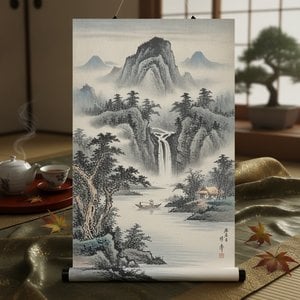
Serenity on Canvas: A Guide to the Timeless Beauty of Japanese Landscape Painting
Discover the serene beauty of Japanese landscape painting. From Hokusai's iconic woodblock prints to meditative sumi-e ink washes, explore a visual journey through the 'floating world' and learn how to bring this timeless Zen aesthetic into your modern home decor.

Ukiyo-e: Obrazy Przepływającego Świata – Historia, Techniki i Trwałe Dziedzictwo Japońskiej Sztuki
Poznaj fascynujący świat ukiyo-e – japońskich drzeworytów z okresu Edo. Historia, techniki, artyści i wpływ na sztukę zachodnią. Ekspercka analiza dla miłośników sztuki i kolekcjonerów.

Efemerowe Wyrażenia: Niuanse Malarstwa Tuszem w Historii i Sztuce Współczesnej
Poznaj fascynujący świat malarstwa tuszem! Odkryj historię, techniki i filozofię tej wyjątkowej sztuki azjatyckiej. Przewodnik po mistrzach pędzla i inspiracje dla współczesnych artystów.

Yi Eungro: Bridging East & West in the Landscape of Korean Modernism
Explore the captivating world of Yi Eungro (Lee Ungno), a pivotal figure in Korean modernism. Discover his unique fusion of Eastern and Western artistic traditions, abstract masterpieces, and lasting legacy. A must-read for discerning art collectors.