


 Podgląd w skali
 Wyślij jako kartkę
 Udostępnij
 Szczegóły dzieła

 Pobierz
 Podobne obiekty
 RTG
RTG Pokaz slajdów
Fool's House

 Rozwiń treść
Giclée / Wydruk artystyczny
Druk giclée lub płótno o jakości muzealnej, szybka realizacja i szeroki wybór opcji wykończenia. ( Przełącz na obraz ręcznie malowany Przełącz na obraz)




P118B $10

P118H $10

P118W $10

P438Z $10

P508JH $12

P508YH $12

P805H $10

P805Z $10

P919BZ $10

P919G $10

P919XJ $10

P959ZH $10

P968JZ $12

W106C $8

W218G $10

W218JH $8

W218Y $10

W307PJ $10

W316G $10

W316PJ $8

W316Y $10

W398PJ $8

W4111J $10

W500HY $15

W500JH $15

W692G $12

W849H $8

W940BG $15

W953PJ $8




Wybierz spośród naszych standardowych rozmiarów, które zachowują oryginalne proporcje dzieła sztuki.

Możesz wprowadzić własne wymiary, aby dopasować dzieło do konkretnej ramy lub przestrzeni. Jeśli wybrany rozmiar nie będzie odpowiadał proporcjom oryginalnego obrazu, przytniecie dzieło lub rozszerzymy obraz za pomocą odbicia lustrzanego lub jednolitego wypełnienia krawędzi. Przed rozpoczęciem produkcji prześlemy cyfrową wizualizację do Twojej akceptacji.
Prosimy pamiętać, że podgląd na ekranie nie odzwierciedla faktycznego przycinania ani rozszerzania. Tylko wizualizacja dokładnie pokaże końcową kompozycję.
Mimo dostępności niestandardowych rozmiarów, zalecamy wybór wymiaru z listy zdefiniowanej, aby zachować oryginalne proporcje.
Dostawa na cały świat () w ciągu 2 tygodni zamiast standardowych 4/5 tygodni. (8 Sierpień)

Bezpłatna ekspresowa wysyłka na cały świat

Wysokiej jakości płótno lniane

Pełne ubezpieczenie przesyłki

Gwarancja zwrotu należności celnych i podatków importowych

Gwarancja wiernego odwzorowania kolorów

Polityka 60-dniowego zwrotu (tylko w przypadku wad)

Gwarancja 100% zwrotu kosztów

Zniżka przy zamówieniu wielu produktów
 Opcja ze szkłem jest dostępna wyłącznie w rozmiarach poniżej 110 cm

Fool's House
Giclée / Wydruk artystyczny
Wymiary reprodukcji
-


Cena całkowita
$ 62
Opis kolekcjonerski
A Quiet Iconography: Exploring Jasper Johns' "Fool’s House"
The painting “Fool’s House” by Jasper Johns stands as a deceptively simple yet profoundly resonant emblem of the American artistic landscape during the mid-1950s. Presented in a striking palette of blue and white—a color scheme characteristic of Johns’ signature style—the artwork immediately draws the eye to its central motif: a broom leaning against a wall. This seemingly mundane object transcends mere depiction, embodying a complex interplay of visual language and conceptual exploration that firmly establishes Johns as a pioneer of Conceptual Art.Style and Technique – Embracing Minimalism
Johns' approach to painting is defined by an unwavering commitment to minimalism. Rejecting the expressive fervor of Abstract Expressionism—artists like Pollock and Rothko—he deliberately eschewed flamboyant brushstrokes and vibrant hues in favor of reductive forms and restrained color palettes. “Fool’s House” exemplifies this stylistic preference perfectly. The smooth, matte surface of the paint contributes to a sense of stillness and contemplation, prioritizing form over gesture. Johns meticulously renders the broom and wall with precise lines and subtle shading, demonstrating an unwavering attention to detail—a technique honed through years of experimentation and driven by a desire to distill visual experience into its purest essence.Historical Context – The Birth of Pop Art’s Influence
“Fool’s House” emerged during a pivotal moment in art history: the burgeoning influence of Pop Art. Artists like Warhol and Lichtenstein were actively challenging artistic conventions by appropriating imagery from popular culture—advertising billboards, comic strips, and everyday objects—transforming them into artworks that interrogated notions of authorship and originality. While Johns distanced himself from the overtly celebratory spirit of Pop Art, his work nonetheless absorbed elements of its conceptual framework. The deliberate selection of a commonplace item—the broom—served as a subversive gesture against the prevailing artistic dogma, questioning the hierarchy between “high” art and “low” culture.Symbolism – Beyond Representation
The symbolism embedded within "Fool’s House" is deliberately ambiguous yet powerfully suggestive. The broom itself has been interpreted in various ways: representing domesticity, labor, and perhaps even a yearning for stability amidst the turbulent anxieties of the Cold War era. Its placement against the wall reinforces this sense of confinement, hinting at an unspoken narrative about resilience and perseverance. Johns’ masterful use of color—the cool blues conveying serenity while simultaneously hinting at melancholy—further enhances the artwork's emotional depth. He avoids explicit statements or narratives, inviting viewers to engage in a dialogue with the image itself, prompting contemplation on themes of identity, memory, and the relationship between art and reality.Emotional Impact – A Meditation on Perception
Ultimately, “Fool’s House” succeeds in conveying a profound sense of emotional resonance despite its apparent simplicity. The artwork compels us to consider how perception shapes our understanding of the world around us—how seemingly insignificant objects can hold immense significance within the realm of artistic expression. It encourages viewers to linger upon the image, allowing its subtle nuances and understated beauty to permeate their consciousness. Like many of Johns’ works, “Fool’s House” transcends mere visual representation, becoming a conduit for introspection and contemplation—a testament to the enduring power of art to provoke thought and evoke feeling.Podobne dzieła


O artyście
A Life Painted in Symbols: The World of Jasper Johns
Jasper Johns emerged as a pivotal figure in the landscape of American art, bridging the emotive intensity of Abstract Expressionism with the burgeoning Pop Art movement that would soon redefine artistic boundaries. Born in Augusta, Georgia, in 1930, his early life was marked by a sense of displacement following his parents’ divorce, an experience that perhaps subtly informed his later explorations of identity and belonging within the context of American iconography. His formative years unfolded across various schools before he briefly attended the University of South Carolina, but it wasn't until his move to New York City in 1949 that Johns truly began to forge his artistic path. A period of service during the Korean War further shaped his perspective, exposing him to a world far removed from the burgeoning art scene he was eager to embrace upon his return.Breaking with Abstraction: The Dawn of a New Visual Language
The post-war American art world was dominated by Abstract Expressionism—a style characterized by spontaneous gesture and deeply personal emotional expression. While initially influenced by this movement, Johns felt compelled to move beyond its purely non-representational approach. He sought a new visual language, one that incorporated recognizable imagery not as illustrations but as vehicles for deeper contemplation. This wasn’t simply about *depicting* the world; it was about questioning how we perceive and interpret symbols within it. Key influences guided his departure: Marcel Duchamp's radical readymades challenged conventional notions of art-making, while the emphasis on materiality in Abstract Expressionism informed Johns’ early techniques. However, it was the everyday objects and potent symbols of American culture—flags, targets, maps, numbers—that truly became central to his artistic vocabulary. He wasn’t interested in escaping representation; he wanted to dissect it, layer it with meaning, and ultimately reveal its inherent ambiguities.Iconic Images: Flags, Targets, and the Language of Symbols
Johns' breakthrough works arrived in the mid-1950s, instantly establishing him as a force to be reckoned with. His paintings of flags, most notably *Flag* (1954–55), were not patriotic declarations but rather investigations into the very nature of representation. Rendered in a semi-abstract style, using encaustic—pigment mixed with hot wax—and collage techniques, these flags weren’t simply images; they were textured surfaces laden with symbolic weight. The *Flag* series wasn't about celebrating American nationalism, but rather exploring themes of perception, memory, and the relationship between image and reality. The target series, beginning in 1958, further explored this fascination with recognizable forms, questioning perception and meaning through the seemingly straightforward image of a bullseye. *Map* (1961), with its fragmented and layered depictions of the United States, delved into themes of geography, identity, and the complexities of national representation. Works like *False Start* (1959) demonstrated his experimentation with language and visual codes, creating complex compositions that challenged viewers to decipher their underlying meanings. Even *White Flag* (1955), a seemingly simple monochrome canvas, prompted profound questions about absence, surrender, and the very act of seeing.Influences and Techniques
Johns’ artistic development was shaped by a diverse range of influences. The work of Marcel Duchamp profoundly impacted his thinking about representation, encouraging him to question the traditional boundaries between art and reality. The emphasis on materiality in Abstract Expressionism—particularly the use of texture and surface—provided a foundation for his later techniques. He experimented with various media, including encaustic, collage, lithography, and woodcut, often combining them in innovative ways. His meticulous attention to detail and his willingness to incorporate found objects into his work reflected a deep engagement with the physical world. The influence of Robert Rauschenberg, with whom he collaborated closely during the early 1950s, was also significant, fostering a spirit of experimentation and pushing the boundaries of artistic practice.Recognition and Enduring Impact
Jasper Johns has received numerous accolades throughout his illustrious career. He was awarded the Golden Lion at the Venice Biennale in 1988, the National Medal of Arts in 1990, and the Presidential Medal of Freedom in 2011 – a testament to his profound impact on American art. His works are held in major museum collections across the globe—the Museum of Modern Art, the Whitney Museum of American Art, the Metropolitan Museum of Art in New York, and Tate Modern in London, to name just a few. Beyond his paintings, Johns’ contributions extend to sculpture and printmaking, demonstrating his versatility and unwavering commitment to artistic innovation. His enduring legacy lies not only in the iconic images he created but also in the profound questions he raised about the nature of representation, symbolism, and the very essence of what it means to be an artist in a rapidly changing world. He remains an active artist, constantly evolving his approach and solidifying his position as one of the most important figures in 20th and 21st-century art.
Jasper Johns
1930 - , Stany Zjednoczone
Krótka nota
- Artistic Movement Or Style: Pop Art, Abstrakcjonizm
- Artists Or Movements Influenced By This Artist:
- Andy Warhol
- Roy Lichtenstein
- Artists Who Influenced This Artist: ['Marcel Duchamp']
- Date Of Birth: 15 maja 1930
- Full Name: Jasper Johns
- Nationality: Amerykański
- Notable Artworks:
- Flag
- Target
- Mapa
- Place Of Birth: Augusta, USA
Powiązane artykuły

Od Fanowskiego Zainteresowania do Wyjątkowej Sztuki: Kompleksowy Przewodnik po Zamawianiu Personalizowanych Obrazów z Motywami Popkultury
Stwórz unikalny obraz w stylu pop art z ArtsDot! Ręcznie malowane reprodukcje, wydruki na zamówienie i personalizacja zdjęć. Wysoka jakość, gwarancja satysfakcji i inspiracje od ekspertów.

Sir John Watson Gordon: A Study in Scottish Landscape Painting & Tonal Impressionism
Explore the captivating portraits of Sir John Watson Gordon, a leading Scottish master. Discover his evolution from neoclassical style to atmospheric Tonalism and influence on 19th-century British art. Learn about his iconic sitters & legacy.

John George Brown: Capturing American Life & Sentiment in 19th-Century Genre Painting
Explore the captivating genre paintings of John George Brown, celebrated for his realistic depictions of 19th-century American life. Discover his legacy & find museum-quality reproductions at ArtsDot.

John Frederick Lewis: Orientalism, Detail & Genre Painting in 19th-Century British Art
Explore the captivating Orientalist paintings of John Frederick Lewis! Discover his mastery of detail, genre scenes & influence on 19th-century British art. Learn about his life, techniques & legacy at ArtsDot.
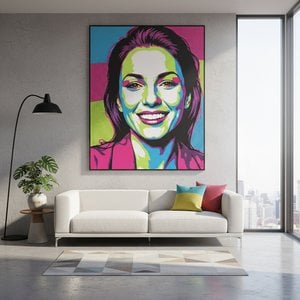
Pop Art z Twojego Zdjęcia: Przemień Wspomnienia w Wyjątkowe Dzieło i Podkreśl Swój Styl
Przemień swoje zdjęcia w wyjątkowe dzieła Pop Art! Ręcznie malowane portrety na zamówienie z gwarancją jakości ArtsDot. Personalizowany prezent, stylowa dekoracja wnętrz i inwestycja w osobistą historię.



