


 Zobacz w skali 1:1
 Wyślij
 Udostępnij
 Szczegóły

 Pobierz plik obrazu
 Podobne obiekty
 RTG
RTG Pokaz slajdów
 Statystyki
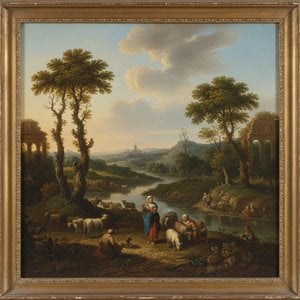
The Ford
 Oil On Canvas
- WallArt
- Romanticism
 1672
1672- Early Modern
 71.0 x 59.0 cm
 Muzeum Sztuki w Budapeszcie
 Czytaj więcej
Ręcznie malowana reprodukcja olejowa
Ręcznie malowany obraz olejny na płótnie, wykonany na zamówienie przez naszych artystów w wybranym przez Ciebie wymiarze i oprawie. ( Przełącz na wersję drukowaną Przełącz na wersję cyfrową)




P118B $10

P118H $10

P118W $10

P438Z $10

P508JH $12

P508YH $12

P805H $10

P805Z $10

P919BZ $10

P919G $10

P919XJ $10

P959ZH $10

P968JZ $12

W106C $8

W218G $10

W218JH $8

W218Y $10

W307PJ $10

W316G $10

W316PJ $8

W316Y $10

W398PJ $8

W4111J $10

W500HY $15

W500JH $15

W692G $12

W849H $8

W940BG $15

W953PJ $8




Wybierz spośród naszych standardowych rozmiarów, które zachowują oryginalne proporcje dzieła sztuki.

Możesz wprowadzić własne wymiary, aby dopasować obraz do konkretnej ramy lub przestrzeni. Jeśli wybrany rozmiar nie będzie odpowiadał proporcjom oryginału, przytniecie dzieło sztuki lub rozszerzymy je o dodatkowe elementy, ręcznie domalowane przez artystę. Przed rozpoczęciem produkcji wyślemy projekt cyfrowy do Twojej akceptacji.
Należy pamiętać, że podgląd na ekranie nie odzwierciedla rzeczywistego przycinania ani rozszerzania obrazu. Tylko projekt dokładnie pokaże ostateczną kompozycję.
Choć oferujemy możliwość zamówienia niestandardowych rozmiarów, zalecamy wybór wymiaru z gotowej listy, aby zachować oryginalne proporcje dzieła.
Po złożeniu zamówienia zespół ArtsDot.com skontaktuje się z klientem drogą mailową w celu uzyskania instrukcji i prześle wizualizację projektu
Dostawa na całym świecie () w ciągu 3–4 tygodni zamiast standardowych 5 tygodni. (18 Wrzesień). Bez kompromisów w kwestii jakości.

Bezpłatna ekspresowa wysyłka na cały świat

Wysokiej jakości płótno lniane

Pełne ubezpieczenie transportowe

Gwarancja zwrotu należności celnych i podatków importowych

Gwarancja idealnego odwzorowania barw

100-dniowy okres na zwrot dzieła w przypadku wykrycia wad produkcyjnych

Gwarancja 100% zwrotu pieniędzy

Oferta przy zakupie wielu sztuk
 Opcja ze szkłem jest dostępna wyłącznie w rozmiarach poniżej 110 cm

The Ford
Technika wykonania
Rozmiar reprodukcji
-


Suma do zapłaty
$ 288
A Pastoral Symphony in Oil
In the quietude of Jan Siberechts’ 1672 masterpiece, "The Ford," we are invited to step into a world where time seems to slow to the gentle rhythm of flowing water and grazing livestock. This exquisite oil on canvas is far more than a mere depiction of a rural crossing; it is a carefully constructed tableau of Flemish serenity and understated elegance. As the eye wanders across the rolling hills, one encounters a scene of profound tranquility—a woman gracefully carrying water alongside a peaceful assembly of cows, horses, and a goat. The composition breathes with a sense of life, capturing that fleeting moment of domestic grace where humanity and nature exist in perfect, unhurprising harmony.
The painting’s atmosphere is defined by a masterful use of chiaroscuro and atmospheric perspective. Siberechts employs a characteristic Flemish technique, layering broad, textured brushstrokes to build a rich sense of depth. While the foreground retains a crisp, tactile clarity—allowing the viewer to almost feel the dampness of the earth and the weight of the livestock—the distant mountains dissolve into a soft, hazy blue. This subtle diminution of detail creates an expansive sense of grandeur, pulling the observer toward a horizon that feels both reachable and infinite. The palette, dominated by muted greens, earthy browns, and soft ochres, evokes the gentle light of an overcast day, casting a diffused glow that softens every edge and invites deep contemplation.
Historical Resonance and Symbolic Depth
To understand "The Ford," one must look back to the era of the English Restoration. Painted during the reign of Charles II, the work embodies a cultural shift away from the austere moralizing of the Puritan years toward a renewed appreciation for classical ideals and the beauty of the natural world. Siberechts, an artist who bridged the gap between the vibrant traditions of Antwerp and the burgeoning landscape movement in England, utilized his Flemish training to celebrate humanist values. The painting serves as a visual manifesto for the harmony found in nature—a sanctuary of peace amidst the political shifts of the 17th century.
Symbolically, the scene resonates with themes of simplicity, abundance, and the eternal cycle of rural life. The act of fetching water and the presence of well-tended animals speak to a bountiful land and a life lived in rhythm with the seasons. For the modern collector or interior designer, this artwork offers a profound emotional anchor. It does not demand attention through jarring colors or chaotic movement; instead, it commands the room through its ability to instill a sense of calm and spiritual reflection. Whether placed in a sunlit library or a sophisticated contemporary living space, "The Ford" acts as a window into a more tranquil existence, making it an incomparable piece for those seeking to infuse their surroundings with timeless elegance and soulful peace.
Podobne dzieła


Biografia artysty
A Flemish Vision in England: The Life and Art of Jan Siberechts
Jan Siberechts, born in Antwerp in 1627, occupies a fascinating position in the history of European art—a bridge between the vibrant traditions of Flemish painting and the burgeoning landscape tradition of England. His story is one of artistic development, fortunate patronage, and ultimately, pioneering influence. The son of a sculptor also named Jan Siberechts, he received his initial training within the family workshop, absorbing the skills and aesthetic sensibilities that would form the foundation of his career. By 1648, he had achieved master status in the prestigious Guild of Saint Luke in Antwerp, signaling his recognition as a skilled craftsman. While concrete evidence remains elusive, art historians speculate about a possible sojourn to Italy during the late 1640s or early 1650s. Though unconfirmed, this potential exposure to Italianate landscape painting—with its emphasis on classical compositions and atmospheric perspective—undoubtedly left an imprint on his evolving style, visible in the early works that showcase a delicate balance between Flemish realism and Italianate ideals. His marriage to Maria-Anna Croes in 1652 marked a period of stability as he honed his craft, initially drawing inspiration from Dutch masters like Nicolaes Berchem and Karel Dujardin, whose pastoral scenes and nuanced light effects resonated with his artistic inclinations.Early Training and Flemish Roots
Siberechts’ formative years were steeped in the traditions of Antwerp’s artistic milieu. His father, also a sculptor, instilled in him a deep appreciation for craftsmanship and sculptural form—influences that would permeate Siberechts’ own artistic endeavors. Becoming a master in Saint Luke’s Guild by 1648 demonstrated not only his technical prowess but also his acceptance within the established artistic hierarchy of Antwerp. This recognition afforded him access to resources and opportunities crucial for furthering his artistic pursuits. Although biographical details about Siberechts remain sparse, scholarly research suggests he may have traveled to Italy sometime around 1650 or 1651—a journey that would expose him to the stylistic innovations emerging from Rome during this period. The Italian landscape tradition, characterized by its embrace of classical ideals and meticulous attention to atmospheric effects, profoundly impacted Siberechts’ artistic sensibilities. This influence is particularly evident in his early paintings, where a subtle fusion of Flemish realism and Italianate aesthetics creates a distinctive visual language.The Influence of Dutch Masters
Siberechts’ artistic trajectory was significantly shaped by the works of prominent Dutch painters who dominated the art scene during his formative years. Nicolaes Berchem and Karel Dujardin—masters of pastoral landscapes and luminous chiaroscuro—served as pivotal models for Siberechts, inspiring him to emulate their techniques and stylistic choices. These artists skillfully captured the beauty of rural life through delicate brushstrokes and masterful use of light, establishing a precedent for Siberechts’ own artistic explorations. Berchem's paintings, renowned for their ethereal quality and symbolic richness, conveyed profound emotional depth—a characteristic that Siberechts would later adopt in his compositions. Similarly, Dujardin’s landscapes celebrated the tranquility of the countryside while simultaneously conveying an awareness of humanist ideals. These influences undoubtedly contributed to Siberechts’ ability to create evocative scenes imbued with both visual splendor and intellectual contemplation.From Flemish Countryside to English Estates
The 1660s marked a decisive turning point in Siberechts’ artistic journey—a period during which he decisively embraced the landscape tradition of Flanders and began to forge his own distinctive style. Departing from the conventions of earlier Flemish painters, Siberechts focused on depicting scenes of rural life with unprecedented vibrancy and detail. Unlike many of his contemporaries who favored idealized depictions of nature, Siberechts presented a realistic portrayal of the Flemish countryside populated by robust figures—often women engaged in everyday tasks—dressed in brilliantly colored clothing that punctuated the verdant landscapes. He skillfully manipulated water reflections, creating visual echoes and adding depth to his compositions. These paintings weren’t merely topographical representations; they were immersive explorations of human experience within the natural world. Siberechts' meticulous attention to detail—particularly in capturing the textures of foliage and the subtleties of light—established him as a leader among Flemish landscape painters.A Pioneer of English Landscape Painting
Siberechts’ artistic reputation extended beyond Flanders when he accepted an invitation from George Villiers, the Second Duke of Buckingham, to decorate Cliveden House in England around 1672. This commission represented a significant step forward in Siberechts’ career—providing him with both financial stability and invaluable experience working on grand architectural projects. However, it was his subsequent travels throughout England that cemented his legacy as a pioneer of the English landscape tradition. He undertook numerous commissions to document the estates of aristocratic clients—a practice that would establish him as one of the foremost artists of his time. Siberechts’ landscapes captured not only the physical beauty of these estates but also their social and cultural significance, reflecting the prevailing ethos of the era. His innovative approach to composition—employing a bird's-eye perspective and utilizing misty atmospheric haze—influenced generations of English landscape painters who followed. Siberechts’ contribution lies not merely in his technical mastery but also in his ability to convey a sense of place and belonging—a quality that continues to resonate with viewers today. His paintings stand as enduring monuments to the artistic spirit of the seventeenth century, embodying both Flemish tradition and the burgeoning dynamism of English culture.
Jan Sibeckts
1627 - 1703 , Belgia
Najważniejsze informacje
- Artistic Movement Or Style: Barok
- Artists Or Movements Influenced By This Artist: ['David Teniers the Younger']
- Artists Who Influenced This Artist:
- Nicolaes Berchem
- Karel Dujardin
- Date Of Birth: 1627
- Date Of Death: 1703
- Full Name: Jan Siberechts
- Nationality: Flamandzki
- Notable Artworks:
- PAYSAGE AVEC FIGURES
- The Ford
- Belsize Estate
- Place Of Birth: Antwerp, Belgia
Zobacz także powiązane artykuły
Nicolaes Berchem: Dutch Golden Age Pastoralism & the Evolution of Landscape Painting
Explore the captivating world of Nicolaes Berchem, a leading Dutch Golden Age painter. Discover his idyllic landscapes, masterful technique & lasting influence on art history. Learn more at ArtsDot.

Golden Light & Dutch Skies: Bringing the Magic of Dutch Golden Age Landscapes into Your Home
Transform your home with the breathtaking light of Dutch Golden Age landscapes. Discover how hand-painted oil reproductions of masterworks like Ruisdael and Vermeer bring timeless elegance, atmosphere, and soulful texture to modern interiors. Elevate your space with museum-quality art.

Jacob van Ruisdael: Master of Dutch Landscape & the Evocation of National Identity
Explore the life & work of Jacob van Ruisdael, the preeminent Dutch landscape painter. Discover his technical brilliance, symbolic depth, and lasting influence on art history. Learn about collecting Ruisdael's masterpieces.

Jan van Goyen: Master of Dutch Landscape & Atmospheric Perspective
Discover Jan van Goyen, the master of Dutch landscape painting. Explore his subtle technique, atmospheric realism & lasting influence on art history. Learn about this 17th-century pioneer at ArtsDot.

John Constable: 25 Najlepszych Obrazów Mistrza Angielskiego Krajobrazu | ArtsDot
Odkryj 25 arcydzieł Johna Constable'a – mistrza angielskiego krajobrazu! Poznaj romantyczne pejzaże, technikę malarską i inspiracje z Dedham Vale. Reprodukcje obrazów najwyższej jakości na ArtsDot.com. Eksploruj pełną kolekcję online!