


Obraz dostosowuje się do Twoich wyborów: , .
Opis obiektu
Admire Jacques-Louis David's 'Etienne Maurice Gerard,' a powerful portrait of a Napoleonic general. Witness his exceptional skill & the era’s spirit through bold brushstrokes and regal detail.
 Rozwiń treść
Biografia artysty
Jacques-Louis David – pionier neoklasycyzmu i twórca obrazów rewolucyjnych oraz glorifikujących Napoleona Bonapartego. Jego dzieła, takie jak „Oaths of the Horatii”, symbolizują bohaterstwo i piękno klasycznej sztuki.
Ręcznie malowana reprodukcja olejowa
Ręcznie malowany obraz olejny na płótnie, wykonany na zamówienie przez naszych artystów w wybranym przez Ciebie wymiarze i oprawie. ( Przełącz na wydania drukowane Przejdź do wersji cyfrowej)
Więcej o tym obrazie
 Podgląd w skali 1:1
 Wyślij jako kartkę
 Udostępnij
 Szczegóły dzieła
 Przewodnik

 Pobierz obraz
 Podobne obiekty
 RTG
RTG Pokaz slajdów
 Pytania i odpowiedzi
 Statystyki
Zamów swój obraz w czterech prostych krokach
Nie spiesz się. Możesz zmienić każdą odpowiedź; cena w Twoim koszyku będzie aktualizowana po każdym wyborze.
1 Pierwszy z czterech kroków
Który rozmiar wybierasz?
Te rozmiary zachowują proporcje oryginalnego obrazu. Rysunek przedstawia wybrany przez Ciebie format na ścianie, nad dwumetrową sofą.
lub podaj własne wymiary
Wybierz spośród naszych standardowych rozmiarów, które zachowują oryginalne proporcje dzieła sztuki.

Wpisz wymaganą szerokość i wysokość, aby obraz pasował do Twojej ramy lub ściany. Ponieważ jest to dzieło malowane ręcznie, w przypadku rozmiaru o innych proporcjach artysta może domalować nieco więcej wokół obrazu lub przyciąć jego fragmenty — wybór należy do Ciebie. Przed rozpoczęciem pracy prześlemy Ci cyfrową wizualizację do zatwierdzenia. Obraz widoczny na tej stronie nie przedstawia rzeczywistego efektu — jedynie wizualizacja oddaje realny rezultat.
2 Drugi z czterech kroków
W jaki sposób przygotować dzieło: w formie tuby, na krosnach czy w ramie?
Poniższe ceny dotyczą rozmiaru wybranego w pierwszym kroku.
Wybierz krawędzie płótna naciągniętego na ramę
Wybierz ramę

Białe krawędzie zł1

rozmyte krawędzie zł1

Przedłużony zł1

P118B zł10

P118H zł10

P118W zł10

P438Z zł10

P508JH zł12

P508YH zł12

P805H zł10

P805Z zł10

P919BZ zł10

P919G zł10

P919XJ zł10

P959ZH zł10

P968JZ zł12

W106C zł8

W218G zł10

W218JH zł8

W218Y zł10

W307PJ zł10

W316G zł10

W316PJ zł8

W316Y zł10

W398PJ zł8

W4111J zł10

W500HY zł15

W500JH zł15

W692G zł12

W849H zł8

W940BG zł15

W953PJ zł8

H24-GOLD zł30

H24-SILVER zł30

H36-GOLD zł45

H36-SILVER zł45
W oprawie
Profil: . Wymiar całkowity w ramie: .
3 Trzeci z czterech kroków
Czy chcieliby Państwo wprowadzić jakieś zmiany w obrazie?
Większość osób odpowiada przecząco. Ponieważ każdy obraz jest tworzony ręcznie, nasz artysta może również dostosować go do Twoich potrzeb.
Po złożeniu zamówienia zespół ArtsDot.com skontaktuje się z klientem drogą mailową w celu uzyskania instrukcji i prześle podgląd projektu
4 Krok czwarty z czterech
Kilka opcji wykończenia
Wszystkie są opcjonalne. Wybrane już odpowiedzi nie wiążą się z żadnymi dodatkowymi kosztami.
Kto jest autorem?
Dostawa na całym świecie () w ciągu 3–4 tygodni zamiast standardowych 5 tygodni. (4 Listopad). Bez kompromisów w kwestii jakości.
Tabliczka informacyjna, jak w muzeum?
Szczegóły grawerowanej brązowej tabliczki
This elegant plaque features the artist's name and the title of the artwork, finely engraved for a timeless presentation.
It is made from bronze with a refined, elegant finish. The text is precisely laser-engraved for a sharp and permanent result. Measuring 9x2 cm, the plaque is compact yet easy to read. It's built to be durable and scratch-resistant, offering a professional, museum-quality look. Mounting is simple thanks to the included adhesive backing.
Szczegóły przezroczystej tabliczki akrylowej
The plaque includes essential engraved details such as the artist's name, the title of the artwork, the date it was created, the type of media used-like oil on canvas or watercolor-a brief description of the piece, and a QR code that links to the complete artwork information.
It is crafted from clear acrylic, offering a sleek, modern appearance. The text is UV-engraved in black to ensure strong visual contrast. With a size of 10x15 cm, it ensures optimal readability. It comes equipped with two metal hooks for secure wall mounting. The plaque is designed to be weather-resistant, making it suitable for various environments, and it includes interactive features that work seamlessly with smartphone scanning.
Szczegóły czarnej tabliczki akrylowej
This elegant plaque includes engraved information such as the artist's name, the title of the artwork, the date it was created, the type of media used (like oil on canvas or watercolor), a short description of the artwork, and a QR code for quick access to more information.
The plaque itself is made from refined black acrylic with a premium finish. The text is laser-engraved in white for high contrast and readability. Its size is 10x15 cm, designed to be easy to read. It comes with two metal hooks for professional mounting. The design is sleek and fits any interior style. It is also weather-resistant and durable, with built-in digital integration for mobile compatibility.
Werniks ochronny?
Kiedy potrzebujesz dostawy?
✓ Sprawdź i zamów
Twoje dzieło, dokładnie tak, jak zamówiłeś

Etienne Maurice Gerard
Technika reprodukcji
Wymiary reprodukcji
-

Wybitny mistrz artystyczny
Większa szczegółowość, finezja i dodatkowy czas na realizację
-

Opcje oprawy reprodukcji
-
-
W przypadku dzieł sztuki lub reprodukcji, których którykolwiek z boków przekracza 105 cm (około 41 cali), rama zostanie wysłana w formie zestawu do samodzielnego montażu. Metoda ta zapewnia bezpieczną dostawę i zapobiega uszkodzeniom podczas transportu.
Wymagany profesjonalny montaż – nie jest to produkt typu DIY.
Zestaw musi zostać złożony, a płótno naciągnięte przez doświadczonego profesjonalnego ramiarza, przy użyciu kleju do drewna (brak w zestawie), kleszczy do naciągania płótna oraz ścisków, które utrzymają krosna w równej pozycji podczas schnięcia kleju. Nieprawidłowy montaż lub nierównomierne napięcie płótna może trwale uszkodzić dzieło sztuki i nie podlega naszej gwarancji.
 W przypadku dzieł sztuki lub reprodukcji, których którykolwiek z boków przekracza 105 cm (około 41 cali), rama zostanie wysłana w formie zestawu do samodzielnego montażu. Metoda ta zapewnia bezpieczną dostawę i zapobiega uszkodzeniom podczas transportu.
W zestawie znajdują się wszystkie listwy z litego drewna, precyzyjnie docięte do wymiarów.
Montaż odbywa się przy użyciu dołączonych wkrętów oraz kleju do drewna do łączenia narożników, którego zestaw nie zawiera i który musi zostać dostarczony przez ramiarza.
Wymagane są profesjonalne narzędzia, których nie ma w zestawie: kleszcze do naciągania płótna (napinacz) oraz zaciski, które pozwolą utrzymać listwy w równej pozycji podczas schnięcia kleju.
Ważne:
Do połączenia narożników niezbędny jest klej do drewna, listwy należy unieruchomić za pomocą ścisków do momentu całkowitego wyschnięcia kleju, a naciągnięcie płótna na złożoną ramę wymaga użycia kleszczy do naciągania płótna. Żaden z tych elementów nie jest dołączony do zestawu. Przed zamówieniem tego rozmiaru zalecamy konsultację z doświadczonym ramiarzem.

Etykieta obiektu
-
-

Lakier ochronny
Lakier z połyskiem (pogłębia kolory, chroni przed światłem i wilgocią)
-

Personalizacja dzieła
Przykłady możliwości personalizacji: zastąp twarz zdjęciem klienta; dodaj zwierzę domowe (np. zamień kota na psa); umieść ukrytą wiadomość w tle; zmień krajobraz lub elementy tła.
-

Ekspresowa
Dostawa na cały świat () w ciągu 3–4 tygodni zamiast standardowych 5 tygodni. (4 Listopad). Bez kompromisów w kwestii jakości.
-
Przesyłka ekspresowa
Dostawa na cały świat () w ciągu 5 tygodni. (11 Listopad).
W cenie
Cena całkowita
zł 1021
Opcja ze szkłem jest dostępna wyłącznie w rozmiarach poniżej 110 cm
W każdym zamówieniu
- Bezpłatna ekspresowa wysyłka na cały świat
- Wysokiej jakości płótno lniane
- Pełne ubezpieczenie przesyłki
- Gwarancja zwrotu należności celnych i podatków importowych
- Gwarancja wiernego odwzorowania kolorów
- 100-dniowa polityka zwrotów (tylko w przypadku wad)
- Gwarancja 100% zwrotu pieniędzy
- Zniżka przy zakupie wielu sztuk


The Visionary’s Brush: Jacques-Louis David and Etienne Maurice Gerard
Jacques-Louis David's Etienne Maurice Gerard is more than just a portrait; it’s a meticulously crafted distillation of the Napoleonic era, a visual testament to military prowess, and a poignant reflection on the shifting tides of French history. Painted in 1816, shortly after Napoleon’s defeat and the subsequent exile of many prominent figures, this work captures General Gerard not merely as an individual, but as a symbol – a representation of France's past glory and its uncertain future. David, already a pivotal figure in the transition from Rococo to Neoclassical art, here masterfully employs the principles of his new style to elevate Gerard to heroic stature, imbuing the scene with a dramatic intensity that resonates far beyond a simple likeness.
The painting immediately draws the eye to Gerard’s commanding presence. He stands confidently on a balcony overlooking a distant landscape, his foot raised in a gesture of authority and control – a subtle yet powerful symbol of leadership. The composition is carefully balanced, utilizing strong diagonals created by the balcony railing and Gerard's stance to draw the viewer into the scene. David’s signature use of warm colors—rich reds, deep blues, and earthy browns—creates an atmosphere of power and gravitas, while his bold brushstrokes inject a sense of dynamism and movement into the otherwise formal arrangement.
Neoclassical Precision: A Study in Detail
David’s mastery of Neoclassical technique is evident in every meticulously rendered detail. The portrait showcases an extraordinary level of precision, particularly in the depiction of Gerard's uniform and medals. Each button, each fold of fabric, each glimmering emblem is painstakingly depicted, reflecting David’s dedication to accuracy and his deep understanding of military attire. This attention to detail isn’t merely decorative; it serves to underscore Gerard’s status as a decorated officer and a national hero – a man who had earned the respect and admiration of his peers.
The background landscape, rendered in muted tones, provides a dramatic backdrop for Gerard's figure. The distant mountains, visible through the hazy atmosphere, evoke a sense of vastness and timelessness, anchoring the portrait within the broader context of French history. Note also the subtle inclusion of architectural elements – the balustrade, the chairs—that subtly reinforce the Neoclassical aesthetic, grounding the scene in classical ideals of order and harmony.
Symbolism and Historical Context
Etienne Maurice Gerard is deeply embedded within the complex political and social landscape of post-revolutionary France. Gerard himself was a significant figure during the Napoleonic Wars, known for his bravery and strategic acumen. However, David’s portrayal transcends mere biographical representation; it speaks to the broader themes of power, ambition, and national identity that defined the era. The confident expression on Gerard's face—a subtle hint of determination mingled with quiet authority—suggests a man who has weathered storms and emerged victorious.
The painting’s creation coincided with a period of political instability in France, following Napoleon’s defeat and the restoration of the Bourbon monarchy. David, himself exiled from Paris, used this portrait as an opportunity to revisit his Neoclassical style and to celebrate the ideals of the past—a deliberate act of defiance against the prevailing conservative forces. The work can be interpreted as a nostalgic yearning for a bygone era of grandeur and military glory, while simultaneously serving as a reminder of France’s enduring legacy in the world of art and culture.
At ArtsDot.com, we are proud to offer meticulously hand-painted reproductions of Etienne Maurice Gerard, capturing David's exceptional skill and the painting's dramatic intensity with unparalleled fidelity. Whether you choose a canvas print or an oil-painted replica, our artisans will ensure that every detail is rendered with precision and care, allowing you to bring this iconic masterpiece into your home or office.
To learn more about Jacques-Louis David and his remarkable career, please visit Jacques Louis David’s page on ArtsDot. For further insights into the painting's historical context and artistic influences, we recommend exploring Jacques Louis David on Wikipedia and Neo-Classicism Art Movement on ArtsDot.
Pytania i odpowiedzi
Do jakiego nurtu należy "Etienne Maurice Gerard"?
„Etienne Maurice Gerard” to dzieło należące do nurtu Neoclassicism. Nurt ten określa tradycję artystyczną, w której osadzone jest dzieło.
Jakie inne pseudonimy lub nazwy stosuje Jacques-Louis David?
Jacques-Louis David jest znany/a również pod pseudonimami: Jacques David, David.
Do czego sugerowane jest wykorzystanie „Etienne Maurice Gerard” – Jacques-Louis David?
Sugerowanym zastosowaniem dla „Etienne Maurice Gerard” – Jacques-Louis David jest Statement, choć może on służyć również do innych celów.
Podobne dzieła


Jacques-Louis David
1748 - 1800, Francja
Biografia artysty
A Brushstroke Across Revolution: The Life and Art of Jacques-Louis David
Jacques-Louis David, born in Paris in 1748, was more than just a painter; he was a visual chronicler of an era defined by upheaval, idealism, and the relentless pursuit of new orders. His life mirrored the dramatic shifts unfolding across France – from the waning opulence of the Rococo to the austere clarity of Neoclassicism, and ultimately, through the tumultuous years of revolution and Napoleonic glory. A childhood marked by the early loss of his father and a facial impediment that initially hindered his speech seemed only to sharpen his observational skills and fuel an unwavering dedication to artistic mastery. Though initially apprenticed to François Boucher, David quickly found himself drawn to the more morally resonant work of Joseph-Marie Vien, whose emphasis on history painting and classical subjects resonated with a burgeoning sense of purpose within the young artist. His early attempts to win the prestigious Prix de Rome were fraught with frustration, yet these repeated setbacks only intensified his resolve, forging a relentless perfectionism that would characterize his entire career.The Birth of Neoclassical Drama
David’s artistic evolution wasn't merely a stylistic shift; it was a philosophical statement. He rejected the frivolous ornamentation and playful themes of the Rococo, embracing instead the clarity, order, and moral seriousness inherent in classical antiquity. This commitment was profoundly influenced by archaeological discoveries at Pompeii and Herculaneum, which unveiled a world of Roman art and architecture previously lost to time. These unearthed ruins provided him with an idealized vision of republican virtue and civic duty – principles he would translate into his paintings. His breakthrough came with “Oath of the Horatii” (1784), a painting that transcended mere artistic skill to become an emblem of civic virtue and patriotic sacrifice. The stark composition, dramatic lighting, and precise draftsmanship were revolutionary, signaling a decisive break from the past. It wasn’t simply *what* he painted but *how* – a deliberate construction designed to evoke powerful emotional responses and inspire contemplation on themes of duty, honor, and self-sacrifice. The figures are rendered with an almost sculptural quality, their bodies conveying both strength and vulnerability, while the pyramidal composition creates a sense of stability and order. This work didn't just announce a new style; it foreshadowed the ideological currents that would soon sweep across France.Revolution and Remembrance: Art as Political Weapon
As the French Revolution erupted in 1789, David was not merely an observer but an active participant. A fervent supporter of the revolutionary cause and a close associate of Maximilien Robespierre, he saw art as a powerful tool for shaping public opinion and immortalizing the ideals of the new republic. His paintings during this period became potent symbols of revolutionary martyrdom and republican fervor. Perhaps his most iconic work from this era is “The Death of Marat” (1793), a hauntingly realistic depiction of the assassinated journalist, transformed into a secular saint. The painting’s stark simplicity – the pale body, the makeshift desk, the poignant letter clutched in Marat's hand – elevates the scene to a level of profound emotional resonance. David deliberately chose to depict Marat in a state of vulnerability and suffering, emphasizing his sacrifice for the cause of liberty. This image was widely circulated throughout revolutionary Paris, serving as a powerful reminder of the price of freedom. He also created “The Death of Socrates” (1787) and "The Lictors Bringing Brutus the Bodies of His Sons" (1789), both exploring themes of sacrifice and civic duty in the face of tyranny. During this time, David served on the Committee of Public Safety, a testament to his commitment to the revolution.From Revolution to Empire: Serving Napoleon
The fall of Robespierre marked another turning point in David’s career. With remarkable adaptability, he navigated the shifting political landscape and aligned himself with Napoleon Bonaparte, becoming the First Consul’s official court painter. This new patronage ushered in a period of grand-scale commissions designed to glorify Napoleon’s victories and achievements. “Napoleon Crossing the Alps” (1801-1805) is perhaps the most famous example – a masterful piece of propaganda that presents Napoleon as a heroic, almost mythical figure conquering both nature and adversity. The painting utilizes dramatic lighting, dynamic composition, and carefully chosen details to create an image of unparalleled grandeur and power. “The Coronation of Napoleon” (1807), an immense canvas capturing the opulence and grandeur of the imperial ceremony, further cemented David’s position as the preeminent artist of the Napoleonic era. During this time, his palette subtly shifted, incorporating warmer Venetian colours while maintaining the precision and clarity that defined his style. He also produced portraits of Napoleon and other prominent figures, solidifying his role as the Emperor's official visual propagandist.Legacy and Influence
The Bourbon Restoration in 1814 brought renewed peril for David, whose association with the fallen Napoleon made him a target of persecution. He chose exile in Brussels in 1816, where he continued to paint and teach until his death on December 29, 1825. Despite facing political challenges, David’s influence remained profound. He trained numerous pupils, including Jean-Auguste-Dominique Ingres, who would become one of the most important neoclassical painters of the 19th century. David's emphasis on draftsmanship, composition, and historical accuracy left an indelible mark on French art. *His legacy extends beyond mere imitation*; his expressive distortions of form and space even foreshadowed the innovations of later artists like Henri Matisse and Pablo Picasso. Jacques-Louis David was not simply a painter of his time; he *defined* it, capturing its spirit of revolution, ambition, and enduring ideals on canvas for generations to come.


Powiązane artykuły

Jacques-Louis David: Neoclassical Ideals & Revolutionary Witness
Explore the life & art of Jacques-Louis David, leading Neoclassical painter of the French Revolution. Discover iconic works like 'The Death of Marat' and his lasting impact on art history. Expert analysis & high-quality reproductions at ArtsDot.
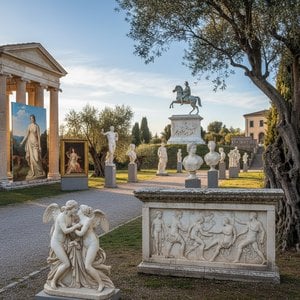
Neoklasycyzm: 10 Arcydzieł, Które Zdefiniowały Epokę | ArtsDot.com
Odkryj 10 arcydzieł neoklasycyzmu! Poznaj historie Davida, Ingresa i Canovy. Malarstwo i rzeźba pełne harmonii i elegancji. Reprodukcje najwyższej jakości na ArtsDot.com – inspiracje dla Twojego wnętrza. Eksploruj kolekcję online!

Anne-Louis Girodet: Bridging Neoclassicism & Romanticism with Emotional Truth
Explore the captivating world of Anne-Louis Girodet, a pivotal figure bridging Neoclassicism & Romanticism. Discover his masterpieces and unique artistic vision with ArtsDot.