


 Zobacz w skali 1:1
 Wyślij
 Udostępnij
 Szczegóły
 Przewodnik

 Pobierz plik obrazu
 Podobne obiekty
 RTG
RTG Pokaz slajdów
 Statystyki
Cupid and Psyche
 Oil On Canvas
- WallArt
- Neoclassical Style
 1817
1817- 19th Century
 184.0 x 242.0 cm
 Muzeum Sztuki w Cleveland
 Czytaj więcej
Giclée / Wydruk artystyczny
Wydruki giclée lub płótna o jakości muzealnej, szybka realizacja i szeroki wybór opcji wykończenia. ( Kup ręcznie malowany obraz Przełącz na wersję cyfrową)




P118B $10

P118H $10

P118W $10

P438Z $10

P508JH $12

P508YH $12

P805H $10

P805Z $10

P919BZ $10

P919G $10

P919XJ $10

P959ZH $10

P968JZ $12

W106C $8

W218G $10

W218JH $8

W218Y $10

W307PJ $10

W316G $10

W316PJ $8

W316Y $10

W398PJ $8

W4111J $10

W500HY $15

W500JH $15

W692G $12

W849H $8

W940BG $15

W953PJ $8




Wybierz spośród naszych standardowych rozmiarów, które zachowują oryginalne proporcje dzieła sztuki.

Możesz wprowadzić własne wymiary, aby dopasować dzieło do konkretnej ramy lub przestrzeni. Jeśli wybrany rozmiar nie będzie odpowiadał proporcjom oryginalnego obrazu, przytniecie dzieło lub rozszerzymy obraz za pomocą odbicia lustrzanego lub jednolitego wypełnienia krawędzi. Przed rozpoczęciem produkcji prześlemy cyfrową wizualizację do Twojej akceptacji.
Prosimy pamiętać, że podgląd na ekranie nie odzwierciedla faktycznego przycinania ani rozszerzania. Tylko wizualizacja dokładnie pokaże końcową kompozycję.
Mimo dostępności niestandardowych rozmiarów, zalecamy wybór wymiaru z listy zdefiniowanej, aby zachować oryginalne proporcje.
Dostawa na cały świat () w ciągu 2 tygodni zamiast standardowych 4/5 tygodni. (24 Wrzesień)

Bezpłatna ekspresowa wysyłka na cały świat

Wysokiej jakości płótno lniane

Pełne ubezpieczenie transportowe

Gwarancja zwrotu należności celnych i podatków importowych

Gwarancja idealnego odwzorowania barw

100-dniowy okres na zwrot dzieła w przypadku wykrycia wad produkcyjnych

Gwarancja 100% zwrotu pieniędzy

Oferta przy zakupie wielu sztuk
 Opcja ze szkłem jest dostępna wyłącznie w rozmiarach poniżej 110 cm

Cupid and Psyche
Giclée / Wydruk artystyczny
Rozmiar reprodukcji
-


Suma do zapłaty
$ 62
Cupid and Psyche: A Neoclassical Reverie
Jacques Louis David’s *Cupid and Psyche* isn't merely a depiction of mythology; it’s an embodiment of the neoclassical spirit—a deliberate return to the grandeur and moral clarity championed by artists like Raphael and Michelangelo. Completed in 1817, shortly after Napoleon’s ascension to power, this monumental canvas transcends its narrative subject matter to become a profound meditation on love, virtue, and divine grace. Its placement within the Cleveland Museum of Art underscores its enduring significance as a cornerstone of European art history.Composition and Setting: An Intimate Drama
David meticulously crafted a scene that feels both expansive and intensely personal. The figures—Cupid and Psyche—are positioned in a bedchamber bathed in soft, diffused light, creating an atmosphere of serene vulnerability. This deliberate choice contrasts sharply with the turbulent artistic currents preceding it, favoring restraint and idealized beauty over flamboyant ornamentation. Notice the careful arrangement of supporting characters: a man standing at the top right corner, presumably representing Zeus, and another figure on the far right, symbolizing Hermes—both guardians of Psyche’s journey. The inclusion of a chair subtly reinforces the domestic setting, grounding the fantastical narrative in tangible reality. David's masterful use of perspective draws the viewer into this intimate tableau, fostering a palpable sense of connection between the subjects and the observer.The Language of Neoclassicism: Technique and Color Palette
David’s technique exemplifies the hallmarks of neoclassical painting—precise modeling, meticulous detail, and an unwavering commitment to anatomical accuracy. He employed oil paints on canvas with painstaking care, layering translucent glazes to achieve remarkable luminosity and depth. The color palette is restrained yet harmonious, dominated by muted reds, golds, and creams—colors associated with nobility and spiritual contemplation. These hues contribute to the painting’s overall mood of solemn beauty, mirroring the moral ideals that underpinned the neoclassical movement. David's attention to detail extends beyond mere representation; he strives to convey an emotional truthfulness that elevates the artwork above simple visual spectacle.Mythological Symbolism: Eros and Psyche – A Tale of Redemption
The story of Cupid and Psyche is steeped in symbolism, reflecting Platonic philosophy’s exploration of the soul's ascent toward divine knowledge. Cupid’s impulsive act—disobeying Venus’s command—represents humanity’s susceptibility to passion and desire, while Psyche embodies virtue and perseverance. Their arduous journey symbolizes the struggle for spiritual enlightenment and the triumph of love over adversity. The bedchamber itself serves as a metaphor for the womb of creation, representing the potential for divine rebirth and transformation. David skillfully captures these concepts through gesture and expression—Psyche’s gaze fixed on Cupid’s face conveys unwavering devotion, highlighting the transformative power of genuine affection.Legacy and Emotional Resonance
*Cupid and Psyche* stands as a testament to Jacques Louis David's artistic genius and his unwavering belief in classical ideals. Its enduring appeal lies not only in its technical brilliance but also in its profound emotional resonance—a celebration of love’s capacity for overcoming obstacles and achieving ultimate fulfillment. Reproductions by ArtsDot.com allow collectors and enthusiasts alike to experience the beauty and contemplation inherent in this iconic masterpiece, preserving David's vision for generations to come.Podobne dzieła


Biografia artysty
A Brushstroke Across Revolution: The Life and Art of Jacques-Louis David
Jacques-Louis David, born in Paris in 1748, was more than just a painter; he was a visual chronicler of an era defined by upheaval, idealism, and the relentless pursuit of new orders. His life mirrored the dramatic shifts unfolding across France – from the waning opulence of the Rococo to the austere clarity of Neoclassicism, and ultimately, through the tumultuous years of revolution and Napoleonic glory. A childhood marked by the early loss of his father and a facial impediment that initially hindered his speech seemed only to sharpen his observational skills and fuel an unwavering dedication to artistic mastery. Though initially apprenticed to François Boucher, David quickly found himself drawn to the more morally resonant work of Joseph-Marie Vien, whose emphasis on history painting and classical subjects resonated with a burgeoning sense of purpose within the young artist. His early attempts to win the prestigious Prix de Rome were fraught with frustration, yet these repeated setbacks only intensified his resolve, forging a relentless perfectionism that would characterize his entire career.The Birth of Neoclassical Drama
David’s artistic evolution wasn't merely a stylistic shift; it was a philosophical statement. He rejected the frivolous ornamentation and playful themes of the Rococo, embracing instead the clarity, order, and moral seriousness inherent in classical antiquity. This commitment was profoundly influenced by archaeological discoveries at Pompeii and Herculaneum, which unveiled a world of Roman art and architecture previously lost to time. These unearthed ruins provided him with an idealized vision of republican virtue and civic duty – principles he would translate into his paintings. His breakthrough came with “Oath of the Horatii” (1784), a painting that transcended mere artistic skill to become an emblem of civic virtue and patriotic sacrifice. The stark composition, dramatic lighting, and precise draftsmanship were revolutionary, signaling a decisive break from the past. It wasn’t simply *what* he painted but *how* – a deliberate construction designed to evoke powerful emotional responses and inspire contemplation on themes of duty, honor, and self-sacrifice. The figures are rendered with an almost sculptural quality, their bodies conveying both strength and vulnerability, while the pyramidal composition creates a sense of stability and order. This work didn't just announce a new style; it foreshadowed the ideological currents that would soon sweep across France.Revolution and Remembrance: Art as Political Weapon
As the French Revolution erupted in 1789, David was not merely an observer but an active participant. A fervent supporter of the revolutionary cause and a close associate of Maximilien Robespierre, he saw art as a powerful tool for shaping public opinion and immortalizing the ideals of the new republic. His paintings during this period became potent symbols of revolutionary martyrdom and republican fervor. Perhaps his most iconic work from this era is “The Death of Marat” (1793), a hauntingly realistic depiction of the assassinated journalist, transformed into a secular saint. The painting’s stark simplicity – the pale body, the makeshift desk, the poignant letter clutched in Marat's hand – elevates the scene to a level of profound emotional resonance. David deliberately chose to depict Marat in a state of vulnerability and suffering, emphasizing his sacrifice for the cause of liberty. This image was widely circulated throughout revolutionary Paris, serving as a powerful reminder of the price of freedom. He also created “The Death of Socrates” (1787) and "The Lictors Bringing Brutus the Bodies of His Sons" (1789), both exploring themes of sacrifice and civic duty in the face of tyranny. During this time, David served on the Committee of Public Safety, a testament to his commitment to the revolution.From Revolution to Empire: Serving Napoleon
The fall of Robespierre marked another turning point in David’s career. With remarkable adaptability, he navigated the shifting political landscape and aligned himself with Napoleon Bonaparte, becoming the First Consul’s official court painter. This new patronage ushered in a period of grand-scale commissions designed to glorify Napoleon’s victories and achievements. “Napoleon Crossing the Alps” (1801-1805) is perhaps the most famous example – a masterful piece of propaganda that presents Napoleon as a heroic, almost mythical figure conquering both nature and adversity. The painting utilizes dramatic lighting, dynamic composition, and carefully chosen details to create an image of unparalleled grandeur and power. “The Coronation of Napoleon” (1807), an immense canvas capturing the opulence and grandeur of the imperial ceremony, further cemented David’s position as the preeminent artist of the Napoleonic era. During this time, his palette subtly shifted, incorporating warmer Venetian colours while maintaining the precision and clarity that defined his style. He also produced portraits of Napoleon and other prominent figures, solidifying his role as the Emperor's official visual propagandist.Legacy and Influence
The Bourbon Restoration in 1814 brought renewed peril for David, whose association with the fallen Napoleon made him a target of persecution. He chose exile in Brussels in 1816, where he continued to paint and teach until his death on December 29, 1825. Despite facing political challenges, David’s influence remained profound. He trained numerous pupils, including Jean-Auguste-Dominique Ingres, who would become one of the most important neoclassical painters of the 19th century. David's emphasis on draftsmanship, composition, and historical accuracy left an indelible mark on French art. *His legacy extends beyond mere imitation*; his expressive distortions of form and space even foreshadowed the innovations of later artists like Henri Matisse and Pablo Picasso. Jacques-Louis David was not simply a painter of his time; he *defined* it, capturing its spirit of revolution, ambition, and enduring ideals on canvas for generations to come.
Jacques-Louis David
1748 - 1800 , Francja
Najważniejsze informacje
- Artistic Movement Or Style: Neoklasycyzm
- Artists Or Movements Influenced By This Artist:
- Ingres
- Matisse
- Artists Who Influenced This Artist:
- Vien
- Poussin
- Date Of Birth: 30 VIII 1748
- Date Of Death: 29 DC 1825
- Full Name: Jacques-Louis David
- Nationality: Francuz
- Notable Artworks:
- Oaths Horatii
- Śmierć Marata
- Napoleon na Alpach
- Place Of Birth: Paryż, Francja
Zobacz także powiązane artykuły

Neoklasycyzm: Powrót do antyku i trwałe dziedzictwo sztuki europejskiej
Poznaj neoklasycyzm – fascynujący powrót do ideałów antyku w sztuce i architekturze. Analiza dzieł, wpływ Winckelmanna i kontekst historyczny. Ekspercka wiedza na ArtsDot.
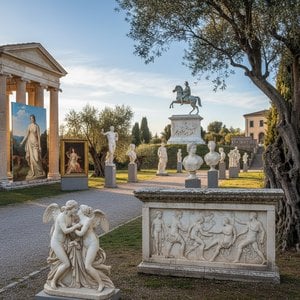
Neoklasycyzm: 10 Arcydzieł, Które Zdefiniowały Epokę | ArtsDot.com
Odkryj 10 arcydzieł neoklasycyzmu! Poznaj historie Davida, Ingresa i Canovy. Malarstwo i rzeźba pełne harmonii i elegancji. Reprodukcje najwyższej jakości na ArtsDot.com – inspiracje dla Twojego wnętrza. Eksploruj kolekcję online!

Neoklasycyzm: Powrót do antyku i trwałe dziedzictwo w sztuce i kulturze
Poznaj neoklasycyzm – fascynujący powrót do antycznych ideałów w sztuce i architekturze. Analiza dzieł, wpływ na kulturę polską i europejską. Ekspercka wiedza o mistrzach jak David i Ingres.

Jacques-Louis David: Neoclassical Ideals & Revolutionary Witness
Explore the life & art of Jacques-Louis David, leading Neoclassical painter of the French Revolution. Discover iconic works like 'The Death of Marat' and his lasting impact on art history. Expert analysis & high-quality reproductions at ArtsDot.
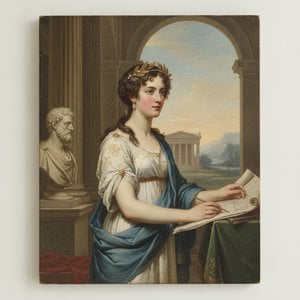
Odrodzenie antyku: Eksploracja ideałów piękna i władzy w portrecie neoklasycystycznym
Poznaj fascynujący świat portretu neoklasycystycznego! Eksplorujemy wpływ antyku na sztukę, techniki malarskie i wybitnych artystów. Odkryj idealy piękna i władzy w klasycznych obrazach.


