
Amazon on horseback Hand-painted in oil, just for your walls


The picture follows your choices: , .
Opis obiektu
A powerful depiction of a regal woman wielding a sword atop a horse by Northern Mannerist master Jacques Bellange captures the dramatic essence of 1606, inviting you to explore this exquisite piece of printmaking history.
 Rozwiń treść
Biografia artysty
Jacques Bellange (c. 1575-1616) was a Northern Mannerist printmaker & painter from Lorraine, renowned for striking religious etchings. Rediscovered in the 20th century, his unique style continues to captivate art enthusiasts.
Ręcznie malowana reprodukcja olejowa
Ręcznie malowany obraz olejny na płótnie, wykonany na zamówienie przez naszych artystów w wybranym przez Ciebie wymiarze i oprawie. ( Przełącz na wydania drukowane Przejdź do wersji cyfrowej)
Order your painting in four simple steps
Take your time. You can change any answer; the price in your order card follows each choice.
1 Step one of four
Which size would you like?
These sizes keep the proportions of the original painting. The drawing shows your choice on a wall, above a two-metre sofa.
Or give your own measurements
Wybierz spośród naszych standardowych rozmiarów, które zachowują oryginalne proporcje dzieła sztuki.

Wpisz wymaganą szerokość i wysokość, aby obraz pasował do Twojej ramy lub ściany. Ponieważ jest to dzieło malowane ręcznie, w przypadku rozmiaru o innych proporcjach artysta może domalować nieco więcej wokół obrazu lub przyciąć jego fragmenty — wybór należy do Ciebie. Przed rozpoczęciem pracy prześlemy Ci cyfrową wizualizację do zatwierdzenia. Obraz widoczny na tej stronie nie przedstawia rzeczywistego efektu — jedynie wizualizacja oddaje realny rezultat.
2 Step two of four
How should it be prepared: rolled, stretched or framed?
The prices below are for the size you chose in step one.
Choose the edges of the stretched canvas
Choose your frame

White zł1

Blurside zł1

Extended zł1

P118B zł10

P118H zł10

P118W zł10

P438Z zł10

P508JH zł12

P508YH zł12

P805H zł10

P805Z zł10

P919BZ zł10

P919G zł10

P919XJ zł10

P959ZH zł10

P968JZ zł12

W106C zł8

W218G zł10

W218JH zł8

W218Y zł10

W307PJ zł10

W316G zł10

W316PJ zł8

W316Y zł10

W398PJ zł8

W4111J zł10

W500HY zł15

W500JH zł15

W692G zł12

W849H zł8

W940BG zł15

W953PJ zł8

H24-GOLD zł30

H24-SILVER zł30

H36-GOLD zł45

H36-SILVER zł45
W oprawie
Moulding: . Overall size with the frame: .
3 Step three of four
Would you like anything changed in the painting?
Most people answer no. Because each painting is made by hand, our artist can also adapt it for you.
After order, ArtsDot.com team will email client for instructions and provide a mockup preview
4 Step four of four
A few finishing options
All of them are optional. The answers already selected cost nothing extra.
Who paints it?
Dostawa na całym świecie () w ciągu 3–4 tygodni zamiast standardowych 5 tygodni. (29 Październik). Bez kompromisów w kwestii jakości.
A nameplate, as in a museum?
Szczegóły grawerowanej brązowej tabliczki
This elegant plaque features the artist's name and the title of the artwork, finely engraved for a timeless presentation.
It is made from bronze with a refined, elegant finish. The text is precisely laser-engraved for a sharp and permanent result. Measuring 9x2 cm, the plaque is compact yet easy to read. It's built to be durable and scratch-resistant, offering a professional, museum-quality look. Mounting is simple thanks to the included adhesive backing.
Szczegóły przezroczystej tabliczki akrylowej
The plaque includes essential engraved details such as the artist's name, the title of the artwork, the date it was created, the type of media used-like oil on canvas or watercolor-a brief description of the piece, and a QR code that links to the complete artwork information.
It is crafted from clear acrylic, offering a sleek, modern appearance. The text is UV-engraved in black to ensure strong visual contrast. With a size of 10x15 cm, it ensures optimal readability. It comes equipped with two metal hooks for secure wall mounting. The plaque is designed to be weather-resistant, making it suitable for various environments, and it includes interactive features that work seamlessly with smartphone scanning.
Szczegóły czarnej tabliczki akrylowej
This elegant plaque includes engraved information such as the artist's name, the title of the artwork, the date it was created, the type of media used (like oil on canvas or watercolor), a short description of the artwork, and a QR code for quick access to more information.
The plaque itself is made from refined black acrylic with a premium finish. The text is laser-engraved in white for high contrast and readability. Its size is 10x15 cm, designed to be easy to read. It comes with two metal hooks for professional mounting. The design is sleek and fits any interior style. It is also weather-resistant and durable, with built-in digital integration for mobile compatibility.
A protective varnish?
When do you need it?
✓ Check and order
Your painting, as you ordered it

Amazon on horseback
Technika reprodukcji
Wymiary reprodukcji
-

Wybitny mistrz artystyczny
Większa szczegółowość, finezja i dodatkowy czas na realizację
-

Opcje oprawy reprodukcji
-
-
W przypadku dzieł sztuki lub reprodukcji, których którykolwiek z boków przekracza 105 cm (około 41 cali), rama zostanie wysłana w formie zestawu do samodzielnego montażu. Metoda ta zapewnia bezpieczną dostawę i zapobiega uszkodzeniom podczas transportu.
Wymagany profesjonalny montaż – nie jest to produkt typu DIY.
Zestaw musi zostać złożony, a płótno naciągnięte przez doświadczonego profesjonalnego ramiarza, przy użyciu kleju do drewna (brak w zestawie), kleszczy do naciągania płótna oraz ścisków, które utrzymają krosna w równej pozycji podczas schnięcia kleju. Nieprawidłowy montaż lub nierównomierne napięcie płótna może trwale uszkodzić dzieło sztuki i nie podlega naszej gwarancji.
 W przypadku dzieł sztuki lub reprodukcji, których którykolwiek z boków przekracza 105 cm (około 41 cali), rama zostanie wysłana w formie zestawu do samodzielnego montażu. Metoda ta zapewnia bezpieczną dostawę i zapobiega uszkodzeniom podczas transportu.
W zestawie znajdują się wszystkie listwy z litego drewna, precyzyjnie docięte do wymiarów.
Montaż odbywa się przy użyciu dołączonych wkrętów oraz kleju do drewna do łączenia narożników, którego zestaw nie zawiera i który musi zostać dostarczony przez ramiarza.
Wymagane są profesjonalne narzędzia, których nie ma w zestawie: kleszcze do naciągania płótna (napinacz) oraz zaciski, które pozwolą utrzymać listwy w równej pozycji podczas schnięcia kleju.
Ważne:
Do połączenia narożników niezbędny jest klej do drewna, listwy należy unieruchomić za pomocą ścisków do momentu całkowitego wyschnięcia kleju, a naciągnięcie płótna na złożoną ramę wymaga użycia kleszczy do naciągania płótna. Żaden z tych elementów nie jest dołączony do zestawu. Przed zamówieniem tego rozmiaru zalecamy konsultację z doświadczonym ramiarzem.

Etykieta obiektu
-
-

Lakier ochronny
Lakier z połyskiem (pogłębia kolory, chroni przed światłem i wilgocią)
-

Personalizacja dzieła
Przykłady możliwości personalizacji: zastąp twarz zdjęciem klienta; dodaj zwierzę domowe (np. zamień kota na psa); umieść ukrytą wiadomość w tle; zmień krajobraz lub elementy tła.
-

Ekspresowa
Dostawa na cały świat () w ciągu 3–4 tygodni zamiast standardowych 5 tygodni. (29 Październik). Bez kompromisów w kwestii jakości.
-
Przesyłka ekspresowa
Dostawa na cały świat () w ciągu 5 tygodni. (5 Listopad).
W cenie
Cena całkowita
zł 1013
Opcja ze szkłem jest dostępna wyłącznie w rozmiarach poniżej 110 cm
Included with every order
- Bezpłatna ekspresowa wysyłka na cały świat
- Wysokiej jakości płótno lniane
- Pełne ubezpieczenie przesyłki
- Gwarancja zwrotu należności celnych i podatków importowych
- Gwarancja wiernego odwzorowania kolorów
- 100-dniowa polityka zwrotów (tylko w przypadku wad)
- Gwarancja 100% zwrotu pieniędzy
- Zniżka przy zakupie wielu sztuk


A Vision of Northern Mannerist Majesty
In the delicate yet commanding lines of Jacques Bellange’s Amazon on horseback, we encounter a window into the enigmatic world of Northern Mannerism. Created in 1606, this evocative work transcends mere illustration, offering instead a dramatic tableau of power and myth. The subject—a woman clad in regal, flowing attire—perches atop her steed with an air of sovereign authority. As she grips her sword, the viewer is immediately drawn into a narrative of martial prowess and aristocratic grace. Bellange, a master of the etching needle, utilizes the medium to weave a complex tapestry of light and shadow, where every stroke contributes to a sense of psychological depth and theatrical tension that was the hallmark of his singular style.
The composition is a masterclass in stylized elegance, characteristic of the Lorraine school. The figure of the Amazon is not merely a warrior but a symbol of untamed strength refined by royal dignity. There is a surreal, almost dreamlike quality to the scene; notice the peculiar anatomical flourishes, such as the unusual positioning of the horse's features, which suggest the artist's departure from strict naturalism in favor of emotional and aesthetic impact. This intentional distortion serves to elevate the subject from the mundane to the legendary, making the piece an ideal focal point for those who appreciate art that challenges the eye and stirs the imagination.
Symbolism and the Spirit of the Era
To gaze upon this work is to engage with the complex symbolism of the early 17th century. The sword held by the Amazon serves as a potent emblem of justice, defense, and the indomitable spirit of the female warrior. In an era where much of the art focused on static religious iconography, Bellange’s exploration of a mythological figure riding through a landscape of shadows offers a refreshing sense of movement and agency. The interplay between the rider's delicate garments and the raw energy of the horse creates a profound tension between civilization and nature, a theme that continues to resonate with modern collectors.
For the discerning interior designer or art enthusiast, this piece offers more than just visual beauty; it provides a conversation piece steeped in historical intrigue. The dark, moody atmosphere of the etching lends itself beautifully to sophisticated, curated spaces—perhaps an executive study, a library, or a gallery-style hallway where the play of light on a high-quality reproduction can truly shine. It evokes a sense of timelessness, bridging the gap between the mysterious history of the Bâse-les-Vosges region and the contemporary desire for art that possesses both intellectual weight and aesthetic splendor.
A Legacy Captured in Ink
Though Jacques Bellange left behind no surviving paintings, his mastery of printmaking ensures his immortality. Amazon on horseback stands as a testament to his ability to command the etched line, creating textures that feel almost tactile. The way the light catches the folds of the queen's gown and the muscular tension of the horse invites the viewer to linger, searching for meaning in the shadows. Owning a reproduction of such a significant work allows one to bring the haunting beauty of Northern Mannerism into the home, offering a daily encounter with the sublime artistry of a forgotten master.
Pytania i odpowiedzi
Czy dzieło "Amazon on horseback" znajduje się w domenie publicznej?
„Amazon on horseback” – Jacques Bellange znajduje się w domenie publicznej (należy do domeny publicznej – autorskie prawa majątkowe wygasły). Status ten określa zasady reprodukcji obrazu tego dzieła.
Kiedy powstało dzieło "Amazon on horseback" i do jakiego nurtu należy?
Dzieło "Amazon on horseback" powstało w 1606 roku i reprezentuje nurt Northern Mannerism.
Z jakiej epoki pochodzi „Amazon on horseback” – Jacques Bellange?
„Amazon on horseback” – Jacques Bellange pochodzi z okresu Early Modern. Epoka ta stanowi kontekst historyczny dla tego dzieła.

Jacques Bellange
1575 - 1616, France
Biografia artysty
A Shadowy Master of the Northern Mannerist Spirit
Jacques Bellange remains one of the most enigmatic and captivating figures in the history of European printmaking. A master of the Northern Mannerist style, his life was lived in the twilight of the late Renaissance, a period defined by elongated forms, theatrical tension, and an almost feverish psychological intensity. Though much of his personal biography remains shrouded in the mists of the early 17th century, his artistic legacy is vibrantly clear through the intricate lines of his etchings. Born around 1575 in the Bâse-les-Vosges region of France, Bellange emerged from a landscape of shifting borders and intense religious fervor, eventually finding his creative home within the sophisticated courtly circles of Nancy.
The traces of his early life are as delicate and elusive as his etchings. While historical records regarding his family origins are sparse, scholars often point to his rapid ascent within the Duchy of Lorraine as evidence of a significant, perhaps even noble, connection. There is much speculation that he may have been the illegitimate son of a high-ranking patron, a theory supported by the prestigious title of "knight" attributed to him and his seamless integration into the court of the Dukes of Lorraine. By 1595, he was already established in La Mothe, honing a craft that would soon transform the medium of printmaking into a vehicle for profound emotional expression.
The Elegance of the Lorraine Court
Bellange’s career reached its zenith under the patronage of Henri II and Philippe III, the Dukes of Lorraine. This period of courtly stability provided him with the luxury of time and resources, allowing him to refine a technique that was uniquely his own. Unlike many of his contemporaries who focused on the clarity of the High Renaissance, Bellange embraced the complexities of Mannerism. His work is characterized by a restless energy, where figures seem to twist and writhe with an almost supernatural grace. In the halls of Nancy, he developed a visual language that blended the sacred with the profane, creating works that were as much about the human psyche as they were about religious devotion.
His mastery of the etching needle allowed him to manipulate light and shadow with unprecedented drama. Through the meticulous use of hatching and cross-hatching, he could conjure textures ranging from the heavy folds of ancient drapery to the weathered skin of a street performer. This technical prowess is perhaps most evident in his ability to imbue even the simplest subject with a sense of profound mystery. Whether depicting a noble figure or a common musician, Bellange’s hand is unmistakable, leaving behind a trail of silvery, luminous lines that seem to vibrate with life.
A Legacy Etched in Light and Shadow
The true significance of Jacques Bellange lies in his ability to capture the ephemeral. His oeuvre serves as a window into a world of intense spiritual struggle and theatrical beauty. Some of his most enduring works demonstrate this range:
- The Three Marys at the Tomb: A striking example of his religious gravity, where dramatic figures and intricate details converge to create a moment of profound biblical tension.
- Hurdy-Gurdy Player: A masterpiece of character study, showcasing his ability to use complex linework to capture the hunched, weary essence of a street musician, imbuing a common subject with deep psychological depth.
- Gentleman in Ancient Costume: An exploration of the Mannerist obsession with historical fantasy and stylized elegance, featuring a warrior adorned in attire that evokes a sense of mythic grandeur.
Though his life was cut short in 1616, Bellange’s influence endured far beyond the borders of Lorraine. His rediscovery in the 20th century brought a renewed appreciation for the expressive potential of the etched line and the enduring power of the Mannerist aesthetic. Today, he is celebrated not merely as a court artist, but as a pioneer who pushed the boundaries of printmaking, leaving an indelible mark on the history of Western art through his hauntingly beautiful, shadow-drenched visions.
Quick facts about Jacques Bellange
- Full Name: Jacques Bellange
- Nationality: French
- Date Of Birth: 1575
- Date Of Death: 1616
- Place Of Birth: Bâse-les-Vosges, France
- Notable Artworks:
- Lamentation
- The Three Marys at the Tomb
- Gypsy with a Child
- Artistic Movement Or Style: Northern Mannerism
- Artists Who Influenced This Artist: ['Hendrik Goltzius']
- Artists Or Movements Influenced By This Artist: ['Renaissance']
Podobne dzieła


Powiązane artykuły

Albrecht Altdorfer: Innovation, Spirituality & the Northern Renaissance Landscape
Explore the groundbreaking art of Albrecht Altdorfer, a pioneer of the Northern Renaissance's Danube School. Discover his innovative landscapes, spiritual symbolism & lasting influence on German painting.

Północny Renesans: Rozkwit Realizmu, Reformacji Religijnej i Artystycznych Innowacji
Poznaj fascynujący świat Północnego Renesansu! Odkryj realizm flamandzkich mistrzów, wpływ reformacji na sztukę i arcydzieła van Eycka, Weydena i Boscha. Ekspercka analiza historii i innowacji artystycznych.
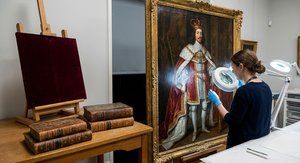
Majestat Reprezentacji: Studium Wizerunku Władzy i Symboliki Królewskiej w Historii Sztuki
Odkryj fascynującą historię królewskiej reprezentacji w sztuce! Analiza portretów władców, symboliki monarchii i dworskich ceremonii. Ekspercka wiedza dla kolekcjonerów i miłośników malarstwa.
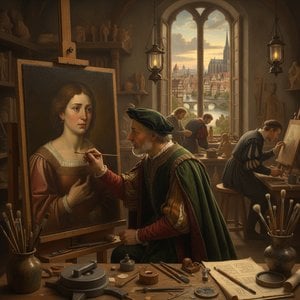
Północne Odrodzenie: Innowacje Artystyczne i Przełom Kulturowy w Renesansowej Niemczech
Poznaj fascynujący świat Renesansu Północnego! Odkryj innowacje artystyczne, wybitnych mistrzów i unikalną symbolikę malarstwa niemieckiego. Ekspercka analiza historii sztuki z ArtsDot.
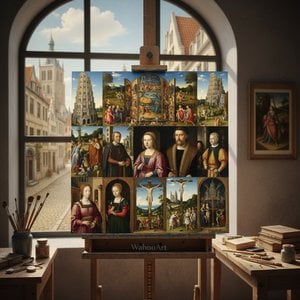
Arcydzieła Północnego Renesansu: 10 Obrazów, które Zmieniły Sztukę | ArtsDot.com
Poznaj 10 arcydzieł Północnego Renesansu! Odkryj historie van Eycka, Dürera i Holbeina. Reprodukcje obrazów najwyższej jakości dla Twojego wnętrza. Inspiracje i zakup dzieł sztuki na ArtsDot.com.
 Podgląd w skali 1:1
 Wyślij jako kartkę
 Udostępnij
 Szczegóły dzieła
 Przewodnik

 Pobierz obraz
 Podobne obiekty
 RTG
RTG Pokaz slajdów
 Q&A
Q&A Statystyki