


 Zobacz w skali 1:1
 Wyślij
 Udostępnij
 Szczegóły
 Przewodnik

 Pobierz plik obrazu
 Podobne obiekty
 RTG
RTG Pokaz slajdów
 Statystyki
Samuel Humes
 Oil On Canvas
- WallArt
- Romantic Victorian Portrait
 1825
1825- 19th Century
 74.0 x 61.0 cm
 Metropolitan Museum of Art
 Czytaj więcej
Giclée / Wydruk artystyczny
Wydruki giclée lub płótna o jakości muzealnej, szybka realizacja i szeroki wybór opcji wykończenia. ( Kup ręcznie malowany obraz Przełącz na wersję cyfrową)




P118B zł10

P118H zł10

P118W zł10

P438Z zł10

P508JH zł12

P508YH zł12

P805H zł10

P805Z zł10

P919BZ zł10

P919G zł10

P919XJ zł10

P959ZH zł10

P968JZ zł12

W106C zł8

W218G zł10

W218JH zł8

W218Y zł10

W307PJ zł10

W316G zł10

W316PJ zł8

W316Y zł10

W398PJ zł8

W4111J zł10

W500HY zł15

W500JH zł15

W692G zł12

W849H zł8

W940BG zł15

W953PJ zł8




Wybierz spośród naszych standardowych rozmiarów, które zachowują oryginalne proporcje dzieła sztuki.

Wpisz wymaganą szerokość i wysokość, aby dopasować grafikę do ramy lub ściany. Wydruk można jedynie przyciąć, nigdy nie powiększając go poza oryginalny obraz, dlatego format o innym proporcji spowoduje utratę części kompozycji. Przed rozpoczęciem druku prześlemy Ci cyfrowy podgląd do zatwierdzenia. Obraz wyświetlany na tej stronie nie pokazuje rzeczywistego przycięcia — jedynie podgląd oddaje ten efekt.
Dostawa na cały świat () w ciągu 2 tygodni zamiast standardowych 4/5 tygodni. (24 Październik)

Bezpłatna ekspresowa wysyłka na cały świat

Wysokiej jakości płótno lniane

Pełne ubezpieczenie transportowe

Gwarancja zwrotu należności celnych i podatków importowych

Gwarancja idealnego odwzorowania barw

100-dniowy okres na zwrot dzieła w przypadku wykrycia wad produkcyjnych

Gwarancja 100% zwrotu pieniędzy

Oferta przy zakupie wielu sztuk
 Opcja ze szkłem jest dostępna wyłącznie w rozmiarach poniżej 110 cm

Samuel Humes
Giclée / Wydruk artystyczny
Rozmiar reprodukcji
-


Suma do zapłaty
zł 238
A Window into Pennsylvania Society: Examining Jacob Eichholtz’s Portrait of Samuel Humes
Jacob Eichholtz's "Samuel Humes" stands as a testament to the burgeoning artistic spirit of early 19th-century America, specifically within the context of Lancaster County. Born in 1776, Eichholtz wasn’t formally trained at an academy; his artistic journey began organically—rooted in the practical realities of his upbringing alongside Leonard Eichholtz, whose Bull’s Head Tavern served as a cornerstone of Lancaster's social and economic life. This formative experience instilled in him not merely an understanding of commerce but also a profound appreciation for human interaction – a sensibility that would permeate his oeuvre. Recognizing his innate talent, Eichholtz’s family skillfully channeled this inclination toward the craft of coppersmithing, securing a stable profession while simultaneously nurturing his artistic aspirations.- Subject Matter: The portrait depicts Samuel Humes, an affluent gentleman from Lancaster County, presenting him in a dignified pose against a subtly textured background.
- Style: Eichholtz’s style aligns with the Romantic Victorian movement, characterized by its emphasis on realism and psychological depth—a departure from earlier Neoclassical conventions.
Technique & Materials – Capturing Light and Texture
Executed in oil paint on canvas measuring 74 x 61 cm, Eichholtz employed a meticulous technique that prioritized capturing the nuances of light and texture. He skillfully blended brushstrokes to achieve a velvety surface finish—a hallmark of Victorian portraiture—allowing for subtle gradations of color and creating an illusion of three-dimensionality. The artist’s careful observation of anatomy and drapery contributes to the painting's remarkable accuracy, reflecting the prevailing scientific interest in studying human form during this period.Historical Context – Pennsylvania’s Artistic Renaissance
“Samuel Humes” emerged during a period of significant artistic growth within Pennsylvania—often referred to as Pennsylvania’s Artistic Renaissance. The burgeoning middle class embraced portraiture as a means of commemorating achievements and establishing social status, fostering a demand for skilled artists like Eichholtz. Lancaster County itself was experiencing rapid industrialization and urbanization, attracting individuals from across the nation eager to build lives and reputations. Eichholtz's work embodies this spirit—a celebration of both individual identity and the broader cultural landscape of his time.Symbolism & Emotional Impact – Apples and Classical Influence
The inclusion of apples within Humes’s attire is laden with symbolic significance, referencing biblical references to Adam and Eve and representing fertility and prosperity—themes prevalent in Victorian art. Furthermore, Eichholtz's stylistic choices draw inspiration from classical ideals of beauty and harmony, mirroring the broader revival of Greco-Roman culture during the Romantic era. The painting evokes a sense of quiet dignity and contemplative reflection, inviting viewers to contemplate Humes’s character and place within his community—a testament to Eichholtz’s ability to convey emotion through visual representation.Provenance & Legacy – A Masterpiece Preserved
Currently housed at the Metropolitan Museum of Art in New York City, “Samuel Humes” remains a captivating example of American Romantic portraiture. Its meticulous execution and evocative composition continue to inspire admiration among art historians and collectors alike—a lasting legacy of Jacob Eichholtz’s artistic vision.Pytania i odpowiedzi
Jaki klimat wnosi „Samuel Humes” autorstwa Jakub Eichholtz do wnętrza?
„Samuel Humes” autorstwa Jakub Eichholtz ma Elegant atmosferę i jest polecane do Living Room. Nastrój to to, co dzieło wnosi do otaczającej je przestrzeni.
Czy dzieło "Samuel Humes" jest dostępne jako wysokiej jakości wydruk artystyczny?
„Samuel Humes” jest dostępny jako szlachetna odbitka na płótnie bawełnianym lub archiwalnym papierze płótnopodobnym. Zamówienia można składać na stronie Wydruk artystyczny, wybierając dowolny rozmiar.
Jaki rozmiar reprodukcji jest sugerowany dla „Samuel Humes” autorstwa Jakub Eichholtz?
Dla dzieła „Samuel Humes” autorstwa Jakub Eichholtz sugerowana jest reprodukcja w formacie Medium. Rozmiar można dostosować, zachowując proporcje.
Podobne dzieła


Biografia artysty
Jacob Eichholtz (1776–1842): A Pennsylvania Portraitist’s Quiet Triumph
Jacob Eichholtz (1776-1842) inhabited several worlds, or so his letter to fellow artist and historian of early American art, William Dunlap would suggest. Trained as an artisan, he successfully entered the world of fine art (Fig. 1). Born and raised in the small town of Lancaster, Pennsylvania, he was most at home in cosmopolitan Philadelphia. His is an American story and his success at navigating a path through his rapidly changing worlds brings America’s past into sharper relief.- Early Life and Craftsmanship
- The Influence of Thomas Sully and Benjamin Latrobe
- A Flourishing Portrait Career
- Family Life and Legacy
- Recognition and Remembrance
Early Life and Craftsmanship
Jacob Eichholtz was born in Lancaster, Pennsylvania, to Leonard and Catharine Eichholtz, who owned and ran the Bull’s Head Tavern on East King Street in Lancaster; his father took part in the American Revolutionary War. At age 11, Jacob with his brothers attended the English school at Franklin College where he learned the three Rs — reading, 'riting and 'rithmetic. He also took lessons from a sign painter since his parents noticed his inclination to draw, but eventually he was apprenticed as a coppersmith. After his apprenticeship ended, he started as a tinsmith working with sheet iron. By 1805, Eichholtz opened his own shop in Lancaster where he, “mended sugar boxes, tinned copper kettles, and made coffee pots, wash basins, lanterns, stills, and funnels.” Eichholtz’s father’s involvement in the war instilled a sense of civic duty and shaped his worldview. His family's prosperity provided him with opportunities for education and advancement—a rare circumstance in rural Pennsylvania at the time.The Influence of Thomas Sully and Benjamin Latrobe
A pivotal moment in Eichholtz’s artistic journey occurred when artist James Peale visited Lancaster and became acquainted with Eichholtz, who commissioned Peale his portrait. Shortly thereafter, Thomas Sully befriended Eichholtz when he was visiting Lancaster on business and accepted his invitation to work in his painting room. Sully took Eichholtz under his wing, giving him painting supplies and offering advice. Sully wrote that he was surprised and gratified to see how much Eichholtz’s painting skills improved, and that, “eichholtz would have made a first-rate painter had he begun early in life with the usual advantages.” Latrobe's architectural designs further broadened Eichholtz’s horizons and exposed him to innovative artistic ideas. These connections fostered collaboration and propelled Eichholtz’s artistic development.A Flourishing Portrait Career
By 1808, Eichholtz advertised that he “executes portraits and profile paintings” in the Lancaster's Intelligencer and Weekly Advertiser. He painted mainly in Pennsylvania, Delaware, and Maryland, and exhibited at the Pennsylvania Academy of the Fine Arts. During the winter of 1811-1812, Eichholtz traveled to Boston where he spent several weeks at the studio of Gilbert Stuart copying his works under Stuart’s supervision. Stuart encouraged Eichholtz to continue painting. Eichholtz's prolific output—over 800 portraits—established him as one of Pennsylvania’s most celebrated artists and cemented his place in American art history.Family Life and Legacy
Jacob married Catharine Hatz Michael (1770-1817), a young widow with two children; they had four children of their own, caroline, catharine maria, rubens mayer, and margaret amelia. He later married catharine trissler of lancaster, and they had nine children, edward, anna maria, elizabeth susanna, benjamin west, angelica kauffman, rebecca, henry, robert lindsay, and lavallyn barry. Eichholtz’s dedication to his family—a cornerstone of Lancaster society—provided him with stability and inspiration. His legacy extends beyond his artistic achievements; he embodied the values of hard work, perseverance, and familial devotion.Recognition and Remembrance
Eichholtz's portraits are housed in major museums across the United States, including the Smithsonian American Art Museum and the National Gallery of Art. Historians have lauded his skill and sensitivity—particularly his depictions of prominent figures like Henry Clay and James Buchanan—as exemplars of Romantic Victorian portraiture. Recent efforts to restore his gravestone and erect a commemorative plaque underscore the enduring fascination with this quiet Pennsylvania artist whose work continues to resonate with audiences today.
Jakub Eichholtz
1776 - 1842 , Stany Zjednoczone
Najważniejsze informacje
- Artistic Movement Or Style: Romanticizm Viktoriański
- Artists Who Influenced This Artist:
- James Peale
- Thomas Sully
- Date Of Birth: 1776
- Date Of Death: 1842
- Full Name: Jacob Eichholtz
- Nationality: Amerykański
- Notable Artworks:
- Henry Eichholtz Leman
- Phoebe Cassidy Freeman (Mrs. Clarkson Freeman)
- William Clark Frazer
- Robert Coleman
- Place Of Birth: Lancaster, Pennsylvania
Zobacz także powiązane artykuły

Olej na płótnie: Historia, techniki i ponadczasowy urok malarskiego medium
Poznaj historię i techniki malarstwa olejowego! Od renesansowych mistrzów po współczesne zastosowania – wszystko o oleju na płótnie. Poradniki, konserwacja i inspiracje dla pasjonatów sztuki.

Trwała Spuścizna Malarstwa Olejnego: Technika, Historia i Estetyczny Wpływ
Poznaj historię i technikę malarstwa olejnego! Eksperckie artykuły o konserwacji, renowacji oraz współczesnych zastosowaniach. Dowiedz się więcej o mistrzach i trwałości obrazów olejnych.
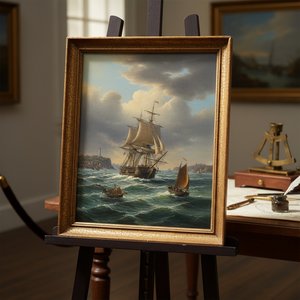
Samuel Walters: Capturing Victorian Maritime Life with Precision & Artistry
Explore the exquisite maritime paintings of Samuel Walters (1811-1882). Discover his mastery of detail, historical scenes & influence on Victorian art. Learn about collecting his works and find high-quality reproductions at ArtsDot.

Romantic Realism's Finest: 10 Masterpieces for Your Home | ArtsDot
Explore 10 defining masterpieces of Romantic Realism! Discover Courbet, Millet & Daumier's powerful paintings—capturing emotion and social realities. Find museum-quality reproductions for your home at ArtsDot.com.

The Enduring Power of Painting: A Historical & Contemporary Exploration of Form and Emotion
Explore the rich history & enduring techniques of oil painting with ArtsDot. Discover masterpieces, learn about art collecting, and find authentic handmade reproductions crafted by skilled artists.