Podgląd w skali
 Wyślij jako kartkę
 Udostępnij
 Szczegóły dzieła

 Pobierz
 Podobne obiekty
 RTG
RTG Pokaz slajdów
John patmos

 Rozwiń treść
Giclée / Wydruk artystyczny
Druk giclée lub płótno o jakości muzealnej, szybka realizacja i szeroki wybór opcji wykończenia. ( Przełącz na obraz ręcznie malowany Przełącz na obraz)




P118B $10

P118H $10

P118W $10

P438Z $10

P508JH $12

P508YH $12

P805H $10

P805Z $10

P919BZ $10

P919G $10

P919XJ $10

P959ZH $10

P968JZ $12

W106C $8

W218G $10

W218JH $8

W218Y $10

W307PJ $10

W316G $10

W316PJ $8

W316Y $10

W398PJ $8

W4111J $10

W500HY $15

W500JH $15

W692G $12

W849H $8

W940BG $15

W953PJ $8




Wybierz spośród naszych standardowych rozmiarów, które zachowują oryginalne proporcje dzieła sztuki.

Możesz wprowadzić własne wymiary, aby dopasować dzieło do konkretnej ramy lub przestrzeni. Jeśli wybrany rozmiar nie będzie odpowiadał proporcjom oryginalnego obrazu, przytniecie dzieło lub rozszerzymy obraz za pomocą odbicia lustrzanego lub jednolitego wypełnienia krawędzi. Przed rozpoczęciem produkcji prześlemy cyfrową wizualizację do Twojej akceptacji.
Prosimy pamiętać, że podgląd na ekranie nie odzwierciedla faktycznego przycinania ani rozszerzania. Tylko wizualizacja dokładnie pokaże końcową kompozycję.
Mimo dostępności niestandardowych rozmiarów, zalecamy wybór wymiaru z listy zdefiniowanej, aby zachować oryginalne proporcje.
Dostawa na cały świat () w ciągu 2 tygodni zamiast standardowych 4/5 tygodni. (10 Sierpień)

Bezpłatna ekspresowa wysyłka na cały świat

Wysokiej jakości płótno lniane

Pełne ubezpieczenie przesyłki

Gwarancja zwrotu należności celnych i podatków importowych

Gwarancja wiernego odwzorowania kolorów

Polityka 60-dniowego zwrotu (tylko w przypadku wad)

Gwarancja 100% zwrotu kosztów

Zniżka przy zamówieniu wielu produktów
 Opcja ze szkłem jest dostępna wyłącznie w rozmiarach poniżej 110 cm

John patmos
Giclée / Wydruk artystyczny
Wymiary reprodukcji
-


Cena całkowita
$ 62
Opis kolekcjonerski
A Vision of Faith and Divine Revelation: Hieronymus Bosch’s ‘St John the Evangelist on Patmos’
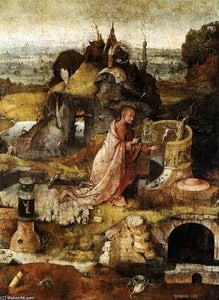
Hieronymus Bosch's “St John the Evangelist on Patmos” stands as a haunting testament to the anxieties and spiritual aspirations of the Early Netherlandish Renaissance. Painted circa 1495-1500, this monumental panel depicts Saint Jerome, diligently engaged in prayer atop a rolling hill overlooking a tranquil river—a landscape imbued with subtle symbolism mirroring the inner turmoil of faith itself. The painting’s unsettling beauty resides not merely in its meticulous detail but in Bosch's masterful manipulation of light and shadow, creating an atmosphere that simultaneously draws the viewer inward and confronts them with the sublime terror of divine judgment.Composition and Technique: A Symphony of Line and Texture
Bosch employs a hierarchical compositional strategy, placing Saint Jerome centrally framed against a backdrop of expansive scenery. Above him floats an angelic figure radiating luminescence—a direct invocation of God’s grace—emphasizing the saint's devotion and highlighting the pivotal role of divine intervention in spiritual experience. The artist utilizes linear perspective to establish depth, guiding the eye across the landscape towards distant buildings and tree lines, yet softens these contours with expressive brushstrokes that contribute to a palpable sense of materiality. Impastoed textures dominate the depiction of the hill and Jerome’s clothing, conveying both physicality and emotional intensity—a deliberate choice reflecting Bosch's fascination with earthly forms alongside spiritual concepts. The technique is characteristic of Early Netherlandish painting: painstaking layering of oil pigments builds up rich color gradations and captures subtle nuances of light, resulting in an image that vibrates with palpable presence.Symbolism and Narrative Depth
The scene draws heavily upon biblical lore—specifically the Gospel account of Saint Jerome’s pilgrimage to Patmos to transcribe the Apocalypse written by St John the Evangelist. The open book symbolizes Jerome's unwavering commitment to scripture and his arduous quest for spiritual understanding, mirroring the broader preoccupation with theological interpretation prevalent during Bosch’s time. The angel’s halo signifies divine protection and guidance—a visual representation of God’s benevolent influence on human endeavor. Furthermore, the Virgin Mary appears at the upper left corner, bathed in ethereal light, serving as a beacon of maternal compassion and intercession – a common motif reflecting the importance of Marian devotion within Northern European piety. Bosch's incorporation of fantastical elements—such as the stylized tree line—suggests a realm beyond earthly perception, hinting at the complexities of faith and the confrontation with unsettling truths.Historical Context: Anxiety and Transcendence in Late Medieval Art
Bosch’s artistic vision emerged from a period marked by profound social and religious upheaval. The burgeoning humanist movement challenged medieval dogma, while anxieties surrounding mortality and divine retribution fueled morbid fascination with death and decay. Bosch's oeuvre reflects this pervasive preoccupation with the darker side of human experience—yet simultaneously strives for transcendence through depictions of spiritual contemplation and divine grace. “St John the Evangelist on Patmos” exemplifies this duality, presenting a visually arresting image that compels viewers to grapple with fundamental questions about faith, morality, and the nature of reality. It stands as an enduring masterpiece of Early Netherlandish art, captivating audiences centuries later with its unsettling beauty and profound psychological insight.Emotional Resonance: Contemplation and Unease
Ultimately, Bosch’s “St John the Evangelist on Patmos” evokes a powerful emotional response—one characterized by solemn contemplation mingled with palpable unease. The painting's subdued palette amplifies the sense of melancholy, inviting viewers to immerse themselves in the saint’s solitary vigil and contemplate the mysteries of divine revelation. The dramatic lighting underscores the psychological drama unfolding within the frame, emphasizing Jerome’s vulnerability and highlighting the transformative potential of spiritual devotion. Like all Bosch’s works, this panel transcends mere representation; it probes the depths of human consciousness—challenging viewers to confront their own anxieties about mortality and striving for a glimpse beyond the confines of earthly existence.Podobne dzieła




O artyście
A Netherlandish Enigma: The Life and Art of Hieronymus Bosch
Born around 1450 in the vibrant, bustling town of ’s-Hertogenbosch in the Netherlands—then part of Brabant—Hieronymus Bosch, originally Jheronimus van Aken, remains one of art history’s most compelling and mysterious figures. His world was steeped in late medieval religious fervor, folklore, and a growing sense of societal unease, all of which would profoundly shape his uniquely unsettling artistic vision. Coming from a family with a long tradition of painting—his grandfather, Jan van Aken, and father, Anthonius van Aken, were both artists—Bosch likely received his earliest training within the family workshop, absorbing the techniques and conventions of Netherlandish painting. However, even in his formative years, he began to diverge from established norms, hinting at the extraordinary imagination that would define his career. Biographical details are frustratingly scarce; records are fragmented, leaving much open to speculation and interpretation, adding to the aura of mystique surrounding both the man and his work. He married Aleyt Goyaerts van den Meerveen sometime before 1481, a union that provided him with some financial security through her family’s holdings, but little else is known about their personal life.Fantastical Visions and Symbolic Depths
Bosch's artistic style is instantly recognizable—a captivating blend of meticulous detail and wildly imaginative imagery. He primarily worked with oil on oak panels, demonstrating a masterful command of the medium, achieving luminous colors and intricate textures. While his early works show influences from traditional Netherlandish painting, particularly in their realism and attention to detail, he quickly moved beyond mere imitation, developing a profoundly original vision. His paintings are not simply representations of reality; they are allegorical landscapes populated by bizarre creatures, hybrid beings, and unsettling scenes that seem plucked from dreams—or nightmares. Religious themes form the core of much of his work, but these are rarely straightforward depictions of biblical stories. Instead, Bosch uses symbolism to explore complex moral and theological concepts, often focusing on the dangers of sin, the fragility of earthly pleasures, and the inevitability of divine judgment. His creatures—grotesque demons, fantastical animals, and strangely human figures—are not merely decorative elements; they are embodiments of vice, temptation, and spiritual corruption. The blending of the sacred and the profane, the beautiful and the grotesque, creates a uniquely unsettling effect that continues to captivate viewers centuries later.Masterpieces of Moral Allegory
Among Bosch’s most celebrated achievements is The Garden of Earthly Delights (c. 1490-1510), a triptych that remains one of the most enigmatic and debated works in art history. When opened, it presents a panoramic vision of paradise, earthly life, and hell—a complex allegorical representation of humanity’s fall from grace. The left panel depicts the Garden of Eden, teeming with fantastical creatures and lush vegetation; the central panel portrays a world consumed by sensual pleasure and unrestrained desire; and the right panel offers a terrifying glimpse into the torments of hell. The Triptych of the Last Judgement (c. 1480-1490) is another powerful example of his skill in portraying both heavenly bliss and infernal torment, while The Ascent of the Blessed (c. 1480-1490) demonstrates his ability to create ethereal and dreamlike scenes. Even smaller works like Epiphany (c. 1495) showcase his innovative use of oil on wood and complex symbolism, revealing a mind constantly grappling with profound questions about faith, morality, and the human condition.Influences and Artistic Development
Identifying Bosch’s direct influences is a challenging task, given the originality of his vision. Scholars suggest possible connections to medieval folklore, religious texts—particularly those emphasizing apocalyptic themes—and the prevailing anxieties of the time, including fears of heresy and social upheaval. However, it's clear that he synthesized these elements into something entirely new and uniquely his own. His work evolved over time, moving from more conventional Netherlandish styles towards a highly personalized and symbolic approach. Early works show influences from artists like Rogier van der Weyden and Robert Campin, but as Bosch matured, he developed a distinctive style characterized by its meticulous detail, bizarre imagery, and unsettling atmosphere. The influence of the late Gothic tradition is evident in his use of perspective and his depiction of crowded scenes, while the emerging Renaissance interest in humanism can be seen in his exploration of moral themes and his portrayal of human figures—though often distorted and grotesque.Legacy and Enduring Influence
Identifying Bosch’s direct influences is a challenging task, given the originality of his vision. Scholars suggest possible connections to medieval folklore, religious texts—particularly those emphasizing apocalyptic themes—and the prevailing anxieties of the time, including fears of heresy and social upheaval. However, it's clear that he synthesized these elements into something entirely new and uniquely his own. His impact on subsequent artists is undeniable. Pieter Bruegel the Elder directly followed in his footsteps, adopting similar themes and compositional techniques, while later movements, such as Surrealism, also drew inspiration from Bosch’s dreamlike imagery and exploration of the subconscious. Artists like Salvador Dalí and Max Ernst openly acknowledged their debt to his unsettling visions. Even today, Bosch's work continues to fascinate and provoke debate, solidifying his place as a master of Netherlandish painting and a visionary artist whose influence extends far beyond his own time. His paintings offer valuable insights into the religious, social, and psychological climate of the late 15th and early 16th centuries, challenging conventional norms and paving the way for new forms of artistic expression. He died in 1516, leaving behind a body of work that continues to haunt and inspire, ensuring his enduring legacy as one of art history’s most singular and unforgettable voices.
Hieronim Bosch
1450 - 1516 , Holandia
Krótka nota
- Artistic Movement Or Style: Surrealizm, Symbolizm
- Artists Or Movements Influenced By This Artist: ['Pieter Bruegel']
- Date Of Birth: c. 1450
- Date Of Death: 1516
- Full Name: Hieronymus Bosch
- Nationality: Holenderski
- Notable Artworks:
- Ogród Radości Zbawicielskiej
- Apokalipsa
- Wędrowiec
- Place Of Birth: Den Bosch, Holandia
Powiązane artykuły
Hieronymus Bosch: 25 Arcydzieł Mistrza Niderlandzkiego Renesansu | ArtsDot
Odkryj 25 arcydzieł Hieronymusa Boscha – mistrza niderlandzkiego renesansu! Poznaj fascynujące historie, symbolikę i techniki malarskie tego niezwykłego artysty. Reprodukcje obrazów najwyższej jakości na ArtsDot.com. Eksploruj pełną kolekcję online!

Hieronymus Bosch: Decoding the Visions of a Netherlandish Master
Explore the captivating world of Hieronymus Bosch! Delve into the symbolism, religious context, and artistic innovation of this Netherlandish master with ArtsDot's expert analysis. Discover his iconic paintings & lasting influence.

John Singer Sargent: 25 Arcydzieł Pełnych Elegancji i Światła | ArtsDot.com
Odkryj 25 arcydzieł Johna Singera Sargenta – mistrza portretu i impresjonizmu. Poznaj historie, techniki i inspiracje za jego najsłynniejszymi obrazami. Reprodukcje najwyższej jakości na ArtsDot.com. Eksploruj pełną kolekcję online!

John Constable: 25 Najlepszych Obrazów Mistrza Angielskiego Krajobrazu | ArtsDot
Odkryj 25 arcydzieł Johna Constable'a – mistrza angielskiego krajobrazu! Poznaj romantyczne pejzaże, technikę malarską i inspiracje z Dedham Vale. Reprodukcje obrazów najwyższej jakości na ArtsDot.com. Eksploruj pełną kolekcję online!

Olej na płótnie: Historia, techniki i ponadczasowy urok malarskiego medium
Poznaj historię i techniki malarstwa olejowego! Od renesansowych mistrzów po współczesne zastosowania – wszystko o oleju na płótnie. Poradniki, konserwacja i inspiracje dla pasjonatów sztuki.