

- 76.0 x 64.0 cm


Obraz dostosowuje się do Twoich wyborów: , .
Opis obiektu
Experience the striking realism of George Malcolm by Henry Raeburn, a masterful 1790 portrait capturing contemplative depth; discover this timeless piece today.
 Rozwiń treść
Biografia artysty
Henry Raeburn (1756-1823) – wybitny szkocki malarz portretowy, znany z realistycznego stylu i oddania charakteru prominentnych postaci. Odkryj jego dziedzictwo!
Ręcznie malowana reprodukcja olejowa
Ręcznie malowany obraz olejny na płótnie, wykonany na zamówienie przez naszych artystów w wybranym przez Ciebie wymiarze i oprawie. ( Przełącz na wydania drukowane Przejdź do wersji cyfrowej)
Więcej o tym obrazie
 Podgląd w skali 1:1
 Wyślij jako kartkę
 Udostępnij
 Szczegóły dzieła
 Przewodnik

 Pobierz obraz
 Podobne obiekty
 RTG
RTG Pokaz slajdów
 Pytania i odpowiedzi
 Statystyki
Zamów swój obraz w czterech prostych krokach
Nie spiesz się. Możesz zmienić każdą odpowiedź; cena w Twoim koszyku będzie aktualizowana po każdym wyborze.
1 Pierwszy z czterech kroków
Który rozmiar wybierasz?
Te rozmiary zachowują proporcje oryginalnego obrazu. Rysunek przedstawia wybrany przez Ciebie format na ścianie, nad dwumetrową sofą.
lub podaj własne wymiary
Wybierz spośród naszych standardowych rozmiarów, które zachowują oryginalne proporcje dzieła sztuki.

Wpisz wymaganą szerokość i wysokość, aby obraz pasował do Twojej ramy lub ściany. Ponieważ jest to dzieło malowane ręcznie, w przypadku rozmiaru o innych proporcjach artysta może domalować nieco więcej wokół obrazu lub przyciąć jego fragmenty — wybór należy do Ciebie. Przed rozpoczęciem pracy prześlemy Ci cyfrową wizualizację do zatwierdzenia. Obraz widoczny na tej stronie nie przedstawia rzeczywistego efektu — jedynie wizualizacja oddaje realny rezultat.
2 Drugi z czterech kroków
W jaki sposób przygotować dzieło: w formie tuby, na krosnach czy w ramie?
Poniższe ceny dotyczą rozmiaru wybranego w pierwszym kroku.
Wybierz krawędzie płótna naciągniętego na ramę
Wybierz ramę

Białe krawędzie zł1

rozmyte krawędzie zł1

Przedłużony zł1

P118B zł10

P118H zł10

P118W zł10

P438Z zł10

P508JH zł12

P508YH zł12

P805H zł10

P805Z zł10

P919BZ zł10

P919G zł10

P919XJ zł10

P959ZH zł10

P968JZ zł12

W106C zł8

W218G zł10

W218JH zł8

W218Y zł10

W307PJ zł10

W316G zł10

W316PJ zł8

W316Y zł10

W398PJ zł8

W4111J zł10

W500HY zł15

W500JH zł15

W692G zł12

W849H zł8

W940BG zł15

W953PJ zł8

H24-GOLD zł30

H24-SILVER zł30

H36-GOLD zł45

H36-SILVER zł45
W oprawie
Profil: . Wymiar całkowity w ramie: .
3 Trzeci z czterech kroków
Czy chcieliby Państwo wprowadzić jakieś zmiany w obrazie?
Większość osób odpowiada przecząco. Ponieważ każdy obraz jest tworzony ręcznie, nasz artysta może również dostosować go do Twoich potrzeb.
Po złożeniu zamówienia zespół ArtsDot.com skontaktuje się z klientem drogą mailową w celu uzyskania instrukcji i prześle podgląd projektu
4 Krok czwarty z czterech
Kilka opcji wykończenia
Wszystkie są opcjonalne. Wybrane już odpowiedzi nie wiążą się z żadnymi dodatkowymi kosztami.
Kto jest autorem?
Dostawa na całym świecie () w ciągu 3–4 tygodni zamiast standardowych 5 tygodni. (4 Listopad). Bez kompromisów w kwestii jakości.
Tabliczka informacyjna, jak w muzeum?
Szczegóły grawerowanej brązowej tabliczki
This elegant plaque features the artist's name and the title of the artwork, finely engraved for a timeless presentation.
It is made from bronze with a refined, elegant finish. The text is precisely laser-engraved for a sharp and permanent result. Measuring 9x2 cm, the plaque is compact yet easy to read. It's built to be durable and scratch-resistant, offering a professional, museum-quality look. Mounting is simple thanks to the included adhesive backing.
Szczegóły przezroczystej tabliczki akrylowej
The plaque includes essential engraved details such as the artist's name, the title of the artwork, the date it was created, the type of media used-like oil on canvas or watercolor-a brief description of the piece, and a QR code that links to the complete artwork information.
It is crafted from clear acrylic, offering a sleek, modern appearance. The text is UV-engraved in black to ensure strong visual contrast. With a size of 10x15 cm, it ensures optimal readability. It comes equipped with two metal hooks for secure wall mounting. The plaque is designed to be weather-resistant, making it suitable for various environments, and it includes interactive features that work seamlessly with smartphone scanning.
Szczegóły czarnej tabliczki akrylowej
This elegant plaque includes engraved information such as the artist's name, the title of the artwork, the date it was created, the type of media used (like oil on canvas or watercolor), a short description of the artwork, and a QR code for quick access to more information.
The plaque itself is made from refined black acrylic with a premium finish. The text is laser-engraved in white for high contrast and readability. Its size is 10x15 cm, designed to be easy to read. It comes with two metal hooks for professional mounting. The design is sleek and fits any interior style. It is also weather-resistant and durable, with built-in digital integration for mobile compatibility.
Werniks ochronny?
Kiedy potrzebujesz dostawy?
✓ Sprawdź i zamów
Twoje dzieło, dokładnie tak, jak zamówiłeś

George Malcolm
Technika reprodukcji
Wymiary reprodukcji
-

Wybitny mistrz artystyczny
Większa szczegółowość, finezja i dodatkowy czas na realizację
-

Opcje oprawy reprodukcji
-
-
W przypadku dzieł sztuki lub reprodukcji, których którykolwiek z boków przekracza 105 cm (około 41 cali), rama zostanie wysłana w formie zestawu do samodzielnego montażu. Metoda ta zapewnia bezpieczną dostawę i zapobiega uszkodzeniom podczas transportu.
Wymagany profesjonalny montaż – nie jest to produkt typu DIY.
Zestaw musi zostać złożony, a płótno naciągnięte przez doświadczonego profesjonalnego ramiarza, przy użyciu kleju do drewna (brak w zestawie), kleszczy do naciągania płótna oraz ścisków, które utrzymają krosna w równej pozycji podczas schnięcia kleju. Nieprawidłowy montaż lub nierównomierne napięcie płótna może trwale uszkodzić dzieło sztuki i nie podlega naszej gwarancji.
 W przypadku dzieł sztuki lub reprodukcji, których którykolwiek z boków przekracza 105 cm (około 41 cali), rama zostanie wysłana w formie zestawu do samodzielnego montażu. Metoda ta zapewnia bezpieczną dostawę i zapobiega uszkodzeniom podczas transportu.
W zestawie znajdują się wszystkie listwy z litego drewna, precyzyjnie docięte do wymiarów.
Montaż odbywa się przy użyciu dołączonych wkrętów oraz kleju do drewna do łączenia narożników, którego zestaw nie zawiera i który musi zostać dostarczony przez ramiarza.
Wymagane są profesjonalne narzędzia, których nie ma w zestawie: kleszcze do naciągania płótna (napinacz) oraz zaciski, które pozwolą utrzymać listwy w równej pozycji podczas schnięcia kleju.
Ważne:
Do połączenia narożników niezbędny jest klej do drewna, listwy należy unieruchomić za pomocą ścisków do momentu całkowitego wyschnięcia kleju, a naciągnięcie płótna na złożoną ramę wymaga użycia kleszczy do naciągania płótna. Żaden z tych elementów nie jest dołączony do zestawu. Przed zamówieniem tego rozmiaru zalecamy konsultację z doświadczonym ramiarzem.

Etykieta obiektu
-
-

Lakier ochronny
Lakier z połyskiem (pogłębia kolory, chroni przed światłem i wilgocią)
-

Personalizacja dzieła
Przykłady możliwości personalizacji: zastąp twarz zdjęciem klienta; dodaj zwierzę domowe (np. zamień kota na psa); umieść ukrytą wiadomość w tle; zmień krajobraz lub elementy tła.
-

Ekspresowa
Dostawa na cały świat () w ciągu 3–4 tygodni zamiast standardowych 5 tygodni. (4 Listopad). Bez kompromisów w kwestii jakości.
-
Przesyłka ekspresowa
Dostawa na cały świat () w ciągu 5 tygodni. (11 Listopad).
W cenie
Cena całkowita
zł 1021
Opcja ze szkłem jest dostępna wyłącznie w rozmiarach poniżej 110 cm
W każdym zamówieniu
- Bezpłatna ekspresowa wysyłka na cały świat
- Wysokiej jakości płótno lniane
- Pełne ubezpieczenie przesyłki
- Gwarancja zwrotu należności celnych i podatków importowych
- Gwarancja wiernego odwzorowania kolorów
- 100-dniowa polityka zwrotów (tylko w przypadku wad)
- Gwarancja 100% zwrotu pieniędzy
- Zniżka przy zakupie wielu sztuk


A Glimpse into Georgian Dignity: The Portrait of George Malcolm
To stand before this portrait of George Malcolm is to step directly into the refined drawing rooms of the late eighteenth century. Painted around 1790, this oil on canvas captures more than just a likeness; it arrests a moment of profound contemplation. The subject, depicted as a gentleman in his prime with distinguished white hair, meets the viewer's gaze with an intensity that is both direct and deeply thoughtful. His attire—the rich blue coat contrasted by the warm glow of a yellow vest—speaks volumes about the social standing and sartorial elegance of the period. It is a masterful study in controlled emotion, where every fold of fabric and nuance of expression contributes to a narrative of quiet authority.
The Artistry of Henry Raeburn: Capturing the Soul
The hand that rendered this portrait belongs to Henry Raeburn, an artist whose genius elevated British portraiture to new heights. While Raeburn’s career spanned decades and encompassed numerous celebrated figures, his ability to imbue his sitters with palpable inner life remains consistent. His technique, honed through years of meticulous observation—a skill perhaps initially sharpened in the delicate work of goldsmithing—allows him to achieve a remarkable sense of realism without ever sacrificing artistic grace. Observe the texture of the oil paint; it lends a rich depth that seems to absorb and reflect candlelight simultaneously. Raeburn did not merely record features; he captured the very essence of character, making George Malcolm feel both historically distant and intimately present.
Composition and Emotional Resonance
The composition itself is a lesson in balanced grandeur. The subject occupies the frame with confident poise, yet the surrounding space is managed with such care that it prevents the portrait from feeling claustrophobic. This balance allows the viewer's eye to wander, appreciating the subtle interplay between the sitter’s serious mien and the carefully arranged backdrop. Emotionally, the painting resonates with a sense of dignified introspection. It invites us, the modern observer, to pause our hurried pace and consider the weight of thought—a timeless invitation that transcends the specific year of 1790.
A Legacy for the Modern Collector
For those who collect art not merely as decoration but as a conduit to history, this piece offers unparalleled depth. Whether adorning a formal study or serving as a centerpiece in an elegantly appointed drawing-room, a reproduction of George Malcolm by Raeburn brings with it the weight of Georgian sophistication and artistic mastery. The quality of the original oil on canvas ensures that even reproductions retain the richness and velvety texture characteristic of this era's finest portraiture. It is an heirloom piece, promising not just visual beauty, but a continuous dialogue with the masters of British art.
Pytania i odpowiedzi
Ile lat miał Henryk Raeburn, gdy powstało dzieło „George Malcolm”?
Gdy w 1790 roku powstało dzieło „George Malcolm”, Henryk Raeburn – urodzony/a w 1756 – miał/a 34 lat.
Gdzie mogę znaleźć statystyki dotyczące „George Malcolm” – Henryk Raeburn?
Statystyki dotyczące „George Malcolm” – Henryk Raeburn znajdują się na stronie Statystyki wyświetleń dzieła: obejmują one miesięczną liczbę odwiedzin danego dzieła, wizyty przy pracach artysty oraz podział ostatnich odwiedzających według krajów i języków.
Jaka technika została użyta w przypadku "George Malcolm" i kiedy powstało to dzieło?
Technika wykonania dzieła „George Malcolm” – Henryk Raeburn to Oil On Canvas, a datowanie pracy pochodzi z 1790.
Podobne dzieła


Henryk Raeburn
1756 - 1823, Szkocja
Biografia artysty
A Scottish Master of Realism: The Life and Art of Sir Henry Raeburn
Sir Henry Raeburn, a name synonymous with the vibrant spirit of 18th-century Scotland, was more than just a portrait painter; he was a cultural observer, a psychological explorer, and a revolutionary in his approach to capturing the essence of his subjects. Born into a modest background amidst the burgeoning Enlightenment, Raeburn’s journey from an orphaned boy to one of Britain's most celebrated artists is a testament to his innate talent, relentless dedication, and a profound understanding of human character. His story unfolds not just as a chronicle of artistic development but also as a reflection of a nation forging its own identity.Early Life and Artistic Beginnings
Henry Raeburn’s early life was marked by both hardship and opportunity. Born in Stockbridge, a district of Edinburgh in 1756, he experienced the profound loss of his parents at just six years old, an event that profoundly shaped his outlook on life. Raised by his elder brother, William, who secured him an education at Heriot’s Hospital – a prestigious institution renowned for its classical training – Raeburn initially pursued a path in goldsmithing, a skill he honed with meticulous precision. However, it was during this apprenticeship that his artistic inclinations began to blossom, particularly through miniature painting. He found himself drawn to the intricate detail and delicate craftsmanship of creating tiny portraits on ivory, revealing an innate talent for capturing likenesses with remarkable accuracy and sensitivity. This early work demonstrated not only technical skill but also a keen eye for observation – a quality that would become central to his later artistic practice.From Edinburgh’s Shadows to Roman Inspiration
Raeburn's artistic trajectory took a decisive turn when he married Ann Edgar in 1778, a union that provided him with the financial stability necessary to dedicate himself fully to painting. He began studying the works of David Martin, a respected portraitist in Edinburgh, but it was his brief sojourn to Italy in 1784-86 that truly ignited his artistic vision. During this time, he immersed himself in the art and culture of Rome, encountering masters like Gavin Hamilton and Pompeo Batoni – artists whose bold use of light, dramatic compositions, and psychological insight profoundly influenced his own style. He meticulously copied works by these Italian masters, absorbing their techniques and developing a deeper understanding of how to convey emotion and character through paint. This Roman experience served as a crucial catalyst, transforming Raeburn from a promising craftsman into a confident and innovative artist.The Development of a Distinctive Style
Returning to Edinburgh in 1786, Raeburn quickly established himself as the leading portrait painter of his time. Unlike many of his contemporaries who adhered to the formal conventions of aristocratic portraiture, Raeburn embraced a more direct and uninhibited approach. He eschewed elaborate backgrounds and idealized poses, instead focusing on capturing the individual’s personality, status, and even their mood with remarkable immediacy. His technique was characterized by bold brushstrokes, dramatic lighting effects – often utilizing *chiaroscuro* to create depth and intensity – and a willingness to experiment with unconventional compositions. He famously painted directly onto the canvas without preliminary sketches, relying on his intuition and observational skills to guide his hand. This spontaneous style, coupled with his deep understanding of human psychology, resulted in portraits that were both strikingly realistic and profoundly engaging. Works like *The Young Polo Player* exemplify this approach, capturing not just a likeness but also the energy and exuberance of youth.Recognition and Legacy
Raeburn’s artistic success was quickly recognized by Edinburgh society, and he became a sought-after portraitist for prominent figures from all walks of life – including Adam Smith, David Hume, and numerous members of the Scottish aristocracy. In 1815, he was elected to the Royal Academy in London, a momentous achievement that cemented his reputation as one of Britain’s leading artists. Shortly before his death in 1823, he was knighted by King George IV and appointed His Majesty's Limner for Scotland – a testament to his enduring influence on British art. Today, Raeburn’s paintings are celebrated for their realism, psychological insight, and masterful technique. They offer a unique glimpse into the lives and personalities of 18th-century Scotland, preserving a vibrant record of a nation in transition. His legacy continues to inspire artists and scholars alike, ensuring that Sir Henry Raeburn remains a pivotal figure in the history of British art.- His dedication to realism and psychological insight set him apart from many of his contemporaries.
- He helped establish a distinctly Scottish identity within British art.
- His masterful technique continues to be studied and admired by artists and scholars alike.
Powiązane artykuły
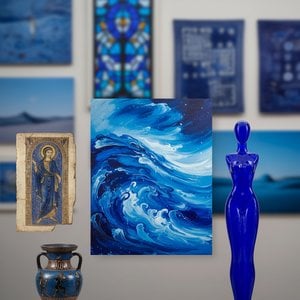
Błękit w Sztuce: Symbolika, Historia i Psychologiczne Oddziaływanie Koloru
Odkryj fascynującą historię błękitu w sztuce! Poznaj symbolikę, psychologię i wpływ tego koloru na arcydzieła renesansu i współczesne trendy. Ekspercka analiza dla miłośników sztuki.

Trwała Spuścizna Malarstwa Olejnego: Technika, Historia i Estetyczny Wpływ
Poznaj historię i technikę malarstwa olejnego! Eksperckie artykuły o konserwacji, renowacji oraz współczesnych zastosowaniach. Dowiedz się więcej o mistrzach i trwałości obrazów olejnych.

Top 10 Sławnych Obrazów w Odcieniach Szaroniebieskiego – Inspiracje dla Wnętrz | ArtsDot.com
Odkryj 10 najsłynniejszych obrazów w odcieniach szaroniebieskiego! Poznaj historie Claude Moneta, Degasa i Van Gogha. Inspiracje wnętrzarskie i reprodukcje najwyższej jakości na ArtsDot.com – sztuka dla Twojego domu.