

 Podgląd w skali 1:1
 Wyślij jako kartkę
 Udostępnij
 Szczegóły dzieła
 Przewodnik

 Pobierz obraz
 Podobne obiekty
 RTG
RTG Pokaz slajdów
 Q&A
Q&A Statystyki
Minerva

- 214.0 x 120.0 cm


 Rozwiń treść
Giclée / Wydruk artystyczny
Wydruki giclée lub płótna o jakości muzealnej, szybka realizacja i szeroki wybór opcji wykończenia. ( Zamów ręcznie malowaną reprodukcję Przejdź do wersji cyfrowej)




P118B zł10

P118H zł10

P118W zł10

P438Z zł10

P508JH zł12

P508YH zł12

P805H zł10

P805Z zł10

P919BZ zł10

P919G zł10

P919XJ zł10

P959ZH zł10

P968JZ zł12

W106C zł8

W218G zł10

W218JH zł8

W218Y zł10

W307PJ zł10

W316G zł10

W316PJ zł8

W316Y zł10

W398PJ zł8

W4111J zł10

W500HY zł15

W500JH zł15

W692G zł12

W849H zł8

W940BG zł15

W953PJ zł8




Wybierz spośród naszych standardowych rozmiarów, które zachowują oryginalne proporcje dzieła sztuki.

Wpisz wymaganą szerokość i wysokość, aby dopasować grafikę do ramy lub ściany. Wydruk można jedynie przyciąć, nigdy nie powiększając go poza oryginalny obraz, dlatego format o innych proporcjach spowoduje utratę części kompozycji. Przed rozpoczęciem druku prześlemy Ci cyfrowy podgląd do zatwierdzenia. Obraz wyświetlany na tej stronie nie pokazuje rzeczywistego przycięcia — jedynie podgląd oddaje ten efekt.
Dostawa na cały świat () w ciągu 2 tygodni zamiast standardowych 4/5 tygodni. (1 Listopad)

Bezpłatna ekspresowa wysyłka na cały świat

Wysokiej jakości płótno lniane

Pełne ubezpieczenie przesyłki

Gwarancja zwrotu należności celnych i podatków importowych

Gwarancja wiernego odwzorowania kolorów

100-dniowa polityka zwrotów (tylko w przypadku wad)

Gwarancja 100% zwrotu pieniędzy

Zniżka przy zakupie wielu sztuk
 Opcja ze szkłem jest dostępna wyłącznie w rozmiarach poniżej 110 cm

Minerva
Giclée / Wydruk artystyczny
Wymiary reprodukcji
-


Cena całkowita
zł 241
Minerva - A Trio of Renaissance Idealism
For centuries these three paintings – Minerva, Mercury and Hercules – have represented an inseparable triad within the artistic landscape of Northern Mannerism. Yet their creation unfolded across several years, reflecting the evolving tastes and ambitions of a particular era. Hendrick Goltzius’s masterful depiction of Minerva and Mercury in 1611 established a foundational aesthetic, followed by Hercules and Cacus completed in 1613, likely commissioned by Johan Colterman Junior – a young man embodying youthful vigor and intellectual prowess. This artwork distinguishes itself subtly from its predecessors; its dimensions differ slightly, and its original frame bore a distinct character, hinting at meticulous attention to detail and preservation of artistic heritage. The earliest documented sighting of the trio hanging together dates back to 1671, where they resided within the home of Colterman Junior’s descendants – a testament to their enduring appeal and significance as emblems of humanist education.- Subject Matter: The painting portrays a woman seated gracefully, her hand resting confidently on her hip—a posture conveying poise and authority. Alongside her stands a man wielding a spear and shield, symbolizing strength and protection. Complementing this dynamic duo are two additional figures positioned strategically within the composition, adding depth and narrative complexity to the scene.
- Style & Technique: Goltzius’s approach exemplifies Northern Mannerism, characterized by dramatic lighting, stylized forms, and an emphasis on emotional expression. He skillfully employs “swelling line,” a technique that enhances visual impact and contributes to the painting's overall sense of grandeur. The artist meticulously renders textures—particularly in Minerva’s drapery—demonstrating exceptional draughtsmanship.
- Historical Context: Created during the early Baroque period, this artwork reflects the humanist ideals prevalent at the time – a belief that contemplation (Mercury) and action (Minerva) cultivate wisdom and virtue. Hercules's triumph over Cacus serves as a powerful allegory for overcoming obstacles and achieving excellence.
Symbolism & Attributes: Minerva’s Embrace of Knowledge
Minerva, the goddess of wisdom and patron saint of the arts, is depicted leaning upon her shield—a device emblazoned with the head of Medusa, symbolizing vigilance against evil and fearlessness in confronting challenges. At her feet lie symbolic objects – books representing erudition, a portfolio signifying artistic creativity, a pen and penholder embodying intellectual discourse, a weaver’s shuttle symbolizing craftsmanship, and a lute representing musical artistry. These attributes collectively underscore the painting's central theme: the harmonious balance between intellect and practice—a cornerstone of Renaissance humanism.The Portrait of Youthful Power
The depiction of Hercules is particularly noteworthy. Goltzius skillfully captures the youthful dynamism of Johan Colterman Junior, portraying him as a figure radiating confidence and vitality. This portrayal aligns perfectly with the humanist aspiration to cultivate virtue through active engagement—a concept powerfully conveyed by Hercules’s victory over Cacus, representing triumph over adversity and unwavering determination.A Legacy Enduring Through Time
The painting's enduring fascination stems from its masterful execution and profound symbolic resonance. Its meticulous detail, combined with Goltzius’s innovative technique and the artwork’s connection to a pivotal moment in humanist thought, ensures that Minerva—and her companions—continue to inspire admiration and contemplation centuries after their creation. It stands as an exceptional example of Renaissance artistic achievement, inviting viewers to engage with its beauty and contemplate its enduring message.Pytania i odpowiedzi
Czy mogę zobaczyć „Minerva” – Hendryk Goltzius w różnym oświetleniu?
"Minerva" można badać warstwa po warstwie na stronie Analiza rentgenowska, która oferuje interaktywny podgląd inspirowany stołem świetlnym konserwatora, prezentujący jedenaście optycznych odczytów obrazu.
Jakie są wymiary oryginału "Minerva"?
Oryginalny utwór „Minerva” – Hendryk Goltzius ma wymiary 214 x 120 cm.
Czy dzieło „Minerva” autorstwa Hendryk Goltzius znajduje się w domenie publicznej i dlaczego?
„Minerva” – Hendryk Goltzius jest należy do domeny publicznej – autorskie prawa majątkowe wygasły. Okres ochrony praw autorskich liczony jest od śmierci artysty, która nastąpiła w 1617.
Podobne dzieła


Biografia artysty
Early Life and Artistic Foundations
Hendrik Goltzius, a name synonymous with the vibrant dynamism of Northern Mannerism in Dutch art, emerged from humble beginnings in the region of Bracht, near present-day Venlo, Germany, in 1558. His early life was marked by an unexpected challenge – a severe burn to his right hand at a young age, an accident that would ironically become a defining characteristic of his artistic prowess. This physical impediment, rather than hindering him, shaped his technique, forcing him to develop a unique and commanding swing with the burin, the essential tool for engraving. His family’s lineage held a rich artistic heritage; his great-grandfather and grandfather were both painters in Venlo, and his father, Jan Goltz II, was a skilled glass painter in Duisburg. This familial connection instilled within him an early appreciation for visual arts, leading him to study painting on glass before transitioning to the intricate world of engraving under the tutelage of Dirck Volckertszoon Coornhert, a renowned polymath and engraver based in Cleves. This formative period laid the groundwork for his future success, introducing him to the fundamental principles of printmaking and establishing a deep understanding of artistic composition.The Haarlem Years: Innovation and Influence
Around 1577, Goltzius embarked on a pivotal chapter of his life by relocating to Haarlem, a thriving center of art and commerce in the Dutch Republic. This move proved transformative, as he established an independent printmaking workshop and quickly gained recognition for his exceptional skill and innovative approach. Haarlem became his artistic home for the remainder of his career, fostering collaborations with fellow artists like Cornelis van Haarlem and Carel van Mander, forming what is known as the “Haarlem School” – a collective dedicated to pushing the boundaries of Mannerist art in the Netherlands. Goltzius’s marriage to Margaretha Jansdr., a wealthy widow, provided him with the financial stability necessary to pursue his artistic ambitions and build a reputation for producing high-quality engravings that were sought after throughout Europe. His workshop became a hub of creative activity, attracting apprentices and contributing significantly to the dissemination of Mannerist styles across the continent.Technique and Artistic Style: The “Swelling Line”
Goltzius’s artistic style was distinguished by a remarkable command of engraving technique, most notably through his pioneering use of what is now known as the "swelling line." This innovative approach involved manipulating the burin to create varying thicknesses in lines, effectively simulating tonal shading and adding depth and dimension to his prints. This technique, coupled with his mastery of cross-hatching – creating a dense network of intersecting lines – allowed him to achieve an unprecedented level of realism and expressiveness within the confines of engraving. He was also a pioneer of the “dot and lozenge” technique, further refining tonal shading by strategically placing dots in lozenge-shaped spaces. His technical skill rivaled that of Albrecht Dürer, one of the most celebrated engravers of the Renaissance, earning him widespread acclaim and establishing him as a leading figure in his field. His engravings of works by Bartholomaeus Spranger, a prominent Mannerist painter, further amplified Spranger’s fame while simultaneously solidifying Goltzius's own reputation.Major Works and Legacy
Throughout his career, Goltzius produced an impressive body of work encompassing both engravings and paintings. His engravings included elaborate series depicting the *Story of Lucretia*, the *Wedding of Cupid and Psyche*, and a monumental cycle illustrating the life of Christ. His masterful renderings of classical figures – exemplified by his iconic engraving of *Hercules Killing Cacus* – demonstrated his deep understanding of anatomy, perspective, and composition. He also created numerous portraits, capturing the personalities and status of his patrons with remarkable detail and sensitivity. His paintings, though fewer in number than his engravings, showcased a similar artistic vision, often featuring mythological subjects and allegorical scenes. Goltzius’s work has been celebrated by major print rooms worldwide, including the Rijksmuseum Amsterdam, the Frans Hals Museum, and the Metropolitan Museum of Art in New York City. His legacy continues to inspire artists and art historians alike, cementing his place as a pivotal figure in the history of Northern Mannerism and Dutch engraving. His innovative techniques and masterful execution left an indelible mark on the development of printmaking, influencing generations of artists who followed.
Hendryk Goltzius
1558 - 1617 , Niemcy
Krótka nota
- Artistic Movement Or Style: Manner realizmu i baroku
- Artists Or Movements Influenced By This Artist: ['Bartholomeus Spranger']
- Artists Who Influenced This Artist: ['Dirck Volckertszoon Coornhert']
- Date Of Birth: Styczeń/Luty 1558
- Date Of Death: 1 stycznia 1617
- Full Name: Hendrik Goltzius
- Nationality: Holender
- Notable Artworks:
- Jupiter i Antiope
- Herakles zabijający Karkana
- Demogorgon
- Place Of Birth: Braunschweig, Niemcy
Powiązane artykuły

Hendrick Goltzius: Master Engraver & the Flourishing of Dutch Mannerism
Explore the life & art of Hendrick Goltzius, a master engraver of Dutch Mannerism. Discover his innovative techniques, iconic engravings like 'Jahel', and lasting influence on Baroque art. Learn about collecting Goltzius today.

The Enduring Legacy of Fine Art Prints: Technique, History & Aesthetic Impact
Explore the rich history & techniques of fine art prints. Discover investment potential, assess authenticity, and learn how to preserve your collection with expert guidance. Trusted insights for discerning collectors.

Odbitki Giclée: Jakość Archiwalna i Estetyczne Niuanse dla Wymagającego Kolekcjonera
Poznaj sekrety druku giclée – technologii zapewniającej najwyższą jakość reprodukcji sztuki i trwałość archiwalaną. Poradnik dla wymagających kolekcjonerów o wyborze papieru, tuszy i profilach kolorystycznych.
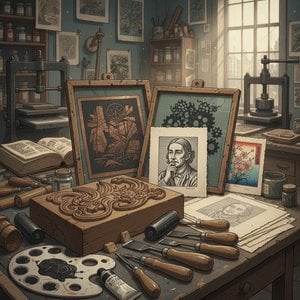
The Enduring Legacy of Printmaking: Techniques, Themes & Artistic Innovation Across Centuries
Explore the rich history of printmaking with ArtsDot. Discover techniques from intaglio to lithography, learn about collecting valuable prints & find museum-quality reproductions. Expert insights for art enthusiasts and collectors.

Echoes of Time: Exploring the Enduring Appeal & Historical Context of Vintage Art Prints
Explore the captivating world of vintage art prints! Discover their history, collecting tips & enduring appeal. Expert insights on chromolithography and building a legacy collection with ArtsDot.
