

 Podgląd w skali 1:1
 Wyślij jako kartkę
 Udostępnij
 Szczegóły dzieła
 Przewodnik

 Pobierz obraz
 Podobne obiekty
 RTG
RTG Pokaz slajdów
 Pytania i odpowiedzi
 Statystyki
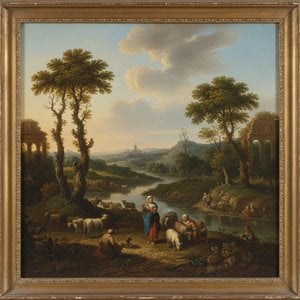
Classical Landscape

- 49.0 x 73.0 cm


 Rozwiń treść
Giclée / Wydruk artystyczny
Wydruki giclée lub płótna o jakości muzealnej, szybka realizacja i szeroki wybór opcji wykończenia. ( Zamów ręcznie malowaną reprodukcję Przejdź do wersji cyfrowej)




P118B zł10

P118H zł10

P118W zł10

P438Z zł10

P508JH zł12

P508YH zł12

P805H zł10

P805Z zł10

P919BZ zł10

P919G zł10

P919XJ zł10

P959ZH zł10

P968JZ zł12

W106C zł8

W218G zł10

W218JH zł8

W218Y zł10

W307PJ zł10

W316G zł10

W316PJ zł8

W316Y zł10

W398PJ zł8

W4111J zł10

W500HY zł15

W500JH zł15

W692G zł12

W849H zł8

W940BG zł15

W953PJ zł8




Wybierz spośród naszych standardowych rozmiarów, które zachowują oryginalne proporcje dzieła sztuki.

Wpisz wymaganą szerokość i wysokość, aby dopasować grafikę do ramy lub ściany. Wydruk można jedynie przyciąć, nigdy nie powiększając go poza oryginalny obraz, dlatego format o innych proporcjach spowoduje utratę części kompozycji. Przed rozpoczęciem druku prześlemy Ci cyfrowy podgląd do zatwierdzenia. Obraz wyświetlany na tej stronie nie pokazuje rzeczywistego przycięcia — jedynie podgląd oddaje ten efekt.
Dostawa na cały świat () w ciągu 2 tygodni zamiast standardowych 4/5 tygodni. (15 Listopad)

Bezpłatna ekspresowa wysyłka na cały świat

Wysokiej jakości płótno lniane

Pełne ubezpieczenie przesyłki

Gwarancja zwrotu należności celnych i podatków importowych

Gwarancja wiernego odwzorowania kolorów

100-dniowa polityka zwrotów (tylko w przypadku wad)

Gwarancja 100% zwrotu pieniędzy

Zniżka przy zakupie wielu sztuk
 Opcja ze szkłem jest dostępna wyłącznie w rozmiarach poniżej 110 cm

Classical Landscape
Giclée / Wydruk artystyczny
Wymiary reprodukcji
-


Cena całkowita
zł 245
Podobne dzieła


Biografia artysty
The Master of the Roman Light: The Life and Art of Hendrik Frans van Lint
In the golden age of the Grand Tour, when travelers from across Europe flocked to the sun-drenched ruins and majestic piazzas of Italy, few artists captured the ephemeral magic of the landscape as poignantly as Hendrik Frans van Lint. Born in Antwerp in 1684, Van Lint carried the meticulous traditions of his Flemish heritage into the heart of Rome, where he would spend the most transformative years of his life. While his roots lay in the industrious artistic circles of Belgium, his soul became inextricably linked to the luminous atmosphere of the Roman Campagna. His journey was not merely a geographical migration but an artistic evolution, moving from the structured training of his youth toward a profound mastery of veduta—the art of the detailed, panoramic view.
Van Lint’s early years were steeped in the rigorous discipline of the Flemish Baroque. As the son of the painter Peter van Lint and a pupil to masters such as Peter van Bredael, he inherited a foundational respect for compositional clarity and technical precision. However, it was his move to Rome that truly ignited his creative spirit. Upon arriving in the eternal city, he joined the Schildersbent, a celebrated society of Netherlandish painters. It was within this vibrant community of expatriate artists that he earned the affectionate nickname "Studio"—a testament to his incredibly meticulous technique and his ability to render architectural details with such fidelity that they seemed almost etched by hand.
A Symphony of Architecture and Atmosphere
The work of Van Lint is characterized by a breathtaking duality: the rigid, structural permanence of classical architecture set against the soft, fleeting qualities of light and air. He was deeply influenced by the pioneering vedutismo of Caspar van Wittel, whose topographical accuracy provided a blueprint for capturing the essence of Italian urbanity. Yet, Van Lint refused to be bound by mere documentation. He drew immense inspiration from the classical ideal landscapes of Claude Lorrain, often imbuing his scenes with a nostalgic, Arcadian beauty that transcended simple topography.
His canvases frequently present a spectrum of views, ranging from the strictly accurate to the beautifully imagined. In his depictions of places like Caprarola or the Roman outskirts, one can observe a masterful use of light—a warm, golden glow that seems to breathe life into stone and foliage alike. His landscapes often feature:
- Architectural Grandeur: The precise rendering of villas, palaces, and ancient ruins that anchor the composition.
- Atmospheric Depth: A sophisticated use of perspective and haze to create a sense of vast, receding space.
- Genre Elements: Small, delicate figures—often peasants or travelers—that provide scale and a sense of lived reality to the sweeping vistas.
This ability to blend the topographical with the poetic made his work the ultimate souvenir for the 18th-century aristocrat. To own a Van Lint was to possess a window into the Roman ideal, a piece of the sun-soaked Italian dream captured with unparalleled grace.
Legacy and Historical Significance
The historical significance of Hendrik Frans van Lint lies in his role as a bridge between the meticulous Northern tradition and the emotive, light-driven sensibilities of the Southern Baroque. He did not merely record what he saw; he interpreted the atmosphere of an era. His paintings found homes in some of the most prestigious collections in Europe, including the Doria Pamphilj in Rome and the Palazzo Bianco in Genoa, ensuring that his vision of Italy would endure long after the era of the Grand Tour had faded.
Today, Van Lint is remembered as a virtuoso of the veduta style, an artist whose work remains a vital record of the aesthetic aspirations of the 18th century. His legacy persists in every brushstroke that captures the way light dances upon a Roman piazza or settles softly over a distant hill, reminding us of a time when art was the primary vessel for exploring the wonders of the wider world.

Hendrik Frans Van Lint
1684 - 1763 , Belgium
Krótka nota
- Full Name: Hendrik Frans van Lint
- Nationality: Belgian
- Date Of Birth: 1684
- Date Of Death: 1763
- Place Of Birth: Antwerp, Belgium
- Notable Artworks:
- Giacomo van Lint
- An extensive Italianate wooded landscape
- A classical river landscape with figures on a path and a palace in the distance
- Artistic Movement Or Style: Veduta Painting
- Artists Who Influenced This Artist: Caspar van Wittel
- Artists Or Movements Influenced By This Artist: Italian Baroque
Powiązane artykuły

Holenderski Barok: 10 Arcydzieł, Które Zdefiniowały Epokę | ArtsDot
Poznaj 10 arcydzieł holenderskiego baroku! Odkryj historie Rembrandta, Vermeera i innych mistrzów XVII wieku. Reprodukcje obrazów najwyższej jakości – idealne do Twojego wnętrza. ArtsDot.com

Urok Spokoju i Harmonii: Analiza Estetyki Serene Beauty w Sztuce
Odkryj głęboką estetykę spokoju i harmonii w sztuce! Analizujemy historyczne konteksty, psychologię percepcji oraz wpływ Wabi-Sabi. Znajdź inspiracje dla relaksujących wnętrz z ArtsDot.

Sceny Życia Codziennego w Malarstwie: Kompleksowe Studium Gatunkowego Rozkwitu
Odkryj fascynujący świat malarstwa gatunkowego! Kompleksowe studium scen życia codziennego w Holenderskim Złotym Wieku. Analiza technik, tematów i wpływu na sztukę. Ekspercka wiedza dla kolekcjonerów i miłośników historii.

25 Arcydzieł Rijksmuseum: Historia Sztuki w Twoim Domu | ArtsDot.com
Odkryj 25 arcydzieł Rijksmuseum Amsterdam! Poznaj historie Rembrandta, Vermeera i innych holenderskich mistrzów. Reprodukcje obrazów najwyższej jakości do Twojego wnętrza. Inspiracje dekoracyjne na ArtsDot.com.
Nicolaes Berchem: Dutch Golden Age Pastoralism & the Evolution of Landscape Painting
Explore the captivating world of Nicolaes Berchem, a leading Dutch Golden Age painter. Discover his idyllic landscapes, masterful technique & lasting influence on art history. Learn more at ArtsDot.