


 Zobacz w skali 1:1
 Wyślij
 Udostępnij
 Szczegóły
 Przewodnik

 Pobierz plik obrazu
 Podobne obiekty
 RTG
RTG Pokaz slajdów
 Statystyki
(Boxer)
 Hyper-Realism
 1988
1988 41.0 x 51.0 cm
 Czytaj więcej
Dzieło sztuki prezentowane na tej stronie podlega ochronie prawem autorskim, co oznacza, że nie mamy prawa do tworzenia ani sprzedaży jego identycznej reprodukcji. Ochrona ta jest egzekwowana na mocy umów międzynarodowych, takich jak Konwencja berneńska oraz przez przepisy prawa krajowego, w tym te określone w Prawo autorskie USA – Tytuł 17.
Metoda ta jest w pełni zgodna z przepisami prawa autorskiego, ponieważ nie polega na kopiowaniu ani powielaniu chronionego dzieła. Stanowi ona kreatywną reinterpretację – nowy obraz, który czerpie inspirację z oryginału, ale nie jest z nim tożsamy.
Giclée / Wydruk artystyczny
Wydruki giclée lub płótna o jakości muzealnej, szybka realizacja i szeroki wybór opcji wykończenia. ( Kup ręcznie malowany obraz Przełącz na wersję cyfrową)




P118B zł10

P118H zł10

P118W zł10

P438Z zł10

P508JH zł12

P508YH zł12

P805H zł10

P805Z zł10

P919BZ zł10

P919G zł10

P919XJ zł10

P959ZH zł10

P968JZ zł12

W106C zł8

W218G zł10

W218JH zł8

W218Y zł10

W307PJ zł10

W316G zł10

W316PJ zł8

W316Y zł10

W398PJ zł8

W4111J zł10

W500HY zł15

W500JH zł15

W692G zł12

W849H zł8

W940BG zł15

W953PJ zł8




Wybierz spośród naszych standardowych rozmiarów, które zachowują oryginalne proporcje dzieła sztuki.

Wpisz wymaganą szerokość i wysokość, aby dopasować grafikę do ramy lub ściany. Wydruk można jedynie przyciąć, nigdy nie powiększając go poza oryginalny obraz, dlatego format o innym proporcji spowoduje utratę części kompozycji. Przed rozpoczęciem druku prześlemy Ci cyfrowy podgląd do zatwierdzenia. Obraz wyświetlany na tej stronie nie pokazuje rzeczywistego przycięcia — jedynie podgląd oddaje ten efekt.
Dostawa na cały świat () w ciągu 2 tygodni zamiast standardowych 4/5 tygodni. (24 Październik)

Bezpłatna ekspresowa wysyłka na cały świat

Wysokiej jakości płótno lniane

Pełne ubezpieczenie transportowe

Gwarancja zwrotu należności celnych i podatków importowych

Gwarancja idealnego odwzorowania barw

100-dniowy okres na zwrot dzieła w przypadku wykrycia wad produkcyjnych

Gwarancja 100% zwrotu pieniędzy

Oferta przy zakupie wielu sztuk
 Opcja ze szkłem jest dostępna wyłącznie w rozmiarach poniżej 110 cm

(Boxer)
Giclée / Wydruk artystyczny
Rozmiar reprodukcji
-


Suma do zapłaty
zł 238
The Artistic Vision
Edgerton's work is a prime example of Hyper-Realism, a genre of painting and sculpture that resembles high-resolution photography. As seen in his other works, such as Coronet, Edgerton's innovative approach to photography has made him a prominent figure in the art world. The Boxer photograph is no exception, with its ability to freeze time and capture the essence of the moment.- The image features a man wearing boxing gloves, positioned towards the right side of the frame, with his arms extended outwards as he delivers a punch.
- The black and white nature of the image adds a timeless quality to the scene, emphasizing the artistic aspect of the photo.
- Edgerton's use of lighting and composition creates a sense of drama and tension, drawing the viewer into the scene.
For more information on Harold E Edgerton and his work, visit https://ArtsDot.com/@/Harold-E-Edgerton. To learn more about the Hyper-Realism Art Movement, see /art/list/?Filter=A@D3CQKV-The-Hyper-Realism-Art-Movement.
Pytania i odpowiedzi
Co wyjaśnia sytuację prawną dotyczącą praw autorskich do „(Boxer)” autorstwa Harold E Edgerton?
„(Boxer)” autorstwa Harold E Edgerton znajduje się w nadal chronione prawem autorskim. Okres ochrony praw autorskich liczony jest od śmierci artysty, która nastąpiła w 1990.
Do jakiego nurtu artystycznego należy „(Boxer)” autorstwa Harold E Edgerton?
Nurt związany z „(Boxer)” autorstwa Harold E Edgerton to Hyper-Realism. Ta klasyfikacja sytuuje dzieło wśród pokrewnych artystów i dzieł sztuki.
Jakie są proporcje oraz wymiary dzieła „(Boxer)” autorstwa Harold E Edgerton?
„(Boxer)” autorstwa Harold E Edgerton ma proporcje pracy w formacie Landscape o wymiarach 41 x 51 cm.
Podobne dzieła


Biografia artysty
The Architect of Frozen Time: The Life and Legacy of Harold E. Edgerton
In the quiet intersection where rigorous scientific inquiry meets the profound beauty of visual art, few figures loom as large as Harold Eugene Edgerton. Affectionately remembered by many as “Papa Flash,” Edgerton was far more than a physicist or an engineer; he was a visionary who possessed the rare ability to peel back the veil of the invisible. Born in 1903 in Fremont, Nebraska, his journey began in a landscape of intellectual curiosity, shaped by a father whose mastery of language and oratory instilled in him a deep respect for communication. This early foundation would later manifest in his ability to communicate complex physical phenomena through the medium of light, turning the fleeting, imperceptible movements of our world into permanent, breathtaking icons of frozen motion.
Edgerton’s academic path was one of relentless pursuit and precision. After earning his bachelor’s degree in electrical engineering from the University of Nebraska–Lincoln in 1925, he moved toward the prestigious halls of the Massachusetts Institute of Technology (MIT). It was here, through his Master of Science and subsequent Doctor of Science degrees, that his fascination with synchronous motors and stroboscopic studies began to coalesce into a revolutionary methodology. He did not merely study light; he learned to command it. By refining the stroboscope from an obscure laboratory tool into a powerful instrument of illumination, he paved the way for a new era of photography—one where the camera could finally compete with the speed of thought and the velocity of nature.
The Alchemy of Light and Motion
The true magic of Edgerton’s work lies in his mastery of high-speed photography, a technique that allowed him to capture what the human eye is biologically incapable of perceiving. Through his innovative use of strobe lighting, he transformed the chaotic energy of motion into structured, sculptural compositions. His lens did not just record reality; it reinterpreted it. In works such as "Coronet," created in 1957, we witness the sublime beauty of a single drop of milk colliding with a liquid surface, creating a delicate, crown-like shape that exists for only a fraction of a second. This piece remains one of the most significant achievements in photographic history, demonstrating how scientific precision can evoke deep emotional and aesthetic responses.
This ability to freeze time extended to the most dynamic of subjects. Whether it was the intense, muscular exertion captured in his "Boxer" series or the rhythmic, looping energy of "Moving Skip Rope," Edgerton’s images possess a hyper-realistic quality that feels both startlingly present and eternally still. His technical prowess allowed him to explore themes of:
- The Fluidity of Nature: Capturing the intricate patterns of water splashes and droplets in works like "Water Sprinkler."
- Kinetic Energy: Revealing the hidden mechanics of physical movement, from sports to everyday gestures.
- Scientific Visualization: Using photography as a tool to document and explain complex physical processes through visual clarity.
A Lasting Impact on Science and Art
Beyond the frame of his photographs, Edgerton’s contributions to the world were vast and transformative. His research into sonar technology and deep-sea photography revolutionized our understanding of the ocean, even leading to collaborations with legendary explorers like Jacques Cousteau. His equipment played a pivotal role in searching for shipwrecks and exploring the mysteries of the deep, proving that his scientific mind was always tethered to a sense of wonder about the unknown. He bridged the gap between the laboratory and the gallery, demonstrating that the tools used to measure the universe are the very same tools used to celebrate its beauty.
As we reflect on the life of Harold E. Edgerton, we see a legacy defined by the illumination of the dark and the capture of the ephemeral. He taught us that there is an entire universe of motion occurring just beyond our perception, waiting for the right flash of light to bring it into view. His work remains a testament to the idea that science and art are not opposing forces, but rather two different languages describing the same magnificent reality. Through his eyes, the world was never just moving; it was dancing in a series of perfect, unforgettable moments.

Harold E Edgerton
1903 - 1990
Najważniejsze informacje
- Full Name: Harold Eugene Edgerton
- Nationality: American
- Date Of Birth: 1903
- Date Of Death: 1990
- Place Of Birth: Fremont, Nebraska
- Notable Artworks:
- Coronet
- Boxer
- Artistic Movement Or Style: Hyperrealism
- Artists Who Influenced This Artist: ['Charles Stark Draper']
- Artists Or Movements Influenced By This Artist: ['Photography']
Zobacz także powiązane artykuły

Czarne arcydzieła: Top 10 słynnych obrazów pełnych mroku i ekspresji | ArtsDot.com
Odkryj 10 słynnych obrazów, w których czerń króluje! Poznaj historie artystów, ekspresjonizm i mroczną paletę barw. Reprodukcje dzieł sztuki najwyższej jakości na ArtsDot.com – inspiracje do wnętrz i kolekcjonerstwo.

Piktorializm w Polsce: Poszukiwanie Duszy Fotografii i Estetyki Malarskiej
Poznaj historię piktorializmu w Polsce – nurtu fotografii artystycznej dążącego do estetyki malarskiej. Odkryj kluczowe postacie, techniki i wpływ na polską sztukę. Ekspercka analiza i fascynujące fakty!

Beyond the Lens: Photography's Enduring Influence on Modern & Contemporary Art
Explore photography's pivotal role in shaping modern & contemporary art. Discover key movements, influential artists like Stieglitz, and expert collecting advice from ArtsDot.

Monochromatyczne Wizje: Estetyka i Historyczne Znaczenie Fotografii Czarno-Białej
Odkryj fascynujący świat fotografii czarno-białej! Poznaj historię, techniki i arcydzieła monochromatycznej sztuki. Inspiracje, porady i analiza wpływu na współczesną estetykę. ArtsDot.com.
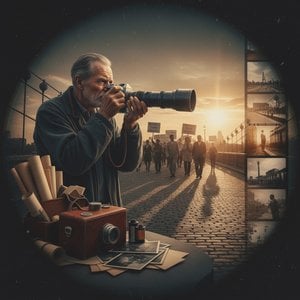
Witnessing History Through Lens & Light: Documentary Photography's Enduring Legacy
Explore the powerful history of documentary photography – from its origins to contemporary masters like Gordon Parks & W. Eugene Smith. Discover how this art form shapes our understanding of society and witness pivotal moments in time.