


 Zobacz w skali 1:1
 Wyślij
 Udostępnij
 Szczegóły
 Przewodnik

 Pobierz plik obrazu
 Podobne obiekty
 RTG
RTG Pokaz slajdów
 Statystyki
untitled (8927)

 Czytaj więcej
Giclée / Wydruk artystyczny
Wydruki giclée lub płótna o jakości muzealnej, szybka realizacja i szeroki wybór opcji wykończenia. ( Kup ręcznie malowany obraz Przełącz na wersję cyfrową)




P118B zł10

P118H zł10

P118W zł10

P438Z zł10

P508JH zł12

P508YH zł12

P805H zł10

P805Z zł10

P919BZ zł10

P919G zł10

P919XJ zł10

P959ZH zł10

P968JZ zł12

W106C zł8

W218G zł10

W218JH zł8

W218Y zł10

W307PJ zł10

W316G zł10

W316PJ zł8

W316Y zł10

W398PJ zł8

W4111J zł10

W500HY zł15

W500JH zł15

W692G zł12

W849H zł8

W940BG zł15

W953PJ zł8




Wybierz spośród naszych standardowych rozmiarów, które zachowują oryginalne proporcje dzieła sztuki.

Wpisz wymaganą szerokość i wysokość, aby dopasować grafikę do ramy lub ściany. Wydruk można jedynie przyciąć, nigdy nie powiększając go poza oryginalny obraz, dlatego format o innym proporcji spowoduje utratę części kompozycji. Przed rozpoczęciem druku prześlemy Ci cyfrowy podgląd do zatwierdzenia. Obraz wyświetlany na tej stronie nie pokazuje rzeczywistego przycięcia — jedynie podgląd oddaje ten efekt.
Dostawa na cały świat () w ciągu 2 tygodni zamiast standardowych 4/5 tygodni. (23 Październik)

Bezpłatna ekspresowa wysyłka na cały świat

Wysokiej jakości płótno lniane

Pełne ubezpieczenie transportowe

Gwarancja zwrotu należności celnych i podatków importowych

Gwarancja idealnego odwzorowania barw

100-dniowy okres na zwrot dzieła w przypadku wykrycia wad produkcyjnych

Gwarancja 100% zwrotu pieniędzy

Oferta przy zakupie wielu sztuk
 Opcja ze szkłem jest dostępna wyłącznie w rozmiarach poniżej 110 cm

untitled (8927)
Giclée / Wydruk artystyczny
Rozmiar reprodukcji
-


Suma do zapłaty
zł 239
Podobne dzieła


Biografia artysty
A Life Subtly Lived: The World of Gwen John
Gwen John, a Welsh artist whose name now resonates with quiet introspection and understated power, was a figure remarkably overlooked for much of her life. Born Gwendolen Mary John in Haverfordwest, Wales, on June 22nd, 1876, her existence unfolded as a deliberate counterpoint to the often boisterous and attention-seeking world of artistic circles. Unlike her celebrated brother, Augustus Edwin John – whose charismatic personality frequently overshadowed his work – Gwen carved out a path defined by solitude, a profound spiritual seeking, and an unwavering dedication to capturing the inner lives of those who graced her canvases. Her story is one woven with threads of familial artistic inclination, personal heartbreak, and ultimately, a belated recognition of her unique and deeply moving vision. The early years were steeped in the traditions of Welsh art; both her siblings, Thornton and Winifred, also found their voices as artists, creating a family legacy that nonetheless saw Gwen largely operating in the shadows. Following the untimely death of her mother, Augusta Smith, the family relocated to the charming coastal town of Tenby, Wales, where young Gwen began to develop her artistic eye, sketching along the dramatic coastline – a practice that would forever shape her sensitivity to light, form, and the ever-shifting moods of the Welsh landscape. This early immersion in the muted tones and atmospheric skies of her homeland fostered a preference for subtle harmonies and delicate nuances rather than bold declarations or flamboyant displays.Parisian Echoes: Rodin, Spirituality, and Artistic Development
The pivotal moment in John’s artistic trajectory arrived with her move to Paris in 1903. This wasn't merely a geographical shift; it was an immersion into the heart of the burgeoning modernist movement. She quickly found herself drawn into the orbit of Auguste Rodin, becoming his model and, for nearly a decade, his intimate companion. Their relationship was profoundly complex – offering her financial stability and access to a network of influential artists and intellectuals, yet also marked by emotional turbulence and eventual distance. Unlike the often-public displays of affection favored by many artists of the time, John’s connection with Rodin remained largely private, fueling speculation and adding another layer of intrigue to her already enigmatic persona. She studied at James Abbott McNeil Whistler’s newly established academy in Paris, further refining her technique and deepening her understanding of tonal harmony and atmospheric effects – influences that would subtly shape her distinctive style. Around 1913, a profound spiritual awakening led John to convert to Catholicism. This wasn't simply a religious shift; it permeated her artistic vision, imbuing her work with a sense of quiet contemplation and a desire to create art as an act of devotion – she famously aspired to be “God’s little artist.” This newfound faith didn’t manifest in overtly religious imagery but rather in a heightened sensitivity to the inner lives of her subjects, imbuing them with a dignity and stillness that transcends mere physical representation.The Intimacy of Portraiture: A Modernist Vision
Gwen John is most widely recognized for her portraits, yet these are not the grand, ostentatious depictions favored by many of her contemporaries. Instead, she focused on capturing the essence of anonymity – portraying women in simple settings, engaged in everyday activities, or lost in quiet thought. These paintings aren’t about outward appearance; they're explorations of inner states, meticulously revealing a sense of vulnerability, resilience, and the subtle complexities of human emotion. Her technique is characterized by remarkable restraint: she employed a limited palette – often relying on shades of gray, brown, and ochre – to create atmosphere and evoke mood. Light and shadow play crucial roles, subtly defining form and drawing the viewer into the intimate world she creates. While her style might initially appear traditional, it possesses a distinctly modernist sensibility. John wasn’t interested in replicating reality; she sought to convey subjective experience, psychological truth, and the emotional weight of existence. The influence of James McNeill Whistler is evident in her emphasis on tonal harmony and atmospheric effects, yet John ultimately transcended imitation, forging a style that was uniquely her own – one defined by its quiet intensity and profound empathy. She wasn’t interested in capturing likenesses; she sought to portray *being* – the subtle essence of her subjects, their unspoken thoughts and feelings.Legacy Rediscovered: A Quiet Revolution
For much of her lifetime, Gwen John remained largely overshadowed by her brother's fame and recognition. She lived a largely secluded life in Meudon, a charming suburb just outside Paris, from 1910 until her death in 1939, producing an astonishing volume of work that received limited attention during her years. It wasn’t until after her passing – marked by a poignant memorial exhibition held in London in 1946 – that her artistic contributions began to be truly appreciated and understood. This event sparked renewed interest among critics and collectors alike, leading to subsequent scholarship that has revealed the depth and originality of her vision. Today, Gwen John is recognized as a significant figure in British art, a pioneer who challenged conventional notions of portraiture and explored themes of female subjectivity with remarkable sensitivity and insight. Her work continues to resonate deeply with audiences, offering a powerful reminder that true artistic greatness often lies not in grand gestures or flamboyant displays, but in the quiet power of observation, introspection, and unwavering dedication to one’s own unique vision. Her legacy stands as a testament to the enduring appeal of subtlety, intimacy, and the profound beauty found in the ordinary.- Major Themes: Intimacy, solitude, spirituality, female subjectivity, psychological depth.
- Influences: James McNeill Whistler, Auguste Rodin, Catholicism.

Gwen John
1876 - 1939 , Walia
Najważniejsze informacje
- Artistic Movement Or Style: Modernizm
- Artists Or Movements Influenced By This Artist: ['Augustus John']
- Artists Who Influenced This Artist:
- Rodin
- Whistler
- Date Of Birth: 1876
- Date Of Death: 1939
- Full Name: Gwen John
- Nationality: Walijska
- Notable Artworks:
- Portrety
- Wnętrza
- Place Of Birth: Haverfordwest, USA
Zobacz także powiązane artykuły
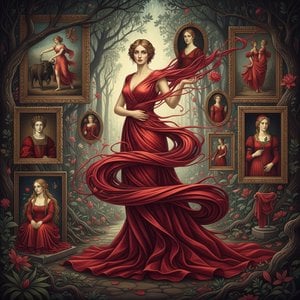
Crimson Threads of Narrative: Exploring Symbolism & Representation in Artworks Featuring the Red Dress
Explore the rich symbolism of the red dress in art history! From ancient power displays to iconic portraits like Cézanne’s 'Madame Cezanne', discover the cultural and artistic significance behind this captivating color. Expert analysis & insights.

John Constable: 25 Najlepszych Obrazów Mistrza Angielskiego Krajobrazu | ArtsDot
Odkryj 25 arcydzieł Johna Constable'a – mistrza angielskiego krajobrazu! Poznaj romantyczne pejzaże, technikę malarską i inspiracje z Dedham Vale. Reprodukcje obrazów najwyższej jakości na ArtsDot.com. Eksploruj pełną kolekcję online!

Olej na płótnie: Historia, techniki i ponadczasowy urok malarskiego medium
Poznaj historię i techniki malarstwa olejowego! Od renesansowych mistrzów po współczesne zastosowania – wszystko o oleju na płótnie. Poradniki, konserwacja i inspiracje dla pasjonatów sztuki.

Trwała Spuścizna Malarstwa Olejnego: Technika, Historia i Estetyczny Wpływ
Poznaj historię i technikę malarstwa olejnego! Eksperckie artykuły o konserwacji, renowacji oraz współczesnych zastosowaniach. Dowiedz się więcej o mistrzach i trwałości obrazów olejnych.

John Singer Sargent: 25 Arcydzieł Pełnych Elegancji i Światła | ArtsDot.com
Odkryj 25 arcydzieł Johna Singera Sargenta – mistrza portretu i impresjonizmu. Poznaj historie, techniki i inspiracje za jego najsłynniejszymi obrazami. Reprodukcje najwyższej jakości na ArtsDot.com. Eksploruj pełną kolekcję online!