


The picture follows your choices: , .
Opis obiektu
 Rozwiń treść
Biografia artysty
Poznaj Gustave Moreau – francuskiego mistrza Symbolizmu! Jego dzieła fascynują bogactwem kolorów i głęboką symboliką. Odkryj jego niezwykły świat sztuki XIX wieku!
Ręcznie malowana reprodukcja olejowa
Ręcznie malowany obraz olejny na płótnie, wykonany na zamówienie przez naszych artystów w wybranym przez Ciebie wymiarze i oprawie. ( Przełącz na wydania drukowane Przejdź do wersji cyfrowej)
More about this painting
 Podgląd w skali 1:1
 Wyślij jako kartkę
 Udostępnij
 Szczegóły dzieła
 Przewodnik

 Pobierz obraz
 Podobne obiekty
 RTG
RTG Pokaz slajdów
 Q&A
Q&A Statystyki
Order your painting in four simple steps
Take your time. You can change any answer; the price in your order card follows each choice.
1 Step one of four
Which size would you like?
These sizes keep the proportions of the original painting. The drawing shows your choice on a wall, above a two-metre sofa.
Or give your own measurements
Wybierz spośród naszych standardowych rozmiarów, które zachowują oryginalne proporcje dzieła sztuki.

Wpisz wymaganą szerokość i wysokość, aby obraz pasował do Twojej ramy lub ściany. Ponieważ jest to dzieło malowane ręcznie, w przypadku rozmiaru o innych proporcjach artysta może domalować nieco więcej wokół obrazu lub przyciąć jego fragmenty — wybór należy do Ciebie. Przed rozpoczęciem pracy prześlemy Ci cyfrową wizualizację do zatwierdzenia. Obraz widoczny na tej stronie nie przedstawia rzeczywistego efektu — jedynie wizualizacja oddaje realny rezultat.
2 Step two of four
How should it be prepared: rolled, stretched or framed?
The prices below are for the size you chose in step one.
Choose the edges of the stretched canvas
Choose your frame

White zł1

Blurside zł1

Extended zł1

P118B zł10

P118H zł10

P118W zł10

P438Z zł10

P508JH zł12

P508YH zł12

P805H zł10

P805Z zł10

P919BZ zł10

P919G zł10

P919XJ zł10

P959ZH zł10

P968JZ zł12

W106C zł8

W218G zł10

W218JH zł8

W218Y zł10

W307PJ zł10

W316G zł10

W316PJ zł8

W316Y zł10

W398PJ zł8

W4111J zł10

W500HY zł15

W500JH zł15

W692G zł12

W849H zł8

W940BG zł15

W953PJ zł8

H24-GOLD zł30

H24-SILVER zł30

H36-GOLD zł45

H36-SILVER zł45
W oprawie
Moulding: . Overall size with the frame: .
3 Step three of four
Would you like anything changed in the painting?
Most people answer no. Because each painting is made by hand, our artist can also adapt it for you.
After order, ArtsDot.com team will email client for instructions and provide a mockup preview
4 Step four of four
A few finishing options
All of them are optional. The answers already selected cost nothing extra.
Who paints it?
Dostawa na całym świecie () w ciągu 3–4 tygodni zamiast standardowych 5 tygodni. (31 Październik). Bez kompromisów w kwestii jakości.
A nameplate, as in a museum?
Szczegóły grawerowanej brązowej tabliczki
This elegant plaque features the artist's name and the title of the artwork, finely engraved for a timeless presentation.
It is made from bronze with a refined, elegant finish. The text is precisely laser-engraved for a sharp and permanent result. Measuring 9x2 cm, the plaque is compact yet easy to read. It's built to be durable and scratch-resistant, offering a professional, museum-quality look. Mounting is simple thanks to the included adhesive backing.
Szczegóły przezroczystej tabliczki akrylowej
The plaque includes essential engraved details such as the artist's name, the title of the artwork, the date it was created, the type of media used-like oil on canvas or watercolor-a brief description of the piece, and a QR code that links to the complete artwork information.
It is crafted from clear acrylic, offering a sleek, modern appearance. The text is UV-engraved in black to ensure strong visual contrast. With a size of 10x15 cm, it ensures optimal readability. It comes equipped with two metal hooks for secure wall mounting. The plaque is designed to be weather-resistant, making it suitable for various environments, and it includes interactive features that work seamlessly with smartphone scanning.
Szczegóły czarnej tabliczki akrylowej
This elegant plaque includes engraved information such as the artist's name, the title of the artwork, the date it was created, the type of media used (like oil on canvas or watercolor), a short description of the artwork, and a QR code for quick access to more information.
The plaque itself is made from refined black acrylic with a premium finish. The text is laser-engraved in white for high contrast and readability. Its size is 10x15 cm, designed to be easy to read. It comes with two metal hooks for professional mounting. The design is sleek and fits any interior style. It is also weather-resistant and durable, with built-in digital integration for mobile compatibility.
A protective varnish?
When do you need it?
✓ Check and order
Your painting, as you ordered it

Venice
Technika reprodukcji
Wymiary reprodukcji
-

Wybitny mistrz artystyczny
Większa szczegółowość, finezja i dodatkowy czas na realizację
-

Opcje oprawy reprodukcji
-
-
W przypadku dzieł sztuki lub reprodukcji, których którykolwiek z boków przekracza 105 cm (około 41 cali), rama zostanie wysłana w formie zestawu do samodzielnego montażu. Metoda ta zapewnia bezpieczną dostawę i zapobiega uszkodzeniom podczas transportu.
Wymagany profesjonalny montaż – nie jest to produkt typu DIY.
Zestaw musi zostać złożony, a płótno naciągnięte przez doświadczonego profesjonalnego ramiarza, przy użyciu kleju do drewna (brak w zestawie), kleszczy do naciągania płótna oraz ścisków, które utrzymają krosna w równej pozycji podczas schnięcia kleju. Nieprawidłowy montaż lub nierównomierne napięcie płótna może trwale uszkodzić dzieło sztuki i nie podlega naszej gwarancji.
 W przypadku dzieł sztuki lub reprodukcji, których którykolwiek z boków przekracza 105 cm (około 41 cali), rama zostanie wysłana w formie zestawu do samodzielnego montażu. Metoda ta zapewnia bezpieczną dostawę i zapobiega uszkodzeniom podczas transportu.
W zestawie znajdują się wszystkie listwy z litego drewna, precyzyjnie docięte do wymiarów.
Montaż odbywa się przy użyciu dołączonych wkrętów oraz kleju do drewna do łączenia narożników, którego zestaw nie zawiera i który musi zostać dostarczony przez ramiarza.
Wymagane są profesjonalne narzędzia, których nie ma w zestawie: kleszcze do naciągania płótna (napinacz) oraz zaciski, które pozwolą utrzymać listwy w równej pozycji podczas schnięcia kleju.
Ważne:
Do połączenia narożników niezbędny jest klej do drewna, listwy należy unieruchomić za pomocą ścisków do momentu całkowitego wyschnięcia kleju, a naciągnięcie płótna na złożoną ramę wymaga użycia kleszczy do naciągania płótna. Żaden z tych elementów nie jest dołączony do zestawu. Przed zamówieniem tego rozmiaru zalecamy konsultację z doświadczonym ramiarzem.

Etykieta obiektu
-
-

Lakier ochronny
Lakier z połyskiem (pogłębia kolory, chroni przed światłem i wilgocią)
-

Personalizacja dzieła
Przykłady możliwości personalizacji: zastąp twarz zdjęciem klienta; dodaj zwierzę domowe (np. zamień kota na psa); umieść ukrytą wiadomość w tle; zmień krajobraz lub elementy tła.
-

Ekspresowa
Dostawa na cały świat () w ciągu 3–4 tygodni zamiast standardowych 5 tygodni. (31 Październik). Bez kompromisów w kwestii jakości.
-
Przesyłka ekspresowa
Dostawa na cały świat () w ciągu 5 tygodni. (7 Listopad).
W cenie
Cena całkowita
zł 1023
Opcja ze szkłem jest dostępna wyłącznie w rozmiarach poniżej 110 cm
Included with every order
- Bezpłatna ekspresowa wysyłka na cały świat
- Wysokiej jakości płótno lniane
- Pełne ubezpieczenie przesyłki
- Gwarancja zwrotu należności celnych i podatków importowych
- Gwarancja wiernego odwzorowania kolorów
- 100-dniowa polityka zwrotów (tylko w przypadku wad)
- Gwarancja 100% zwrotu pieniędzy
- Zniżka przy zakupie wielu sztuk


A Dreamscape of Venice: Gustave Moreau’s Enigmatic Vision
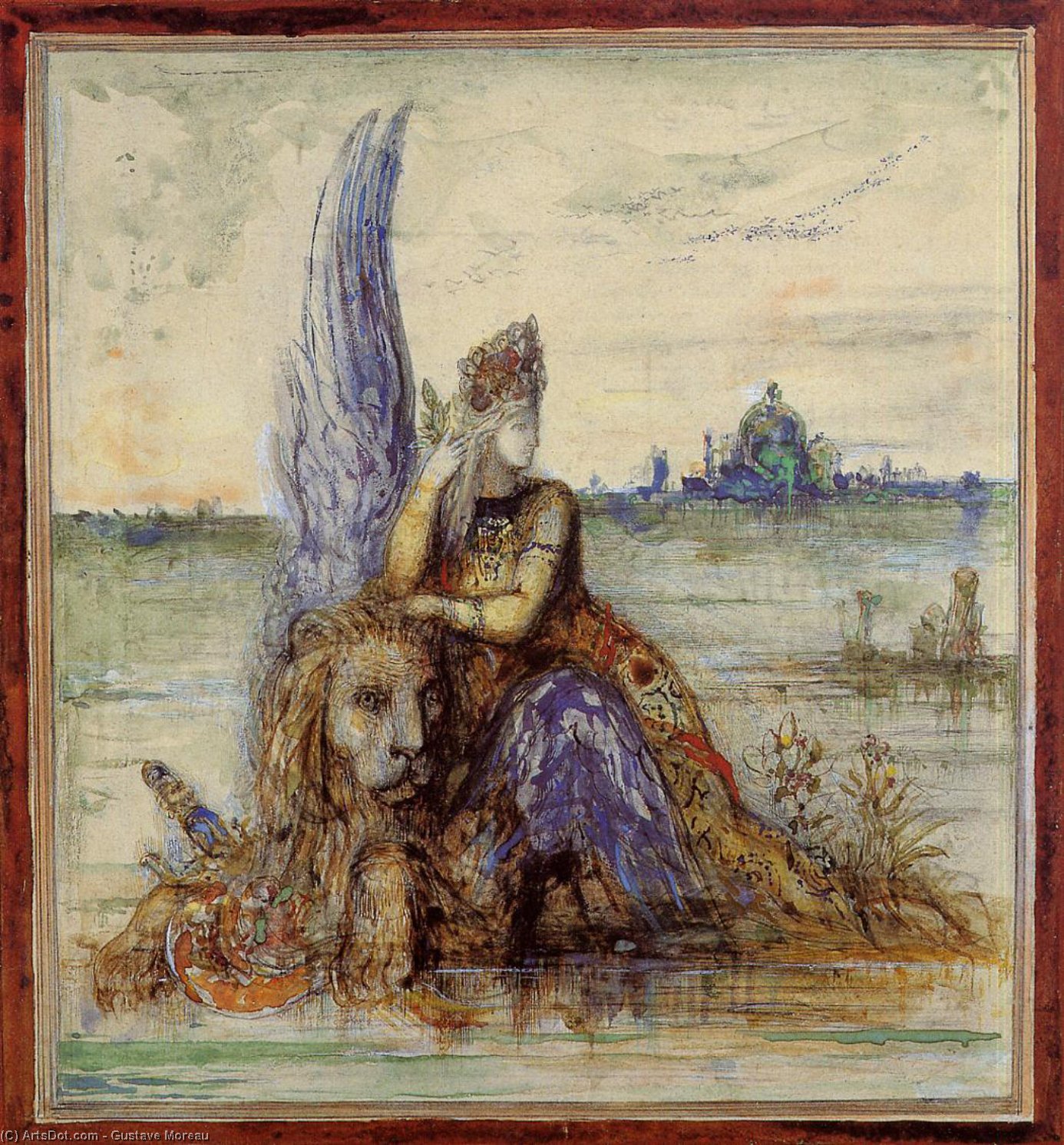
Gustave Moreau's "Venice," painted in 1885, isn’t merely a depiction of a city; it’s an immersion into a realm of myth and emotion. This watercolor, now residing within the hallowed halls of the Musée Gustave Moreau in Paris, embodies the core tenets of Symbolism – a movement that sought to express inner psychological states rather than simply mirroring external reality. Moreau, a master of layering symbolism upon traditional subjects, transforms Venice into an evocative stage for his personal mythology, inviting viewers on a journey through dream and memory.
The painting immediately captivates with its hazy, almost otherworldly atmosphere. The muted palette—dominated by blues, greens, and ochres—creates a sense of distance and timelessness. Moreau’s technique is deliberately loose and fluid, characteristic of watercolor, allowing the colors to bleed into one another and suggesting movement within the water. He employs a broken brushstroke, building up layers of translucent washes that imbue the scene with an ethereal quality. The cityscape itself isn't sharply defined; instead, it appears as a shimmering reflection in the water, further contributing to the dreamlike atmosphere.
The Regal Figure and Symbolic Weight
At the heart of the composition sits a woman seated regally upon the back of a lion – an arresting image that immediately draws the eye. This isn’t a literal representation; it's a carefully constructed symbol. The lion, a potent emblem of strength, power, and royalty throughout history, anchors the figure and elevates her status. Her crown, subtly rendered but undeniably present, reinforces this sense of nobility and perhaps even divinity. Moreau frequently employed female figures from mythology and religious narratives as archetypes in his work, imbuing them with symbolic weight and psychological depth. This woman, positioned within a watery realm, suggests a connection to both the earthly and the spiritual – a figure caught between worlds.
The presence of other individuals adds layers of intrigue to the scene. A solitary figure stands on the left, seemingly observing the tableau, while two others are clustered on the right, their faces obscured by shadow. These figures aren’t merely background elements; they represent potential observers, perhaps even participants in this unfolding dreamscape. The bird perched at the top-left corner adds a touch of lightness and freedom, hinting at transcendence or spiritual aspiration.
A Window into Moreau's World
Understanding Gustave Moreau requires delving into his personal life and artistic philosophy. Born in Paris in 1826, he was deeply influenced by his father’s architectural background, fostering a keen eye for detail and composition. Moreau’s early training at the École des Beaux-Arts provided him with technical skills, but it was his friendship with Théodore Chassériau that truly ignited his Symbolist sensibilities. He rejected the prevailing Realism of the time, instead seeking to express inner emotions and spiritual truths through evocative imagery. His work often explored themes of mythology, religion, and the human psyche, frequently featuring female figures as powerful symbols.
Moreau’s legacy extends beyond this single painting. He was a dedicated teacher, nurturing the talents of artists like Henri Matisse and Georges Rouault, shaping an entire generation of Symbolist painters. His dedication to his craft culminated in the establishment of the Musée Gustave Moreau in 1903, ensuring that his artistic vision would be preserved for posterity. “Venice,” therefore, isn’t just a beautiful artwork; it's a testament to Moreau’s enduring influence and his profound exploration of the human spirit.
Capturing the Essence: A Reproduction for Your Space
ArtsDot offers meticulously crafted hand-painted reproductions of Gustave Moreau’s “Venice,” allowing you to bring this captivating dreamscape into your home or office. Our skilled artisans replicate Moreau's delicate watercolor technique and evocative color palette with exceptional precision, ensuring that every detail is faithfully reproduced. Whether you are an art enthusiast, a collector seeking to expand your collection, or simply someone looking for a unique piece of decorative art, our reproduction captures the essence of this iconic work – its mystery, beauty, and profound symbolic depth.
Consider how “Venice” can transform your space. Its ethereal quality will create a sense of tranquility and contemplation, while the rich symbolism invites viewers to engage with the painting on a deeper level. A ArtsDot reproduction is more than just an image; it’s a portal into Moreau's world – a world where myth, nature, and urban life converge in a timeless tableau.
Pytania i odpowiedzi
Jaki jest zalecany rozmiar wydruku dla „Venice” – Gustaw Moreau?
Dla dzieła „Venice” – Gustaw Moreau sugerowana jest reprodukcja w formacie Medium. Rozmiar można dostosować, zachowując proporcje.
Z której epoki pochodzi "Venice"?
„Venice” – Gustaw Moreau pochodzi z okresu Early Medieval. Epoka ta stanowi kontekst historyczny dla tego dzieła.
Czy kolory w „Venice” – Gustaw Moreau są nasycone, czy stonowane?
Paleta dzieła "Venice" charakteryzuje się Subtle Color nasyceniem kolorów.
Podobne dzieła


Gustaw Moreau
1826 - 1898, Francja
Biografia artysty
A Dream Weaver of Symbolism: The Life and Art of Gustave Moreau
Gustave Moreau, a name inextricably linked to the ethereal beauty and profound mysteries of Symbolist painting, emerged from 19th-century Paris as an artist utterly distinct in his vision. Born in 1826 into a comfortable bourgeois family—his father an architect and archivist—Moreau’s early life was steeped in intellectual curiosity and a deep appreciation for aesthetics. From a remarkably young age, he displayed a prodigious talent for drawing, nurtured through the rigorous training of the École des Beaux-Arts under esteemed figures like François-Édouard Picot. However, Moreau's artistic trajectory swiftly diverged from the prevailing Realist and Impressionist currents dominating his time. He wasn’t driven by a desire to capture fleeting moments or represent objective reality; instead, he sought to unlock the hidden realms of myth, religion, and the intricate workings of the human psyche through a deeply personal and symbolic visual language. His artistic journey became an inward exploration, translating subjective emotions and spiritual yearnings onto canvas with meticulous detail and a palette often rich in vibrant, almost opulent hues.The Forge of Imagination: Influences and Artistic Development
Moreau’s artistic development wasn't forged in isolation. While rejecting the dominant trends of his era, he drew inspiration from a remarkably diverse range of sources. The dramatic use of color and exotic subject matter found in the works of Eugène Delacroix ignited within him a passionate interest in narrative painting imbued with intense emotionality. He held Renaissance masters—Michelangelo and Leonardo da Vinci, in particular—in the highest esteem, deeply admiring their mastery of composition, anatomical precision, and their remarkable ability to penetrate the complexities of human psychology. Yet, Moreau wasn’t merely imitating these giants; he was synthesizing their influences into something entirely new, a distinctly personal style. His pivotal journey to Italy during the 1850s proved transformative, immersing him in the art of antiquity and the Renaissance. This experience provided an unparalleled wealth of motifs and stylistic cues that would subsequently populate his future works. He meticulously copied Old Master paintings—not as mere reproductions, but as a means of absorbing their techniques and unlocking their secrets—carefully studying brushstrokes, color palettes, and compositional strategies. This dedication to craft, combined with his burgeoning fascination with mythology and literature, formed the bedrock of his unique artistic vision.A World of Symbols: Themes and Techniques
Moreau’s paintings are not simply illustrations of myths or biblical stories; they are complex allegories designed to provoke contemplation and interpretation. He didn't aim to retell these narratives literally but rather to explore their underlying psychological and spiritual truths. His canvases are populated with a rich tapestry of symbolic imagery—serpents representing temptation, jewels signifying earthly desires, and figures embodying abstract concepts such as grief, loss, or redemption. He masterfully created an atmosphere of dreaminess through intricate detail, shimmering textures, and often unsettling juxtapositions of light and shadow. Moreau’s technique was characterized by a painstaking layering of paint—a deliberate process that resulted in surfaces brimming with iridescent colors and evoking a sense of otherworldly beauty. His skillful use of gold leaf further enhanced this effect, lending his works a Byzantine quality that underscored their spiritual dimension. He prioritized the expressive power of color and form over strict adherence to realistic representation, focusing on conveying mood and meaning rather than photographic accuracy.Notable Works and Legacy
Throughout his career, Moreau produced an astonishing body of work, including iconic paintings such as *Salomé tańcząca przed Herodem* (Salome Dancing before Herod), *Jupiter i Semele*, *Orfeusz*, *Widzenie*, and *Święta Elżbieta z Anglii lub Cud róż*. These works demonstrate his extraordinary skill in depicting mythological scenes, biblical narratives, and allegorical themes. Moreau’s influence extended far beyond the Symbolist movement itself. He mentored numerous artists at the École des Beaux-Arts, encouraging them to embrace imagination, symbolism, and individual expression—a radical departure from the prevailing academic norms of the time. Though initially met with mixed reactions, Moreau's work gained recognition in the late 19th and early 20th centuries, solidifying his place as a pivotal figure in modern art. Today, the Musée Gustave Moreau in Paris stands as a testament to his enduring legacy—a sanctuary where visitors can immerse themselves in the captivating world of this extraordinary artist, experiencing firsthand the power and beauty of his symbolic vision.Key Characteristics
- Symbolic Imagery: Moreau’s paintings are replete with symbols representing complex ideas and emotions.
- Dreamlike Atmosphere: He skillfully created an ethereal and otherworldly atmosphere through meticulous detail and color manipulation.
- Rich Palette: His use of vibrant, often opulent colors contributed to the overall sense of mystery and beauty.
- Influence of Renaissance Masters: Moreau drew inspiration from the techniques and philosophies of Michelangelo and Leonardo da Vinci.


Powiązane artykuły

Efemeryczne Wizje: Historia i Współczesna Praktyka Malarstwa Akwarelowego
Poznaj historię i techniki malarstwa akwarelowego! Odkryj inspiracje mistrzów, współczesne trendy oraz praktyczne porady dotyczące materiałów. Rozwiń swoją pasję z naszym przewodnikiem.

10 Legendarnych Akwareli, Które Zmieniły Sztukę. Inspiracje do Dekoracji Domu.
Odkryj 10 legendarnych akwareli Turner'a, Monet'a i innych mistrzów! Poznaj historie, techniki i inspiracje tych ponadczasowych dzieł. Reprodukcje obrazów najwyższej jakości na ArtsDot.com – idealne do dekoracji wnętrz.
Gustav Klimt: 25 Arcydzieł Pełnych Złota i Symboliki | ArtsDot.com
Odkryj 25 arcydzieł Gustava Klimta – od 'Pocałunku' po 'Kobietę w złocie'. Poznaj historię, symbolikę i technikę malarstwa secesyjnego. Reprodukcje najwyższej jakości na ArtsDot.com! Eksploruj pełną kolekcję online.