


 Podgląd w skali
 Wyślij jako kartkę
 Udostępnij
 Szczegóły dzieła

 Pobierz
 Podobne obiekty
 RTG
RTG Pokaz slajdów
Fée aux griffons


 Rozwiń treść
Giclée / Wydruk artystyczny
Druk giclée lub płótno o jakości muzealnej, szybka realizacja i szeroki wybór opcji wykończenia. ( Zamów ręcznie malowaną reprodukcję Kup obraz wysokiej rozdzielczości)




P118B $10

P118H $10

P118W $10

P438Z $10

P508JH $12

P508YH $12

P805H $10

P805Z $10

P919BZ $10

P919G $10

P919XJ $10

P959ZH $10

P968JZ $12

W106C $8

W218G $10

W218JH $8

W218Y $10

W307PJ $10

W316G $10

W316PJ $8

W316Y $10

W398PJ $8

W4111J $10

W500HY $15

W500JH $15

W692G $12

W849H $8

W940BG $15

W953PJ $8




Wybierz spośród naszych standardowych rozmiarów, które zachowują oryginalne proporcje dzieła sztuki.

Możesz wprowadzić własne wymiary, aby dopasować dzieło do konkretnej ramy lub przestrzeni. Jeśli wybrany rozmiar nie będzie odpowiadał proporcjom oryginalnego obrazu, przytniecie dzieło lub rozszerzymy obraz za pomocą odbicia lustrzanego lub jednolitego wypełnienia krawędzi. Przed rozpoczęciem produkcji prześlemy cyfrową wizualizację do Twojej akceptacji.
Prosimy pamiętać, że podgląd na ekranie nie odzwierciedla faktycznego przycinania ani rozszerzania. Tylko wizualizacja dokładnie pokaże końcową kompozycję.
Mimo dostępności niestandardowych rozmiarów, zalecamy wybór wymiaru z listy zdefiniowanej, aby zachować oryginalne proporcje.
Dostawa na cały świat () w ciągu 2 tygodni zamiast standardowych 4/5 tygodni. (18 Sierpień)

Bezpłatna ekspresowa wysyłka na cały świat

Wysokiej jakości płótno lniane

Pełne ubezpieczenie przesyłki

Gwarancja zwrotu należności celnych i podatków importowych

Gwarancja wiernego odwzorowania kolorów

Polityka 60-dniowego zwrotu (tylko w przypadku wad)

Gwarancja 100% zwrotu kosztów

Zniżka przy zamówieniu wielu produktów
 Opcja ze szkłem jest dostępna wyłącznie w rozmiarach poniżej 110 cm

Fée aux griffons
Giclée / Wydruk artystyczny
Wymiary reprodukcji
-


Cena całkowita
$ 62
Opis kolekcjonerski
A Vision of Mythic Grace: Gustave Moreau’s *Fée aux Griffons*
Gustave Moreau's Fée aux Griffons (Fairies with Griffins) is not merely a depiction of a fantastical scene; it’s an immersion into the richly layered world of Symbolist art, a realm where dreams and mythology intertwine to evoke profound emotional responses. Painted in 1880, this captivating work exemplifies Moreau's unique approach – one that deliberately eschewed the naturalism favored by his contemporaries, opting instead for a meticulously constructed tableau brimming with allegorical significance. The painting’s power resides not just in its visual beauty but also in its ability to transport the viewer into a space of heightened imagination and spiritual contemplation.
- Subject Matter: The central figure, a woman reclining amidst a fantastical setting, immediately establishes a connection with classical mythology. Her outstretched wings, adorned with griffins – mythical creatures combining the body of a lion with the head and wings of an eagle – elevate her to a position of divine or semi-divine status.
- Style & Technique: Moreau’s style is characterized by its opulent detail, rich color palette, and meticulous rendering. He employs a technique reminiscent of Byzantine mosaics and Renaissance frescoes, creating a sense of luminous depth and otherworldly beauty. The brushwork is often obscured, contributing to the painting's hazy, dreamlike atmosphere.
The Symbolist Movement & Moreau’s Vision
Moreau was a pivotal figure in the Symbolist movement, which arose as a reaction against the perceived materialism and superficiality of Realism and Impressionism. Symbolists sought to express subjective emotions, spiritual truths, and mythological themes through highly stylized imagery. Moreau's work is deeply rooted in this tradition, drawing inspiration from sources such as medieval legends, classical mythology, and esoteric philosophies. He was particularly interested in exploring the darker aspects of human psychology and the mysteries of the unconscious mind. The painting’s composition deliberately evokes a sense of timelessness, suggesting an eternal struggle between beauty and darkness, innocence and corruption.
- Historical Context: Created during a period of significant social and intellectual change in France – marked by advancements in science, industrialization, and the rise of new philosophical ideas – Moreau’s art reflects a desire to find meaning and solace in the face of these rapid transformations.
- Influence of Byzantine Art: Moreau's fascination with Byzantine iconography is evident in the painting's flattened perspective, stylized figures, and use of gold leaf, creating an effect of shimmering grandeur.
Decoding the Symbolism
Beyond its immediate visual appeal, Fée aux Griffons is laden with symbolic meaning. The griffins themselves represent power, guardianship, and divine authority – qualities associated with both protection and judgment. The woman’s reclining pose suggests vulnerability and perhaps a state of transition or transformation. The presence of the birds further amplifies this sense of ethereal beauty and spiritual connection. The vase, a recurring motif in Moreau's work, symbolizes fertility, abundance, and the cyclical nature of life and death. The overall effect is one of profound mystery and suggestive ambiguity – inviting viewers to interpret the scene through their own emotional and intellectual lens.
Emotional Impact & Artistic Value
Moreau’s *Fée aux Griffons* possesses a captivating allure, drawing the viewer into its dreamlike world. The painting's rich textures, luminous colors, and evocative symbolism create an intensely immersive experience. It is a testament to Moreau’s mastery of technique and his profound understanding of the human psyche. A hand-painted reproduction offers a unique opportunity to own a piece of this artistic legacy, bringing a touch of timeless beauty and symbolic depth into any interior space. This artwork represents not just a visual object but a portal to a world of mythic grace and enduring fascination.
Podobne dzieła


O artyście
A Dream Weaver of Symbolism: The Life and Art of Gustave Moreau
Gustave Moreau, a name inextricably linked to the ethereal beauty and profound mysteries of Symbolist painting, emerged from 19th-century Paris as an artist utterly distinct in his vision. Born in 1826 into a comfortable bourgeois family—his father an architect and archivist—Moreau’s early life was steeped in intellectual curiosity and a deep appreciation for aesthetics. From a remarkably young age, he displayed a prodigious talent for drawing, nurtured through the rigorous training of the École des Beaux-Arts under esteemed figures like François-Édouard Picot. However, Moreau's artistic trajectory swiftly diverged from the prevailing Realist and Impressionist currents dominating his time. He wasn’t driven by a desire to capture fleeting moments or represent objective reality; instead, he sought to unlock the hidden realms of myth, religion, and the intricate workings of the human psyche through a deeply personal and symbolic visual language. His artistic journey became an inward exploration, translating subjective emotions and spiritual yearnings onto canvas with meticulous detail and a palette often rich in vibrant, almost opulent hues.The Forge of Imagination: Influences and Artistic Development
Moreau’s artistic development wasn't forged in isolation. While rejecting the dominant trends of his era, he drew inspiration from a remarkably diverse range of sources. The dramatic use of color and exotic subject matter found in the works of Eugène Delacroix ignited within him a passionate interest in narrative painting imbued with intense emotionality. He held Renaissance masters—Michelangelo and Leonardo da Vinci, in particular—in the highest esteem, deeply admiring their mastery of composition, anatomical precision, and their remarkable ability to penetrate the complexities of human psychology. Yet, Moreau wasn’t merely imitating these giants; he was synthesizing their influences into something entirely new, a distinctly personal style. His pivotal journey to Italy during the 1850s proved transformative, immersing him in the art of antiquity and the Renaissance. This experience provided an unparalleled wealth of motifs and stylistic cues that would subsequently populate his future works. He meticulously copied Old Master paintings—not as mere reproductions, but as a means of absorbing their techniques and unlocking their secrets—carefully studying brushstrokes, color palettes, and compositional strategies. This dedication to craft, combined with his burgeoning fascination with mythology and literature, formed the bedrock of his unique artistic vision.A World of Symbols: Themes and Techniques
Moreau’s paintings are not simply illustrations of myths or biblical stories; they are complex allegories designed to provoke contemplation and interpretation. He didn't aim to retell these narratives literally but rather to explore their underlying psychological and spiritual truths. His canvases are populated with a rich tapestry of symbolic imagery—serpents representing temptation, jewels signifying earthly desires, and figures embodying abstract concepts such as grief, loss, or redemption. He masterfully created an atmosphere of dreaminess through intricate detail, shimmering textures, and often unsettling juxtapositions of light and shadow. Moreau’s technique was characterized by a painstaking layering of paint—a deliberate process that resulted in surfaces brimming with iridescent colors and evoking a sense of otherworldly beauty. His skillful use of gold leaf further enhanced this effect, lending his works a Byzantine quality that underscored their spiritual dimension. He prioritized the expressive power of color and form over strict adherence to realistic representation, focusing on conveying mood and meaning rather than photographic accuracy.Notable Works and Legacy
Throughout his career, Moreau produced an astonishing body of work, including iconic paintings such as *Salomé tańcząca przed Herodem* (Salome Dancing before Herod), *Jupiter i Semele*, *Orfeusz*, *Widzenie*, and *Święta Elżbieta z Anglii lub Cud róż*. These works demonstrate his extraordinary skill in depicting mythological scenes, biblical narratives, and allegorical themes. Moreau’s influence extended far beyond the Symbolist movement itself. He mentored numerous artists at the École des Beaux-Arts, encouraging them to embrace imagination, symbolism, and individual expression—a radical departure from the prevailing academic norms of the time. Though initially met with mixed reactions, Moreau's work gained recognition in the late 19th and early 20th centuries, solidifying his place as a pivotal figure in modern art. Today, the Musée Gustave Moreau in Paris stands as a testament to his enduring legacy—a sanctuary where visitors can immerse themselves in the captivating world of this extraordinary artist, experiencing firsthand the power and beauty of his symbolic vision.Key Characteristics
- Symbolic Imagery: Moreau’s paintings are replete with symbols representing complex ideas and emotions.
- Dreamlike Atmosphere: He skillfully created an ethereal and otherworldly atmosphere through meticulous detail and color manipulation.
- Rich Palette: His use of vibrant, often opulent colors contributed to the overall sense of mystery and beauty.
- Influence of Renaissance Masters: Moreau drew inspiration from the techniques and philosophies of Michelangelo and Leonardo da Vinci.

Gustaw Moreau
1826 - 1898 , Francja
Krótka nota
- Artistic Movement Or Style: Symbolizm
- Artists Or Movements Influenced By This Artist:
- Matisse
- Rouault
- Artists Who Influenced This Artist:
- Delacroix
- Michelangelo
- Date Of Birth: 6 kwietnia 1826
- Date Of Death: 18 kwietnia 1898
- Full Name: Gustave Moreau
- Nationality: Francuz
- Notable Artworks:
- Salome tańcząca
- Prometeusz
- Święta Elżbieta
- Place Of Birth: Paryż, Francja
Powiązane artykuły

Odbitki Giclée: Jakość Archiwalna i Estetyczne Niuanse dla Wymagającego Kolekcjonera
Poznaj sekrety druku giclée – technologii zapewniającej najwyższą jakość reprodukcji sztuki i trwałość archiwalaną. Poradnik dla wymagających kolekcjonerów o wyborze papieru, tuszy i profilach kolorystycznych.

Gustave Moreau: Symbolism's Enigmatic Visionary & Precursors of Modern Fantasy Art
Explore the captivating world of Gustave Moreau, the leading Symbolist painter. Discover his iconic masterpieces, influences, and lasting legacy. Expert analysis for collectors & art enthusiasts.

Echoes of Time: Exploring the Enduring Appeal & Historical Context of Vintage Art Prints
Explore the captivating world of vintage art prints! Discover their history, collecting tips & enduring appeal. Expert insights on chromolithography and building a legacy collection with ArtsDot.

The Enduring Legacy of Fine Art Prints: Technique, History & Aesthetic Impact
Explore the rich history & techniques of fine art prints. Discover investment potential, assess authenticity, and learn how to preserve your collection with expert guidance. Trusted insights for discerning collectors.
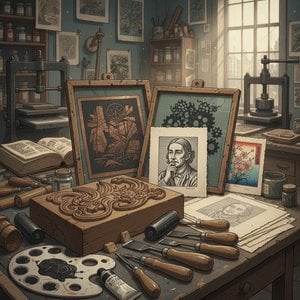
The Enduring Legacy of Printmaking: Techniques, Themes & Artistic Innovation Across Centuries
Explore the rich history of printmaking with ArtsDot. Discover techniques from intaglio to lithography, learn about collecting valuable prints & find museum-quality reproductions. Expert insights for art enthusiasts and collectors.



