

 Podgląd w skali 1:1
 Wyślij jako kartkę
 Udostępnij
 Szczegóły dzieła
 Przewodnik

 Pobierz obraz
 Podobne obiekty
 RTG
RTG Pokaz slajdów
 Pytania i odpowiedzi
 Statystyki
Copy after Giulio Romano

- 39.0 x 29.0 cm


 Rozwiń treść
Giclée / Wydruk artystyczny
Wydruki giclée lub płótna o jakości muzealnej, szybka realizacja i szeroki wybór opcji wykończenia. ( Zamów ręcznie malowaną reprodukcję Przejdź do wersji cyfrowej)




P118B zł10

P118H zł10

P118W zł10

P438Z zł10

P508JH zł12

P508YH zł12

P805H zł10

P805Z zł10

P919BZ zł10

P919G zł10

P919XJ zł10

P959ZH zł10

P968JZ zł12

W106C zł8

W218G zł10

W218JH zł8

W218Y zł10

W307PJ zł10

W316G zł10

W316PJ zł8

W316Y zł10

W398PJ zł8

W4111J zł10

W500HY zł15

W500JH zł15

W692G zł12

W849H zł8

W940BG zł15

W953PJ zł8




Wybierz spośród naszych standardowych rozmiarów, które zachowują oryginalne proporcje dzieła sztuki.

Wpisz wymaganą szerokość i wysokość, aby dopasować grafikę do ramy lub ściany. Wydruk można jedynie przyciąć, nigdy nie powiększając go poza oryginalny obraz, dlatego format o innych proporcjach spowoduje utratę części kompozycji. Przed rozpoczęciem druku prześlemy Ci cyfrowy podgląd do zatwierdzenia. Obraz wyświetlany na tej stronie nie pokazuje rzeczywistego przycięcia — jedynie podgląd oddaje ten efekt.
Dostawa na cały świat () w ciągu 2 tygodni zamiast standardowych 4/5 tygodni. (4 Listopad)

Bezpłatna ekspresowa wysyłka na cały świat

Wysokiej jakości płótno lniane

Pełne ubezpieczenie przesyłki

Gwarancja zwrotu należności celnych i podatków importowych

Gwarancja wiernego odwzorowania kolorów

100-dniowa polityka zwrotów (tylko w przypadku wad)

Gwarancja 100% zwrotu pieniędzy

Zniżka przy zakupie wielu sztuk
 Opcja ze szkłem jest dostępna wyłącznie w rozmiarach poniżej 110 cm

Copy after Giulio Romano
Giclée / Wydruk artystyczny
Wymiary reprodukcji
-


Cena całkowita
zł 246
Copy After Giulio Romano's Fall of Icarus
The painting “Copy after Giulio Romano’s Fall of Icarus” by Giulio Romano is a masterful depiction of myth and tragedy, executed in the Mannerist style during the Renaissance period. Created around 1536, this artwork transcends mere visual representation; it embodies profound philosophical contemplation on human ambition and inevitable downfall—themes central to the intellectual currents of its time.- Subject Matter: The composition portrays Icarus plummeting from the sky after his wings constructed of wax and feathers disintegrate under the scorching heat of Helios, the sun god. This iconic image draws heavily upon Greek mythology, specifically Aesop’s fable about Icarus and Daedelus—a cautionary tale concerning hubris and disregarding divine warnings.
- Style: Romano's work exemplifies Mannerism, a stylistic reaction against the harmonious balance of High Renaissance art. Characterized by elongated figures, distorted perspectives, dramatic poses, and unsettling expressions, it prioritizes emotional intensity over anatomical accuracy. The artist deliberately eschews idealized beauty in favor of conveying psychological states—fear, despair, and vulnerability.
- Technique: Romano employed oil paint on canvas, utilizing meticulous layering and glazing techniques to achieve remarkable luminosity and textural detail. He skillfully manipulated color palettes—often muted reds and browns—to heighten the sense of gloom and reinforce the painting’s melancholic mood. The artist's attention to detail extends beyond mere representation; he strives to capture the essence of the narrative through expressive brushstrokes.
- Historical Context: Produced during a period marked by political instability and religious upheaval—the Sack of Rome in 1527 profoundly impacting artistic patronage—the painting reflects anxieties about mortality and the fragility of human endeavors. It aligns with broader Renaissance humanist concerns regarding the limitations of human intellect and the inescapable influence of fate.
- Symbolism: The fall of Icarus serves as a potent symbol of human pride and folly, representing the perilous pursuit of unattainable goals. The wings themselves symbolize aspiration and ambition, yet their disintegration underscores the futility of defying natural laws or disregarding wisdom. Furthermore, the desolate landscape surrounding Icarus reinforces the painting’s overarching theme—the inevitability of suffering and decay.
The Cleveland Museum of Art's acquisition of this copy demonstrates its enduring appeal to collectors and art historians alike. Its haunting beauty lies not merely in its technical prowess but also in its ability to provoke contemplation on fundamental questions about human existence—a testament to Romano’s artistic genius and the timeless relevance of classical mythology.
Additional Research Links
Artist Information
- Artist: Giulio Romano
- Birth Year: 1499
- Death Year: 1546
- Birth City: Rome
- Birth Country: Italy
Giulio Romano, born Giulio Pippi around 1499 in Rome, emerged during a period of unparalleled artistic innovation. His formative years were spent under the tutelage of Raphael, arguably the most celebrated painter of the High Renaissance—a relationship that profoundly shaped his artistic sensibilities and technical skills. Beyond mere apprenticeship, Romano actively participated in groundbreaking projects like the decoration of the Vatican Stanze—those magnificent halls commissioned by Popes Julius II and Leo X—where he collaborated closely with Raphael on monumental frescoes depicting biblical narratives.
Further Exploration
- Details of the entrance
- Giulio Bonasone
- Giulio Romano: A Master of Mannerism & the Palazzo Te Legacy
Resources
Pytania i odpowiedzi
Jaka jest technika i data powstania „Copy after Giulio Romano” – Giulio Romano?
Technika wykonania dzieła „Copy after Giulio Romano” – Giulio Romano to Acrylic On Canvas, a datowanie pracy pochodzi z 1536.
Ile lat miał Giulio Romano, gdy powstało dzieło „Copy after Giulio Romano”?
Gdy w 1536 roku powstało dzieło „Copy after Giulio Romano”, Giulio Romano – urodzony/a w 1499 – miał/a 37 lat.
Czy mogę użyć rozszerzonej rzeczywistości, aby zobaczyć „Copy after Giulio Romano” – Giulio Romano w swoim pokoju?
„Copy after Giulio Romano” posiada podgląd w rozszerzonej rzeczywistości: strona Podgląd w AR pozwala zobaczyć dzieło w Twojej własnej przestrzeni na kompatybilnym urządzeniu.
Podobne dzieła


Biografia artysty
A Roman Beginning and Apprenticeship Under a Master
Giulio Romano, born Giulio Pippi around 1499 in Rome, emerged during a period of intense artistic transformation. Details surrounding his early life remain somewhat shrouded in mystery, yet it’s clear he quickly entered the orbit of Raphael, arguably the most celebrated painter of the High Renaissance. This apprenticeship proved to be profoundly formative, not only shaping his technical skills but also laying the foundation for his future stylistic explorations. He wasn't merely a studio assistant; Giulio rapidly evolved into an indispensable collaborator, contributing significantly to projects of immense scale and importance – notably the decoration of the Vatican Stanze, those magnificent rooms commissioned by Popes Julius II and Leo X. His hand is readily identifiable in *The Fire in the Borgo*, where he assisted Raphael in depicting a dramatic scene of miraculous intervention, capturing both the intensity of the event and the artist’s masterful use of light and shadow. Following Raphael's untimely death in 1520, Giulio inherited responsibility for completing numerous unfinished commissions, including the ambitious decoration of Villa Madama for Cardinal Giuliano de’ Medici. This early exposure to large-scale projects and the demands of aristocratic patronage instilled within him a remarkable confidence and ambition—qualities that would define his later career.The Birth of Mannerism: A Departure from Classical Harmony
While firmly rooted in the Renaissance tradition, Giulio Romano's artistic trajectory soon diverged significantly from the prevailing emphasis on classical balance and harmony. He became a key figure in the development of Mannerism – a style characterized by its deliberate artificiality, elegant distortions, and often unsettling psychological depth. Heavily influenced by Michelangelo’s powerful figures and dynamic compositions—particularly his use of dramatic perspective and emotional intensity—as well as a broader climate of artistic experimentation within Rome, Giulio began to embrace asymmetry, tension, and a more subjective approach to representation in his work. This wasn't a rejection of Renaissance ideals so much as a deliberate exploration of their limits, pushing beyond the constraints of *natura* to create works that were more expressive and intellectually stimulating. He increasingly modified Raphael’s plans, injecting a new sensibility into Roman art—a statement of Mannerism on a grand scale. This shift is readily apparent in his drawings, which exhibit a remarkable freedom of line and a penchant for dramatic foreshortening, showcasing a departure from the idealized forms of the High Renaissance.Mantua’s Master: Palazzo Te and Architectural Innovation
In 1524, Giulio accepted an invitation from Federico Gonzaga, Duke of Mantua, to become court painter and architect. This marked a pivotal moment in his career, providing him with unprecedented creative freedom and resources. He essentially became responsible for all artistic activity within the duchy, overseeing not only paintings and frescoes but also architectural projects, garden designs, and even theatrical productions. His most celebrated achievement during this period is undoubtedly Palazzo Te, an extraordinary suburban villa that stands as a testament to his innovative genius. The palace’s interiors are adorned with illusionistic frescoes of breathtaking complexity and psychological depth—a veritable feast for the eyes and mind. *The Sala dei Giganti* (Hall of the Giants), for example, depicts a chaotic battle between gods and giants, engulfing the viewer in a swirling vortex of figures and architectural fragments, creating an immersive experience that is both awe-inspiring and unsettling. Beyond Palazzo Te, Giulio also undertook significant renovations to Mantua’s ducal palace and cathedral, leaving an indelible mark on the city's urban landscape.Legacy and Lasting Influence
Giulio Romano died in Mantua in 1546, leaving behind a legacy that extended far beyond Italy’s borders. His drawings were highly prized by collectors, and engravings based on his work – particularly those by Marcantonio Raimondi – played a crucial role in disseminating Italian artistic styles throughout Europe. He was so famous after his death that he is the only “modern” artist mentioned by William Shakespeare in *A Midsummer Night’s Dream*, a testament to his widespread renown. His influence can be seen in the works of numerous subsequent artists, who adopted his dynamic compositions, elongated figures, and expressive use of color. While Mannerism eventually gave way to other stylistic movements, Giulio Romano's contributions remain essential to understanding the evolution of Western art. He represents a pivotal moment—a transition from the harmonious ideals of the High Renaissance to the more complex and emotionally charged aesthetic of the late 16th century. *His work continues to captivate and challenge viewers today, reminding us of the power of art to both reflect and shape our understanding of the world.*- Key Influences: Raphael, Michelangelo
- Notable Works: *The Fire in the Borgo*, Palazzo Te, Villa Madama
- Style: Mannerism (characterized by asymmetry, tension, and emotional intensity)

Giulio Romano
1499 - 1546 , Włochy
Krótka nota
- Artistic Movement Or Style: Mannernisz
- Artists Or Movements Influenced By This Artist: ['Mannerisci']
- Artists Who Influenced This Artist:
- Rafael
- Michałeł
- Date Of Birth: c. 1499
- Date Of Death: 1546
- Full Name: Giulio Romano
- Nationality: Włoski
- Notable Artworks:
- Fire w Borgo
- Palazzo Te
- Place Of Birth: Rzym, Włochy
Powiązane artykuły

Giulio Romano: A Master of Mannerism & the Palazzo Te Legacy
Explore the revolutionary art of Giulio Romano, master of Mannerism & architect of Palazzo Te. Discover his influence, investment potential, and stunning frescoes – a guide for discerning collectors.
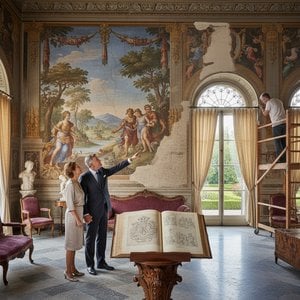
Fresk jako Rodzinna Spuścizna: Utrwalenie Dziedzictwa na Ścianach
Odkryj sztukę fresku! Poznaj historię, technikę i inspiracje. Zamów spersonalizowany fresk rodzinny – trwałe dzieło sztuki dla przyszłych pokoleń. Profesjonalna konserwacja i ochrona.

Sztuka, która ożywia przestrzeń: Emocjonalna siła fresku we wnętrzu
Poznaj fascynujący świat fresków! Ekspercka wiedza o technice, historii i konserwacji malowideł ściennych. Inspiracje dla wnętrz i możliwość zamówienia unikalnego dzieła sztuki.

Trwała Spuścizna Fresku: Technika, Historia i Wyraz Artystyczny w Różnych Kulturach
Odkryj fascynujący świat fresków! Poznaj historię, technikę tworzenia i wybitnych artystów. Ekspercka analiza konserwacji i współczesne zastosowania malowideł ściennych. Inspiracje dla wnętrz i pasjonatów sztuki.

The Enduring Legacy of Fresco Painting: Techniques, History & Contemporary Relevance
Explore the rich history & enduring artistry of fresco painting – from Giotto to Michelangelo! Discover techniques, conservation efforts, & modern applications. Learn how ArtsDot brings this timeless art form to your home.
