

- 27.0 x 29.0 cm


Obraz dostosowuje się do Twoich wyborów: , .
Opis obiektu
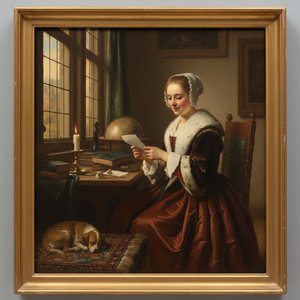
Gerrit Dou’s "Astronomer" (1650) is a stunning Baroque masterpiece. Explore this oil painting's dramatic lighting, detailed realism & symbolic depth of knowledge.
 Rozwiń treść
Biografia artysty
Poznaj wyjątkowe malarstwo złotego wieku holenderskiego Gerarda Doua (1613-1675). Znany z niezwykle szczegółowego stylu fijnschilderij, scen rodzajowych oraz mistrzowskiego wykorzystania światła w świecących wnętrzach. Odkryj jego dziedzictwo i dzieła!
Ręcznie malowana reprodukcja olejowa
Ręcznie malowany obraz olejny na płótnie, wykonany na zamówienie przez naszych artystów w wybranym przez Ciebie wymiarze i oprawie. ( Przełącz na wydania drukowane Przejdź do wersji cyfrowej)
Więcej o tym obrazie
 Podgląd w skali 1:1
 Wyślij jako kartkę
 Udostępnij
 Szczegóły dzieła
 Przewodnik

 Pobierz obraz
 Podobne obiekty
 RTG
RTG Pokaz slajdów
 Pytania i odpowiedzi
 Statystyki
Zamów swój obraz w czterech prostych krokach
Nie spiesz się. Możesz zmienić każdą odpowiedź; cena w Twoim koszyku będzie aktualizowana po każdym wyborze.
1 Pierwszy z czterech kroków
Który rozmiar wybierasz?
Te rozmiary zachowują proporcje oryginalnego obrazu. Rysunek przedstawia wybrany przez Ciebie format na ścianie, nad dwumetrową sofą.
lub podaj własne wymiary
Wybierz spośród naszych standardowych rozmiarów, które zachowują oryginalne proporcje dzieła sztuki.

Wpisz wymaganą szerokość i wysokość, aby obraz pasował do Twojej ramy lub ściany. Ponieważ jest to dzieło malowane ręcznie, w przypadku rozmiaru o innych proporcjach artysta może domalować nieco więcej wokół obrazu lub przyciąć jego fragmenty — wybór należy do Ciebie. Przed rozpoczęciem pracy prześlemy Ci cyfrową wizualizację do zatwierdzenia. Obraz widoczny na tej stronie nie przedstawia rzeczywistego efektu — jedynie wizualizacja oddaje realny rezultat.
2 Drugi z czterech kroków
W jaki sposób przygotować dzieło: w formie tuby, na krosnach czy w ramie?
Poniższe ceny dotyczą rozmiaru wybranego w pierwszym kroku.
Wybierz krawędzie płótna naciągniętego na ramę
Wybierz ramę

Białe krawędzie zł1

rozmyte krawędzie zł1

Przedłużony zł1

P118B zł10

P118H zł10

P118W zł10

P438Z zł10

P508JH zł12

P508YH zł12

P805H zł10

P805Z zł10

P919BZ zł10

P919G zł10

P919XJ zł10

P959ZH zł10

P968JZ zł12

W106C zł8

W218G zł10

W218JH zł8

W218Y zł10

W307PJ zł10

W316G zł10

W316PJ zł8

W316Y zł10

W398PJ zł8

W4111J zł10

W500HY zł15

W500JH zł15

W692G zł12

W849H zł8

W940BG zł15

W953PJ zł8

H24-GOLD zł30

H24-SILVER zł30

H36-GOLD zł45

H36-SILVER zł45
W oprawie
Profil: . Wymiar całkowity w ramie: .
3 Trzeci z czterech kroków
Czy chcieliby Państwo wprowadzić jakieś zmiany w obrazie?
Większość osób odpowiada przecząco. Ponieważ każdy obraz jest tworzony ręcznie, nasz artysta może również dostosować go do Twoich potrzeb.
Po złożeniu zamówienia zespół ArtsDot.com skontaktuje się z klientem drogą mailową w celu uzyskania instrukcji i prześle podgląd projektu
4 Krok czwarty z czterech
Kilka opcji wykończenia
Wszystkie są opcjonalne. Wybrane już odpowiedzi nie wiążą się z żadnymi dodatkowymi kosztami.
Kto jest autorem?
Dostawa na całym świecie () w ciągu 3–4 tygodni zamiast standardowych 5 tygodni. (10 Listopad). Bez kompromisów w kwestii jakości.
Tabliczka informacyjna, jak w muzeum?
Szczegóły grawerowanej brązowej tabliczki
This elegant plaque features the artist's name and the title of the artwork, finely engraved for a timeless presentation.
It is made from bronze with a refined, elegant finish. The text is precisely laser-engraved for a sharp and permanent result. Measuring 9x2 cm, the plaque is compact yet easy to read. It's built to be durable and scratch-resistant, offering a professional, museum-quality look. Mounting is simple thanks to the included adhesive backing.
Szczegóły przezroczystej tabliczki akrylowej
The plaque includes essential engraved details such as the artist's name, the title of the artwork, the date it was created, the type of media used-like oil on canvas or watercolor-a brief description of the piece, and a QR code that links to the complete artwork information.
It is crafted from clear acrylic, offering a sleek, modern appearance. The text is UV-engraved in black to ensure strong visual contrast. With a size of 10x15 cm, it ensures optimal readability. It comes equipped with two metal hooks for secure wall mounting. The plaque is designed to be weather-resistant, making it suitable for various environments, and it includes interactive features that work seamlessly with smartphone scanning.
Szczegóły czarnej tabliczki akrylowej
This elegant plaque includes engraved information such as the artist's name, the title of the artwork, the date it was created, the type of media used (like oil on canvas or watercolor), a short description of the artwork, and a QR code for quick access to more information.
The plaque itself is made from refined black acrylic with a premium finish. The text is laser-engraved in white for high contrast and readability. Its size is 10x15 cm, designed to be easy to read. It comes with two metal hooks for professional mounting. The design is sleek and fits any interior style. It is also weather-resistant and durable, with built-in digital integration for mobile compatibility.
Werniks ochronny?
Kiedy potrzebujesz dostawy?
✓ Sprawdź i zamów
Twoje dzieło, dokładnie tak, jak zamówiłeś

Astronomer
Technika reprodukcji
Wymiary reprodukcji
-

Wybitny mistrz artystyczny
Większa szczegółowość, finezja i dodatkowy czas na realizację
-

Opcje oprawy reprodukcji
-
-
W przypadku dzieł sztuki lub reprodukcji, których którykolwiek z boków przekracza 105 cm (około 41 cali), rama zostanie wysłana w formie zestawu do samodzielnego montażu. Metoda ta zapewnia bezpieczną dostawę i zapobiega uszkodzeniom podczas transportu.
Wymagany profesjonalny montaż – nie jest to produkt typu DIY.
Zestaw musi zostać złożony, a płótno naciągnięte przez doświadczonego profesjonalnego ramiarza, przy użyciu kleju do drewna (brak w zestawie), kleszczy do naciągania płótna oraz ścisków, które utrzymają krosna w równej pozycji podczas schnięcia kleju. Nieprawidłowy montaż lub nierównomierne napięcie płótna może trwale uszkodzić dzieło sztuki i nie podlega naszej gwarancji.
 W przypadku dzieł sztuki lub reprodukcji, których którykolwiek z boków przekracza 105 cm (około 41 cali), rama zostanie wysłana w formie zestawu do samodzielnego montażu. Metoda ta zapewnia bezpieczną dostawę i zapobiega uszkodzeniom podczas transportu.
W zestawie znajdują się wszystkie listwy z litego drewna, precyzyjnie docięte do wymiarów.
Montaż odbywa się przy użyciu dołączonych wkrętów oraz kleju do drewna do łączenia narożników, którego zestaw nie zawiera i który musi zostać dostarczony przez ramiarza.
Wymagane są profesjonalne narzędzia, których nie ma w zestawie: kleszcze do naciągania płótna (napinacz) oraz zaciski, które pozwolą utrzymać listwy w równej pozycji podczas schnięcia kleju.
Ważne:
Do połączenia narożników niezbędny jest klej do drewna, listwy należy unieruchomić za pomocą ścisków do momentu całkowitego wyschnięcia kleju, a naciągnięcie płótna na złożoną ramę wymaga użycia kleszczy do naciągania płótna. Żaden z tych elementów nie jest dołączony do zestawu. Przed zamówieniem tego rozmiaru zalecamy konsultację z doświadczonym ramiarzem.

Etykieta obiektu
-
-

Lakier ochronny
Lakier z połyskiem (pogłębia kolory, chroni przed światłem i wilgocią)
-

Personalizacja dzieła
Przykłady możliwości personalizacji: zastąp twarz zdjęciem klienta; dodaj zwierzę domowe (np. zamień kota na psa); umieść ukrytą wiadomość w tle; zmień krajobraz lub elementy tła.
-

Ekspresowa
Dostawa na cały świat () w ciągu 3–4 tygodni zamiast standardowych 5 tygodni. (10 Listopad). Bez kompromisów w kwestii jakości.
-
Przesyłka ekspresowa
Dostawa na cały świat () w ciągu 5 tygodni. (17 Listopad).
W cenie
Cena całkowita
zł 1033
Opcja ze szkłem jest dostępna wyłącznie w rozmiarach poniżej 110 cm
W każdym zamówieniu
- Bezpłatna ekspresowa wysyłka na cały świat
- Wysokiej jakości płótno lniane
- Pełne ubezpieczenie przesyłki
- Gwarancja zwrotu należności celnych i podatków importowych
- Gwarancja wiernego odwzorowania kolorów
- 100-dniowa polityka zwrotów (tylko w przypadku wad)
- Gwarancja 100% zwrotu pieniędzy
- Zniżka przy zakupie wielu sztuk


The Astronomer’s Quiet Reverie: Gerrit Dou's Baroque Masterpiece
Gerrit Dou’s “Astronomer by Candlelight,” painted around 1665, isn’t merely a portrait; it’s a meticulously crafted window into the contemplative heart of the Dutch Golden Age. The painting immediately draws you in with its dramatic chiaroscuro – the stark contrast between light and shadow – reminiscent of Caravaggio but imbued with Dou's uniquely subtle touch. It depicts an elderly scholar, likely an alchemist or astronomer, deeply engrossed in his celestial globe, illuminated by a single, flickering candle. This isn’t a scene of frenetic activity; rather, it exudes a profound sense of quiet contemplation, inviting the viewer to share in the man's intellectual journey.
Dou was a master of “fijnschilder” painting – a technique characterized by painstaking detail and an almost photographic realism. He achieved this through countless layers of thin glazes applied over time, creating surfaces that shimmer with an incredible depth and luminosity. Notice the delicate rendering of the scholar’s hands, gripping the globe with a precise yet gentle touch; the subtle variations in texture across his clothing, suggesting both age and wealth; and the meticulous depiction of the candle flame itself – not as a simple source of light, but as a dynamic element casting intricate patterns on the surrounding objects. This level of detail speaks to Dou’s dedication and his mastery of oil paint.
A Window into 17th-Century Knowledge
The painting is firmly rooted in the intellectual ferment of the Dutch Golden Age – a period marked by burgeoning scientific inquiry, exploration, and a fascination with both classical learning and emerging discoveries. The celestial globe itself represents more than just an instrument for astronomical observation; it symbolizes humanity’s relentless quest to understand the cosmos and our place within it. The inclusion of books and instruments—a sextant, a compass, and various measuring tools—further emphasizes this pursuit of knowledge. It's a scene that echoes the spirit of the Renaissance, where a renewed interest in classical texts and scientific investigation fueled an era of unprecedented intellectual growth.
Furthermore, the scholar’s attire and surroundings hint at his social standing – he is clearly a man of means, comfortable enough to dedicate himself to scholarly pursuits. The arched window behind him, bathed in shadow, suggests a private study, a space for solitary reflection and intense concentration. This intimate setting reinforces the painting's theme of quiet contemplation and intellectual exploration.
Symbolism and Emotional Resonance
Beyond its historical context, “Astronomer by Candlelight” is rich in symbolic meaning. The candle, as a source of both illumination and potential danger (fire), represents enlightenment and revelation, but also the fragility of knowledge. The scholar’s aged face suggests wisdom gained through years of study, yet there's also an element of melancholy – a recognition of the vastness of the universe and perhaps the limitations of human understanding. The globe itself is a potent symbol of ambition and the desire to map and comprehend the unknown.
The painting’s emotional impact is profoundly subtle yet deeply affecting. It doesn't shout for attention; instead, it invites viewers to pause, observe, and reflect on their own relationship with knowledge, time, and the mysteries of existence. The quiet intensity of the scene creates a sense of intimacy, drawing us into the scholar’s world and allowing us to share in his contemplative gaze.
A Timeless Masterpiece for Collectors and Designers
Reproductions of “Astronomer by Candlelight” offer a remarkable opportunity to bring this exquisite Baroque masterpiece into any setting. The painting's rich colors, intricate details, and evocative atmosphere will add a touch of intellectual sophistication and timeless beauty to your home or office. Consider framing the reproduction in a dark wood frame to further enhance its dramatic effect, reminiscent of the original’s presentation. Its ability to evoke contemplation makes it an ideal addition to libraries, study spaces, or any room where one seeks inspiration and quiet reflection.
Pytania i odpowiedzi
Do którego pomieszczenia w domu najlepiej pasuje reprodukcja "Astronomer"?
Reprodukcja "Astronomer" doskonale pasuje do Living Room.
Do którego okresu twórczości Gerrit Dou należy dzieło „Astronomer”?
„Astronomer” pochodzi z okresu Mature Period w twórczości Gerrit Dou. Klasyfikacja ta wiąże dzieło z rozwojem artysty.
Czy mogę zobaczyć „Astronomer” – Gerrit Dou w różnym oświetleniu?
"Astronomer" można badać warstwa po warstwie na stronie Analiza rentgenowska, która oferuje interaktywny podgląd inspirowany stołem świetlnym konserwatora, prezentujący jedenaście optycznych odczytów obrazu.
Podobne dzieła


Gerrit Dou
1613 - 1675, Holandia
Biografia artysty
Gerrit Dou (1613 - 1675)
Gerrit Dou was one of the most celebrated painters of the Dutch Golden Age, whose meticulous *fijnschilder* style—characterized by minute detail and polished realism—established him as a cornerstone of Leiden’s artistic tradition. Born in Leiden on April 7, 1613, the son of Marytje Jansdr van Rosenburg and the glazier Douwe Jansz de Vries van Arentsvelt, his early life was marked by exposure to the craft of stained glass, an occupation passed down through his father’s lineage. This formative experience would profoundly shape his artistic sensibilities.Early Training and Rembrandt's Influence
Gerrit Dou received his initial instruction in drawing under Bartholomeus Dolendo, a respected Leiden artist who instilled in him a foundational understanding of artistic principles. However, it was his apprenticeship with Rembrandt van Rijn—a pivotal moment that cemented his artistic trajectory—that truly propelled him toward mastery. From 1628 to 1631, Dou honed his skills alongside Rembrandt’s protégé Isaac de Jouderville, absorbing the master's innovative techniques and stylistic vision. Rembrandt’s influence is palpable in several of Dou’s early works, notably a self-portrait executed at the age of twenty-two around 1635–1638—a piece that exemplifies Rembrandt’s masterful use of chiaroscuro and psychological depth.The Leiden Fijnschilders and Distinctive Style
Dou quickly distinguished himself from Rembrandt's peers, cultivating a singular artistic style that would become synonymous with the Leiden *fijnschilders*. Unlike Rembrandt’s broader stylistic explorations, Dou focused on achieving unparalleled precision and subtlety—a pursuit reflected in his painstaking rendering of textures and surfaces. He famously spent five days perfecting a single hand, demonstrating an unwavering commitment to meticulous craftsmanship. This dedication extended beyond mere technical skill; Dou possessed an innate ability to capture the essence of human emotion within seemingly simple compositions.Notable Works and Patronage
Gerrit Dou’s oeuvre comprises over two hundred paintings—primarily genre scenes depicting everyday life—many of which are renowned for their dramatic lighting effects and illusionistic techniques. Among his most celebrated works is *The Astronomer by Candlelight*, a masterpiece that showcases Dou's unparalleled command of chiaroscuro, creating an atmosphere of contemplative solemnity. Furthermore, Dou’s paintings graced the collections of prominent patrons, including Pieter Spiering—the Swedish ambassador to the Dutch Republic—who recognized Dou’s exceptional talent and commissioned several portraits reflecting his refined taste. His legacy continues to inspire artists today, securing his place as one of the most influential figures in Dutch Baroque painting.Legacy and Influence
Gerrit Dou's artistic innovations profoundly impacted subsequent generations of painters, notably Frans van Mieris the Elder and Gabriel Metsu—who regarded Dou as their mentor and exemplar. His meticulous style served as a model for aspiring artists seeking to emulate Rembrandt’s brilliance while forging their own distinctive voices. Dou’s work was exhibited extensively throughout Europe during his lifetime, establishing him as a celebrated artist within the intellectual circles of his era. Today, Gerrit Dou's paintings reside in museums across the continent—a testament to his enduring artistic significance and the lasting impact of his groundbreaking contributions to Dutch art history.


Powiązane artykuły

Iluminacja Realizmu: Holenderski Złoty Wiek Malarstwa – Studium Światła i Cienia (1600-1700)
Odkryj fascynujący świat holenderskiego Złotego Wieku malarstwa (1600-1700). Analiza dzieł Rembrandta, Vermeera i techniki chiaroscuro. Ekspercka wiedza o Rijksmuseum i gatunkach artystycznych.

Holenderski Barok: 10 Arcydzieł, Które Zdefiniowały Epokę | ArtsDot
Poznaj 10 arcydzieł holenderskiego baroku! Odkryj historie Rembrandta, Vermeera i innych mistrzów XVII wieku. Reprodukcje obrazów najwyższej jakości – idealne do Twojego wnętrza. ArtsDot.com
Gerrit Dou: Intimacy & Light in the Dutch Golden Age
Explore the exquisite world of Gerrit Dou, a master of Dutch Golden Age painting. Discover his intimate genre scenes, signature use of light, and lasting legacy. Learn about collecting Dou's works & their value.