


Obraz dostosowuje się do Twoich wyborów: , .
Opis obiektu
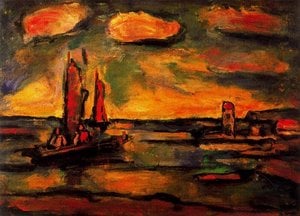
Georges Rouault’s "Christ au Faubourg" captures urban life with bold colors and dynamic brushstrokes, reflecting his Expressionist style—characterized by dark contours framing luminous color fields reminiscent of medieval artistry.
 Rozwiń treść
Biografia artysty
Georges Rouault (1871-1958) – francuski malarz ekspresjonista, znany z emocjonalnych obrazów religijnych i portretów marginalizowanych grup społecznych. Jego styl inspirowany witrażami.
Ręcznie malowana reprodukcja olejowa
Ręcznie malowany obraz olejny na płótnie, wykonany na zamówienie przez naszych artystów w wybranym przez Ciebie wymiarze i oprawie. ( Przełącz na wydania drukowane Przejdź do wersji cyfrowej)
Ten utwór podlega ochronie prawem autorskim
Dzieło sztuki prezentowane na tej stronie podlega ochronie prawem autorskim, co oznacza, że nie mamy prawa do tworzenia ani sprzedaży jego identycznej reprodukcji. Ochrona ta jest egzekwowana na mocy umów międzynarodowych, takich jak Konwencja berneńska oraz przez przepisy prawa krajowego, w tym te określone w Prawo autorskie USA – Tytuł 17.
Jako pełną szacunku i legalną alternatywę oferujemy personalizowane, malowane ręcznie dzieła sztuki inspirowane oryginałem. Nasi wykwalifikowani i profesjonalni artyści starannie analizują styl, nastrój oraz artystyczną esencję pierwowzoru, aby stworzyć nowe, unikalne dzieło, które przywołuje te same emocje – pozostając jednocześnie w pełni oryginalną kreacją.
Metoda ta jest w pełni zgodna z przepisami prawa autorskiego, ponieważ nie polega na kopiowaniu ani powielaniu chronionego dzieła. Stanowi ona kreatywną reinterpretację – nowy obraz, który czerpie inspirację z oryginału, ale nie jest z nim tożsamy.
Więcej o tym obrazie
 Podgląd w skali 1:1
 Wyślij jako kartkę
 Udostępnij
 Szczegóły dzieła
 Przewodnik

 Pobierz obraz
 Podobne obiekty
 RTG
RTG Pokaz slajdów
 Pytania i odpowiedzi
 Statystyki
Zamów swój obraz w czterech prostych krokach
Nie spiesz się. Możesz zmienić każdą odpowiedź; cena w Twoim koszyku będzie aktualizowana po każdym wyborze.
1 Pierwszy z czterech kroków
Który rozmiar wybierasz?
Te rozmiary zachowują proporcje oryginalnego obrazu. Rysunek przedstawia wybrany przez Ciebie format na ścianie, nad dwumetrową sofą.
lub podaj własne wymiary
Wybierz spośród naszych standardowych rozmiarów, które zachowują oryginalne proporcje dzieła sztuki.

Wpisz wymaganą szerokość i wysokość, aby obraz pasował do Twojej ramy lub ściany. Ponieważ jest to dzieło malowane ręcznie, w przypadku rozmiaru o innych proporcjach artysta może domalować nieco więcej wokół obrazu lub przyciąć jego fragmenty — wybór należy do Ciebie. Przed rozpoczęciem pracy prześlemy Ci cyfrową wizualizację do zatwierdzenia. Obraz widoczny na tej stronie nie przedstawia rzeczywistego efektu — jedynie wizualizacja oddaje realny rezultat.
2 Drugi z czterech kroków
W jaki sposób przygotować dzieło: w formie tuby, na krosnach czy w ramie?
Poniższe ceny dotyczą rozmiaru wybranego w pierwszym kroku.
Wybierz krawędzie płótna naciągniętego na ramę
Wybierz ramę

Białe krawędzie zł1

rozmyte krawędzie zł1

Przedłużony zł1

P118B zł10

P118H zł10

P118W zł10

P438Z zł10

P508JH zł12

P508YH zł12

P805H zł10

P805Z zł10

P919BZ zł10

P919G zł10

P919XJ zł10

P959ZH zł10

P968JZ zł12

W106C zł8

W218G zł10

W218JH zł8

W218Y zł10

W307PJ zł10

W316G zł10

W316PJ zł8

W316Y zł10

W398PJ zł8

W4111J zł10

W500HY zł15

W500JH zł15

W692G zł12

W849H zł8

W940BG zł15

W953PJ zł8

H24-GOLD zł30

H24-SILVER zł30

H36-GOLD zł45

H36-SILVER zł45
W oprawie
Profil: . Wymiar całkowity w ramie: .
3 Trzeci z czterech kroków
Czy chcieliby Państwo wprowadzić jakieś zmiany w obrazie?
Większość osób odpowiada przecząco. Ponieważ każdy obraz jest tworzony ręcznie, nasz artysta może również dostosować go do Twoich potrzeb.
Po złożeniu zamówienia zespół ArtsDot.com skontaktuje się z klientem drogą mailową w celu uzyskania instrukcji i prześle podgląd projektu
4 Krok czwarty z czterech
Kilka opcji wykończenia
Wszystkie są opcjonalne. Wybrane już odpowiedzi nie wiążą się z żadnymi dodatkowymi kosztami.
Kto jest autorem?
Dostawa na całym świecie () w ciągu 3–4 tygodni zamiast standardowych 5 tygodni. (5 Listopad). Bez kompromisów w kwestii jakości.
Tabliczka informacyjna, jak w muzeum?
Szczegóły grawerowanej brązowej tabliczki
This elegant plaque features the artist's name and the title of the artwork, finely engraved for a timeless presentation.
It is made from bronze with a refined, elegant finish. The text is precisely laser-engraved for a sharp and permanent result. Measuring 9x2 cm, the plaque is compact yet easy to read. It's built to be durable and scratch-resistant, offering a professional, museum-quality look. Mounting is simple thanks to the included adhesive backing.
Szczegóły przezroczystej tabliczki akrylowej
The plaque includes essential engraved details such as the artist's name, the title of the artwork, the date it was created, the type of media used-like oil on canvas or watercolor-a brief description of the piece, and a QR code that links to the complete artwork information.
It is crafted from clear acrylic, offering a sleek, modern appearance. The text is UV-engraved in black to ensure strong visual contrast. With a size of 10x15 cm, it ensures optimal readability. It comes equipped with two metal hooks for secure wall mounting. The plaque is designed to be weather-resistant, making it suitable for various environments, and it includes interactive features that work seamlessly with smartphone scanning.
Szczegóły czarnej tabliczki akrylowej
This elegant plaque includes engraved information such as the artist's name, the title of the artwork, the date it was created, the type of media used (like oil on canvas or watercolor), a short description of the artwork, and a QR code for quick access to more information.
The plaque itself is made from refined black acrylic with a premium finish. The text is laser-engraved in white for high contrast and readability. Its size is 10x15 cm, designed to be easy to read. It comes with two metal hooks for professional mounting. The design is sleek and fits any interior style. It is also weather-resistant and durable, with built-in digital integration for mobile compatibility.
Werniks ochronny?
Kiedy potrzebujesz dostawy?
✓ Sprawdź i zamów
Twoje dzieło, dokładnie tak, jak zamówiłeś

Christ insulted
Technika reprodukcji
Wymiary reprodukcji
-

Wybitny mistrz artystyczny
Większa szczegółowość, finezja i dodatkowy czas na realizację
-

Opcje oprawy reprodukcji
-
-
W przypadku dzieł sztuki lub reprodukcji, których którykolwiek z boków przekracza 105 cm (około 41 cali), rama zostanie wysłana w formie zestawu do samodzielnego montażu. Metoda ta zapewnia bezpieczną dostawę i zapobiega uszkodzeniom podczas transportu.
Wymagany profesjonalny montaż – nie jest to produkt typu DIY.
Zestaw musi zostać złożony, a płótno naciągnięte przez doświadczonego profesjonalnego ramiarza, przy użyciu kleju do drewna (brak w zestawie), kleszczy do naciągania płótna oraz ścisków, które utrzymają krosna w równej pozycji podczas schnięcia kleju. Nieprawidłowy montaż lub nierównomierne napięcie płótna może trwale uszkodzić dzieło sztuki i nie podlega naszej gwarancji.
 W przypadku dzieł sztuki lub reprodukcji, których którykolwiek z boków przekracza 105 cm (około 41 cali), rama zostanie wysłana w formie zestawu do samodzielnego montażu. Metoda ta zapewnia bezpieczną dostawę i zapobiega uszkodzeniom podczas transportu.
W zestawie znajdują się wszystkie listwy z litego drewna, precyzyjnie docięte do wymiarów.
Montaż odbywa się przy użyciu dołączonych wkrętów oraz kleju do drewna do łączenia narożników, którego zestaw nie zawiera i który musi zostać dostarczony przez ramiarza.
Wymagane są profesjonalne narzędzia, których nie ma w zestawie: kleszcze do naciągania płótna (napinacz) oraz zaciski, które pozwolą utrzymać listwy w równej pozycji podczas schnięcia kleju.
Ważne:
Do połączenia narożników niezbędny jest klej do drewna, listwy należy unieruchomić za pomocą ścisków do momentu całkowitego wyschnięcia kleju, a naciągnięcie płótna na złożoną ramę wymaga użycia kleszczy do naciągania płótna. Żaden z tych elementów nie jest dołączony do zestawu. Przed zamówieniem tego rozmiaru zalecamy konsultację z doświadczonym ramiarzem.

Etykieta obiektu
-
-

Lakier ochronny
Lakier z połyskiem (pogłębia kolory, chroni przed światłem i wilgocią)
-

Personalizacja dzieła
Przykłady możliwości personalizacji: zastąp twarz zdjęciem klienta; dodaj zwierzę domowe (np. zamień kota na psa); umieść ukrytą wiadomość w tle; zmień krajobraz lub elementy tła.
-

Ekspresowa
Dostawa na cały świat () w ciągu 3–4 tygodni zamiast standardowych 5 tygodni. (5 Listopad). Bez kompromisów w kwestii jakości.
-
Przesyłka ekspresowa
Dostawa na cały świat () w ciągu 5 tygodni. (12 Listopad).
W cenie
Cena całkowita
zł 1021
Opcja ze szkłem jest dostępna wyłącznie w rozmiarach poniżej 110 cm
W każdym zamówieniu
- Bezpłatna ekspresowa wysyłka na cały świat
- Wysokiej jakości płótno lniane
- Pełne ubezpieczenie przesyłki
- Gwarancja zwrotu należności celnych i podatków importowych
- Gwarancja wiernego odwzorowania kolorów
- 100-dniowa polityka zwrotów (tylko w przypadku wad)
- Gwarancja 100% zwrotu pieniędzy
- Zniżka przy zakupie wielu sztuk


Georges Rouault’s “Christ Mocked by Soldiers”: A Study in Somber Expressionism
Georges Rouault's "Christ Mocked by Soldiers," completed in 1932, stands as a haunting testament to the artist’s unwavering commitment to portraying human suffering with unflinching honesty. Executed in oil on canvas, this monumental work exemplifies Rouault’s signature style—a deliberate rejection of Impressionistic luminosity in favor of a dense, textured surface imbued with profound emotional resonance. The painting depicts Jesus Christ being subjected to ridicule and humiliation by Roman soldiers following his arrest, capturing a pivotal moment from the Passion narrative with remarkable psychological depth.- Style: Rouault’s Expressionism distinguishes itself through its rejection of idealized beauty, prioritizing instead the depiction of raw emotion and psychological turmoil. Unlike Impressionists who sought to capture fleeting moments of light and color, Rouault aimed to convey inner states—despair, vulnerability, and defiance—through distorted forms and muted palettes.
- Technique: Rouault employed a technique known as “impasto,” applying thick layers of paint onto the canvas with visible brushstrokes. This method creates a tactile surface that amplifies the painting’s dramatic impact, mirroring the physicality of suffering and conveying a sense of immediacy. The dark contours framing luminous color fields—a stylistic hallmark inherited from medieval stained glass—further enhance the visual drama and underscore Rouault's artistic lineage.
Historical Context: Echoes of Suffering in Troubled Times
Painted during the turbulent years leading up to World War II, “Christ Mocked by Soldiers” reflects the pervasive anxieties surrounding societal upheaval and religious disillusionment prevalent in Europe at the time. Rouault’s artistic vision was deeply influenced by his Catholic faith—a conviction that fueled his empathy for marginalized individuals and drove him to confront uncomfortable truths about human existence. The painting's depiction of Christ’s humiliation resonates with biblical accounts of persecution and injustice, serving as a poignant commentary on the moral failings of humanity.- Biblical Narrative: Rouault meticulously renders the scene from Matthew 27:39-41, capturing Jesus’s agonizing gaze as he is mocked by Roman soldiers before his crucifixion. The artist's careful attention to detail—the soldier’s posture, Christ’s expression—aims to evoke a visceral response in the viewer, prompting contemplation on themes of faith, betrayal, and divine compassion.
- Symbolism: Rouault utilizes symbolic imagery to amplify the painting’s emotional impact. The dark contours surrounding the luminous color fields represent the oppressive forces of evil that threaten to engulf Christ's spirit—a visual metaphor for the struggle between good and evil inherent in human experience.
Emotional Impact: A Profound Meditation on Human Vulnerability
“Christ Mocked by Soldiers” transcends mere representation, transforming into a profound meditation on human vulnerability and spiritual resilience. Rouault’s masterful manipulation of color and texture compels the viewer to confront uncomfortable emotions—fear, despair, compassion—eliciting a visceral response that lingers long after viewing. The painting's somber palette—dominated by shades of brown, gray, and ochre—creates an atmosphere of oppressive gloom, mirroring Christ’s psychological torment. Yet, amidst this darkness lies a glimmer of hope—a subtle suggestion of divine grace—affirming the enduring power of faith in the face of adversity.Conclusion: Rouault's Legacy – An Uncompromising Voice for Humanity
Georges Rouault’s “Christ Mocked by Soldiers” remains an enduring masterpiece of Expressionist art, securing its place as one of the artist’s most poignant explorations of human suffering and spiritual conviction. Its uncompromising honesty—coupled with masterful technique and evocative symbolism—continues to inspire artists and captivate audiences alike, cementing Rouault's legacy as a champion of empathy and a fearless interrogator of existential questions.Pytania i odpowiedzi
Jaki nastrój oddaje styl Expressionism w dziele „Christ insulted”?
Melancholic emocja dzieła „Christ insulted” współgra z jego stylem Expressionism.
Co wyjaśnia sytuację prawną dotyczącą praw autorskich do „Christ insulted” – Georges Rouault?
Status praw autorskich do dzieła „Christ insulted” – nadal objęte ochroną prawa autorskiego – wynika z faktu, że artysta zmarł w 1958.
Czy kolory dzieła "Christ insulted" są intensywne czy stonowane?
Kolorystyka dzieła "Christ insulted" charakteryzuje się nasyceniem na poziomie Balanced Soft oraz intensywnością wynoszącą Balanced.
Podobne dzieła




Georges Rouault
1871 - 1958, Francja
Biografia artysty
A Life Forged in Parisian Shadows
Georges Rouault, born in Paris in 1871 amidst the turmoil of the Commune, lived a life deeply etched by hardship and spiritual seeking. His earliest years were spent literally in the shadows – his family sought refuge in a cellar during the city’s bombardment, an event that would resonate throughout his artistic vision. This humble beginning, coupled with a devoutly Catholic upbringing fostered by his mother, instilled within him a profound empathy for the marginalized and suffering, themes that would become central to his oeuvre. He wasn't destined for formal academic privilege; instead, he embarked on an apprenticeship as a glass painter at fourteen, a craft that profoundly shaped his aesthetic sensibilities. The vibrant hues and bold outlines inherent in stained glass became foundational to his mature style – a characteristic use of dark contours framing luminous color fields, reminiscent of medieval artistry. This early immersion wasn’t merely technical; it was spiritual, imbuing him with an appreciation for the narrative power of light and image. He simultaneously pursued formal training at the École des Beaux-Arts, where he became a devoted pupil of Gustave Moreau, whose Symbolist leanings further nurtured Rouault's inclination towards emotionally charged subject matter.Early Influences and Artistic Beginnings
Rouault’s artistic journey began not with grand ambitions but with a practical apprenticeship in the stained-glass workshops of Paris. This early experience—working with light, color, and intricate designs—laid the groundwork for his distinctive style. The meticulous craftsmanship required to create these luminous panels instilled in him a deep respect for detail and a sensitivity to texture. Simultaneously, he attended evening classes at the École des Beaux-Arts, where he studied under Gustave Moreau, whose influence was particularly profound. Moreau’s Symbolist approach—emphasizing emotional expression over strict realism—resonated deeply with Rouault's nascent artistic sensibilities. Moreau’s studio became a crucible of experimentation, exposing Rouault to a diverse range of artists and ideas, including those of Paul Gauguin and Vincent van Gogh. This exposure broadened his horizons and challenged traditional notions of beauty. Crucially, Moreau encouraged Rouault to explore the darker aspects of human experience, a theme that would become increasingly prominent in his work. Early works show a symbolism in the use of color that probably reflects Moreau's influence, and when Moreau died in 1898, Rouault was appointed curator of the Moreau Museum in Paris.From Fauvism’s Embrace to Expressionist Depths
Rouault’s artistic journey wasn’t one of immediate recognition or easy categorization. While initially influenced by the Symbolists, he found himself drawn into the orbit of the burgeoning Fauvist movement in the early 20th century. He befriended artists like Henri Matisse and Albert Marquet, participating in exhibitions alongside them, yet his temperament always steered him toward a more somber and introspective path than the purely aesthetic explorations of his contemporaries. The vibrant colors of Fauvism served as a springboard, but Rouault quickly transcended its limitations, infusing his canvases with an emotional intensity that foreshadowed Expressionism. He began to focus on subjects often overlooked or deemed unworthy of artistic attention: prostitutes, clowns, judges, and prisoners. These weren’t merely depictions of societal outcasts; they were poignant allegories for the human condition – explorations of sin, redemption, and the inherent dignity within suffering. His characterizations, often grotesque yet deeply empathetic, resonated with a growing sense of unease and alienation in modern society, influencing a generation of Expressionist painters who sought to convey inner turmoil through distorted forms and jarring colors.A Moral Compass in Canvas and Print
The First World War proved to be a pivotal moment for Rouault, solidifying his commitment to religious faith and deepening the moral weight of his art. He largely withdrew from public exhibitions during this period, dedicating himself to intensely personal projects like the *Miserere* series – a monumental cycle of etchings depicting scenes of human suffering inspired by the Psalms. These works, created over more than a decade, are arguably his most powerful and enduring achievement. The plates themselves were reworked repeatedly, reflecting Rouault’s relentless pursuit of emotional truth and spiritual understanding. He wasn't interested in mere representation; he sought to capture the raw essence of human experience – the anguish, the despair, but also the glimmer of hope that persists even in the darkest corners of existence. Beyond *Miserere*, his paintings continued to explore similar themes, often featuring figures isolated and burdened by their circumstances, yet imbued with a quiet dignity. His depictions of clowns, for example, weren’t simply comedic; they were tragic figures embodying the absurdity and loneliness of life.Legacy and Lasting Impact
Georges Rouault's artistic legacy extends far beyond his technical innovations or stylistic affiliations. He was a profoundly spiritual artist who used his craft as a means of moral inquiry and empathetic connection. His work challenged conventional notions of beauty, embracing ugliness and suffering as integral aspects of the human experience. He rejected the purely decorative in favor of art that confronted viewers with uncomfortable truths about themselves and their society. In later life, he received commissions for religious works, including designs for Sergei Diaghilev’s ballet *The Prodigal Son*, further cementing his reputation as a uniquely devout artist. A curious and perhaps tragic footnote to his career is the fact that, late in life, Rouault destroyed approximately 300 of his paintings – an act driven by self-criticism and a relentless pursuit of artistic perfection. This dramatic gesture underscores the intensity of his creative process and his unwavering commitment to expressing his inner vision. Rouault died in Paris in 1958, leaving behind a body of work that continues to resonate with audiences today—a testament to the enduring power of art born from compassion, faith, and an unflinching gaze upon the complexities of the human heart.Powiązane artykuły

10 Arcydzieł Ekspresjonizmu Niemieckiego, Które Zdefiniowały Epokę | ArtsDot
Poznaj 10 arcydzieł ekspresjonizmu niemieckiego – od Kirchnera po Muncha. Odkryj historię, emocje i techniki tych ikonicznych dzieł sztuki. Reprodukcje najwyższej jakości na ArtsDot.com. Eksploruj kolekcję online!

High Medieval Art: 10 Masterpieces That Shaped an Era | ArtsDot
Journey through High Medieval Art! Explore 10 iconic masterpieces – from Giotto's frescoes to stunning Gothic cathedrals. Discover the stories behind these timeless paintings, sculptures & illuminated manuscripts. Find museum-quality art reproductions at ArtsDot.com.

Georges Braque: 25 Arcydzieł Kubizmu i Nowoczesnej Sztuki | ArtsDot.com
Odkryj 25 arcydzieł Georges'a Braque – pioniera kubizmu i malarstwa nowoczesnego. Poznaj historię, techniki i inspiracje za jego najsłynniejszymi obrazami. Reprodukcje najwyższej jakości na ArtsDot.com! Eksploruj pełną kolekcję online.