

 Wyślij jako kartkę
 Udostępnij
 Szczegóły dzieła

 Pobierz
 Podobne obiekty
 Pokaz slajdów
Untitled


 Rozwiń treść
Kup wysokiej rozdzielczości, ulepszony obraz cyfrowy o znacznie wyższej jakości niż podgląd online.
Każdy plik jest starannie przygotowywany przez naszych specjalistów przy użyciu zaawansowanych narzędzi oraz profesjonalnej, ręcznej retuszy. Dbamy o to, aby każdy obraz cechował się wyjątkową ostrością, precyzyjnym odwzorowaniem kolorów i subtelnymi detalami.
Ostateczny plik dostarczany jest drogą mailową w ciągu 72 godzin, zoptymalizowany do natychmiastowego wykorzystania w profesjonalnych zastosowaniach redakcyjnych i poligraficznych. To ta sama jakość, której ufają czołowe studia projektowe, wydawnictwa oraz galerie sztuki.
Obraz cyfrowy
Pobierz plik o wysokiej rozdzielczości do osobistego wyświetlania, druku oraz projektów kreatywnych. ( Zamów wydruk Przełącz na obraz ręcznie malowany)
W każdym zamówieniu na obraz cyfrowy znajduje się
Profesjonalna dostawa cyfrowa z gwarancją
Wybierając ArtsDot.com, nie otrzymujesz jedynie obrazu – otrzymujesz profesjonalnie udoskonalone cyfrowe dzieło sztuki, stworzone z najwyższą precyzją i objęte gwarancją satysfakcji. Oto wszystko, co automatycznie dołączane jest do Twojego zamówienia:

Błyskawiczna wysyłka e-mailowa
Plik z obrazem cyfrowym w wysokiej rozdzielczości zostanie przesłany na Twój adres e-mail w ciągu 72 godzin od złożenia zamówienia – gotowy do natychmiastowego użycia.

Plik cyfrowy wzbogacony przez AI
Twoja grafika została profesjonalnie zoptymalizowana przy użyciu zaawansowanych narzędzi AI oraz ręcznej edycji, co zapewnia maksymalną szczegółowość, klarowność i wierność kolorów.

Dożywotnia darmowa ponowna dostawa
Przypadkowo usunąłeś lub zgubiłeś swój plik? Bez obaw – prześlemy go Tobie ponownie w dowolnym momencie, bez żadnych opłat.

Bez opłat importowych – zawsze
Ciesz się swoją sztuką natychmiast, bez żadnych opłat celnych, należności ani kosztów dostawy – pliki cyfrowe są zawsze wolne od podatku.

Gwarancja wierności kolorów
Dzięki zastosowaniu profesjonalnych narzędzi i procesów zarządzania barwą zapewniamy, że Twoje cyfrowe zdjęcie odzwierciedla oryginalne kolory tak wiernie, jak to tylko możliwe.

60-dniowa gwarancja satysfakcji
Jeśli nie będziesz zadowolony ze swojego cyfrowego obrazu, dokonamy jego poprawki lub zwrócimy 100% kosztów w ciągu 60 dni – bez żadnych pytań.

100% Gwarancja zwrotu pieniędzy
Nie jesteś zadowolony? Otrzymaj pełny zwrot kosztów w ciągu 60 dni od otrzymania pliku cyfrowego – bez zbędnych pytań.

Rabaty przy zamówieniach hurtowych
Kup 3 obrazy, oszczędź 10% - Kup 5, oszczędź 15% - Kup 10+, oszczędź 20%. Idealne do projektów kreatywnych, galerii i agencji.
Opis kolekcjonerski
The Geometry of Emotion: A Study in Red
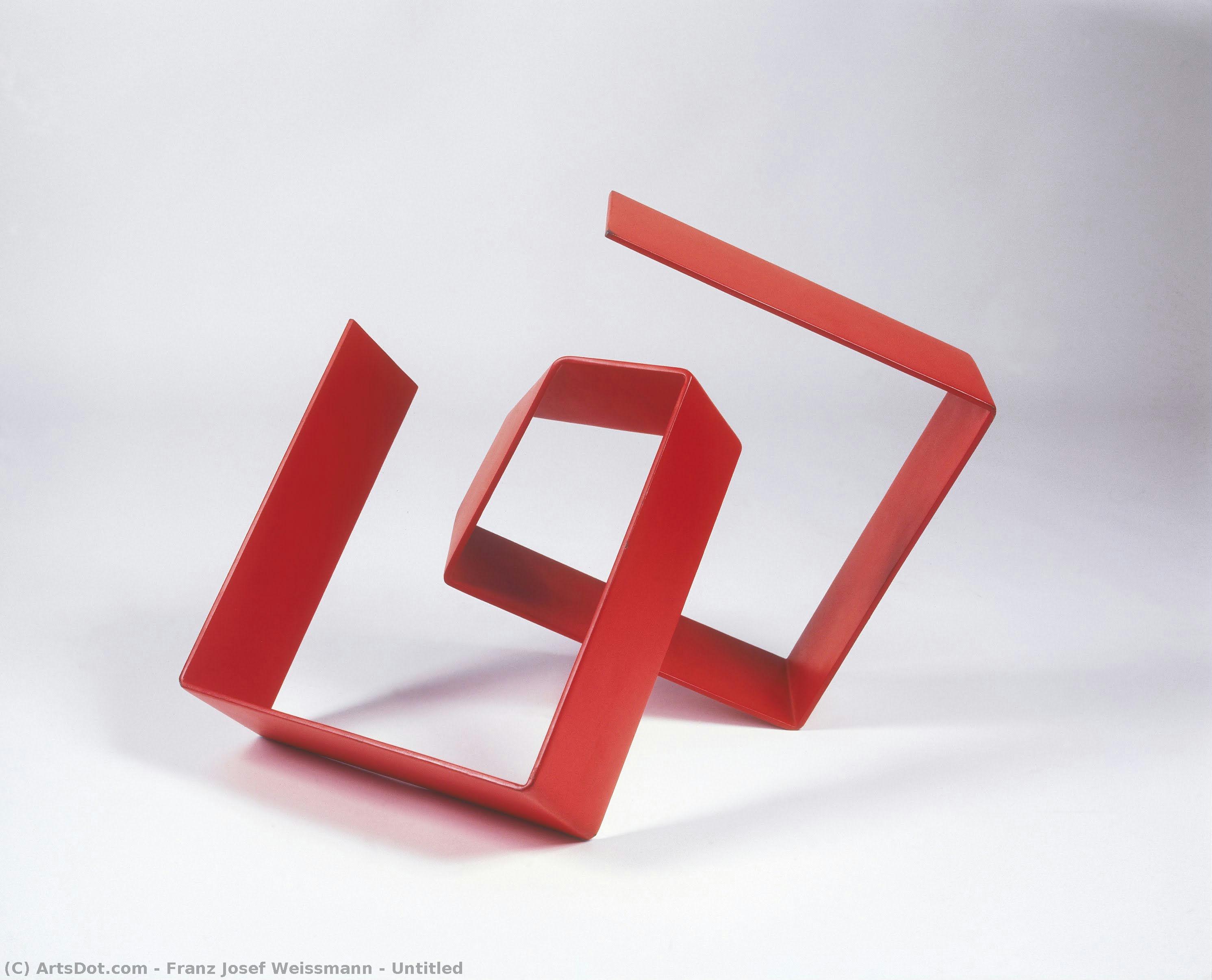
In the realm of geometric abstraction, few works command attention with such visceral intensity as this untitled masterpiece by Franz Josef Weissmann. Created in 1986, this sculpture serves as a profound meditation on form, space, and the rhythmic interplay of angles. At first glance, the eye is immediately arrested by the vibrant, saturated red that defines its surface—a color that pulses with life and energy against a stark, minimalist backdrop. The piece presents an intricate dance of curves and sharp edges, suggesting a deconstructed cube that has been liberated from its rigid, traditional constraints. It is not merely an object to be viewed, but a dynamic presence that seems to shift and evolve as the viewer moves around it.
The sculpture’s power lies in its ability to transform mathematical precision into something deeply organic and emotive. While the structure is rooted in the logic of constructivism, there is a fluid, almost biological quality to its silhouette. The way the light catches the various planes creates a shifting landscape of shadows, adding a layer of depth that invites prolonged contemplation. For the collector or interior designer, this work offers a sophisticated focal point; it possesses the rare ability to anchor a room with its bold color while simultaneously providing an intellectual lightness through its open, airy composition.
A Legacy of Neo-Concrete Innovation
To understand the soul of this work, one must look toward the historical currents that shaped Weissmann’s vision. As a pioneer of the Neo-Concrete movement in Brazil, Weissmann sought to move beyond the cold, purely mathematical nature of traditional abstraction. He aimed to infuse geometric forms with subjectivity and sensory experience. This 1986 creation is a testament to that lifelong pursuit. It reflects his mastery over material and space, demonstrating how a seemingly simple shape can be manipulated to evoke complex psychological responses.
The technique displayed here speaks to a profound command of structural balance. The artist utilizes the interplay of negative and positive space to create a sense of motion within a static medium. Every angle is deliberate, every curve calculated to guide the eye through a continuous loop of discovery. For those seeking to incorporate high-quality reproductions into a curated collection, this piece represents more than just decoration; it is an invitation to engage with the history of Brazilian modernism and the enduring beauty of structural harmony.
Whether placed in a contemporary gallery setting or as a striking centerpiece in a luxury residential interior, this reproduction captures the essence of Weissmann’s genius. It brings the bold, transformative spirit of 20th-century abstraction into the modern home, offering an eternal dialogue between the precision of art and the warmth of human emotion.
Podobne dzieła


Biografia artysty
Franz Josef Weissmann: Pioneer of Geometric Abstraction
Franz Josef Weissmann (1911-2005) stands as a pivotal figure in Brazilian art history, recognized primarily for his groundbreaking contributions to Neo-Concrete sculpture and his unwavering dedication to exploring the fundamental principles of geometric abstraction. Born in Austria amidst the Austro-Hungarian Empire, Weissmann’s early life was marked by emigration to Brazil at the age of eleven, shaping his artistic trajectory and fostering a unique perspective on artistic innovation. His formative years instilled within him a profound appreciation for both tradition and experimentation—a duality that would become central to his distinctive style.- Early Life & Education: Weissmann’s formal education began in Knittelfeld, Austria, where he honed his skills in architecture, painting, drawing, and sculpture at the National School of Fine Arts in Rio de Janeiro between 1939 and 1941. Further refining his craft under August Zamoyski's tutelage from 1942 to 1944—studying drawing, sculpture, modeling, and foundry techniques—established a solid foundation for his artistic pursuits.
- The Rise of Neo-Concrete: Weissmann’s involvement with Grupo Frente in 1955 signaled the emergence of Neo-Concrete art in Brazil. This movement championed a radical departure from representational painting, advocating instead for pure geometric forms—primarily cubes and squares—as vehicles for conveying artistic ideas. Weissmann's leadership within Grupo Frente solidified his position as one of the foremost proponents of this influential aesthetic.
- Notable Works & Exhibitions: Weissmann’s sculptural output is characterized by meticulous attention to detail and a masterful manipulation of materials, notably zinc and aluminum sheets hammered into textured surfaces. His seminal piece, “Composition with Semicercles,” currently resides in the Syracuse University Art Collection, exemplifying his commitment to exploring spatial relationships and textural variations—elements that define his artistic vision. Weissmann’s sculptures have graced galleries across Europe and Latin America, including São Jorge Gallery in Madrid and Grupo B Gallery in Rio de Janeiro, garnering critical acclaim and cementing his legacy as a visionary sculptor.
Recognition & Awards
Weissmann's contributions to the artistic landscape were acknowledged with prestigious accolades, including the Award for Best Sculptor by the Brazilian Association of Art Critics in 1970. Furthermore, he participated in the International Outdoor Sculpture Biennial in Antwerp (Belgium) and the Venice Biennale—events that showcased his work on a global stage and solidified his reputation as an internationally respected artist. These honors underscored not only his artistic prowess but also his commitment to fostering dialogue between art and society.Legacy & Influence
Franz Josef Weissmann’s enduring impact on Brazilian sculpture is undeniable. His pioneering exploration of geometric abstraction continues to inspire artists today, demonstrating the transformative power of conceptual rigor combined with masterful craftsmanship. He remains a symbol of artistic courage—a testament to the importance of challenging conventions and pursuing innovative approaches to visual expression. Weissmann's legacy extends beyond his individual artworks; he established Neo-Concrete as an important movement in Brazilian art history.
franz josef weissmann
1911 - 2005 , Brazil
Krótka nota
- Artistic Movement Or Style: Neo-Concrete
- Artists Or Movements Influenced By This Artist: ['Expressionism']
- Artists Who Influenced This Artist: ['August Zamoyski']
- Date Of Birth: September 15, 1911
- Date Of Death: 2005
- Full Name: Franz Josef Weissmann
- Nationality: Brazilian
- Notable Artworks:
- Composition with semicircles
- Amassados series
- Place Of Birth: Brasília, Brazil

