


Obraz dostosowuje się do Twoich wyborów: , .
Opis obiektu
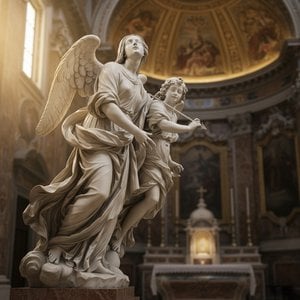
Admire François Duquesnoy's monumental marble statue of Saint Andrew at St Peter’s Basilica – a masterpiece of Baroque sculpture embodying faith and artistic grandeur.
 Rozwiń treść
Biografia artysty
François Duquesnoy (1597-1643): Flemish Baroque sculptor famed for his idealized Roman works, contrasting with Bernini's drama. Explore his art!
Ręcznie malowana reprodukcja olejowa
Ręcznie malowany obraz olejny na płótnie, wykonany na zamówienie przez naszych artystów w wybranym przez Ciebie wymiarze i oprawie. ( Przełącz na wydania drukowane Przejdź do wersji cyfrowej)
Więcej o tym obrazie
 Podgląd w skali 1:1
 Wyślij jako kartkę
 Udostępnij
 Szczegóły dzieła
 Przewodnik

 Pobierz obraz
 Podobne obiekty
 RTG
RTG Pokaz slajdów
 Pytania i odpowiedzi
 Statystyki
Zamów swój obraz w czterech prostych krokach
Nie spiesz się. Możesz zmienić każdą odpowiedź; cena w Twoim koszyku będzie aktualizowana po każdym wyborze.
1 Pierwszy z czterech kroków
Który rozmiar wybierasz?
Te rozmiary zachowują proporcje oryginalnego obrazu. Rysunek przedstawia wybrany przez Ciebie format na ścianie, nad dwumetrową sofą.
lub podaj własne wymiary
Wybierz spośród naszych standardowych rozmiarów, które zachowują oryginalne proporcje dzieła sztuki.

Wpisz wymaganą szerokość i wysokość, aby obraz pasował do Twojej ramy lub ściany. Ponieważ jest to dzieło malowane ręcznie, w przypadku rozmiaru o innych proporcjach artysta może domalować nieco więcej wokół obrazu lub przyciąć jego fragmenty — wybór należy do Ciebie. Przed rozpoczęciem pracy prześlemy Ci cyfrową wizualizację do zatwierdzenia. Obraz widoczny na tej stronie nie przedstawia rzeczywistego efektu — jedynie wizualizacja oddaje realny rezultat.
2 Drugi z czterech kroków
W jaki sposób przygotować dzieło: w formie tuby, na krosnach czy w ramie?
Poniższe ceny dotyczą rozmiaru wybranego w pierwszym kroku.
Wybierz krawędzie płótna naciągniętego na ramę
Wybierz ramę

Białe krawędzie zł1

rozmyte krawędzie zł1

Przedłużony zł1

P118B zł10

P118H zł10

P118W zł10

P438Z zł10

P508JH zł12

P508YH zł12

P805H zł10

P805Z zł10

P919BZ zł10

P919G zł10

P919XJ zł10

P959ZH zł10

P968JZ zł12

W106C zł8

W218G zł10

W218JH zł8

W218Y zł10

W307PJ zł10

W316G zł10

W316PJ zł8

W316Y zł10

W398PJ zł8

W4111J zł10

W500HY zł15

W500JH zł15

W692G zł12

W849H zł8

W940BG zł15

W953PJ zł8

H24-GOLD zł30

H24-SILVER zł30

H36-GOLD zł45

H36-SILVER zł45
W oprawie
Profil: . Wymiar całkowity w ramie: .
3 Trzeci z czterech kroków
Czy chcieliby Państwo wprowadzić jakieś zmiany w obrazie?
Większość osób odpowiada przecząco. Ponieważ każdy obraz jest tworzony ręcznie, nasz artysta może również dostosować go do Twoich potrzeb.
Po złożeniu zamówienia zespół ArtsDot.com skontaktuje się z klientem drogą mailową w celu uzyskania instrukcji i prześle podgląd projektu
4 Krok czwarty z czterech
Kilka opcji wykończenia
Wszystkie są opcjonalne. Wybrane już odpowiedzi nie wiążą się z żadnymi dodatkowymi kosztami.
Kto jest autorem?
Dostawa na całym świecie () w ciągu 3–4 tygodni zamiast standardowych 5 tygodni. (4 Listopad). Bez kompromisów w kwestii jakości.
Tabliczka informacyjna, jak w muzeum?
Szczegóły grawerowanej brązowej tabliczki
This elegant plaque features the artist's name and the title of the artwork, finely engraved for a timeless presentation.
It is made from bronze with a refined, elegant finish. The text is precisely laser-engraved for a sharp and permanent result. Measuring 9x2 cm, the plaque is compact yet easy to read. It's built to be durable and scratch-resistant, offering a professional, museum-quality look. Mounting is simple thanks to the included adhesive backing.
Szczegóły przezroczystej tabliczki akrylowej
The plaque includes essential engraved details such as the artist's name, the title of the artwork, the date it was created, the type of media used-like oil on canvas or watercolor-a brief description of the piece, and a QR code that links to the complete artwork information.
It is crafted from clear acrylic, offering a sleek, modern appearance. The text is UV-engraved in black to ensure strong visual contrast. With a size of 10x15 cm, it ensures optimal readability. It comes equipped with two metal hooks for secure wall mounting. The plaque is designed to be weather-resistant, making it suitable for various environments, and it includes interactive features that work seamlessly with smartphone scanning.
Szczegóły czarnej tabliczki akrylowej
This elegant plaque includes engraved information such as the artist's name, the title of the artwork, the date it was created, the type of media used (like oil on canvas or watercolor), a short description of the artwork, and a QR code for quick access to more information.
The plaque itself is made from refined black acrylic with a premium finish. The text is laser-engraved in white for high contrast and readability. Its size is 10x15 cm, designed to be easy to read. It comes with two metal hooks for professional mounting. The design is sleek and fits any interior style. It is also weather-resistant and durable, with built-in digital integration for mobile compatibility.
Werniks ochronny?
Kiedy potrzebujesz dostawy?
✓ Sprawdź i zamów
Twoje dzieło, dokładnie tak, jak zamówiłeś

St Andrew
Technika reprodukcji
Wymiary reprodukcji
-

Wybitny mistrz artystyczny
Większa szczegółowość, finezja i dodatkowy czas na realizację
-

Opcje oprawy reprodukcji
-
-
W przypadku dzieł sztuki lub reprodukcji, których którykolwiek z boków przekracza 105 cm (około 41 cali), rama zostanie wysłana w formie zestawu do samodzielnego montażu. Metoda ta zapewnia bezpieczną dostawę i zapobiega uszkodzeniom podczas transportu.
Wymagany profesjonalny montaż – nie jest to produkt typu DIY.
Zestaw musi zostać złożony, a płótno naciągnięte przez doświadczonego profesjonalnego ramiarza, przy użyciu kleju do drewna (brak w zestawie), kleszczy do naciągania płótna oraz ścisków, które utrzymają krosna w równej pozycji podczas schnięcia kleju. Nieprawidłowy montaż lub nierównomierne napięcie płótna może trwale uszkodzić dzieło sztuki i nie podlega naszej gwarancji.
 W przypadku dzieł sztuki lub reprodukcji, których którykolwiek z boków przekracza 105 cm (około 41 cali), rama zostanie wysłana w formie zestawu do samodzielnego montażu. Metoda ta zapewnia bezpieczną dostawę i zapobiega uszkodzeniom podczas transportu.
W zestawie znajdują się wszystkie listwy z litego drewna, precyzyjnie docięte do wymiarów.
Montaż odbywa się przy użyciu dołączonych wkrętów oraz kleju do drewna do łączenia narożników, którego zestaw nie zawiera i który musi zostać dostarczony przez ramiarza.
Wymagane są profesjonalne narzędzia, których nie ma w zestawie: kleszcze do naciągania płótna (napinacz) oraz zaciski, które pozwolą utrzymać listwy w równej pozycji podczas schnięcia kleju.
Ważne:
Do połączenia narożników niezbędny jest klej do drewna, listwy należy unieruchomić za pomocą ścisków do momentu całkowitego wyschnięcia kleju, a naciągnięcie płótna na złożoną ramę wymaga użycia kleszczy do naciągania płótna. Żaden z tych elementów nie jest dołączony do zestawu. Przed zamówieniem tego rozmiaru zalecamy konsultację z doświadczonym ramiarzem.

Etykieta obiektu
-
-

Lakier ochronny
Lakier z połyskiem (pogłębia kolory, chroni przed światłem i wilgocią)
-

Personalizacja dzieła
Przykłady możliwości personalizacji: zastąp twarz zdjęciem klienta; dodaj zwierzę domowe (np. zamień kota na psa); umieść ukrytą wiadomość w tle; zmień krajobraz lub elementy tła.
-

Ekspresowa
Dostawa na cały świat () w ciągu 3–4 tygodni zamiast standardowych 5 tygodni. (4 Listopad). Bez kompromisów w kwestii jakości.
-
Przesyłka ekspresowa
Dostawa na cały świat () w ciągu 5 tygodni. (11 Listopad).
W cenie
Cena całkowita
zł 1028
Opcja ze szkłem jest dostępna wyłącznie w rozmiarach poniżej 110 cm
W każdym zamówieniu
- Bezpłatna ekspresowa wysyłka na cały świat
- Wysokiej jakości płótno lniane
- Pełne ubezpieczenie przesyłki
- Gwarancja zwrotu należności celnych i podatków importowych
- Gwarancja wiernego odwzorowania kolorów
- 100-dniowa polityka zwrotów (tylko w przypadku wad)
- Gwarancja 100% zwrotu pieniędzy
- Zniżka przy zakupie wielu sztuk


St Andrew by François Duquesnoy: A Monumental Testament of Baroque Faith
François Duquesnoy’s St Andrew stands as a cornerstone of Baroque sculpture in Rome, embodying the grandeur and spiritual fervor that defined the era. Created between 1629 and 1633, this colossal marble statue resides within St. Peter's Basilica, directly opposite Bernini’s equally imposing Saint Longinus – a deliberate pairing designed to showcase contrasting artistic approaches while simultaneously reinforcing the overarching theme of Christian martyrdom.
Commission, Context & Production: A Patron’s Vision
The genesis of this masterpiece lies in a commission from Cardinal Biscia, protector of the Baker's guild. Rumours persist about whether St Andrew preceded or followed St Susanna; however, scholarly consensus points to St Andrew being initiated first, fueled by documented evidence suggesting that Duquesnoy’s success with St Susanna secured him the patronage of the guild overseeing the creation of St. Maria di Loreto. The statue’s unveiling in 1629 captivated audiences and critics alike, prompting intense debate about stylistic nuances – a discussion mirroring the broader artistic tensions between Pietro da Cortona's classical idealism and Bernini’s theatrical dynamism.
François Duquesnoy’s Style: Classicism Revisited
Duquesnoy’s artistic vision firmly rooted in classicism, yet subtly infused with Baroque sensibilities. Unlike Bernini’s expressive gestures and dramatic drapery, Duquesnoy prioritized stillness and idealized form. He demonstrated a particular affinity for Alessandro Algardi's sculptures, prioritizing clarity of line and sculptural precision. His meticulous study of ancient sculpture—famously scaling Marcus Aurelius to grasp its construction—served as the bedrock of his technique.
Symbolism & Technique: Marble’s Silent Narrative
The statue’s composition is deliberately restrained, reflecting Duquesnoy's belief in conveying spiritual truth through serene beauty. Andrew’s posture – leaning over the crux decussata (cross) – powerfully symbolizes his unwavering faith and acceptance of martyrdom. The drapery, rendered with painstaking detail, contributes to the sculpture’s overall sense of solemn dignity. Crafted from Carrara marble—renowned for its purity and luminosity—the statue exemplifies Duquesnoy's mastery of material manipulation, achieving a remarkable balance between solidity and grace.
Legacy & Significance: A Reflection of Faith
St Andrew remains an enduring emblem of Christian devotion and artistic excellence. Its placement alongside Bernini’s St Longinus underscores the multifaceted nature of Baroque art—a movement characterized by both grandeur and profound contemplation. Today, reproductions of Duquesnoy's masterpiece continue to inspire admiration for its timeless beauty and intellectual depth, offering a captivating glimpse into the spiritual landscape of 17th-century Rome.
Pytania i odpowiedzi
Jaki poziom kontrastu prezentuje „St Andrew” – François Duquesnoy?
Kontrast jasności w dziele "St Andrew" wynosi Bold. Kontrast określa stopień zróżnicowania między obszarami jasnymi a ciemnymi.
Jaki kolor dominuje w kompozycji „St Andrew” – François Duquesnoy?
Dominującym kolorem dzieła „St Andrew” – François Duquesnoy jest Quinacridone Magenta (#6e5a52).
Jaki klimat wprowadziłaby do wnętrza reprodukcja „St Andrew” – François Duquesnoy?
Dzięki swojemu Dramatic nastrojowi, "St Andrew" idealnie sprawdzi się w Hotel Lobby.
Podobne dzieła


François Duquesnoy
1597 - 1643, Italy
Biografia artysty
François Duquesnoy: A Flemish Sculptor in Rome
- Born: Nettuno, Italy (1597)
- Died: 1643
Early Life and Training
- François duquesnoy, also known as Frans Duquesnoy, was born in Brussels. His father, Jérôme duquesnoy the elder, served as the court sculptor to Archduchess Isabella and Archduke Albert.
- Duquesnoy received his early training in Brussels, demonstrating talent that attracted the attention of the archduke.
- The archduke provided financial support for Duquesnoy to study in Rome, where he would spend the majority of his career.
- Upon arriving in Rome around 1618, Duquesnoy meticulously studied antique sculpture, famously climbing over the equestrian Marcus Aurelius to understand its construction.
Artistic Style and Influences
- Duquesnoy's style is characterized by a classicized approach, often contrasted with the more emotional and theatrical works of Gian Lorenzo Bernini.
- He showed greater affinity for Alessandro Algardi’s sculptures.
- Contemporary critics, like Giovanni Bellori, praised Duquesnoy's ability to restore contemporary sculpture to the quality of ancient Roman sculpture.
- Nicolas Poussin, a fellow expatriate artist, shared Duquesnoy's classicized and emotionally detached style, and they lived together in Rome for a time.
- Duquesnoy collaborated with Bernini on several projects, including designs for angels offering garlands at St. Peter’s Basilica.
Major Works and Achievements
- Santa Susanna (1629): Considered one of Duquesnoy's masterpieces, this sculpture depicts the saint with a balance of modesty and revealing draperies, earning high praise from Bellori. A marble copy resides in the Louvre.
- St. Andrew (1629-33): This larger-than-life statue adorns St. Peter’s Basilica, showcasing Duquesnoy's restrained style compared to Bernini and Francesco Mochi's contributions.
- Rondanini Faun: An early work demonstrating his skill in expanding upon antique torsos, though later criticized by neoclassicists. Now located at the British Museum.
- Apollo and Cupid: A notable sculpture showcasing mythological themes.
- Mercury: Another significant work displaying Duquesnoy's talent for depicting classical figures.
Historical Significance
- Duquesnoy played a crucial role in the Roman Baroque art scene, offering an alternative to Bernini’s dramatic style with his more restrained and classicized approach.
- Cardinal Richelieu offered him the position of royal sculptor in France, aiming to establish a royal academy of sculpture in Paris, though Duquesnoy died before he could take up the post.
- His work influenced subsequent generations of sculptors and contributed to the development of Neoclassical art.
- Bellori's high praise solidified his reputation as a restorer of classical ideals in sculpture.
Powiązane artykuły

Trwała Forma: Rzeźba w Historii – Technika i Rezonans Emocjonalny
Poznaj historię rzeźby od antyku do współczesności! Ekspercka analiza technik, stylów i emocjonalnego wpływu arcydzieł. Inspiracje dla kolekcjonerów i miłośników sztuki.

Trwałe Formy: Ewolucja Technik i Tematów w Rzeźbie Przez Wieki – Od Antyku do Renesansu
Poznaj fascynującą historię rzeźby od antyku do renesansu! Odkryj techniki, wybitnych artystów i wpływ na współczesną sztukę. Ekspercka analiza dla kolekcjonerów i miłośników.
Gian Lorenzo Bernini: Sculpting Baroque Emotion & the Roman Imagination
Explore the life & revolutionary art of Gian Lorenzo Bernini, the master sculptor of the Baroque era. Discover his iconic works like David and Ecstasy of Saint Teresa – a journey into Roman artistic genius.