


 Podgląd w skali 1:1
 Wyślij jako kartkę
 Udostępnij
 Szczegóły dzieła
 Przewodnik

 Pobierz obraz
 Podobne obiekty
 RTG
RTG Pokaz slajdów
 Q&A
Q&A Statystyki
Nudy w Lesie
 Obraz olejny na płótnie
- Sztuka ścienna
- Cubist Geometric Abstraction
 1910
1910- Modernizm
 120.0 x 170.0 cm
 Rozwiń treść
Otrzymaj plik gotowy do druku, którego jakość znacznie przewyższa podgląd internetowy. Każdy sprzedawany przez nas obraz cyfrowy pochodzi z wysokorozdzielczego pliku wzorcowego w naszej bazie — zazwyczaj o szerokości od 5 000 do 15 000 pikseli — dzięki czemu możesz drukować w dużym formacie, mocno kadrować lub z pełnym przekonaniem odwzorowywać najdrobniejsze detale.
Żaden plik nie opuszcza naszego studia bez odpowiedniej obróbki. Ekspert ds. cyfrowej edycji sprawdza zgodność kolorów z oryginałem i w razie potrzeby je koryguje, a następnie za pomocą profesjonalnych narzędzi do retuszu poprawia ostrość oraz szczegółowość — zawsze zachowując wierność pociągnięciom pędzla i stylowi artysty. Rezultatem jest obraz, który wygląda jak prawdziwe dzieło, a nie jak przefiltrowany skan.
Zatwierdzasz przed finalizacją zamówienia: nasz ekspert prześle obraz drogą mailową w ciągu 72 godzin do Twojego wglądu. Nie jesteś zadowolony? Poproś o poprawki lub korektę, bądź o zwrot kosztów, jeśli jakość nie spełnia oczekiwań.
To jakość, na której polegają wydawcy, studia projektowe, galerie oraz drukarnie.
Obraz cyfrowy
Pobierz plik o wysokiej rozdzielczości do osobistego użytku, druku oraz projektów kreatywnych. ( Przełącz na wydania drukowane Zamów ręcznie malowaną reprodukcję)
W każdym zamówieniu na obraz cyfrowy znajduje się
Profesjonalna dostawa cyfrowa z gwarancją
Wybierając ArtsDot.com, nie otrzymujesz jedynie obrazu – otrzymujesz profesjonalnie udoskonalone cyfrowe dzieło sztuki, stworzone z najwyższą precyzją i objęte gwarancją satysfakcji. Oto wszystko, co automatycznie dołączane jest do Twojego zamówienia:

Błyskawiczna wysyłka e-mailowa
Plik z obrazem cyfrowym w wysokiej rozdzielczości zostanie przesłany na Twój adres e-mail w ciągu 72 godzin od złożenia zamówienia – gotowy do natychmiastowego użycia.

Plik cyfrowy wzbogacony przez AI
Twoja grafika została profesjonalnie zoptymalizowana przy użyciu zaawansowanych narzędzi AI oraz ręcznej edycji, co zapewnia maksymalną szczegółowość, klarowność i wierność kolorów.

Darmowe ponowne przesyłki dożywotnio
Przypadkowo usunąłeś lub zgubiłeś swój plik? Bez obaw – prześlemy go Tobie ponownie w dowolnym momencie, bez żadnych opłat.

Bez opłat importowych – zawsze
Ciesz się swoją sztuką natychmiast, bez żadnych opłat celnych, należności ani kosztów dostawy – pliki cyfrowe są zawsze wolne od podatku.

Gwarancja wierności kolorów
Dzięki zastosowaniu profesjonalnych narzędzi i procesów zarządzania barwą zapewniamy, że Twoje cyfrowe zdjęcie odzwierciedla oryginalne kolory tak wiernie, jak to tylko możliwe.

Gwarancja satysfakcji przez 100 dni
Jeśli nie będziesz zadowolony ze swojego cyfrowego obrazu, dokonamy jego poprawki lub zwrócimy 100% kosztów w ciągu 100 dni – bez zbędnych pytań.

100% Gwarancja zwrotu pieniędzy
Nie jesteś zadowolony? Otrzymaj pełny zwrot kosztów w ciągu 100 dni od otrzymania pliku cyfrowego – bez zbędnych pytań.

Rabaty przy zamówieniach hurtowych
Kup 3 obrazy, oszczędź 10% - Kup 5, oszczędź 15% - Kup 10+, oszczędź 20%. Idealne do projektów kreatywnych, galerii i agencji.
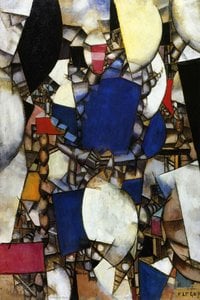
Rewolucyjna wizja: zgłębiając Akty w lesie LÉGERA
Dzieło Akty w lesie (1909-1910) autorstwa Fernanda Légera stanowi kluczowy punkt zwrotny, wyznaczający istotny etap w rozwoju kubizmu. To coś więcej niż tylko przedstawienie postaci pośród drzew; to śmiała dekonstrukcja formy i perspektywy, która od ponad wieku nie przestaje fascynować widzów. W tym malarstwie nie chodzi o to, co zostało przedstawione, lecz o sposób prezentacji – to radykalne podejście, które na nowo zdefiniowało granice sztuki nowoczesnej.
Temat i kompozycja: człowiek spleciony z naturą
Léger prezentuje pofragmentowane ludzkie formy, nierozerwalnie związane z organicznymi kształtami leśnego krajobrazu. Kompozycja ta nie dąży do naturalistycznej reprezentacji; zamiast tego zarówno postacie, jak i roślinność zostają rozbite na geometryczne bryły – przede wszystkim cylindry – tworząc niemal architektoniczną strukturę. Ciała nie są oddane w sposób anatomiczny, lecz jako zbiory zazębiających się kształtów, które sugerują formę, zamiast definiować ją wprost. Ta fragmentacja rzuca wyzwanie tradycyjnej perspektywie, zapraszając oko do wędrówki przez złożony wizualny gobelin, w którym pierwszy plan i tło subtelnie się przenikają. Interakcja między ludzką postacią a światem przyrody nie jest harmonijna w konwencjonalnym sensie; to dynamiczne napięcie odzwierciedlające nowoczesną wrażliwość.
Styl i technika: narodziny „tubizmu”
Akty w lesie stanowią doskonały przykład unikalnego wkładu Légera w kubizm, nurt często nazywany „tubizmem”. Choć dzieli on wspólny grunt z analitycznym kubizmem Picassa i Braque’a, Léger odchodzi od nich, nadając priorytet formom cylindrycznym i silnememu poczuciu trójwymiarowości. Ten nacisk na objętość – owe „tuby”, które definiują jego styl – zapowiada późniejsze poszukiwania artysty związane z estetyką maszynową. Obraz został wykonany farbami olejnymi z mistrzowską kontrolą; nachodzące na siebie geometryczne elementy tworzą głębię i teksturę. Powściągliwa paleta Légera, zdominowana przez chłodne błękity, szarości i biele, dodatkowo podkreśla formę kosztem koloru, nadając dziełu kontemplacyjny, niemal monochromatyczny nastrój. To celowe ograniczenie barw skupia uwagę na zachodzących tu innowacjach strukturalnych.
Kontekst historyczny: moment artystycznego przełomu
Stworzone w okresie intensywnych eksperymentów artystycznych na początku XX wieku, Akty w lesie odzwierciedlają rewolucyjnego ducha kubizmu. Wyłaniając się jako bezpośrednie wyzwanie dla tradycyjnej sztuki reprezentacyjnej, kubizm dążył do przedstawiania tematów z wielu punktów widzenia jednocześnie. Praca Légera odegrała kluczową rolę w adaptacji tych zasad i kształtowaniu własnej wizji artystycznej w ramach tego nurtu. Artysta wystawiał obok takich postaci jak Jean Metzinger czy Henri Le Fauconnier na przełomowych salonach, pomagając wprowadzić kubizm do szerszej świadomości odbiorców. Jego udział w grupach takich jak Grupa Puteaux (Section d'Or) jeszcze bardziej ugruntował jego pozycję jako czołowego innowatora.
Symbolika i oddziaływanie emocjonalne: fragmentacja i nowoczesność
Akty w lesie nie wywołują natychmiastowych reakcji emocjonalnych poprzez otwarty sentymentalizm. Zamiast tego stymulują ciekawość intelektualną i wizualną intrygę. Niekonwencjonalna kompozycja rzuca wyzwanie oczekiwaniom, wymagając od widza aktywnego zaangażowania. Zabstrakcyrowane postaci sugerują tematy relacji człowieka z naturą, podczas gdy geometryczne formy można interpretować jako symboliczne przedstawienie rodzącej się mechanizacji nowoczesnego życia – motywu, który Léger będzie eksplorował znacznie wyraźniej w późniejszej twórczości. Ostatecznie obraz zaprasza do refleksji nad fragmentaryczną naturą percepcji i strukturami, które kształtują nasze rozumienie rzeczywistości. To dzieło, które nagradza uważne patrzenie, odkrywając nowe warstwy złożoności przy każdym spotkaniu.
Ekspozycja i wskazówki dla kolekcjonerów
- Otoczenie: Minimalistyczne wnętrze z neutralnymi kolorami ścian pozwoli chłodnej palecie i geometrycznym formom obrazu zająć centralne miejsce. Należy unikać krzykliwych teł lub rywalizujących ze sobą dzieł sztuki.
- Oświetlenie: Idealne jest subtelne, rozproszone światło. Ostre, bezpośrednie oświetlenie może zacierać delikatne różnice tonalne w kompozycji. Warto rozważyć oświetlenie szynowe wysokiej jakości z regulowanymi reflektorami.
- Elementy dopełniające: Warto zestawić to dzieło z innymi przykładami wczesnego kubizmu lub sztuki abstrakcyjnej z tego samego okresu, aby stworzyć spójną i intelektualnie stymulującą ekspozycję. Nowoczesne meble o czystych liniach będą współgrać z estetyką obrazu.
- Wysokość: Obraz należy zawiesić na wysokości wzroku (około 145-152 cm od podłogi), aby zapewnić komfortowe oglądanie i docenienie detali. Ze względu na rozmiar (120 x 170 cm), należy zapewnić odpowiednią przestrzeń na ścianie dla uzyskania optymalnego efektu.
Akty w lesie to coś więcej niż tylko obraz; to świadectwo innowacyjnego ducha Légera i jego trwałego wkładu w historię sztuki nowoczesnej. Pozostaje on porywającym dziełem, które nieustannie inspiruje artystów i zachwyca widzów unikalnym połączeniem formy, koloru i głębi intelektualnej – to prawdziwie ikoniczny element każdej wyrafinowanej kolekcji.
Pytania i odpowiedzi
Skąd pochodzą odwiedzający „Nudy w Lesie” – Fernand Léger?
Dla dzieła „Nudy w Lesie” dostępna jest strona Statystyki wyświetleń. Przedstawia ona miesięczną liczbę odwiedzin tego dzieła oraz innych prac artysty, z podziałem na kraje i języki.
Czy mogę zobaczyć „Nudy w Lesie” – Fernand Léger w różnym oświetleniu?
"Nudy w Lesie" można badać warstwa po warstwie na stronie Analiza rentgenowska, która oferuje interaktywny podgląd inspirowany stołem świetlnym konserwatora, prezentujący jedenaście optycznych odczytów obrazu.
Ile światła zdają się odbijać kolory dzieła "Nudy w Lesie"?
Kolory dzieła "Nudy w Lesie" charakteryzują się luminancją na poziomie Miękki cień.
Podobne dzieła




Biografia artysty
A Life Forged in Form: The World of Fernand Léger
Fernand Léger, born Joseph Fernand Henri Léger in 1881 amidst the rural landscapes of Argentan, Normandy, stands as a pivotal figure in the evolution of modern art. His journey from the farmlands of his youth to the forefront of Parisian avant-garde circles is a testament to an unwavering artistic vision and a relentless pursuit of capturing the spirit of the machine age. Unlike many of his contemporaries who embraced abstraction as a retreat from representation, Léger sought to *integrate* modernity – its dynamism, its mechanical forms, its very essence – into a new visual language that was both powerfully abstract and deeply rooted in the observable world. His early life, steeped in the physicality of agricultural labor, provided a grounding contrast to the industrialized future he would so passionately depict. Initially destined for architecture, Léger’s path shifted towards painting after arriving in Paris around 1900, supporting himself through drafting work while honing his artistic skills. This period was marked by traditional academic training, but it wasn't until encountering the groundbreaking work of Paul Cézanne that a true transformation began to unfold.The Birth of ‘Tubism’ and the Section d’Or
Cézanne’s retrospective in 1907 acted as a catalyst, liberating Léger from conventional representation and propelling him towards a more geometric and structural approach. He began dismantling forms, analyzing their underlying structures, and rebuilding them on canvas with a newfound emphasis on solidity and volume. This exploration quickly led him into the orbit of Cubism, but Léger wasn’t content to simply replicate the styles of Picasso or Braque. Instead, he developed his own distinct idiom – a personal form of Cubism that critics playfully dubbed “Tubism.” Characterized by cylindrical forms, flattened planes, and bold color contrasts, Tubism celebrated the machine aesthetic long before it became a widespread artistic preoccupation. It was an art born from observing the burgeoning industrial world, recognizing beauty in its functional shapes and mechanical rhythms. Léger’s approach differed significantly; he retained a sense of volume and depth, unlike some Cubists who completely flattened their subjects. This resulted in a dynamic interplay between solidity and flatness, creating a unique visual experience. The period also saw him actively participating in the avant-garde scene, joining forces with artists like Jean Metzinger, Henri Le Fauconnier, Francis Picabia, and Marcel Duchamp within the Puteaux Group, also known as the Section d’Or (The Golden Section). This group, comprised of intellectuals and artists, explored mathematical principles of harmony and proportion, seeking to infuse their art with a sense of order and rationality. Their collective investigations pushed the boundaries of artistic expression, laying the groundwork for future developments in abstract art.War, Mechanization, and a New Aesthetic
The outbreak of World War I profoundly impacted Léger’s life and work. Serving at the front from 1914 to 1916 exposed him to the brutal realities of modern warfare – artillery barrages, aerial combat, and the dehumanizing effects of mechanized conflict. This experience didn't lead to disillusionment or a rejection of modernity; rather, it solidified his fascination with machines and their power. Sketches made during his service documented the stark beauty of military technology, transforming instruments of destruction into subjects of artistic contemplation. The repetitive patterns of trenches, the gleaming metal of tanks, and the angular forms of aircraft became sources of inspiration for his later paintings. Upon returning to civilian life, Léger’s aesthetic underwent a further evolution. His paintings began to reflect a more streamlined, mechanistic sensibility, celebrating the dynamism and efficiency of the industrial world. *Soldier with a Pipe* (1916) exemplifies this shift, showcasing simplified forms and bold colors that evoke the feeling of mechanical precision. This wasn't merely an aesthetic choice; it was a philosophical statement – an affirmation of modernity’s potential for progress and renewal, even in the wake of devastating conflict.The Development of Style: From Cubism to ‘Tubism’ and Beyond
Léger’s artistic journey wasn’t static. While “Tubism” defined his early work, he continually experimented with different approaches. He moved away from the strict geometric forms of his initial Tubist paintings, incorporating more figurative elements and exploring new color palettes. During the 1920s, influenced by Surrealism and the rise of urban life, Léger’s style became increasingly dynamic and expressive. His *Paysages animés* (Animated Landscapes) series from 1921 showcased figures and animals seamlessly integrated into streamlined compositions, blurring the boundaries between organic and inorganic forms. He also experimented with sculpture and filmmaking, creating innovative works that combined painting, ceramics, and moving images. The influence of Marcel Duchamp’s “ready-mades” is evident in Léger's use of industrial objects as subjects for his paintings, further demonstrating his engagement with the modern world. His work during this period can be characterized by a vibrant energy, a sense of movement, and an optimistic vision of the future.Legacy and Lasting Influence
In his post-war years, Léger continued to explore the intersection of art and industry, creating works that celebrated modern life with a unique blend of abstraction and figuration. His *Cityscapes* series reflected the bustling energy of urban centers, while his portraits captured the essence of everyday people. Léger’s influence on subsequent generations of artists is undeniable. His bold simplification of form, his embrace of industrial imagery, and his celebration of popular culture anticipated the emergence of Pop Art decades later. Artists like Roy Lichtenstein and Andy Warhol owe a clear debt to Léger's pioneering work. He bridged the gap between abstract art and figurative representation, demonstrating that it was possible to create works that were both intellectually rigorous and visually engaging. Today, Fernand Léger’s paintings are held in major museums worldwide, including the Musée d'Art et d'Histoire in France and the Musée National Fernand Léger, dedicated solely to his work. He remains a towering figure of 20th-century art – a visionary who dared to find beauty in the machine age and to translate its energy onto canvas with unparalleled boldness and originality. His legacy is not merely as a painter, but as a prophet of modernity. A true pioneer whose work continues to resonate with audiences today.
Fernand Léger
1881 - 1955 , Francja
Krótka nota
- Artistic Movement Or Style: Cubizm, Tubizm
- Artists Or Movements Influenced By This Artist: ['Pop Art']
- Artists Who Influenced This Artist: ['Paul Cézanne']
- Date Of Birth: 4 lutego 1881
- Date Of Death: 17 sierpnia 1955
- Full Name: Fernand Léger
- Nationality: Francuz
- Notable Artworks:
- Nudes in the Forest
- Machine Element
- The Great Parade
- Place Of Birth: Argentan, Francja