


 Podgląd w skali
 Wyślij jako kartkę
 Udostępnij
 Szczegóły dzieła

 Pobierz
 Podobne obiekty
 RTG
RTG Pokaz slajdów
Station Road
 Surrealism
 61.0 x 92.0 cm
 Rozwiń treść
Ręcznie malowana reprodukcja olejowa
Ręcznie malowany obraz olejny na płótnie, wykonany na zamówienie przez naszych artystów w wybranym przez Ciebie wymiarze i oprawie. ( Zamów wydruk Kup obraz wysokiej rozdzielczości)




P118B $10

P118H $10

P118W $10

P438Z $10

P508JH $12

P508YH $12

P805H $10

P805Z $10

P919BZ $10

P919G $10

P919XJ $10

P959ZH $10

P968JZ $12

W106C $8

W218G $10

W218JH $8

W218Y $10

W307PJ $10

W316G $10

W316PJ $8

W316Y $10

W398PJ $8

W4111J $10

W500HY $15

W500JH $15

W692G $12

W849H $8

W940BG $15

W953PJ $8




Wybierz spośród naszych standardowych rozmiarów, które zachowują oryginalne proporcje dzieła sztuki.

Możesz wprowadzić własne wymiary, aby dopasować obraz do konkretnej ramy lub przestrzeni. Jeśli wybrany rozmiar nie będzie odpowiadał proporcjom oryginału, przytniecie dzieło sztuki lub rozszerzymy je o dodatkowe elementy, ręcznie domalowane przez artystę. Przed rozpoczęciem produkcji wyślemy projekt cyfrowy do Twojej akceptacji.
Należy pamiętać, że podgląd na ekranie nie odzwierciedla rzeczywistego przycinania ani rozszerzania obrazu. Tylko projekt dokładnie pokaże ostateczną kompozycję.
Choć oferujemy możliwość zamówienia niestandardowych rozmiarów, zalecamy wybór wymiaru z gotowej listy, aby zachować oryginalne proporcje dzieła.
Po złożeniu zamówienia zespół ArtsDot.com skontaktuje się z klientem drogą mailową w celu uzyskania instrukcji i prześle wizualizację projektu
Dostawa na całym świecie () w ciągu 3–4 tygodni zamiast standardowych 5 tygodni. (23 Sierpień). Bez kompromisów w kwestii jakości.

Bezpłatna ekspresowa wysyłka na cały świat

Wysokiej jakości płótno lniane

Pełne ubezpieczenie przesyłki

Gwarancja zwrotu należności celnych i podatków importowych

Gwarancja wiernego odwzorowania kolorów

Polityka 60-dniowego zwrotu (tylko w przypadku wad)

Gwarancja 100% zwrotu kosztów

Zniżka przy zamówieniu wielu produktów
 Opcja ze szkłem jest dostępna wyłącznie w rozmiarach poniżej 110 cm

Station Road
Technika reprodukcji
Wymiary reprodukcji
-


Cena całkowita
$ 263
Podobne dzieła


O artyście
The Alchemist of the Everyday: The Life and Vision of Evan Charlton
Evan Charlton (1904–1984) occupied a singular space in the mid-century British art scene, acting as a bridge between the grounded precision of realism and the ethereal whispers of surrealism. Born in London to Welsh parents, his early life was marked by an unexpected intellectual foundation; before ever picking up a brush with professional intent, Charlton studied chemistry at University College London. This scientific background perhaps gifted him with a unique, analytical eye—a way of observing the structural integrity of light and form that would later define his mastery of texture and composition. His journey from the laboratory to the studio was catalyzed by the influence of his brother, George, a teacher at the prestigious Slade School of Art, whose invitation to sketch during a summer break paved the way for Charlton’s formal training between 1930 and 1933.
At the Slade, Charlton refined a technique that balanced meticulous observation with an expressive, almost tactile application of paint. Under the tutelage of masters such as Henry Tonks and Philip Wilson Steer, he learned to navigate the complexities of the human figure and the landscape alike. This period of academic rigor provided him with the tools to capture not just the surface of reality, but its underlying emotional resonance. His early success, marked by winning the Slade Prize, signaled the arrival of an artist capable of profound atmospheric storytelling.
From War Documentation to Surrealist Dreamscapes
The trajectory of Charlton’s career was irrevocably shaped by the tremors of the Second World War. Commissioned by the War Artists' Advisory Committee, he stepped away from purely personal explorations to document the grit and gravity of the era. His work during this time—ranging from industrial scenes to intimate portraits of ordinary Britons—infused his art with a deep sense of social responsibility and an acute understanding of the human condition under pressure. These experiences grounded his later, more fantastical works in a recognizable, lived-in reality.
Following the war, Charlton’s work began to drift into more enigmatic territories. While he remained a master of the domestic interior, he increasingly infused these quiet spaces with elements of the uncanny. In masterpieces such as “The Artist’s Family at Llandaff” (1947), one finds a breathtaking duality: the warmth of a cozy home is rendered through rich, textured impasto and expressive lines, yet there remains an underlying sense of stillness that borders on the dreamlike. This ability to juxtapose domestic tranquility with unsettling, surrealist undertones became his hallmark. In landscapes like “Station Road” (1949), the familiar becomes strange, as if the viewer is peering through a veil into a world where time and space have subtly shifted.
A Legacy of Education and Artistic Stewardship
Beyond the canvas, Charlton was a pillar of the British artistic community, dedicating much of his life to the cultivation of future generations. His tenure at the West of England College of Art in Bristol was not merely a period of teaching but one of profound connection, as it was here he met his wife, the equally talented artist Felicity Charlton. Their lives and careers became intertwined in a shared devotion to art, eventually leading him to serve as the Head of the Cardiff School of Art in 1938.
His commitment to the arts extended into the highest levels of administration. As Her Majesty's Inspector of Art for Wales, Charlton played a pivotal role in shaping art education and fostering appreciation across the region. This period of stewardship allowed him a rare freedom; upon his retirement from the Civil Service in 1964, he returned to full-time painting with a renewed vigor. His later years were characterized by an uninhibited exploration of his dualistic style, exhibiting at prestigious venues such as the Royal West of England Academy and the New English Art Club.
Today, the significance of Evan Charlton lies in his refusal to be confined by a single movement. He remains a vital figure for those who find beauty in the intersection of the tangible and the imagined. His legacy is preserved not only in the galleries that house his evocative landscapes and portraits but also in the enduring spirit of artistic inquiry he championed throughout his life.

Evan Charlton
1904 - 1984
Krótka nota
- Artistic Movement Or Style: Surrealism & Portraiture
- Artists Or Movements Influenced By This Artist: ['Alexander Harvey']
- Artists Who Influenced This Artist: ['William Evans']
- Date Of Birth: 1904
- Date Of Death: 1984
- Full Name: Evan Charlton
- Nationality: British
- Notable Artworks:
- The Artist’s Family at Llandaff
- Station Road
- Place Of Birth: London, UK
Powiązane artykuły

Evocations of Place: A Historical Journey Through Landscape Art
Explore the rich history of landscape art with ArtsDot. Discover renowned artists, movements like Impressionism & Romanticism, and expert guidance for collecting timeless pieces. Find your perfect serene escape today!
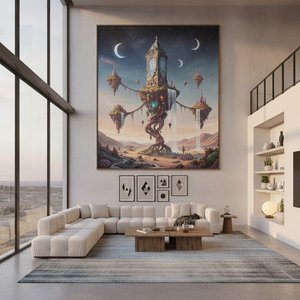
Dreamscapes Unveiled: A Curated Guide to Integrating Surrealist Landscape Art into Modern Interiors
Discover how to transform your home with the captivating mystery of Surrealist landscape art. Our expert guide explores iconic dreamscapes, offering professional tips on curating, styling, and commissioning bespoke surrealist masterpieces for a sophisticated, soulful interior.

Romantyczny Krajobraz w Malarstwie: 10 Arcydzieł, Które Zdefiniowały Epokę | ArtsDot.com
Odkryj 10 arcydzieł romantyzmu w malarstwie! Poznaj historie Caspara Davida Friedricha, Turnera i innych mistrzów. Inspiracje wnętrzarskie & reprodukcje obrazów najwyższej jakości na ArtsDot.com. Eksploruj kolekcję online!

Echa Miejsca: Historyczna Podróż przez Sztukę Krajobrazu
Odkryj historię sztuki krajobrazu – od romantycznych wizji Friedricha po surrealistyczne pejzaże Dalego. Analizy, inspiracje i reprodukcje obrazów najwyższej jakości na ArtsDot.com.

John Constable: 25 Najlepszych Obrazów Mistrza Angielskiego Krajobrazu | ArtsDot
Odkryj 25 arcydzieł Johna Constable'a – mistrza angielskiego krajobrazu! Poznaj romantyczne pejzaże, technikę malarską i inspiracje z Dedham Vale. Reprodukcje obrazów najwyższej jakości na ArtsDot.com. Eksploruj pełną kolekcję online!

