

 Podgląd w skali 1:1
 Wyślij jako kartkę
 Udostępnij
 Szczegóły dzieła
 Przewodnik

 Pobierz obraz
 Podobne obiekty
 RTG
RTG Pokaz slajdów
 Pytania i odpowiedzi
 Statystyki
Interior with Cityscape


 Rozwiń treść
Dzieło sztuki prezentowane na tej stronie podlega ochronie prawem autorskim, co oznacza, że nie mamy prawa do tworzenia ani sprzedaży jego identycznej reprodukcji. Ochrona ta jest egzekwowana na mocy umów międzynarodowych, takich jak Konwencja berneńska oraz przez przepisy prawa krajowego, w tym te określone w Prawo autorskie USA – Tytuł 17.
Metoda ta jest w pełni zgodna z przepisami prawa autorskiego, ponieważ nie polega na kopiowaniu ani powielaniu chronionego dzieła. Stanowi ona kreatywną reinterpretację – nowy obraz, który czerpie inspirację z oryginału, ale nie jest z nim tożsamy.
Giclée / Wydruk artystyczny
Wydruki giclée lub płótna o jakości muzealnej, szybka realizacja i szeroki wybór opcji wykończenia. ( Zamów ręcznie malowaną reprodukcję Przejdź do wersji cyfrowej)




P118B zł10

P118H zł10

P118W zł10

P438Z zł10

P508JH zł12

P508YH zł12

P805H zł10

P805Z zł10

P919BZ zł10

P919G zł10

P919XJ zł10

P959ZH zł10

P968JZ zł12

W106C zł8

W218G zł10

W218JH zł8

W218Y zł10

W307PJ zł10

W316G zł10

W316PJ zł8

W316Y zł10

W398PJ zł8

W4111J zł10

W500HY zł15

W500JH zł15

W692G zł12

W849H zł8

W940BG zł15

W953PJ zł8




Wybierz spośród naszych standardowych rozmiarów, które zachowują oryginalne proporcje dzieła sztuki.

Wpisz wymaganą szerokość i wysokość, aby dopasować grafikę do ramy lub ściany. Wydruk można jedynie przyciąć, nigdy nie powiększając go poza oryginalny obraz, dlatego format o innych proporcjach spowoduje utratę części kompozycji. Przed rozpoczęciem druku prześlemy Ci cyfrowy podgląd do zatwierdzenia. Obraz wyświetlany na tej stronie nie pokazuje rzeczywistego przycięcia — jedynie podgląd oddaje ten efekt.
Dostawa na cały świat () w ciągu 2 tygodni zamiast standardowych 4/5 tygodni. (9 Listopad)

Bezpłatna ekspresowa wysyłka na cały świat

Wysokiej jakości płótno lniane

Pełne ubezpieczenie przesyłki

Gwarancja zwrotu należności celnych i podatków importowych

Gwarancja wiernego odwzorowania kolorów

100-dniowa polityka zwrotów (tylko w przypadku wad)

Gwarancja 100% zwrotu pieniędzy

Zniżka przy zakupie wielu sztuk
 Opcja ze szkłem jest dostępna wyłącznie w rozmiarach poniżej 110 cm

Interior with Cityscape
Giclée / Wydruk artystyczny
Wymiary reprodukcji
-


Cena całkowita
zł 247
A Moment Suspended in Time
In the quietude of Interior with Cityscape, Elmer Bischoff invites us into a sanctuary of stillness, where the frantic pace of the modern world dissolves into a singular, contemplative moment. The scene unfolds within a cozy, sun-dappled interior, centered around a woman seated at a dining table. She is lost in the pages of a book, her posture embodying a profound sense of tranquility that radiates throughout the canvas. Around her, the remnants of a shared or solitary meal—cups scattered across the surface and a lone bottle resting near the edge—suggest a narrative of recent activity now surrendered to silence. In the soft distance, the faint presence of another figure adds a layer of depth, hinting at the gentle pulse of life continuing just beyond the immediate focus of our gaze.
Bischoff’s mastery lies in his ability to weave the domestic with the expansive. Through the windows of this intimate setting, a glimpse of the cityscape emerges, bridging the gap between the private sanctuary of the home and the sprawling, rhythmic energy of the urban environment. This juxtaposition creates a beautiful tension; while the interior offers a refuge of peace, the distant city serves as a reminder of the world's vastness, making the quietude of the foreground feel all the more precious and intentional.
The Lyrical Language of Color and Form
As a pivotal figure in the post-World War II Bay Area school, Bischoff transitioned from the rigorous abstractions of his early career toward a more lyrical, figurative approach. In Interior with Cityscape, this evolution is palpable through his sophisticated use of color and light. The palette is dominated by a soothing harmony of blues and greens, which bathe the room in an atmosphere of calm and relaxation. These cool tones do not merely decorate the space; they define its emotional temperature, wrapping the subject in a soft, atmospheric veil that feels almost dreamlike.
The technique employed here is nothing short of evocative. Bischoff utilizes oil on canvas to create textures that feel both substantial and ethereal. His brushwork avoids harsh outlines, opting instead for a fluid integration of shapes that allows light to appear as if it is vibrating within the paint itself. For the discerning collector or interior designer, this painterly quality offers an incredible versatility; the artwork possesses enough structural presence to anchor a room, yet its soft edges and tranquil hues allow it to blend seamlessly into sophisticated, modern, or classical decor. It is a piece that does not demand attention through noise, but rather commands it through a quiet, irresistible grace.
An Invitation to Contemplation
Beyond the technical brilliance, this painting serves as an emotional anchor. It captures the essence of leisure and contemplation—a rare commodity in our contemporary era. To possess a reproduction of this work is to bring a piece of that stillness into one's own environment. The symbolism of the reading woman suggests a retreat into the intellect and the soul, making the painting an ideal centerpiece for spaces dedicated to thought, such as a library, a study, or a serene living area.
For those seeking to curate a collection that speaks to the human condition, Bischoff’s work offers a profound connection to the beauty of the everyday. Interior with Cityscape is more than a depiction of a room; it is an invitation to slow down, to breathe, and to find the extraordinary within the ordinary. It remains a timeless testament to the power of art to transform a physical space into an emotional landscape.
Pytania i odpowiedzi
Czy „Interior with Cityscape” – Elmer Bischoff to jasne czy ciemne dzieło?
Pod względem postrzeganej jasności, „Interior with Cityscape” – Elmer Bischoff jest shadow.
Gdzie mogę znaleźć przewodnik do "Interior with Cityscape"?
Przewodnik po "Interior with Cityscape" to strona Karta informacyjna dla uczniów dzieła sztuki – nadrukowalna karta informacyjna zawierająca opis utworu, informacje o autorstwie oraz tabelę danych (artysta, daty, technika, wymiary oryginału, kolekcja).
Ilu użytkowników ogląda "Interior with Cityscape"?
Strona Statystyki wyświetleń dzieła „Interior with Cityscape” – Elmer Bischoff przedstawia statystyki odwiedzin: miesięczną liczbę wyświetleń tego dzieła, porównanie z najczęściej oglądanymi pracami artysty oraz informacje o pochodzeniu odwiedzających.
Podobne dzieła


Biografia artysty
The Lyrical Vision of Elmer Bischoff
In the vibrant, transformative landscape of the post-World War II American art scene, few voices captured the quiet intimacy of human existence as poignantly as Elmer Bischoff. Born in Berkeley, California, in 1916, Bischoff was a central figure in a movement that redefined the boundaries between abstraction and representation. His journey was one of profound evolution, moving from the sweeping, gestural energy of Abstract Expressionism toward a deeply emotive form of figurative painting. This transition did not represent a retreat from modernism, but rather a sophisticated synthesis—a way to infuse the raw power of abstract brushwork with the soulful weight of the human figure and domestic space.
Bischoff’s early life and education laid the foundation for his disciplined yet expressive approach. Growing up in Berkeley as the son of German and Swedish-Ecuadoran heritage, he entered the University of California, Berkeley, in 1934. It was during these formative years that he encountered the influential teacher Margaret Peterson, whose unwavering dedication to the ethical value of art left an indelible mark on his creative conscience. However, the trajectory of his life was irrevocably altered by the onset of global conflict. Serving as a lieutenant colonel in the intelligence services near Oxford, England, between 1941 and 1945, Bischoff experienced a world in upheaval, an experience that would later inform the contemplative and often melancholic stillness found in his mature works.
The Bay Area Figurative Movement
Upon returning to San Francisco after the war, Bischoff found himself immersed in an era of unprecedented artistic ebullience. The city had become a crucible for avant-garde experimentation, where he rubbed shoulders with titans such as Mark Rothko and Clyfford Still. This period was marked by a fascination with scale, color, and the visceral nature of paint. Yet, alongside his contemporaries David Park and Richard Diebenkorn, Bischoff began to lead a quiet revolution known as the Bay Area Figurative Movement. This movement sought to reclaim the subject matter of the world—the light hitting a window, the silhouette of a person, the geometry of a room—while retaining the vigorous, painterly language of abstraction.
His work during this era is characterized by a unique sense of atmosphere and light. Unlike the aggressive energy of New York School abstraction, Bischoff’s paintings often possess a lyrical, almost dreamlike quality. He mastered the art of using light to sculpt space, creating scenes that feel both physically present and emotionally distant. His compositions frequently feature:
- Atmospheric Depth: A masterful use of soft edges and diffused light to create a sense of hazy, nostalgic space.
- Emotional Resonance: Figures that are often solitary or caught in moments of quiet reflection, evoking themes of longing and introspection.
- Painterly Texture: A heavy, expressive application of paint that honors the physical process of creation while serving the figurative subject.
Legacy and Lasting Significance
As his career progressed, Bischoff’s recognition grew alongside his technical refinement. His election as an associate member of the National Academy of Design in 1973, followed by full membership in 1985, stands as a testament to his enduring impact on American art. His ability to bridge the gap between the chaotic energy of post-war abstraction and the timeless tradition of figurative storytelling allowed him to create a body of work that remains profoundly relatable to modern audiences.
Today, the legacy of Elmer Bischoff is preserved not only in prestigious collections like the Oakland Museum of California but also in the way we perceive the intersection of light and life. He taught us that the most profound truths are often found in the quietest moments—in the way a shadow falls across a room or the stillness of a figure lost in thought. His contribution to the American canon remains a vital chapter in the history of 20th-century painting, reminding us that even in an age of abstraction, the human spirit remains the ultimate subject.

Elmer Bischoff
1916 - 1991 , United States of America
Krótka nota
- Full Name: Elmer Nelson Bischoff
- Nationality: American
- Date Of Birth: 1916
- Date Of Death: 1991
- Place Of Birth: Berkeley, United States of America
- Notable Artworks:
- Untitled (646)
- Untitled (520)
- Untitled (980)
- Artistic Movement Or Style: Bay Area Figurative
- Artists Who Influenced This Artist: ['Margaret Peterson']
- Artists Or Movements Influenced By This Artist: ['Abstract Expressionism']
Powiązane artykuły

Claude Monet: 25 Najlepszych Arcydzieł Impresjonizmu | Reprodukcje Obrazów Online
Odkryj 25 najpiękniejszych arcydzieł Claude Moneta – impresjonistycznych pejzaży, nymfeii i słonecznych krajobrazów. Poznaj historię sztuki i zainspiruj się do dekoracji wnętrz z ArtsDot.com! Eksploruj pełną kolekcję online.

Szmaragdowe Wizje: Symbolika i Estetyczny Wpływ Zieleni w Historii Sztuki
Odkryj fascynującą historię zieleni w sztuce! Poznaj symbolikę koloru od starożytności do współczesności, wpływ pigmentów i psychologię emocji. Ekspercka analiza dzieł sztuki na ArtsDot.

Top 10 Sławnych Obrazów w Odcieniach Chromowej Zieleni – Sztuka i Dekoracja Domu
Odkryj 10 najsłynniejszych obrazów w odcieniach chromowej zieleni! Van Gogh, Monet, Renoir i inni mistrzowie. Poznaj historię sztuki, techniki malarskie i inspiracje kolorystyczne. Reprodukcje najwyższej jakości na ArtsDot.com – idealne do Twojego wnętrza.

Top 10 Sławnych Obrazów w Odcieniach Szaroniebieskiego – Inspiracje dla Wnętrz | ArtsDot.com
Odkryj 10 najsłynniejszych obrazów w odcieniach szaroniebieskiego! Poznaj historie Claude Moneta, Degasa i Van Gogha. Inspiracje wnętrzarskie i reprodukcje najwyższej jakości na ArtsDot.com – sztuka dla Twojego domu.
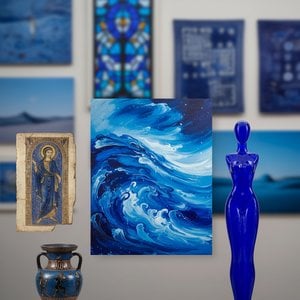
Błękit w Sztuce: Symbolika, Historia i Psychologiczne Oddziaływanie Koloru
Odkryj fascynującą historię błękitu w sztuce! Poznaj symbolikę, psychologię i wpływ tego koloru na arcydzieła renesansu i współczesne trendy. Ekspercka analiza dla miłośników sztuki.